




HR is now much more than recruiting and payroll; it’s become an important part of developing a company’s culture and growth. Therefore, HR salaries in India have changed considerably recently, based on job functions, industries, and levels of experience.
If you are starting your HR career or looking to make a change, being aware of the trends in HR salaries will help you to make better-informed employment decisions. But how much HR should have in their hands as a salary, and what are the main factors that impact it?
This guide shows you the total HR salary in India broken down into experience, function, industry, and cities to provide you with a precise reference of what you can expect and how to create opportunities for yourself.
What is the Average Salary of HR in India Today?
In India, HR professionals earn between ₹3-8 LPA on average, depending on factors like their years of experience, the size of the company, and their skillset within different HR functions.
For example, entry-level HR professionals generally earn less than other experienced professionals; however, they continue to see steady growth in their salary based on the skills they develop in key areas such as recruitment, compliance, and HR analytics.
In contrast, HR professionals with mid-level experience (such as HR Business Partners or Talent Managers) generally receive a higher compensation package than their entry-level equivalents. Depending on their ability to contribute strategically to business decisions, HR professionals in the mid-range can earn between ₹6-15 LPA.
Lastly, HR professionals in senior-level positions (such as HR Directors & CHROs) can make between ₹20-80 LPA, and those employed in large national companies or international organizations can often be paid even more than ₹80 LPA as they work towards improving organizations through transformative programs created by HR departments.
So, from the above explanation, we can conclude that:
- Entry-level HR Paid approximately ₹2.5-5 LPA
- Mid-level HR receiving approximately ₹6-15 LPA
- Senior-level HR will be compensated at rates exceeding ₹20-80+ LPA
What Is HR Salary by Experience in India: From Fresher to Senior Roles?
Experience plays an important role in identifying HR salary in India, with noticeable jumps at key career stages. As professionals move from operational roles to strategic positions, compensation increases significantly alongside responsibility and impact.
Salary Breakdown by Experience:
1. 0 – 1 year Experience (Fresher): ₹2.5 – ₹4 LPA
Fresh HR professionals begin with entry-level jobs where they help with recruitment and onboarding processes, and administrative functions. Through their experiences, they will be developing the skills needed to grow as HR professionals.
2. 2 – 4 years Experience: ₹4 – ₹7 LPA
An HR professional will be responsible for managing the end-to-end recruitment process, engaging employees, and ensuring a basic level of compliance with regulations and legislation. They become more independent from their supervisor and begin contributing more to their team’s and the organization’s overall performance.
3. 5 – 9 years Experience: ₹7 – ₹15 LPA
An HR professional will generally take on either a specialist or a manager role. They will manage a team, initiate and execute various HR initiatives, and ensure all people-related strategies are aligned with the organization’s business objectives, resulting in measurable impacts to the organization.
4. 10 – 15 years Experience: ₹15 – ₹30 LPA
An HR leader will take on a strategic role in the organization. They are responsible for developing talent management strategies, managing all HR policy and programs, and working with senior leadership to help them achieve success while building the organization’s long-term workforce plan.
5. 15+ years Experience (Senior leadership): ₹30 – ₹80+ LPA
Senior HR executives (CHRO, Director of HR, etc.) will create the vision for the organization, result in transformation initiatives across the organization, manage global HR strategies affecting all geographic locations, and have a large impact on developing the organization’s culture and overall success.
Does HR Salary in India Vary by City, and Does Location Really Matter?
Yes, location has a big effect on the pay for HR professionals, with metro areas generally paying higher salaries than tier-2 or smaller cities due to their expensive nature, high number of corporate companies, and strong demand for qualified HR professionals
HR Salaries in Metro Areas
HR Pay in Metro Areas, such as Mumbai, Delhi, and Bangalore, is higher due to the higher number of companies and corporate people, along with global companies expanding their businesses to these locations and creating competition for qualified HR personnel, especially in the mid-to-senior level range.
| City | Entry Level (0–2 yrs) | Mid-Level (4–8 yrs) | Senior HR (10+ yrs) |
| Mumbai | ₹3 – ₹5 LPA | ₹8 – ₹18 LPA | ₹25 – ₹70 LPA |
| Delhi NCR | ₹3 – ₹5 LPA | ₹7 – ₹16 LPA | ₹20 – ₹60 LPA |
| Bangalore | ₹3.5 – ₹6 LPA | ₹9 – ₹20 LPA | ₹30 – ₹80 LPA |
| Hyderabad | ₹3 – ₹5 LPA | ₹8 – ₹17 LPA | ₹25 – ₹65 LPA |
HR Salaries in Tier-2 and Non-Metro Areas
HR salaries in tier-2 and non-metro locations tend to be somewhat lower than in metro areas, but are still competitive. This difference is caused by lower costs of living and fewer global corporate presences in these types of locations. However, more HR people are starting to work remotely, which has allowed for the creation of more opportunities to advance their careers.
What Decides an HR Professional’s Salary in India?
1. Experience Level
The number of years one has worked in their field can make a difference when it comes to salary levels; as someone gains more experience, they become more skilled at performing complex work and take their job from an operational to a strategic role where they are having an impact on the organization’s performance and overall business results.
2. Industry Type
IT & corporate, and finance industries pay more for HR positions than manufacturing or traditional industry types; HR positions in IT, consulting, and finance have more money allocated to these departments, as a result, they have more risk to the global marketplace, and they require more specialized training and skills to perform the job successfully.
3. Company Size
Many of the larger organizations and multi-national companies offer much higher levels of salaries, benefits, and bonus structure than will be found at start-up or small companies, which may have limited salary budgets but generally have higher levels of responsibilities.
4. HR Specialization
Specialized positions such as those involving HR analytics, compensation and benefits, and HR business partner positions have higher salary levels than generalist-type HR positions due to the specialized type of knowledge and skills necessary to be effective in those specialty areas; therefore, these positions provide a greater level of strategic impact on the overall success of an organization.
5. Location
While larger metro cities may pay significantly higher salaries due to the increased demand for HR professionals and to cover a generally higher cost of living, smaller regions, such as rural or smaller towns, generally offer lower salaries with an improved quality of life and lower cost of living.
6. Educational Background
An HR professional who possesses an MBA or certification from a top-tier university will likely earn a higher starting salary than an HR professional with only basic coursework completed; additionally, these employees will generally experience a faster growth potential.
7. Skill Set
Skills such as healthcare data analytics, HR technology tools (such as payroll systems), labor law compliance, and strategic thinking may greatly increase your potential to earn a higher income as the field of HR continues to develop.
8. Performance and Impact
HR professionals who show high levels of performance in their position and are directly responsible for maintaining talent retention, developing organizational culture, and growing the organization will often receive accelerated salary increases, bonuses, and leadership opportunities more quickly than their lower-performing colleagues.
How Big is the Gender Pay Gap in HR in India Compared to Other Sectors?
In HR, there is a gender pay gap that is somewhat smaller than one would likely find in many other industries.
There is a reasonably equal distribution of men and women in HR in India, with women represented at all levels in organisations; this helps to lower the overall pay gap compared to many male-dominated industries.
However, there is still a gap between male and female executives at the senior leadership level, with men usually occupying relatively higher-paying executive positions; thus, the average salary for male executives is higher than that of female executives who have relatively the same level of experience and qualifications.
Gender Pay Gap Snapshot
| Level | Male Avg Salary | Female Avg Salary | Gap % |
| Entry-Level | ₹3.5 LPA | ₹3.3 LPA | ~5% |
| Mid-Level | ₹10 LPA | ₹9 LPA | ~10% |
| Senior-Level | ₹30 LPA | ₹25 LPA | ~15% |
The table above shows that the pay gap changes as experience increases, especially at leadership levels where fewer women reach top executive positions in HR.
At entry-level roles, the difference is not so much, indicating fair hiring practices, but career progression and leadership opportunities influence long-term salary differences significantly.
Organizations are increasingly focusing on diversity and inclusion initiatives, which are gradually helping reduce the gender pay gap in HR compared to other industries.
How Fast Are Emerging HR Roles Growing and Do They Offer Tech-Level Salaries?
Organizations are experiencing a rapid growth in emerging HR roles due to their adoption of digital transformation, data-driven decision-making, and employee experience strategies, resulting in a greater need for tech HR professionals across various industries.
Although these new jobs may not pay as well as the highest-paying tech jobs, most have the potential to earn competitive salaries in areas such as analytics, HR Technology, and strategic business partner.
Fastest-Growing HR Roles (2022–2026)
| Role | Growth Rate | Salary Range |
| HR Analytics Specialist | High | ₹8 – ₹20 LPA |
| Talent Acquisition Lead | High | ₹10 – ₹25 LPA |
| HR Business Partner | Very High | ₹12 – ₹30 LPA |
| Learning & Development | Moderate | ₹6 – ₹18 LPA |
| HR Tech Specialist | Very High | ₹10 – ₹28 LPA |
The table outlines how developing organizational needs are driving demand for specialized HR roles, especially those combining data, technology, and strategic employee planning across various industries today.
Roles like HR Business Partner and HR Tech Specialist show very high growth due to digital transformation, while analytics and talent acquisition roles offer good salaries and career advancement opportunities.
Is Over 30% of Senior HR Compensation Made Up of Variable Pay and Equity?
Yes, in many senior-level HR positions, the total compensation includes more than 30% variable pay, bonus, and equity.
Some important components of the total compensation for a senior-level HR position are:
- Performance bonuses make a significant portion of the total compensation.
- ESOPs are common in start-up companies.
- Annual incentives are merged with company and individual performance.
- Retention bonuses are provided for long-term commitment.
- Profit-sharing components are part of the leadership roles.
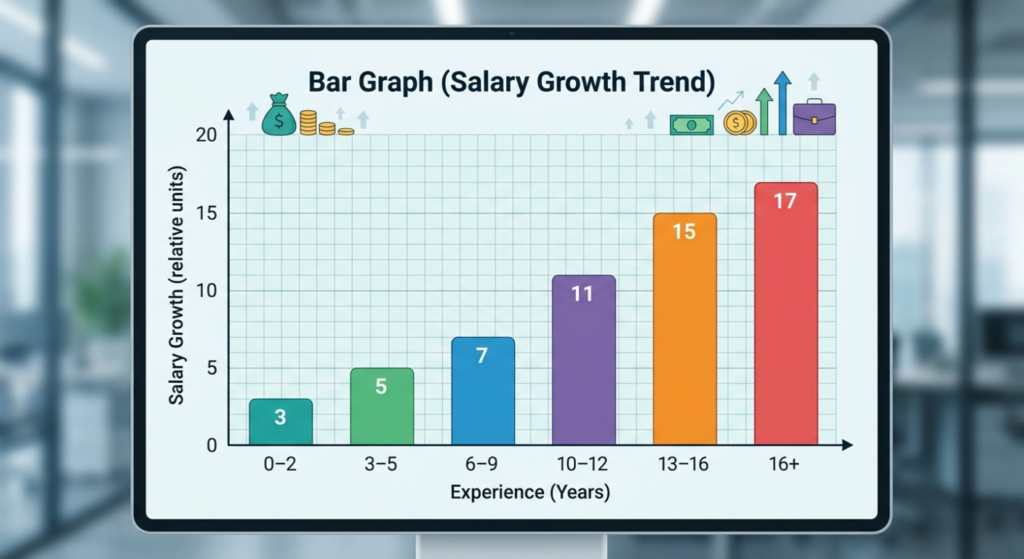
Does HR Pay Accelerate the Most Between 10–16 Years of Experience?
Yes, the salary for HR professionals increases significantly between 10 and 16 years of experience as they take on leadership roles where the level of strategic decision-making, team management, and business alignment is much higher.
At this stage, HR professionals take on roles like HRBP, Head HR, Director, etc., where the salary increases substantially.
Bar Graph (Salary Growth Trend):
Conclusion
The HR salary in India is not static anymore. Instead, it has varied greatly based on experience, role, industry, and location. As the business landscape is changing, the HR role has become strategic. This has a direct correlation with salary.
As organizations continue to focus on talent and culture, HR is an area with significant growth potential. If you are ready to take your HR career to the next level, consider upskilling, specializing, or getting strategic exposure to fast-track your salary growth in the HR space.
Ready to grow your HR career?
Start by upgrading your skills, exploring emerging roles, and positioning yourself for high-impact opportunities today.
Book a Demo Today