

Employee Referral Policy: Complete Guide, Template, Bonus Structure & Best Practices



-
AuthorRuchika Rajput
-
 Last Updated
September 01, 2026
Last Updated
September 01, 2026
-
 Reading Time
15 Mins
Reading Time
15 Mins
Hiring the right people is not always easy. Job boards can bring hundreds of applications, yet finding candidates who truly fit your culture and requirements can take time. An employee referral policy gives employees a clear and structured way to recommend qualified candidates for open positions.
A well-designed employee referral program can make recruitment faster, improve candidate quality, and encourage employees to actively participate in hiring. However, referrals work best when employees understand who they can refer, how the process works, and what rewards they may receive.
In this guide, we will explain what an employee referral policy is, why it matters, what the policy should include, how referral bonuses work, common mistakes to avoid, and best practices for building a successful employee referral program. We will also explore how Savvy HRMS can simplify referrals.
What Is an Employee Referral Policy?
An employee referral policy is a set of guidelines that explains how employees can recommend qualified candidates for job openings within an organization. It defines the referral process, employee eligibility, applicable positions, referral bonus rules, payment conditions, and other important terms.
In simple words, an employee referral policy answers one basic question:
“What happens when an employee recommends someone for a job?”
Instead of handling referrals informally through emails, messages, or conversations, the organization establishes a standard process. Employees know where and how to submit referrals, while HR teams can track candidates and determine whether a referral qualifies for a reward.
An employee referral policy is usually connected to an employee referral program, but the two terms are slightly different.
An employee referral program is the broader initiative that encourages employees to recommend potential candidates. The employee referral policy provides the rules and structure that govern that program.
For example, an organization may have a policy stating that:
- Employees can refer candidates for selected open positions.
- The candidate must not already be in the company’s recruitment database.
- The referral must be submitted through the designated HR system.
- The employee must meet specific eligibility requirements.
- A referral bonus is paid only after the referred candidate completes a defined period of employment.
The exact rules can vary depending on the organization’s hiring needs, workforce size, industry, and compensation practices.
Why Does an Employee Referral Policy Matter?
A good employee referral policy can turn employees into an additional source of qualified talent. Instead of depending entirely on job portals, recruitment agencies, and other external channels, businesses can also use their existing workforce to identify potential candidates.
Here are some of the key reasons an employee referral policy matters.
1. It Can Improve Candidate Quality
Employees usually understand their organization’s work environment, expectations, and culture. When they recommend someone, they may already have an idea of whether the person could be a good fit.
This does not guarantee a successful hire, but it can help HR teams discover candidates who may otherwise never apply.
2. Speed Up Recruitment
Traditional recruitment can involve multiple stages, including job advertising, application screening, sourcing, interviews, and follow-ups.
Referrals can create a more direct path to potential candidates. Since the candidate has already been introduced by an employee, HR may have additional context before beginning the screening process.
3. Reduce Hiring Costs
Organizations often spend money on recruitment advertising, agencies, sourcing platforms, and other hiring activities.
An employee referral program can provide another talent source, potentially reducing dependency on expensive external recruitment channels.
4. Encourages Employee Participation
A referral program gives employees an opportunity to contribute to company growth. When appropriate rewards are included, employees may also have an additional incentive to participate.
The important point is that the program should not make employees feel pressured to refer people. Participation should remain voluntary.
5. Supports Employer Branding
Employees who genuinely enjoy their workplace may naturally recommend it to people in their professional and personal networks.
This can help organizations communicate their employer brand through authentic employee experiences rather than depending only on traditional recruitment advertising.
6. Creates a Structured Referral Process
Without clear guidelines, referrals can quickly become confusing.
Employees may not know which jobs qualify, HR may receive duplicate recommendations, and disagreements may occur over who referred a candidate first.
An employee referral policy establishes clear rules before these issues arise.
What Are the Key Components of an Employee Referral Policy?
An effective employee referral policy should be simple enough for employees to understand but detailed enough to prevent confusion.
The following components are commonly included.
1. Purpose of the Policy
Start by explaining why the employee referral program exists.
For example, the purpose may be to encourage employees to recommend qualified candidates and help the organization identify talent more efficiently.
A clear purpose also helps employees understand that referrals should focus on suitable candidates rather than simply increasing the number of applications.
2. Eligibility
The policy should explain who can participate.
Depending on the organization, eligible employees may include full-time employees, part-time employees, or employees who have completed their probation period.
The policy should also clearly identify employees who are excluded, if applicable. For example, recruiters and employees directly responsible for hiring may have different eligibility rules because recruitment is already part of their role.
3. Eligible Positions
Not every vacancy necessarily needs to be included in the employee referral program.
The policy should state whether referrals are accepted for:
- All open positions
- Selected departments
- Difficult-to-fill roles
- Specific job levels
- Certain locations
- Positions specifically marked as referral-eligible
This prevents employees from making assumptions about which vacancies qualify.
4. Referral Submission Process
Employees should know exactly how to submit a referral.
The process might include:
- Reviewing an eligible vacancy.
- Obtaining the candidate’s permission where appropriate.
- Submitting the candidate’s details through the approved system.
- Providing relevant information about the candidate.
- Allowing HR to review and contact the candidate.
- Tracking the referral status through the recruitment process.
The easier this process is, the more likely employees are to participate.
5. Candidate Eligibility
The policy should define what makes a candidate eligible for referral.
For example, the candidate may need to be a new applicant who was not already being considered for the same position.
This is particularly important because duplicate referrals can create disputes.
6. Referral Bonus Rules
If the organization offers a monetary reward, the policy should explain:
- Bonus amount
- Eligible positions
- Payment conditions
- Payment timeline
- Applicable employee eligibility
- Whether different roles have different bonus amounts
- What happens if multiple employees refer the same candidate
Clear bonus rules reduce misunderstandings.
7. Payment Conditions
A referral bonus does not necessarily need to be paid immediately after a candidate is hired.
Many organizations make payment conditional on the referred employee completing a specified period, such as the probationary period.
The policy should clearly explain when the bonus becomes payable.
8. Duplicate Referrals
The policy should explain how duplicate referrals are handled.
For example, the organization may recognize the first valid referral submitted through the official referral process.
Whatever rule the organization chooses, it should be documented and applied consistently.
9. Privacy and Confidentiality
Referral programs involve employee and candidate information. Therefore, organizations should establish appropriate rules around handling personal information.
Employees should avoid sharing unnecessary candidate information and should follow the organization’s applicable privacy and data-handling requirements.
10. Program Administration
Finally, identify which HR team or department manages the employee referral program.
Employees should know where to ask questions about referral status, eligibility, bonus payments, or other concerns.
What Should an Employee Referral Policy Template Include?
A practical employee referral policy template should be easy to read and easy to apply. Employees should not have to go through several pages of complicated language just to understand how to refer someone.
A basic template can include the following sections:
Employee Referral Policy Template
1. Policy Name
The policy name clearly identifies the document and helps employees quickly recognize the organization’s official employee referral guidelines.
2. Purpose
The purpose explains how the employee referral policy supports recruitment by encouraging employees to recommend qualified candidates for suitable job openings.
3. Scope
The scope defines which employees, departments, locations, and business units are covered by the employee referral policy and its guidelines.
4. Eligible Employees
This section identifies employees who can participate in the employee referral program and specifies any roles or individuals excluded from participation.
5. Eligible Positions
Clearly identify the job openings eligible for employee referrals, including specific departments, roles, locations, or hard-to-fill positions.
6. Referral Process
Explain how employees can submit referrals, where candidate information should be shared, and what details are required for consideration.
7. Candidate Eligibility
Define which candidates qualify for referrals, including rules for existing applicants, former employees, current candidates, and individuals already in recruitment.
8. Referral Bonus
Clearly explain the referral bonus amount, applicable positions, reward structure, and any differences based on job level or hiring difficulty.
9. Bonus Payment Conditions
Specify when the referral bonus becomes payable, such as after the referred employee joins or successfully completes the required employment period.
10. Duplicate Referrals
Establish clear rules for handling multiple employees referring the same candidate and explain how the eligible referrer will be determined.
11. Referral Tracking
Explain how employees can monitor referral progress, receive updates, and understand the current status of candidates they have recommended.
12. Privacy and Confidentiality
Provide guidelines for responsibly handling candidate information and maintaining appropriate confidentiality throughout the employee referral and recruitment process.
13. Policy Administration
Identify the HR team or designated personnel responsible for managing referrals, resolving questions, monitoring rewards, and maintaining the policy.
14. Changes to the Policy
Explain that the organization may modify the employee referral policy when recruitment needs, business requirements, or internal processes change.
The template should then be customized according to the organization’s hiring process, workforce structure, internal policies, and applicable legal requirements.
The goal is not to create the longest policy possible. The goal is to create a policy that employees can understand and follow consistently.
How Does an Employee Referral Bonus Structure Work?
An employee referral bonus structure defines the reward an employee may receive for successfully referring a candidate.
The bonus can be a fixed amount, a role-based amount, or another reward determined by the organization.
For example, a company might use a structure such as:
| Position Type | Example Referral Bonus |
| Entry-level roles | ₹5,000 |
| Mid-level roles | ₹10,000 |
| Specialized roles | ₹15,000 |
| Critical or hard-to-fill roles | ₹20,000+ |
These amounts are only examples. Organizations should determine their own referral rewards based on hiring difficulty, role value, recruitment costs, internal compensation practices, and business objectives.
When Should the Referral Bonus Be Paid?
One of the most important parts of an employee referral policy is defining the payment condition.
A company may choose to pay the referral bonus:
- When the candidate joins
- After the candidate completes probation
- After a specified number of days or months
- In multiple installments
For example, an organization could provide part of the reward after joining and the remaining amount after successful completion of probation.
There is no single employee referral bonus structure that works for every business. What matters most is that the rules are transparent and communicated before employees submit referrals.
Should Every Position Have the Same Bonus?
Not necessarily.
A business may choose to offer different referral bonuses based on the difficulty of hiring for a particular position.
For example, a hard-to-fill technical or leadership role may have a higher referral reward than an entry-level position.
However, businesses should avoid making the structure unnecessarily complicated. Employees should be able to quickly understand what reward applies to a particular vacancy.
What Are the Best Practices for a Successful Employee Referral Program?
Launching an employee referral program is only the beginning. The program needs to be easy, transparent, and engaging if you want employees to actively participate.
Here are some practical best practices.
1. Keep the Referral Process Simple
If submitting a referral takes too many steps, employees may lose interest.
Use a simple submission form or HR platform where employees can quickly provide the required information.
2. Make Eligible Jobs Easy to Identify
Employees should immediately know which positions are open for referrals.
Clearly mark referral-eligible vacancies on the internal career page, HRMS, or recruitment platform.
3. Communicate the Program Regularly
Do not announce the program once and forget about it.
HR teams can remind employees about open positions through internal communication channels, newsletters, team meetings, or employee portals.
4. Explain the Bonus Clearly
Employees should know how much they can earn and what conditions apply.
Avoid vague statements such as “eligible employees may receive a referral reward.”
Instead, clearly explain the applicable bonus and payment conditions.
5. Track Referral Status
Employees appreciate transparency.
If possible, allow employees to see whether their referral has been received, screened, interviewed, selected, or rejected.
This reduces unnecessary follow-ups with HR.
6. Recognize Employees Beyond Money
A successful referral program does not always need to depend entirely on cash incentives.
Organizations can also recognize employees through internal appreciation, recognition programs, certificates, or other suitable rewards.
7. Maintain Fairness
Apply the same referral rules consistently.
If two employees submit referrals for the same candidate, the organization should follow its documented duplicate-referral rule rather than making a decision based on personal preference.
8. Protect Candidate Experience
A referral should not mean that a candidate automatically gets the job.
Every referred candidate should go through the organization’s standard recruitment and assessment process.
This protects fairness and helps maintain the credibility of the employee referral program.
9. Measure Program Performance
Track useful metrics such as:
- Number of referrals received
- Referral-to-interview ratio
- Referral-to-hire ratio
- Time to hire
- Referral hiring cost
- Retention of referred employees
- Referral bonus expenditure
- Employee participation rate
These metrics can help HR understand whether the program is actually delivering value.
10. Ask Employees for Feedback
Employees can tell HR where the referral process is difficult.
A short survey or feedback mechanism can help identify issues such as confusing eligibility rules, slow updates, complicated forms, or unclear bonus conditions.
What Are the Most Common Employee Referral Policy Mistakes?
Even a well-intentioned employee referral policy can create problems when its rules are unclear or the process is difficult to manage.
Here are some common mistakes businesses should avoid.
1. Making the Policy Too Complicated
Employees should not need HR expertise to understand the referral process.
Use simple language and clearly explain the rules.
2. Keeping Bonus Rules Unclear
If employees do not know when or why they will receive a bonus, disputes can arise.
Always define the bonus amount, eligibility, and payment conditions.
3. Ignoring Duplicate Referrals
Without a clear duplicate-referral rule, multiple employees may claim credit for the same candidate.
Define how the organization determines the eligible referrer.
4. Making Referrals Difficult to Submit
If employees have to send emails, fill out multiple forms, and contact HR manually, participation may decline.
A simplified digital process can make a significant difference.
5. Failing to Update Employees
Employees may become frustrated if they refer someone and never hear what happened.
Where appropriate, provide referral status updates while maintaining candidate confidentiality.
6. Treating Referrals as Automatic Hires
A referral is a recommendation, not a guarantee of employment.
All candidates should be evaluated according to the organization’s recruitment criteria.
7. Not Measuring Results
Without tracking referral metrics, HR may not know whether the program is working.
Regularly review participation, hiring outcomes, cost, and retention.
8. Applying Rules Inconsistently
Changing rules from one referral to another can damage employee trust.
The policy should be applied consistently and exceptions should be clearly documented when necessary.
9. Ignoring Candidate Privacy
Employees may share candidate information casually through emails or messaging apps.
The organization should provide clear guidance on appropriate handling of candidate data.
How Does Savvy HRMS Make Employee Referrals Easier?
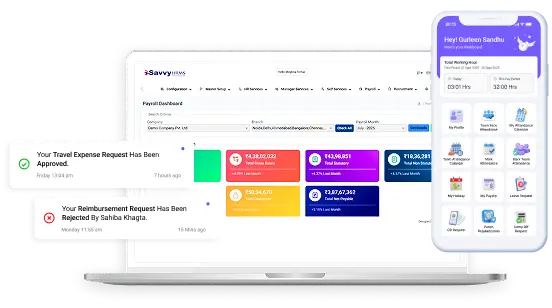
A successful employee referral program should make it easy for employees to recommend suitable candidates and for HR teams to manage those referrals. Savvy HRMS helps bring the referral process into a more structured and centralized HR workflow.
Instead of depending on emails, spreadsheets, and manual follow-ups, businesses can use Savvy HRMS to organize referral information and connect it with recruitment activities. This makes the overall employee referral process simpler, faster, and easier to track.
With Savvy HRMS, businesses can:
- Simplify referral submissions for employees.
- Centralize candidate and referral information in one place.
- Connect employee referrals with recruitment workflows.
- Track referral and candidate progress more efficiently.
- Reduce repetitive manual work for HR teams.
- Improve visibility into referral activities and hiring outcomes.
By simplifying these activities, Savvy HRMS helps create a smoother referral experience for both employees and HR teams, while supporting a more organized and efficient recruitment process.
Conclusion
An effective employee referral policy gives employees a clear and fair way to participate in the hiring process. By defining eligibility, referral procedures, bonus conditions, candidate rules, and responsibilities, organizations can reduce confusion while creating a more consistent employee referral program.
The key is to keep the process simple, communicate the rules clearly, reward participation fairly, and measure results regularly. With the right technology and a well-structured approach, employee referrals can become a valuable part of a company’s broader recruitment and talent acquisition strategy.










Turn employee referrals into a smarter hiring strategy with Savvy HRMS.
Explore the platform and simplify your recruitment workflow today.
Frequently Asked Questions (FAQs)
1. What is an employee referral policy?
An employee referral policy provides clear guidelines for employees who recommend candidates for open positions. It explains eligibility, referral procedures, candidate requirements, rewards, payment conditions, and other rules involved in the referral process.
2. What should an employee referral policy include?
An effective employee referral policy should clearly define the purpose, eligible employees, eligible positions, referral submission process, candidate eligibility, bonus structure, payment conditions, duplicate referral rules, tracking process, and privacy requirements.
3. How does an employee referral bonus work?
An employee referral bonus rewards eligible employees for successfully recommending candidates who are hired. The organization should clearly specify the bonus amount, eligible positions, payment timeline, and conditions that must be met before payment.
4. What are the benefits of an employee referral program?
An employee referral program can help organizations reach qualified candidates through their existing workforce. It may also support faster hiring, reduce recruitment costs, improve candidate reach, and encourage employees to actively contribute to talent acquisition.
5. How can HRMS software simplify employee referrals?
HRMS software can make the employee referral process easier by centralizing referral information, simplifying submissions, connecting referrals with recruitment workflows, tracking candidate progress, reducing manual follow-ups, and giving HR teams better visibility into referral activities.