1. What is a loan management system?
A loan management system manages your loans end-to-end. It tracks every loan from request to closure. It also helps automate employee loan & advances recovery through salary deduction, ensuring that employees' balances are always updated in real time, so no one has to maintain loan balances in Excel.
2. What is loan management?
Loan management is the process of managing a loan throughout its life, from application to approval, disbursement, interest calculation, repayment, and closure. When manually managed, it results in defaulters, late payments, and balance disagreements. When managed through software, each stage is traceable, and the borrower and administrator will always have the info on what has been paid and what is outstanding.
3. What is an enhanced loan management system?
An enhanced loan management system adds automation and better visibility to basic loan tracking. General upgrades include online applications, rule-based approvals, automatic interest and EMI calculation, payroll or bank integration, reminders, and reports. The aim is fewer manual steps, fewer errors, and faster, more transparent loan processing for both administrators and borrowers.
4. What is an employee loan management system in India?
Employee loan management system helps the management to record and manage salary advances taken by employees against the employee payroll. Requests, approvals, interests & EMI deductions are managed & recovered through online and through payroll. The system maintains records for audits & gives employees transparent balances, so no one has to chase loans on chat or spreadsheets.
5. What are the key features of a loan management system?
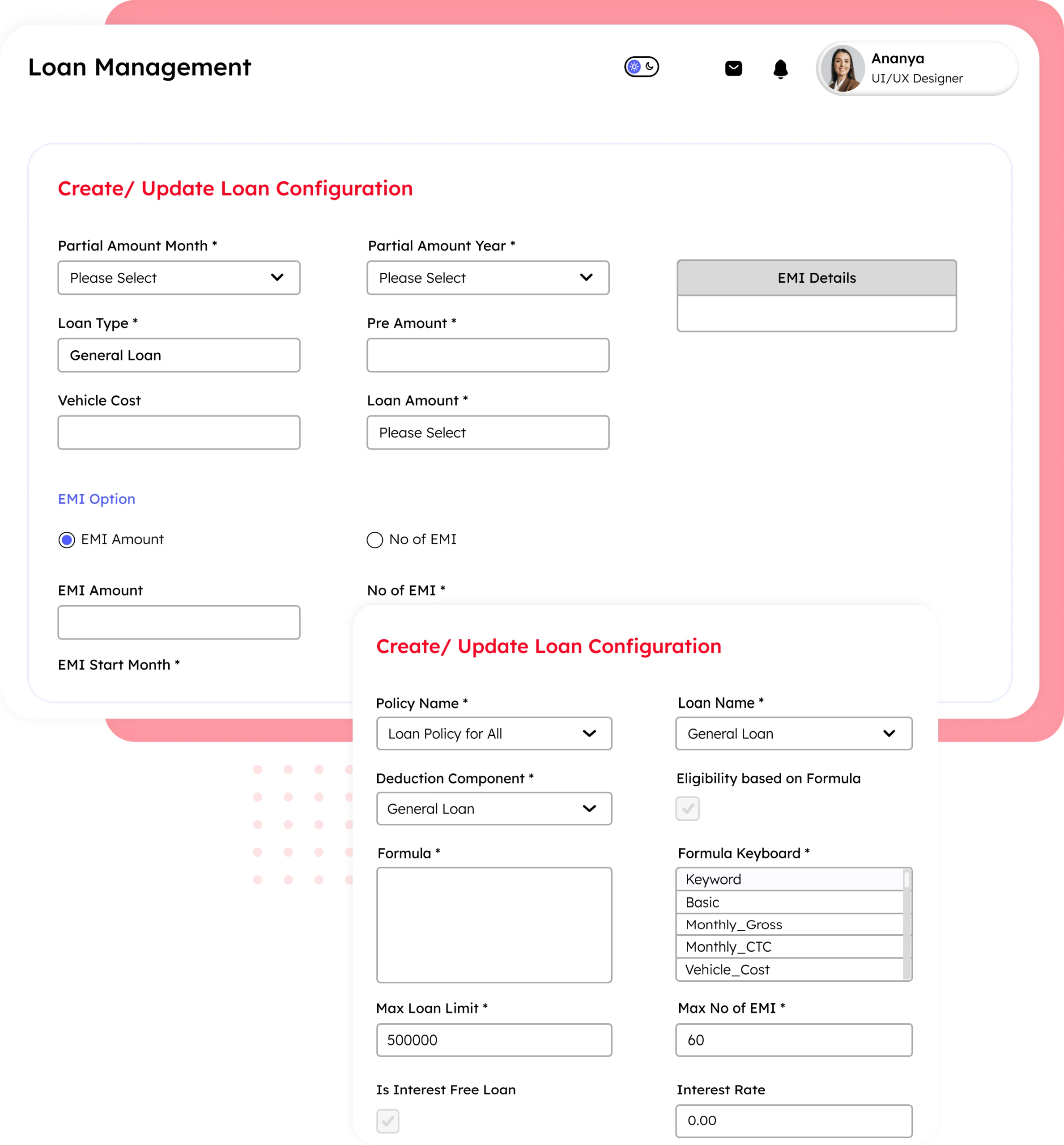
Key features include multiple types of loans with different rules, online loan application and sanction, automatic simple and compound interest, fixed and varying EMI deduction, and reminders. A good system also generates loan ledgers and statements, shows employees their balances, and produces overdue and recovery reports for audit.
6. What are the benefits of a loan management system?
A loan management system means fewer errors, faster approvals, and timely recovery of each installment. An administrator can have a single view of unpaid installments, and a loan applicant can have their statements. The automated calculation and record keeping ensures easier audits and lesser follow up which leaves the team free for other valuable work.
7. How do I choose the right loan management system?
First, show what loan types and approval rules you need. Then look for flexible interest and EMI, payroll or banking integrations, reporting, security, and ease of use. Make sure the vendor supports implementation and can grow as your headcount or portfolio grows. Request a demo with a real loan scenario before you decide.
8. How does a loan management system benefit lenders?
Lenders benefit from quicker processing, accurate interest and repayment dates, and fewer missed collections. Automated reminder mailings and the ability to check status minimize missed collections caused by oversight, while reports can be used to instantly pinpoint exposures, arrears, and collections. Central records allow for easy audits, and borrowers are able to get clear statements and avoid multiple follow-up calls.
9. How do leading loan management software solutions for NBFCs in India compare?
NBFC-grade solutions are compared on loan origination, underwriting, collections, compliance, integrations, and security. Costs and functionality vary by provider and frequently change, so there's no right ranking for all. Shortlist two or three vendors, request a demo with your own loan products, and compare support and overall cost.
10. What are the top cloud-based loan management systems for Indian lenders?
The best choice depends on the type of loans, volume, and compliance your bank needs. Look for cloud hosting, role-based access, encryption, backups, and integration with accounting or payroll. And consider local support and reports, then compare shortlisted vendors through demos and trials rather than depending on a generic top list.
11. What is payroll loan management?
Payroll loan management means handling employee loans and advances inside the payroll process. Interest and EMI installments are deducted automatically from monthly salary, and balances update after every pay run. This removes separate recovery sheets, so HR and employees see the same accurate figures on payslips and loan statements.
12. How does employee salary advance software work?
Employees ask for an advance online, the manager approves it, and HR establishes the repayment plan. The sum is deducted from incoming wages in a single payment or installments. Because requests, approvals, and recoveries are all stored in one system, requests are handled smoothly to meet even critical needs, and nothing is lost in chat.
13. Can a loan management system calculate interest and EMI automatically?
Yes. A good system will calculate simple or compound interest and construct an EMI schedule based on the amount, rate, and tenure of the loan. It will use fixed or variable installments and multiple deduction conditions for each type of loan. This avoids errors in manual calculations, and each recovery is in accordance with the loan policy.
14. Can employees view their loan balances and statements online?
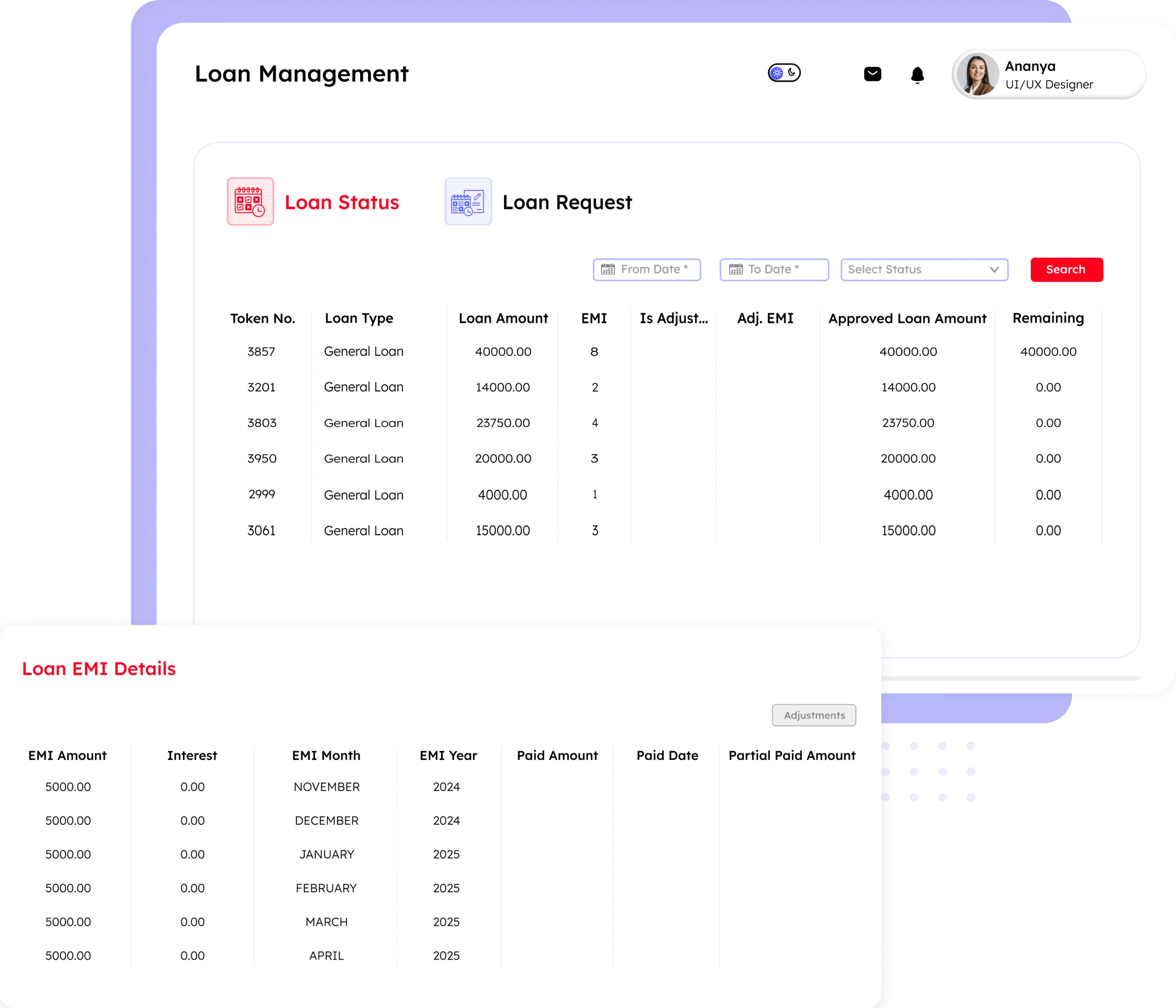
Yes. Employees view their net balance, installments paid, and remaining tenure online and also download their loan statements as required. This reduces repetitive questions to HR and creates trust, since everyone is using the same record, and any shortfall in deductions can be verified instantly.
15. What is a NOC letter in loan management?
A no-objection certificate (NOC) is a letter issued after the disbursement of the whole amount that you paid back in full, and nothing is left. Software will automatically generate the NOC once the last installment is received on a typical NOC template so that HR employees don't have to write letters manually and employees may get quick proof.
16. How are pending loans recovered during full and final settlement?
When an employee exits, it displays the remaining loan and advance balance. It can be recovered through final salary, leave encashment, and dues in the full and final settlement. Being linked to employee details and payroll, there is no error in recovery and no dues are missed.
17. Is a cloud-based loan management system secure?
A well-reputed cloud-based loan management system protects data with role-based access, secure logins, encryption and regular backups. Audit trails help identify who has accessed or modified a loan record. Ask how a vendor stores the data, who has access, and what happens to backups and data when a service is terminated.
18. How much does a loan management system cost in India?
Cost is based on number of users or employees, features, and if setup and training are optional, as most of the cloud vendor systems do. Most cloud providers will charge by user or employee per month, while lender-grade systems charge by the size of the portfolio. Compare what is included and request a quote based on your actual requirements.
19. How long does loan management system implementation take?
Implementation is based on loan types, approval rules, and existing data to convert. Generally, setup involves defining policies, uploading balances, connecting payroll or accounting, and training staff. A good vendor will assist with migration and testing, ensuring no disruption to loan recoveries.
20. Does Savvy HRMS provide a loan management system in Noida?
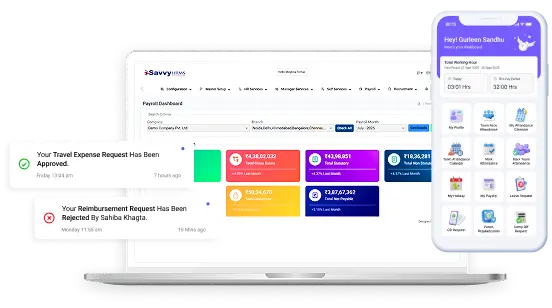
Yes, the Savvy HRMS loan management system in Noida is one of India's best loan management systems. We manage employee loans, advances, EMI deductions, and NOC letters for companies in Noida & companies across India on a single platform, with implementation and post-implementation support from the Savvy HRMS team.















 apartment