

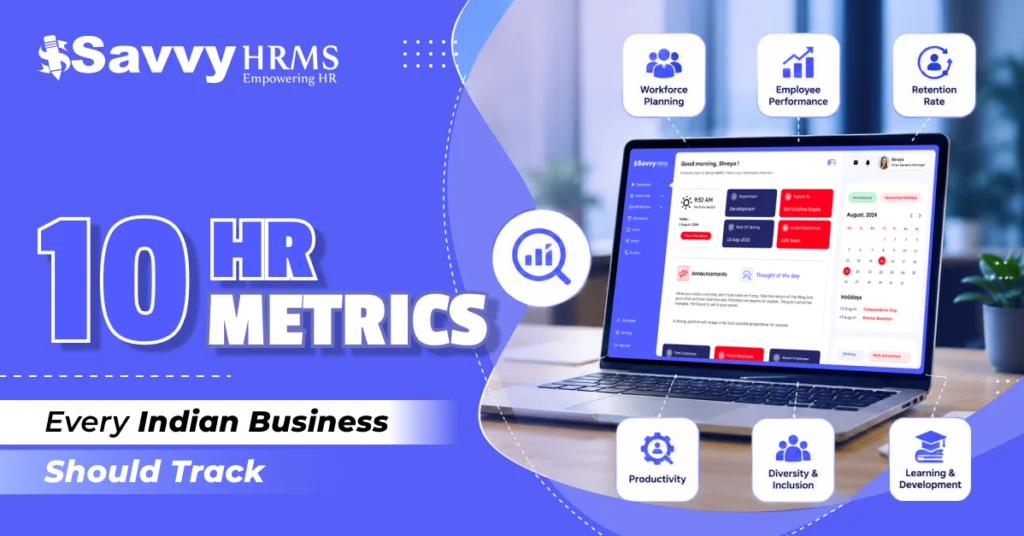
10 HR Metrics Every Indian Business Should Track in 2026


-
AuthorRuchika Rajput
-
 Last Updated
August 01, 2026
Last Updated
August 01, 2026
-
 Reading Time
9 Mins
Reading Time
9 Mins
Running a business today is about much more than hiring the right people. It’s about understanding your workforce, making informed decisions, and creating an environment where employees and the business can grow together.
In 2026, Indian businesses are increasingly depending on data to improve hiring, reduce employee turnover, manage payroll efficiently, and improve overall productivity. This is where HR metrics come into the picture. Instead of making decisions based on assumptions, HR teams can use measurable data to understand what’s working, identify areas for improvement, and build stronger workforce strategies.
Whether you’re a startup, an SME, or a large enterprise, tracking the right HR metrics can help you reduce costs, improve employee satisfaction, and achieve better business outcomes. In this blog, we’ll explore the most important HR metrics every Indian business should monitor in 2026 and how they can contribute to long-term success.
What Are HR Metrics?
HR metrics refer to measures that give organizations an idea about how effectively human resources activities have been performed. Metrics enable organizations to learn about recruiting, employee performance, payroll, attendance, engagement, retention, training, and productivity of the labor force.
In simple words, HR metrics answer questions such as:
- How long is the time required for hiring a person?
- Are employees retained by the organization?
- Is payroll processing done accurately?
- Are employees engaged in work and productive?
- What is the cost involved in recruiting a person?
Through metrics, HR people get the chance to make informed decisions rather than guesswork.
Unlike other reports, metrics assist organizations in making processes effective, lowering costs, and improving employee experience.
Why HR Metrics Matter for Indian Businesses in 2026?
The Indian workplace is developing rapidly. Hybrid work models, AI-driven recruitment, changing labour regulations, and increasing competition for skilled talent mean HR teams need reliable data more than ever.
Here are some reasons why tracking HR metrics has become essential.
1. Better Hiring Decisions
Hiring processes have become highly competitive. Keeping track of hiring metrics allows businesses to pinpoint their hiring process bottlenecks, save money on recruitment, and hire qualified employees faster.
2. Improve Employee Retention
Hiring new employees is costly. Using HR metrics allows for identifying reasons for leaving the organization and ways to retain current employees.
3. Boost Employee Productivity
Monitoring relevant metrics enables businesses to analyze the efficiency of employees and how they contribute to organizational performance.
4. Ensure Payroll Accuracy and Compliance
Payroll errors hurt business reputation and may also result in some compliance issues. Monitoring payroll metrics prevents such mistakes.
5. Make Data-Driven Decisions
HR professionals can make data-based decisions rather than just assume something about the processes.
6. Support Business Growth
Growing companies have a more complicated HR function. HR metrics allow companies to grow their business without losing control over workforce management.
10 HR Metrics Every Indian Business Should Track in 2026
1. Employee Turnover Rate
Employee turnover rate measures the percentage of employees who leave an organization during a specific period.
A high turnover rate often indicates issues related to employee satisfaction, management, compensation, or workplace culture.
Why it matters
- Identifies retention challenges
- Reduces hiring costs
- Improves workforce stability
- Strengthens employer branding
Formula
Employee Turnover Rate = (Employees who left ÷ Average number of employees) × 100
Regularly monitoring turnover trends allows HR teams to take corrective actions before attrition becomes a major business challenge.
2. Time to Hire
Time to Hire measures how quickly a company fills an open position, from the moment a candidate applies until they accept the offer.
In today’s competitive hiring market, skilled candidates often receive multiple job offers. A lengthy recruitment process may result in losing top talent.
Why it matters
- Improves recruitment efficiency
- Reduces vacancy costs
- Enhances candidate experience
- Speeds up business operations
Businesses should regularly evaluate recruitment workflows and automate repetitive tasks to reduce hiring time.
3. Cost per Hire
Hiring involves multiple expenses, including job advertisements, recruitment agencies, assessment tools, background verification, onboarding, and recruiter salaries.
Cost per Hire helps organizations understand how much they spend to recruit each employee.
Why it matters
- Optimizes recruitment budgets
- Measures hiring efficiency
- Identifies unnecessary recruitment expenses
- Supports better workforce planning
Reducing hiring costs without compromising candidate quality should be one of every HR team’s priorities.
4. Employee Absenteeism Rate
Absenteeism refers to the frequency with which employees miss work without planned leave.
While occasional absences are normal, consistently high absenteeism can impact productivity, project timelines, and employee morale.
Why it matters
- Improves workforce planning
- Identifies employee wellness concerns
- Reduces productivity losses
- Helps managers balance workloads
Attendance management software makes tracking absenteeism simple and more accurate.
5. Employee Retention Rate
While turnover focuses on employees leaving, retention measures how successfully an organization keeps its workforce over time.
A higher retention rate generally indicates better employee satisfaction and organizational culture.
Why it matters
- Reduces recruitment costs
- Preserves organizational knowledge
- Improves team stability
- Enhances long-term business growth
Retention strategies should include career development, employee recognition, competitive compensation, and regular feedback.
6. Employee Engagement Score
Employee engagement reflects how emotionally connected employees feel toward their work and the organization.
Engaged employees are generally more productive, innovative, and committed to business success.
Common ways to measure engagement
- Employee surveys
- Pulse surveys
- Feedback sessions
- eNPS (Employee Net Promoter Score)
Why it matters
- Improves productivity
- Reduces turnover
- Strengthens workplace culture
- Increases employee satisfaction
Listening to employee feedback and acting on it is equally important as collecting it.
7. Training Effectiveness
Employee training is an investment, and businesses need to know whether that investment delivers results.
Training effectiveness measures how learning programs improve employee skills, knowledge, and performance.
Why it matters
- Identifies successful training programs
- Improves employee performance
- Enhances career development
- Maximizes learning ROI
Businesses should measure training outcomes through assessments, performance improvements, and employee feedback.
8. Revenue per Employee
Revenue per Employee indicates how effectively a company generates revenue using its workforce.
Although this metric varies across industries, it provides useful insights into workforce productivity.
Why it matters
- Measures business efficiency
- Supports workforce planning
- Helps evaluate organizational performance
- Identifies productivity improvements
This metric should always be analyzed alongside business goals rather than in isolation.
9. Payroll Accuracy Rate
Payroll mistakes can lead to employee dissatisfaction, compliance risks, and unnecessary administrative work.
Payroll Accuracy Rate measures how often salaries are processed correctly without errors.
Why it matters
- Builds employee trust
- Ensures statutory compliance
- Reduces payroll disputes
- Improves operational efficiency
Automated payroll software significantly reduces manual errors and improves payroll accuracy.
10. Overtime Hours
Tracking overtime helps businesses understand workload distribution and workforce utilization.
Occasional overtime is expected, but consistently high overtime may indicate understaffing, inefficient processes, or employee burnout.
Why it matters
- Prevents burnout
- Improves workforce planning
- Controls labour costs
- Supports employee well-being
HR teams should regularly review overtime reports and balance workloads wherever possible.
How Should Indian Businesses Start Tracking HR Metrics?
Tracking HR metrics doesn’t have to be complicated. Even small businesses can begin by focusing on the most relevant workforce indicators.
Here are a few practical steps to get started.
1. Define Your HR Goals
Start by identifying what your business wants to achieve. Are you trying to improve hiring, reduce employee turnover, increase productivity, or strengthen employee engagement? Your goals should determine which HR metrics you prioritize.
2. Track the Right Metrics
Avoid measuring everything at once. Instead, focus on metrics that directly impact your business outcomes. As your HR strategy matures, you can gradually expand your reporting.
3. Automate Data Collection
Manual spreadsheets are time-consuming and prone to errors. An HRMS automatically collects employee data from recruitment, attendance, leave management, payroll, and performance management, making reporting faster and more accurate.
4. Review Reports Regularly
HR metrics are only valuable when they’re reviewed consistently. Monthly and quarterly reports help identify trends, compare performance over time, and take timely corrective actions.
5. Turn Insights into Action
Numbers alone won’t improve your business. The real value comes from acting on the insights. If turnover is rising, investigate the reasons. If hiring takes too long, simplify your recruitment process. If engagement scores are declining, strengthen employee communication and recognition programs.
6. Use an Integrated HRMS
A modern HRMS centralizes employee data and provides real-time dashboards for workforce analytics. This eliminates manual reporting and helps HR teams make faster, data-driven decisions.
Conclusion
As Indian businesses continue to embrace digital transformation, HR metrics have become an essential part of strategic workforce management. They enable organizations to move beyond intuition and make decisions backed by real data.
From improving recruitment and employee retention to ensuring payroll accuracy and boosting productivity, tracking the right HR metrics helps businesses build a stronger, more engaged, and future-ready workforce.
However, collecting and analyzing HR data manually can quickly become confusing as your organization grows. That’s why investing in a reliable HRMS is no longer just an option; it’s a smart business decision.
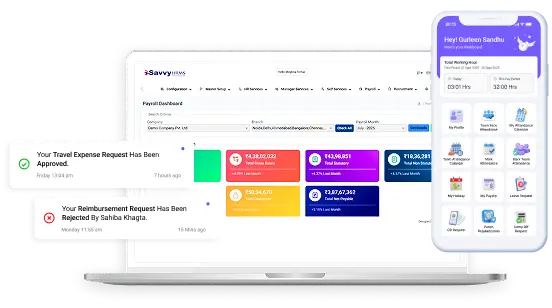
Savvy HRMS simplifies HR management by bringing recruitment, attendance, leave, payroll, performance management, employee records, and advanced HR analytics together on a single platform. With intuitive dashboards and real-time reporting, your HR team can effortlessly monitor critical HR metrics, identify trends, stay compliant, and make informed decisions that support business growth.










Ready to make smarter HR decisions?
Track every important HR metric, automate your HR processes, and empower your workforce with Savvy HRMS.
FAQs
1. What are HR metrics, and why are they important?
HR metrics are measurable indicators that help businesses evaluate the effectiveness of their HR processes, such as hiring, payroll, employee engagement, and retention. Tracking these metrics enables organizations to make data-driven decisions, improve workforce productivity, and support long-term business growth.
2. Which HR metrics should every Indian business track in 2026?
Every business should focus on metrics that directly impact workforce performance and business outcomes, including:
• Employee Turnover Rate
• Time to Hire
• Cost per Hire
• Employee Retention Rate
• Payroll Accuracy Rate
• Employee Engagement Score
• Absenteeism Rate
• Training Effectiveness
• Revenue per Employee
• Overtime Hours
These metrics help improve recruitment, employee satisfaction, operational efficiency, and compliance.
3. How can HR metrics improve business performance?
HR metrics provide valuable insights that help businesses:
• Make better hiring decisions
• Reduce employee turnover
• Improve payroll accuracy
• Increase workforce productivity
• Support strategic business growth
By monitoring these metrics regularly, organizations can identify challenges early and implement effective HR strategies.
4. How can small businesses start tracking HR metrics?
Small businesses can begin by focusing on a few key metrics and gradually expanding their reporting. Best practices include:
• Define clear HR goals
• Track the most relevant metrics
• Automate data collection with an HRMS
• Review reports regularly
• Turn insights into actionable improvements
Using an integrated HRMS simplifies data collection and provides real-time workforce analytics.
5. How does an HRMS help in tracking HR metrics?
An HRMS centralizes employee data and automates HR processes, making it easier to monitor key workforce metrics. It can help businesses:
• Generate real-time HR reports
• Track payroll, attendance, and performance
• Reduce manual errors
• Improve compliance
• Make faster, data-driven decisions
This allows HR teams to focus more on strategic planning and employee development rather than manual reporting.