

CLA Full Form in Salary: What It Means & Why It Matters



-
AuthorRuchika Rajput
-
 Last Updated
June 10, 2026
Last Updated
June 10, 2026
-
 Reading Time
13 Mins
Reading Time
13 Mins
As the employees receive their salary slips each month, they tend to find some abbreviations as well as salary components that might confuse them initially. There is HRA, DA, TA, and even bonuses, among others, but each one of them contributes towards the overall amount of salary an employee receives. One of those terms is CLA.
Salary components are important for employees to be aware of the structure of their salary and even the amount of tax they would have to pay, as well as the benefits that they would receive from it. As far as employers are concerned, a proper structure of salaries ensures transparency.
Therefore, what is CLA in salary? Why do you need to include CLA in the salary structures? And, how does CLA affect the employees?
In this complete blog, we will take you through all the necessary aspects concerning the CLA full form in salary.
What is the Full Form of CLA in Salary?
The CLA stands for Cost of Living Allowance when we talk about the salary.
The allowance, CLA, is an amount that is given to employees to cope with the increasing cost of living due to inflation and various other changes in the economy. It allows employees to remain financially capable in times when their cost of living is increasing due to housing, commuting, education, food, etc.
This allowance is often provided to the workers along with their salaries in several companies and government organizations.
Why Do Companies Include CLA in Salary Structures?
Companies include CLA in salary packages for different reasons:
- To help employees cope with inflation
- To maintain employee satisfaction
- To improve retention and motivation
- To create a competitive compensation package
- To support employees working in expensive cities or regions
In simple words, CLA acts as financial support that helps employees manage everyday expenses more comfortably.
What Does CLA Mean in a Salary Slip?
When you go through your salary certificate carefully, you will find that there is something known as CLA appearing under the column for allowances.
Generally, this comes in association with other elements such as:
- Basic Salary
- House Rent Allowance (HRA)
- Travel Allowance (TA)
- Dearness Allowance (DA)
- Medical Allowance
- Special Allowance
CLA represents the additional amount paid by the employer to adjust for increasing living costs.
Understanding Salary Breakup
1. Fixed Components
The fixed components are the assured components of the salary of an employee, which never change and always stay constant every month, irrespective of the performance and profits made by the company. These components constitute the core of the salary component and serve as a means of financial security.
1. Basic Salary
Basic salary is the very basic component of any salary package. The basic salary is the fixed portion of the salary paid to the employee without the addition of any allowances and before making any deductions from the salary. Other salary components like Provident Fund, gratuity, and bonuses are generally determined based on the basic salary.
2. Fixed Allowances
These are the components added to the basic salary of the employees. Some examples of fixed allowances can be as follows:
- House Rent Allowance
- Cost of Living Allowance
- Medical allowance
- Travel allowance
These allowances are fixed by the company and are usually paid monthly as part of the employee’s regular salary.
2. Variable Components
Variable Components are the payment that depends upon how well the employee performs or how the company operates. This is unlike a monthly salary, which is always certain for all employees.
1. Bonus
The bonus is the extra income given to the employees due to the achievement of certain goals or during certain festivals. An annual performance bonus may also be provided by some organizations for successful business operations.
2. Incentive
The incentive is the extra income given to employees to motivate them in attaining certain objectives. The incentive may be granted to salespeople, marketing experts, and customer service staff.
3. Performance pay
Performance pay is the income earned by employees depending on their performance, either in terms of productivity or effectiveness. It is a significant motivator of employees in most cases.
3. Benefits & Deductions
These include the benefits given to the employees by the employers, as well as the deductions that the employers make from the salaries as per their policies and legal requirements.
1. Provident Fund (PF)
A Provident Fund is a pension fund in which both the employer and the employee contribute an agreed percentage of their basic salary every month. This ensures that the employee builds up financially in the future.
2. Professional Tax
Professional tax is a tax that is deducted from the salary of those who work professionally in some particular states of India. The amount of deduction depends on the rules and salaries fixed by the state governments.
3. Insurance
Several companies offer medical or group insurance to their employees in order to help them face emergencies related to health care in the future.
What is the Purpose of CLA in Employee Salary?
The primary purpose of CLA is to protect employees from the financial burden caused by increasing living expenses.
Benefits for Employees
1. Assists Employees with Increasing Living Expenses
The Corporate Living Allowance assists workers in dealing with inflation by allowing them to cope with growing costs associated with food, transport, accommodation, utility bills, and other necessities of daily life.
2. Improves Monthly Financial Planning
With the assistance of allowance, employees will be able to manage their monthly budget and deal with their expenses easily without being burdened with any financial worries.
3. Enhances Overall Salary Value
The Corporate Living Allowance enhances the total salary package provided to employees, making salaries more advantageous and profitable for employees.
4. Boosts Employee Satisfaction and Happiness
Workers become happy and satisfied with their jobs because companies offer financial assistance, which helps them to maintain their current standard of living.
5. Assists Employees Working in Expensive Areas
The Corporate Living Allowance assists workers who are working in metro areas or other expensive localities to cope with their growing living expenses.
Importance for Employers
1. Employee Retention
Employers who pay their employees with CLA will have better chances of retaining skilled workers because they will not have high employee turnover rates.
2. Increased Productivity
Employees with financial security will always be more productive because financially secure individuals tend to concentrate more on work and become more motivated.
3. Improves Employers’ Reputation
Organizations that compensate their employees fairly and give them certain perks have better chances of building good reputations, thereby attracting better talent.
4. Payroll Flexibility
The implementation of CLA will provide payroll flexibility to employers, who in turn can design compensation programs according to business requirements.
How to Calculate CLA?
There is no universal formula that applies to the calculation of CLA, since all industries have their own compensation formulas.
CLA is normally determined based on:
- Employee’s rank or status
- Work location
- Cost-of-living index
- Organization’s budget
- Industry norms
Common Calculation Methods
1. Fixed Percentage of Basic Salary
There are companies that compute CLA based on a fixed percentage of the basic salary.
Example:
When:
- Basic Salary = ₹40,000
- CLA = 10%
Thus:
- CLA = ₹4,000
2. Location-Based Calculation
Individuals working in metropolitan areas can get a greater CLA since the cost of living in such places is higher.
For instance:
- Worker in Delhi: Greater CLA
- Worker from a small town: Lesser CLA
3. Inflation-based Computation
In many organizations, CLA is determined based on inflation rates each year.
Factors Affecting CLA Amount
Several factors influence CLA calculation:
- City of employment
- Employee seniority
- Organization policies
- Industry type
- Economic conditions
- Government regulations
Is CLA Taxable?
Yes, in most cases, the CLA (cost of living allowance) is taxable. As CLA falls under the category of salary, it will be included in the gross income for the purpose of income tax computation.
Many employees wrongly assume that all allowances listed in the salary slip are tax-exempt. However, in general, the CLA is treated just like any other salary allowance and added to the salary of the employee.
Below is the effect of CLA on salary taxation:
- CLA is added to the gross monthly salary
- It will increase the taxable income of the employee
- Tax deduction will slightly lower the take-home salary
- The amount of tax will depend on the tax slab of the employee
For example, if an employee earns ₹4,000 or ₹5,000 as a CLA each month, then the total amount is included in the annual income calculation of the employee.
However, even though the CLA is taxable, it does not lose its importance for employees struggling to manage living expenses, such as:
- Housing expenses
- Transport costs
- Food expenses
- Utilities charges
- Daily living expenses
In many organizations, the CLA is included in the salary structure so that employees can maintain their purchasing power despite inflation and rising market prices.
What is the difference between HRA & CLA?
| Basis of Difference | HRA (House Rent Allowance) | CLA (Cost of Living Allowance) |
| Full Form | House Rent Allowance | Cost of Living Allowance |
| Purpose | Helps employees manage rental housing expenses | Helps employees cope with rising living costs and inflation |
| Main Benefit | Supports accommodation and rent payments | Supports daily living expenses like food, transport, and utilities |
| Applicability | Given to employees living in rented accommodation | Provided to employees based on the company’s salary policies |
| Tax Benefits | Partial tax exemption available under the Income Tax Act | Generally taxable in most cases |
| Calculation Basis | Based on salary, rent paid, and city of residence | Based on company policy, location, and inflation factors |
| Common Usage | Common in both private and government sectors | More common in private organizations and corporate salary structures |
| Salary Slip Category | Listed under allowances | Listed under allowances |
| Impact on Employees | Reduces housing-related financial burden | Helps maintain purchasing power during inflation |
| Variation by Location | Higher in metro cities | Can vary depending on living costs and company policy |
Who is Eligible for CLA?
Eligibility for CLA depends entirely on the employer’s salary policy.
Industries That Commonly Offer CLA
1. Government Organizations
The government offers CLA to assist its employees in dealing with inflation and ensuring that living standards remain stable regardless of the region and cities.
2. IT Companies
IT companies offer CLA to ensure that their employees who work in costly urban areas can cope with the increased costs of living and commuting.
3. Manufacturing Industries
Manufacturing industries provide CLA to their employees to offset increasing city operational costs and improve workforce happiness and financial stability.
4. MNCs
MNCs offer CLA to ensure that their salaries are competitive and assist their employees who operate in costly international cities.
5. Corporate Businesses
Corporate businesses employ CLA to ensure better employee retention, competitive payrolls, and assistance to employees dealing with increased living costs.
6. Public Sector Organizations
Public sector organizations provide CLA as a means of compensation policy intended to assist their employees during economic changes and inflation.
Employee Categories Eligible for CLA
1. Full-Time Employees
CLA is given to full-time employees as part of their remuneration package in order to deal with rising daily living expenses.
2. Permanent Employees
Permanent employees receive CLA because of continuous monetary support from the organization through its well-thought-out employee compensation program.
3. Senior Executives
Higher CLA could be provided to senior executives on account of their greater responsibilities, need to relocate, and high living standards.
4. Metro City Employees
CLA is given to employees of metro cities in order to cope with rising living expenses associated with accommodation, travel, and food costs.
5. Field Employees
Field employees receive CLA in order to meet their travel and living expenses.
What are the Advantages of CLA for Employees?
CLA offers various benefits that improve employee financial well-being.
1. Financial Assistance in Times of Inflation
CLA can assist workers in dealing with inflationary pressures regarding rental costs, food prices, transport costs, and utility bills without causing various financial strains or instability.
2. Optimized Salary System
The inclusion of CLA in salary systems makes the payroll system transparent and structured, providing flexibility and benefits for employees.
3. Enhanced Worker Morale
When allowances are provided to workers to cover basic needs, they feel valued, and motivation levels rise.
4. Improved Standard of Living
Employees working in costly urban areas can maintain an acceptable standard of living and deal with rising monthly costs.
5. Competitive Compensation
Companies offering CLA have competitive pay packages, which help recruit talented professionals and retain employees over the long run.
Example of CLA in a Salary Structure
Let’s look at a simple salary breakup example.
| Salary Component | Amount |
| Basic Salary | ₹35,000 |
| HRA | ₹14,000 |
| CLA | ₹4,000 |
| Travel Allowance | ₹2,000 |
| Medical Allowance | ₹1,500 |
| Gross Salary | ₹56,500 |
Suppose Rahul works in Delhi for a private IT company.
Since Delhi has a high cost of living, the company provides Rahul with a monthly CLA of ₹5,000 to support expenses like:
- Transportation
- Food
- Rent
- Daily essentials
This additional amount helps Rahul manage rising living costs more comfortably.
Why Understanding CLA is Important for Employees?
Understanding CLA is very important for every employee because the salary structure directly affects financial planning.
1. Improved Salary Negotiations
Employees familiar with CLA and the salary components would be in a position to bargain for better remuneration packages.
2. Payroll Transparency
CLA would enable employees to explain their pay slips correctly and avoid any confusion about allowances, deductions, and other salary components.
3. Better Tax Planning
When employees know how the CLA affects the computation of salary, they will be able to plan their taxes better.
4. Financial Awareness
Employees would be able to make sound financial decisions by understanding various salary components.
5. Smarter Career Decisions
Employees would be able to make informed career choices if they understood how salaries were structured.
Role of HRMS Software in Managing CLA
Modern HRMS software simplifies payroll and allowance management for businesses.
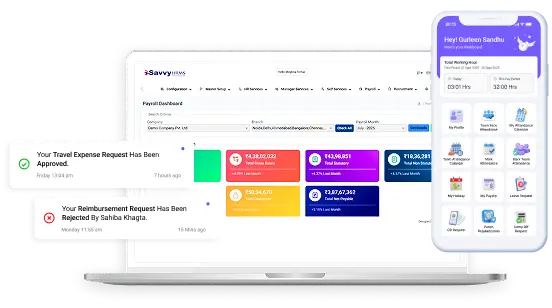
With advanced HRMS solutions like Savvy HRMS, organizations can:
1. Automate Salary Calculations
The automation of salary calculations allows quicker processing of salaries and ensures the accuracy of the payment without any delays in payroll processing on a regular basis.
2. Manage CLA Efficiently
Organizations can automate CLA management with HRMS software and calculate allowances on the basis of organizational policies and employee segments.
3. Ensure Payroll Accuracy
Through automated payroll management, human errors can be reduced, and the process of salary processing, along with deductions and allowances, will be accurate.
4. Generate Transparent Salary Slips
The HRMS system provides transparent salary statements that make it easy for employees to understand deductions, allowances, taxes, and salary details.
5. Handle Tax Compliance
Modern HRMS systems simplify tax calculation processes and facilitate compliance with payroll tax laws and regulations for organizations.
6. Reduce Manual Payroll Errors
The automation of payroll helps reduce dependence on manual payroll processing and minimize errors in salary processing and payroll management.
For HR teams, automated payroll systems save time and improve employee satisfaction through accurate salary processing.
Conclusion
CLA is one of the important components of the salary that enables employees to handle the rising cost of living.
As an employee reading your salary slip or even as an HR professional setting up pay structures, knowing what CLA stands for is very important.
Let us now look at some of its salient features:
- CLA supports the employees financially
- It is often taxed
- Depends on the industry and the place
- Makes the salary structure more competitive
- Enables the employees to lead a better life
In today’s highly competitive business world, it becomes extremely important to have well-defined salary structures. Utilizing modern payroll systems like Savvy HRMS will enable the organization to manage allowances such as CLA effectively.
Understanding salary components like CLA will enable employees to make more informed career decisions as well as negotiate for better pay packages.
Simplify payroll and manage CLA accurately with Savvy HRMS, smarter, faster, and more transparent payroll management.
Book a Demo Today