

Salary Increment Letter Format, Calculation, and Free Templates for Employees


-
AuthorRuchika Rajput
-
 Last Updated
June 03, 2026
Last Updated
June 03, 2026
-
 Reading Time
14 Mins
Reading Time
14 Mins
Salary growth is one of the largest parts that keeps employees motivated and committed to their organization. Whether you are an HR professional, employer, manager, or employee, understanding the complete process of a salary increment is important. From writing a salary increment letter to accurately calculating the increment percentage, every step plays an important role in maintaining transparency and employee management.
A professionally written salary increment letter not only notifies employees about their revised salary but also builds up trust between employers and employees. In the same way, employees often need a salary increment request letter to formally ask for an increment on the basis of performance, promotion, or increased responsibilities.
In this detailed blog, we will cover everything you need to know about salary increment letters, salary increment applications, calculation methods, free templates, and salary hike expectations in both private and government sectors.
What is a Salary Increment Letter?
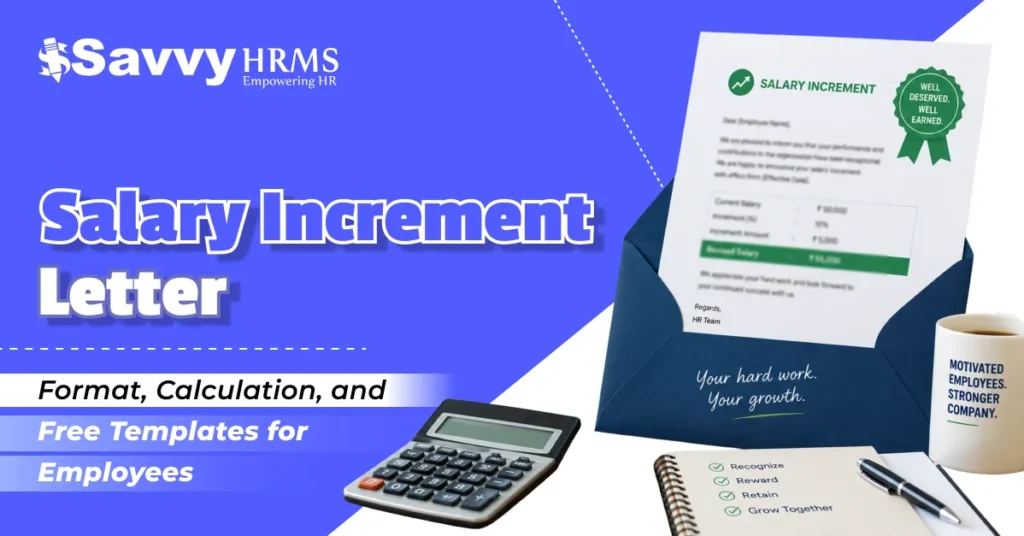
A salary increment letter is an official document issued by an employer to an employee that contains the information about their salary increment. It acts as a formal confirmation of the increased salary structure and normally includes details such as the previous salary, increment amount, revised salary, effective date, and reason for the increment.
A salary increment letter is commonly issued during:
- Annual appraisals
- Employee promotions
- Exceptional performance reviews
- Role or responsibility changes
- Retention strategies
- Company-wide salary revisions
The salary increment letter is necessary for both employers and employees because it gives written proof of the revised salary.
For employees, this document becomes useful during:
- Income verification
- Loan applications
- Tax filing
- Future job changes
- Salary negotiations
For employers and HR teams, a salary increment letter ensures transparency and professionalism in salary negotiation.
Most of the employees also submit a salary increment request letter when they believe they deserve an increment due to performance or market standards.
Why is a Salary Increment Letter Important?
A salary increment letter helps organizations:
- Improve employee satisfaction
- Increase maintenance rates
- Boost employee trust
- Maintain proper payroll documentation
- Ensure transparent salary communication
For employees, receiving a salary increment letter is also seen as recognition for hard work and dedication.
Key Components of a Salary Increment Letter
A professional salary increment letter format should include all necessary information clearly. Missing information can create confusion and unnecessary issues.
Here are the important elements every salary increment letter must contain:
1. Employee Information
The salary increment letter should clearly specify the employee’s basic information to avoid any confusion and maintain proper documentation. This part normally includes:
- Employee name
- Employee ID
- Designation
- Department
- Location or branch (if applicable)
Adding these details helps HR and payroll teams identify the employee correctly and ensures precise salary processing.
2. Date of Issue
Date of Issue is an important section of the salary increment letter because it acts as an official reference for future documentation and salary records. It also helps decide when the revised salary structure was communicated to the employee.
The date should be clearly mentioned at the top of the letter for future reference and compliance purposes.
3. Subject Line
The subject line gives a quick understanding of the purpose of the letter. It should be short, professional, and clearly indicate that the document relates to salary revision or increment.
Examples include:
- Salary Increment Letter
- Revision of Salary Structure
- Salary Increase Notification
- Annual Salary Revision Letter
A proper subject line makes the letter more organized and easier to track in employee records.
4. Increment Details
This is the most important part of the salary increment letter. It gives complete information about the revised salary increment structure and explains the changes made to the employee’s current salary.
This section should include:
- Current salary
- Increment amount or percentage
- Revised salary
- Effective date of increment
- Any changes in allowances or benefits (if applicable)
Clearly mentioning these details helps employees understand their updated salary package without any confusion.
5. Reason for Salary Increment
Mentioning the reason behind the salary increment adds transparency and helps employees feel identified for their efforts and contributions. It also reflects fairness in the performance appraisal process.
The reasons may include:
- Outstanding performance
- Promotion
- Annual appraisal
- Increased responsibilities
- Market salary correction
- Achievement of targets or goals
A well-defined reason motivates employees and strengthens trust within the organization.
6. Appreciation Note
Including an appreciation note makes the salary increment letter more positive and inspiring. It shows that the organization values the employee’s hard work, dedication, and contribution to the company’s growth.
Example:
“We appreciate your dedication and valuable contribution to our organization and look forward to your continued support and performance.”
A well-appreciative message can enhance employee confidence and engagement.
7. Authorized Signature
The salary increment letter should always include the signature of the authorized person to make the document official and valid. This confirms that the salary revision has been approved by the management team.
The letter may be signed by:
- HR manager
- Reporting manager
- Director
- Authorized signatory
In some organizations, the company’s digital signature may also be added for confirmation.
Application of Salary Increment
An application for a salary increment is a formal request submitted by an employee to the manager to ask for a salary increment. Employees generally write a salary increment application when they feel their compensation no longer matches their contribution, experience, or market standards.
A salary increment application letter should always be professional, polite, and well-structured.
Common Reasons for Asking for a Salary Increment
Employees may write a request for a salary increment because of:
- Excellent performance
- Increased workload
- Promotion without salary revision
- Industry salary standards
- Additional responsibilities
- Long-term contribution
- Skill upgrades or certifications
Tips for Writing an Application for a Salary Increment
When drafting a salary increment application, employees should:
- Keep the tone professional
- Mention achievements clearly
- Avoid emotional language
- Include appreciable contributions
- Mention market comparisons if relevant
- Clearly mention salary expectations
Simple Salary Increment Request Letter Example
Dear Manager,
I hope you are doing well. I would like to formally request a salary increment considering my performance and contributions to the organization over the past year.
During this period, I successfully handled additional responsibilities and consistently achieved my targets. I believe my current compensation can be revised in line with my contributions and industry standards.
I would appreciate your consideration regarding my request for salary increment.
Thank you for your time and support.
Sincerely,
Employee Name
This simple salary increment request letter is suitable for employees who want a professional and respectful tone.
How to Draft a Professional Salary Increment Letter?
Drafting a professional salary increment letter needs clarity, professionalism, and a positive process. Whether you are an HR manager, employer, or team leader, the letter should clearly communicate the salary revision while maintaining a respectful and encouraging tone.
A well-written salary increment letter format helps employees understand their revised increment in salary and also shows the company’s professionalism.
1. Collect Necessary Information
Before drafting the salary increment letter, collect all the required employee and salary information to avoid issues and mistakes.
Important information includes:
- Employee name and ID
- Designation and department
- Current salary
- Increment percentage or amount
- Revised salary
- Effective date of increment
- Performance review details
Correct information ensures the salary increment letter remains professional and error-free.
2. Use Professional Formatting
Always follow a clean and formal salary increment letter format. A professionally formatted letter improves readability and creates a positive impression.
Best formatting practices include:
- Use official company letterhead
- Add proper date and subject line
- Use professional fonts and spacing
- Keep paragraphs short and clear
- Mention salary details in an organized manner
A proper format of a salary increment letter also helps HR teams maintain compatible documentation.
3. Open with Positive Tone
The opening paragraph should create a positive and encouraging feeling for the employee.
For example:
“We are pleased to inform you that your salary has been revised based on your excellent performance and contribution to the organization.”
Starting the salary increment letter with appreciation makes employees feel valued and motivated.
4. Link Performance to Reward
A professional salary increment letter should clearly connect the salary hike with the employee’s performance, contribution, or achievements.
Mentioning achievements such as:
- Meeting business targets
- Taking additional responsibilities
- Improving productivity
- Supporting team growth
- Displaying leadership qualities
helps employees understand why they received the increment.
This also promotes better performance and strengthens employee engagement.
5. Maintain Confidentiality
Salary information is sensitive and should always remain confidential.
When preparing salary increment letters:
- Share letters only with authorized employees
- Avoid discussing employee salary details publicly
- Use secure HRMS or payroll systems for salary negotiation
- Restrict access to salary documents
Maintaining confidentiality builds employee trust and ensures professional HR practices.
Best Practices for Salary Increment Letter Writing
- Use simple language
- Avoid confusing salary terms
- Keep formatting professional
- Double-check salary calculations
- Ensure compliance with company policy
Salary Increment Letter Format
[Company Letterhead]
Date: __________
To,
Employee Name
Designation
Department
Subject: Salary Increment Letter
Dear Employee Name,
We are pleased to inform you that your salary has been revised based on your performance and valuable contributions to the organization.
Your dedication, professionalism, and achievement of key goals during the recent appraisal period have been admirable. Your contributions in [mention specific achievements] have positively impacted the team and organizational objectives.
Salary Increment Details:
- Current Monthly Salary: ₹________
- Revised Monthly Salary: ₹________
- Increment Percentage: _______%
- Effective Date: __________
We appreciate your dedication, hard work, and commitment toward the company’s growth.
We look forward to your continued contribution and wish you success in your future endeavors.
Best Regards,
Authorized Signatory
Company Name
Note: This format of salary increment letter can be customized according to company policies.
Templates for Salary Increment Letters
Here are some useful templates for different situations.
Template 1: Performance-Based Salary Increment
[Company Letterhead]
Date: __________
To,
Employee Name
Designation
Department
Subject: Salary Increment Based on Performance
Dear Employee Name,
We are pleased to inform you that your salary has been revised in recognition of your outstanding performance and valuable contribution to the organization.
Your dedication, commitment, and consistent efforts have played an important role in achieving team and business goals.
Salary Increment Details
- Current Monthly Salary: ₹________
- Revised Monthly Salary: ₹________
- Increment Percentage: _______%
- Effective Date: __________
We appreciate your hard work and look forward to your continued success with the organization.
Best Regards,
Authorized Signatory
Company Name
Template 2: Annual Increment Letter
[Company Letterhead]
Date: __________
To,
Employee Name
Designation
Department
Subject: Annual Salary Increment Letter
Dear Employee Name,
As part of the annual appraisal process, we are happy to inform you that your salary has been revised effective from __________.
Your efforts and contributions throughout the year are sincerely appreciated.
Salary Increment Details
- Current Annual Salary ₹________
- Revised Annual Salary: ₹________
- Monthly Increment: ₹________
- Increment Percentage: _______%
- Effective Date: __________
We thank you for your continued dedication and wish you success in your future responsibilities.
Best Regards,
Authorized Signatory
Company Name
Template 3: Promotion with Salary Increment
[Company Letterhead]
Date: __________
To,
Employee Name
Designation
Department
Subject: Promotion and Salary Increment Letter
Dear Employee Name,
Congratulations on your promotion to the position of __________.
In recognition of your excellent performance, leadership qualities, and contribution to the organization, we are pleased to revise your compensation package.
Revised Salary Package
- Current Designation: ________
- New Designation: ________
- Current Monthly Salary: ₹________
- Revised Monthly Salary: ₹________
- Increment Percentage: _______%
- Effective Date: __________
We are confident that you will continue to excel in your new role and contribute significantly to the company’s growth.
Congratulations once again, and we wish you continued success.
Best Regards,
Authorized Signatory
Company Name
Factors Influencing Salary Increments
Various factors determine how much salary increment an employee receives.
1. Employee Performance
Employee performance plays an important role in salary increment decisions, as organizations reward employees who consistently achieve targets and contribute to overall organizational success.
2. Company Performance
Organizations with strong financial performance and higher profits are more likely to offer better salary increments and attractive compensation benefits to employees.
3. Industry Standards
Many companies compare employee salaries with current market trends to ensure competitive compensation and keep skilled professionals within the organization.
4. Employee Skills
Employees possessing specialized certifications, technical expertise, or in-demand skills often receive higher salary increments due to their increased organizational value.
5. Experience Level
Employees with more industry experience and proven expertise generally receive better salary revisions because of their knowledge and contribution to organizational growth.
6. Promotions and Role Changes
Promotions and role changes generally result in salary increments because employees take on additional responsibilities, leadership duties, and higher performance expectations.
7. Inflation and Cost of Living
Many organizations revise employee salaries regularly to balance increments, rising living expenses, and maintain employee satisfaction and financial stability.
How to Calculate Salary Increment Percentage?
Understanding how to calculate salary increment percentage is important for both employees and HR professionals.
A salary increment calculator helps determine how much salary increase an employee receives.
Salary Increment Formula:
| Salary Increment Percentage = ((New Salary − Current Salary) ÷ Current Salary) × 100 |
How HR Teams Use Salary Increment Calculators?
A salary increment calculator helps HR teams:
- Reduce manual errors
- Enhance payroll accuracy
- Standardize appraisal calculations
- Ensure transparency
Modern HRMS software can automatically calculate salary increment percentages and generate salary increment letters instantly.
What to Include in Your Salary Increment Email?
A salary increment email should be concise, professional, and respectful.
Important Elements of Salary Increment Email
Include:
- Proper greeting
- Reason for request
- Achievements and contributions
- Salary discussion request
- Appreciation note
Sample Salary Increment Email
Subject: Request for Salary Increment
Dear Manager,
I hope you are doing well.
I would like to request a discussion regarding a possible salary increment, considering my contributions and responsibilities over the past year.
I have consistently achieved my targets and contributed to key organizational goals. I believe this may be a suitable time to review my compensation.
Thank you for your time and consideration.
Regards,
Employee Name
Employee Designation
Department
Mistakes to Avoid While Asking for a Salary Increment
- Being aggressive
- Comparing salaries negatively
- Using emotional arguments
- Sending informal messages
- Making unrealistic demands
How Much Salary Increment Per Year in the Private Sector?
Salary increments in the private sector mainly depend on:
- Industry
- Company size
- Employee performance
- Economic conditions
- Skills and experience
Average Salary Increment in India
In many private companies, annual salary increments range between:
- 5% to 10% for average performers
- 10% to 20% for high performers
- 20% or more for promotions or critical roles
Industry-Wise Salary Hike Trends
1. IT Industry
Employees in IT and software development often receive:
- 8% to 15% annual increments
2. Sales and Marketing
Performance-based roles may receive:
- 10% to 25% hikes
3. Manufacturing
Average increments generally range between:
- 5% to 12%
4. Startups
Startups may offer:
- Lower fixed hikes
- Better variable pay
- ESOPs or bonuses
How Salary Increase for Government Employees?
Government employee salary increments are usually more structured compared to those in private organizations.
Government Salary Revision System
Government salary increments are generally based on:
- Pay commission recommendations
- Fixed annual increments
- Grade pay revisions
- DA (Dearness Allowance) revisions
- Promotions
Annual Increment in Government Jobs
Most government employees receive:
- Fixed annual increments
- Pay scale revisions after the pay commission updates
Key Benefits of Government Salary Structure
- Predictable increments
- Stable salary structure
- Pension benefits
- Regular allowance revisions
Unlike the private sector, government salary increments are less performance-driven and more policy-based.
How Much Salary Hike to Expect When Changing Jobs?
Switching jobs is one of the most common ways employees achieve significant salary growth.
Average Salary Hike During Job Change
Employees changing jobs can generally expect:
- 20% to 40% salary hike
- Higher hikes for niche skills
- Better offers during talent shortages
Factors Affecting Salary Hike During Job Change
1. Skills and Experience
Employees with advanced technical expertise, certifications, and relevant industry experience often receive better salary hikes during job changes and promotions.
2. Industry Demand
Industries experiencing skill shortages or rapid growth usually offer higher compensation packages to attract and keep qualified professionals effectively.
3. Negotiation Skills
Strong salary negotiation skills help employees secure better compensation packages, benefits, and incentives during appraisals or while changing jobs.
4. Current Salary Package
An employee’s current salary package significantly impacts the new offer, as companies often calculate hikes based on existing compensation.
Conclusion
A salary increment is more than just a salary hike; it reflects employee recognition, motivation, and career growth. Using the right salary increment letter format and clear communication helps organizations maintain transparency and employee satisfaction. Managing salary increments manually can be challenging for HR teams. Savvy HRMS simplifies the entire process by automating salary revisions, appraisal management, payroll calculations, and salary increment letters, helping businesses save time and improve HR efficiency.
Ready to simplify your salary increment process? Explore Savvy HRMS and simplify your HR operations today.
Book a Demo Today