

6 Best HR Software for Restaurants in India: Employee Scheduling, Payroll & Compliance


-
AuthorChandra Shekhar Verma
-
 Last Updated
September 05, 2026
Last Updated
September 05, 2026
-
 Reading Time
19 Mins
Reading Time
19 Mins
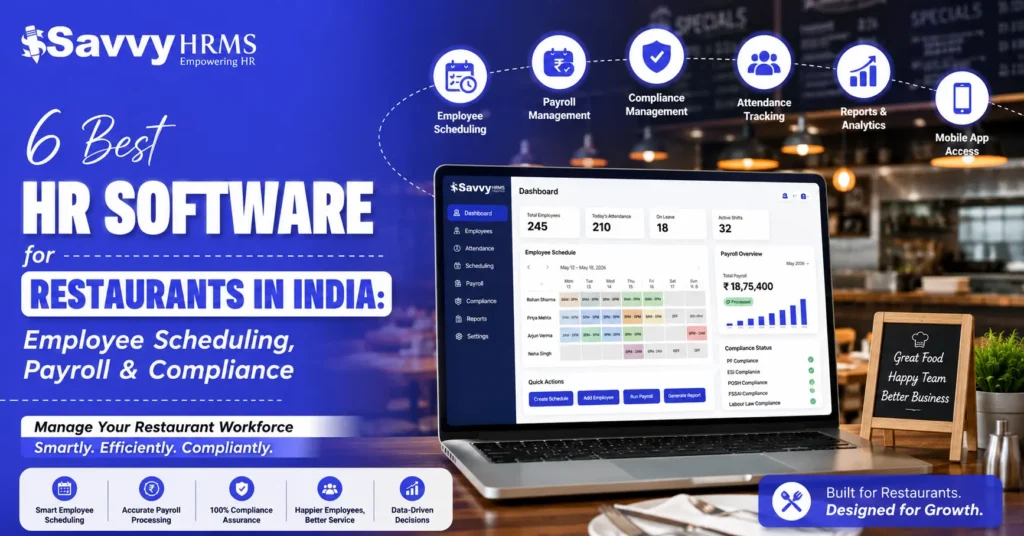
Best HR software for restaurants in India helps restaurant owners and HR teams manage employee scheduling, attendance, payroll, shifts, overtime, compliance, and workforce operations from one platform. With restaurants operating across multiple shifts and locations, the right solution can reduce manual work and improve accuracy.
Restaurant businesses need more than basic payroll processing. They require tools that can handle hourly employees, changing shifts, attendance, overtime, leave management, payroll calculations, and employee records while keeping HR processes organized across different teams and outlets.
For growing restaurant chains, centralized HR technology can simplify workforce management across multiple locations. In this guide, we compare 6 HR platforms including Savvy HRMS, Zoho People, ZingHR, Kredily, Qandle, and HRMantra to help restaurant businesses identify a solution that fits their workforce and operational requirements.
Why Do Restaurants Need Specialized HR Software?
Restaurant businesses have unique workforce needs, with employees working rotating shifts, weekends, holidays, extended hours, and different schedules. Managing attendance, leave, overtime, employee records, and payroll manually can become time-consuming, especially as restaurants expand.
HR software centralizes employee information, attendance, scheduling, leave, payroll, and workforce processes in one platform. For multi-location restaurant chains, it also helps standardize HR operations, improve visibility across outlets, reduce administrative work, and make everyday workforce management more organized.
The right restaurant HR software can help businesses:
- Create and manage employee schedules.
- Track attendance and working hours.
- Manage leave and holidays.
- Monitor overtime and extra working hours.
- Automate payroll-related processes.
- Maintain employee records centrally.
- Improve HR communication and approvals.
- Support labour and payroll compliance.
- Manage employees across multiple restaurant locations.
- Reduce repetitive administrative work.
In short, specialized HR software helps restaurant businesses spend less time managing HR administration and more time focusing on employees, customers, and business growth.
How Did We Rank This HR Software for Restaurants in India?
To identify the best HR software for restaurants in India, we evaluated each platform based on the workforce-management requirements that matter most to restaurant businesses.
Our evaluation focuses not only on the number of HR features available but also on how effectively each platform can support restaurant employees, managers, HR teams, and growing multi-location businesses.
Our Evaluation Criteria
We considered the following factors while comparing these HR platforms:
- Employee Scheduling: The ability to organize employees around different shifts, departments, working patterns, and business requirements.
- Attendance Management: Availability of tools for tracking employee attendance, working hours, leave, late arrivals, and other attendance-related information.
- Payroll Management: The platform’s ability to simplify salary processing and manage payroll-related employee data accurately.
- Shift & Overtime Management: Support for shift-based workforces and tracking additional working hours.
- Compliance Support: Capabilities that can help businesses manage statutory payroll and HR requirements.
- Multi-Location Management: Suitability for restaurant chains operating multiple outlets or business locations.
- Employee Self-Service: Availability of employee-facing tools for leave, attendance, documents, requests, and HR information.
- Integration Potential: The ability to connect HR processes with other business systems where required.
- Scalability: Whether the platform can support a restaurant as its workforce and number of locations grow.
- Overall Restaurant Fit: How well the platform’s overall HR capabilities align with the operational needs of restaurants and hospitality businesses.
Note: Feature availability, integrations, pricing, and implementation options can vary by plan and may change over time. Restaurants should verify the latest details with each software provider before making a purchase decision.
At a Glance: 6 Best HR Software for Restaurants in India
| Rank | HR Software | Best For | Overall Fit |
| 1 | Savvy HRMS | Growing restaurants and multi-location businesses | Excellent |
| 2 | Zoho People | Restaurants seeking flexible HR management | Very Good |
| 3 | ZingHR | Enterprise and large workforce management | Very Good |
| 4 | Kredily | Businesses seeking accessible HR and payroll tools | Good |
| 5 | Qandle | Modern employee management and HR workflows | Good |
| 6 | HRMantra | Comprehensive HR and payroll management | Good |
1. Savvy HRMS
Overview
Savvy HRMS is a comprehensive HRMS platform designed to simplify employee management, attendance, payroll, leave, performance, recruitment, and compliance. For restaurants, it can help centralize workforce operations and support businesses managing employees across growing teams and multiple locations.
Key Capabilities
- Centralized employee information for restaurant workforce management.
- Attendance tracking across employees, teams, and locations.
- Shift management for restaurant-based working schedules.
- Leave management with simplified approval workflows.
- Payroll processing and salary-related HR automation.
- Employee self-service for everyday HR requests.
- Reports and dashboards for workforce visibility.
- HR workflows that reduce repetitive administrative tasks.
- Support for managing growing multi-location restaurant teams.
- Integrated HR processes through a centralized platform.
Who Should Choose Savvy HRMS?
Savvy HRMS is suitable for restaurants, hospitality businesses, and large restaurant chains that want centralized HR management. It can be a strong choice for businesses looking to manage attendance, payroll, leave, employee records, and workforce processes through one scalable HRMS platform.
Who Might Not Need Savvy HRMS?
Very small restaurants with only a handful of employees and minimal HR administration may not require a comprehensive HRMS immediately. Businesses managing only basic employee records or payroll may prefer a simpler solution until their workforce, locations, shifts, and HR requirements become more complex.
Best For
Growing and large restaurants, restaurant chains, hospitality businesses, and multi-location organizations looking for an integrated HRMS for workforce management, payroll, attendance, and HR operations.
How Savvy HRMS Supports HR Operations at Mannat Group of Hotels
Mannat Group of Hotels, with 2,000+ employees, uses Savvy HRMS to simplify attendance, payroll, leave, performance, tax, travel, and expense management. The centralized platform helps improve workforce visibility, simplify HR processes, and support better manpower planning across its hospitality operations.
Key Highlights include:
- Managed attendance through biometric integration
- Simplified payroll and salary processing
- Simplified leave and performance management
- Improved workforce and manpower planning
- Reduced overtime through better workforce visibility
- Centralized travel and expense management
- Simplified tax management and compliance
- Provided dashboards for better HR insights
2. Zoho People
Overview
Zoho People is an HR management platform offering tools for employee information, attendance, leave, performance, and HR workflows. It can suit restaurants looking for flexible HR management and integration within a broader business software ecosystem.
Key Capabilities
- Employee records and centralized HR information.
- Attendance and time tracking capabilities.
- Leave management and approval workflows.
- Performance management and employee reviews.
- Customizable HR workflows and processes.
- Integration with broader business applications.
Who Should Choose Zoho People?
Zoho People can be suitable for restaurants that want a flexible HR platform and already use other Zoho business applications. It may particularly appeal to businesses looking for configurable HR workflows, employee management, attendance, leave, and broader software integration.
Who Might Not Need Zoho People?
Restaurants looking for an extremely simple HR tool with only basic employee records and attendance may find a broader HR platform unnecessary. Businesses with highly specialized restaurant workforce requirements should also evaluate whether the available scheduling and operational capabilities match their exact needs.
Best For
Restaurants and hospitality businesses seeking flexible HR management and integration with a wider business software ecosystem.
3. ZingHR
Overview
ZingHR is a cloud-based HR technology platform focused on workforce management, employee lifecycle processes, payroll, attendance, and enterprise HR operations. Its broader feature set can make it suitable for larger restaurant and hospitality organizations.
Key Capabilities
- Comprehensive employee lifecycle management.
- Attendance and workforce tracking tools.
- Payroll and compensation management capabilities.
- Recruitment and onboarding workflows.
- Performance management and employee development.
- Enterprise-focused HR automation and analytics.
Who Should Choose ZingHR?
ZingHR may suit larger restaurant groups, hospitality organizations, and enterprises with complex HR requirements. Businesses managing large employee populations can consider it when they need broader workforce management, employee lifecycle processes, payroll capabilities, and structured HR operations.
Who Might Not Need ZingHR?
Small independent restaurants with straightforward HR requirements may not need an enterprise-oriented HR platform. If a business has a limited workforce, one location, and basic attendance and payroll requirements, a simpler HR solution may provide sufficient functionality without unnecessary complexity.
Best For
Large restaurant chains, hospitality organizations, and enterprises managing complex workforce and HR operations.
4. Kredily
Overview
Kredily is an HR and payroll platform focused on employee management, payroll, attendance, and related HR processes. It can be considered by restaurants and growing businesses looking for accessible tools to organize everyday workforce administration.
Key Capabilities
- Employee management and HR administration.
- Attendance tracking for employees.
- Payroll and salary management tools.
- Leave management and employee requests.
- Employee self-service and HR accessibility.
- Basic workforce reporting and administration.
Who Should Choose Kredily?
Kredily can be considered by small and growing restaurants that need to organize employee records, attendance, leave, and payroll processes. It may appeal to businesses transitioning from spreadsheets or manual HR administration to a centralized digital HR management platform.
Who Might Not Need Kredily?
Restaurants with highly complex multi-location structures or advanced workforce-management requirements should evaluate whether the platform offers the depth they need. Businesses requiring extensive customization, sophisticated scheduling, or complex enterprise workflows may need to compare more specialized options.
Best For
Small and growing restaurants looking for accessible employee management, attendance, leave, and payroll capabilities.
5. Qandle
Overview
Qandle is an HRMS platform designed to manage employee lifecycle processes, HR workflows, attendance, leave, payroll, and other workforce activities. Its digital HR approach can support restaurants looking to simplify employee administration.
Key Capabilities
- Employee lifecycle management and HR workflows.
- Attendance and time management capabilities.
- Leave management with digital approvals.
- Payroll and employee compensation processes.
- Employee self-service and HR requests.
- HR reports and workforce insights.
Who Should Choose Qandle?
Qandle can suit restaurants and hospitality businesses that want to digitize employee management and automate common HR workflows. It can be considered by growing organizations looking for centralized employee data, attendance, leave, payroll, and employee self-service capabilities.
Who Might Not Need Qandle?
Very small restaurants with minimal employees may not need a complete HRMS if their HR processes are still straightforward. Organizations with highly specialized scheduling, complex outlet structures, or unique workforce rules should assess the platform against their specific operational requirements.
Best For
Growing restaurants seeking digital HR workflows, employee management, attendance, leave, payroll, and self-service capabilities.
6. HRMantra
Overview
HRMantra is an HR and payroll software platform covering employee management, attendance, payroll, recruitment, performance, and other HR processes. Its broad functionality can support restaurants seeking centralized workforce and payroll administration.
Key Capabilities
- Employee information and HR administration.
- Attendance and time management functionality.
- Payroll and salary processing capabilities.
- Recruitment and onboarding management tools.
- Leave and employee management workflows.
- HR reporting and workforce administration.
Who Should Choose HRMantra?
HRMantra can be considered by restaurants that want a broad HR and payroll platform covering multiple employee lifecycle processes. It may work well for businesses that prefer centralized HR administration instead of managing attendance, payroll, employee data, and other activities separately.
Who Might Not Need HRMantra?
Small restaurants with limited employees and simple HR processes may find a comprehensive HR platform more than they currently need. Businesses looking specifically for highly specialized restaurant scheduling or operational workforce tools should compare capabilities carefully before selecting a platform.
Best For
Restaurants and hospitality businesses looking for comprehensive HR, attendance, payroll, and employee management capabilities.
| HR Software | Best For | Biggest Advantage | Potential Integration | Ideal Employee Size |
| Savvy HRMS | Growing, large, and multi-location restaurants | Comprehensive HR and workforce management | Payroll, attendance, business systems | Small to large |
| Zoho People | Flexible HR management | Broader business ecosystem | Zoho and third-party applications | Small to mid-sized |
| ZingHR | Enterprise workforce management | Broad enterprise HR capabilities | Enterprise business systems | Mid-sized to large |
| Kredily | Small and growing businesses | Accessible HR and payroll management | Payroll and business tools | Small to mid-sized |
| Qandle | Digital HR workflows | Modern employee management | Business and HR applications | Small to mid-sized |
| HRMantra | Comprehensive HR and payroll | Broad HR functionality | Payroll and business systems | Mid-sized to large |
What Features Should You Look for in Restaurant HR Software?
Choosing HR software for restaurants requires looking beyond basic employee record management. The platform should address the operational realities of restaurant workforces, including rotating shifts, attendance variations, overtime, multiple locations, and payroll requirements.
1. Employee Scheduling
Restaurant schedules can change frequently based on business demand, employee availability, weekends, holidays, and peak hours. Look for scheduling capabilities that help managers organize employees according to shifts and departments.
2. Attendance Management
The software should make it easy to capture and review employee attendance. Accurate attendance data is particularly important when employee working hours directly influence payroll.
3. Shift Management
Restaurant employees may work morning, afternoon, evening, night, or rotating shifts. Effective shift management helps managers maintain workforce visibility and reduce scheduling confusion.
4. Overtime Tracking
Extra working hours can affect payroll costs. HR software should help businesses track overtime accurately and maintain a clear record of additional working hours.
5. Payroll Management
Restaurant payroll software should simplify salary calculations by bringing together attendance, leave, overtime, employee information, and other payroll inputs.
6. Leave Management
Employees should be able to submit leave requests digitally, while managers should be able to review and approve requests without depending on paper forms or messaging applications.
7. Multi-Location Management
For restaurant chains, centralized HR management is important. Look for software that can organize employees according to outlets, departments, teams, or locations.
8. Employee Self-Service
Employee self-service can reduce repetitive HR queries. Employees should ideally be able to access relevant information and submit common requests themselves.
9. Compliance Support
HR software should support payroll and HR processes relevant to applicable statutory requirements. Businesses should still verify their specific compliance responsibilities based on location, workforce, and business structure.
10. Reports and Analytics
Managers need visibility into attendance, employee numbers, overtime, leave, payroll, and other workforce metrics. Reporting tools can help identify workforce trends and operational issues.
How Does HR Software Simplify Employee Scheduling in Restaurants?
Employee scheduling is one of the most challenging HR tasks for restaurants because staffing requirements can change throughout the day and week.
A restaurant may need more employees during lunch, dinner, weekends, holidays, or special events. At the same time, managers need to consider employee availability, planned leave, shift rotations, and departmental requirements.
HR software can make this process more structured by providing centralized scheduling and employee information.
With restaurant HR software, managers can potentially:
- Organize employees according to shifts.
- View workforce availability.
- Assign employees to relevant schedules.
- Track attendance against scheduled working hours.
- Identify scheduling gaps.
- Manage shift changes more systematically.
- Maintain records of working hours.
- Improve communication around schedules.
Digital scheduling also reduces dependence on spreadsheets, paper schedules, and informal communication channels.
For multi-location restaurant chains, centralized HR software can provide an additional advantage. Management can maintain workforce information across different outlets while allowing authorized managers to manage their respective employees.
The result is a more organized restaurant workforce-management process where schedules, attendance, and employee information can work together instead of remaining in disconnected systems.
How Can Restaurant HR Software Simplify Payroll Management?
Payroll can become complicated in restaurants when employees work different shifts, varying hours, overtime, weekends, or holidays. Manual payroll processing can increase the risk of incorrect inputs and repetitive administrative work.
Restaurant HR software can connect employee information with attendance, leave, and other payroll inputs, helping HR teams create a more structured payroll workflow.
A general digital payroll process can involve:
Employee Data → Attendance → Leave → Overtime → Payroll Inputs → Salary Processing → Payslips → Reports
This centralized approach can help reduce the need to manually collect information from different sources.
Key Payroll Benefits for Restaurants
- Accurate attendance inputs: Payroll teams can use recorded attendance information instead of depending entirely on manual timesheets.
- Better overtime visibility: Managers can maintain clearer records of additional working hours that may need to be considered during payroll processing.
- Centralized employee information: Employee salary and HR information can be maintained in a centralized system.
- Faster payroll administration: Automation can reduce repetitive data-entry tasks.
- Digital payslips: Employees can access salary-related information digitally where supported by the platform.
- Improved payroll reporting: HR teams can use reports to review payroll and workforce information.
Restaurants should also ensure that their payroll software supports the statutory requirements applicable to their business, employees, and operating locations.
How Does HR Software Help Restaurants Manage Attendance, Shifts & Overtime?
Attendance, shifts, and overtime are closely connected in restaurant workforce management. When these processes are maintained separately, HR teams may spend significant time comparing schedules, attendance records, and employee working hours.
HR software can bring these processes into a more centralized workflow.
For example, a restaurant manager may assign an employee to a particular shift. Attendance information can then provide visibility into whether the employee attended, arrived late, left early, or worked beyond the scheduled hours, depending on the capabilities of the selected platform.
1. Attendance Management
Digital attendance helps restaurants maintain more organized employee working records and reduces dependence on manual registers.
2. Shift Management
Managers can organize employees around different shifts and departments, making it easier to understand workforce coverage.
3. Overtime Management
Overtime tracking can help identify employees who work beyond their regular schedules and provide relevant information for payroll processing.
4. Leave Management
When leave records are connected to employee attendance, managers can maintain better visibility into workforce availability.
Together, these features can create a more connected workforce-management process.
For restaurants with multiple outlets, the benefits can be even greater because management can potentially view workforce information across locations instead of collecting separate spreadsheets from every restaurant.
What Are the Benefits of Using HR Software for Restaurants?
Implementing HR software can provide operational, administrative, and workforce benefits for restaurants.
1. Reduced Manual HR Work
HR software automates repetitive tasks such as employee record management, attendance collection, leave processing, and payroll inputs, allowing restaurant HR teams to save time and focus on important workforce activities.
2. Better Attendance and Shift Management
Digital attendance and shift management help restaurants track working hours, manage rotating schedules, monitor employee availability, and maintain accurate records across different teams, departments, and locations.
3. Streamlined Payroll Processing
Restaurant HR software connects attendance, leave, overtime, and employee information with payroll processes, helping HR teams reduce manual calculations, improve payroll accuracy, and process salaries more efficiently.
4. Centralized Employee Records
A centralized HR system keeps employee information, attendance, leave, payroll details, documents, and other HR data organized in one place, making information easier to access and manage.
5. Efficient Multi-Location Workforce Management
Restaurant chains can manage employees across multiple outlets through centralized HR software, giving authorized managers better workforce visibility while maintaining consistent HR processes across different business locations.
6. Improved HR Compliance
HR software helps restaurants maintain organized employee and payroll records while supporting structured HR processes, making it easier for businesses to monitor relevant compliance requirements and maintain accurate documentation.
How to Choose the Best HR Software for Your Restaurant?
The best HR software for a restaurant depends on the size of the workforce, number of locations, HR complexity, budget, and operational requirements.
Before selecting a platform, restaurant owners and HR teams should evaluate the following factors.
1. Understand Your Workforce
Start by identifying how many employees you have, how many shifts you operate, and whether employees work across multiple locations.
2. Identify Your Biggest HR Challenges
Are you struggling with attendance, scheduling, payroll, leave, overtime, employee records, or compliance? Prioritize software that solves your most important problems first.
3. Check Scheduling and Shift Capabilities
If your restaurant operates multiple shifts, make sure the software can support your scheduling requirements.
4. Evaluate Payroll Functionality
Check whether the platform can handle your payroll workflow and whether it supports the employee and attendance information required for salary processing.
5. Consider Multi-Location Requirements
If you operate several restaurants, evaluate whether you can manage locations, departments, and employees centrally.
6. Look at Employee Self-Service
Employee self-service can reduce HR workload by allowing employees to handle routine requests digitally.
7. Review Integrations
Consider whether the software can connect with payroll, accounting, attendance devices, business applications, or other systems used by your organization.
8. Assess Scalability
Do not select software only for your current employee count. Consider whether the platform can support your workforce if you add new outlets and employees.
9. Compare Total Cost
Evaluate more than the subscription price. Consider implementation, customization, integrations, support, training, and other potential costs.
10. Request a Demo
A product demonstration can help restaurant managers understand how the software works in real operational situations.
A useful approach is to create a checklist and score each HR platform against your restaurant’s most important requirements.
Which Is the Best HR Software for Restaurants in India?
For restaurants looking for a comprehensive platform to manage employee information, attendance, leave, payroll, and broader HR operations, Savvy HRMS can be a strong choice.
Its broader HRMS approach makes it suitable for businesses that want to manage multiple HR functions through a centralized platform rather than using separate tools for employee records, attendance, payroll, and other HR processes.
For restaurant businesses, the most important consideration should be whether the software fits their workforce structure. A small independent restaurant may prioritize simplicity, while a growing restaurant chain may need multi-location management, centralized employee data, attendance, payroll, and scalable HR workflows.
Quick Recommendation
- Choose Savvy HRMS if you want a comprehensive HRMS for growing and large restaurant teams and multi-location workforce management.
- Choose Zoho People if flexible HR management and a broader business software ecosystem are important priorities.
- Choose ZingHR if you are a larger organization looking for broad enterprise HR capabilities.
- Choose Kredily if you are a smaller or growing business seeking accessible HR and payroll functionality.
- Choose Qandle if you prioritize digital employee management and HR workflows.
- Choose HRMantra if you want broad HR and payroll functionality across employee lifecycle processes.
Ultimately, the best HR software for restaurants is the platform that aligns most closely with your workforce size, shift structure, locations, payroll requirements, and HR processes.
Conclusion
Choosing the right HR software for restaurants can simplify employee scheduling, attendance, payroll, leave, overtime, and workforce management. For growing restaurant businesses, centralized HR technology can also improve visibility across teams and locations while reducing repetitive administrative work.
Among the platforms reviewed, each HR software offers different capabilities for managing restaurant employees, payroll, attendance, scheduling, and compliance. The right choice ultimately depends on your restaurant’s employee size, number of locations, operational requirements, payroll processes, and long-term growth plans.









Ready to simplify restaurant HR management?
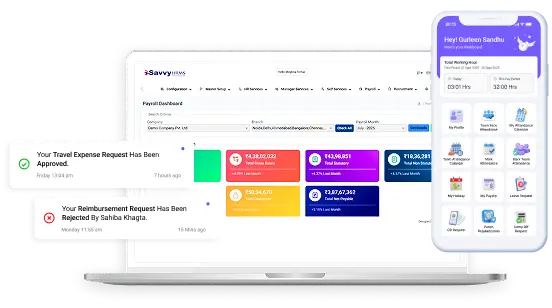
Explore Savvy HRMS to manage your workforce, attendance, payroll, and HR processes from one centralized platform.
Frequently Asked Questions (FAQs)
1. What is HR software for restaurants?
HR software for restaurants is a digital solution that helps manage employee records, attendance, shifts, leave, payroll, overtime, scheduling, and other workforce-related processes from a centralized platform.
2. What features should restaurant HR software have?
Important features include employee scheduling, attendance tracking, shift management, payroll processing, leave management, overtime tracking, employee self-service, reporting, compliance support, and multi-location workforce management.
3. Can HR software manage employee shifts and schedules?
Yes, HR software with scheduling and shift management capabilities can help restaurants assign employees to shifts, track working hours, manage schedules, and improve workforce planning across teams and locations.
4. How does HR software help restaurants with payroll?
HR software can connect employee attendance, leave, overtime, and other payroll inputs, helping restaurants organize salary processing, reduce manual calculations, maintain employee records, and streamline payroll administration.
5. Is HR software useful for multi-location restaurants?
Yes, HR software can help restaurant chains centralize employee information and manage attendance, payroll, leave, shifts, and other HR processes across multiple outlets while providing managers with appropriate workforce visibility.