


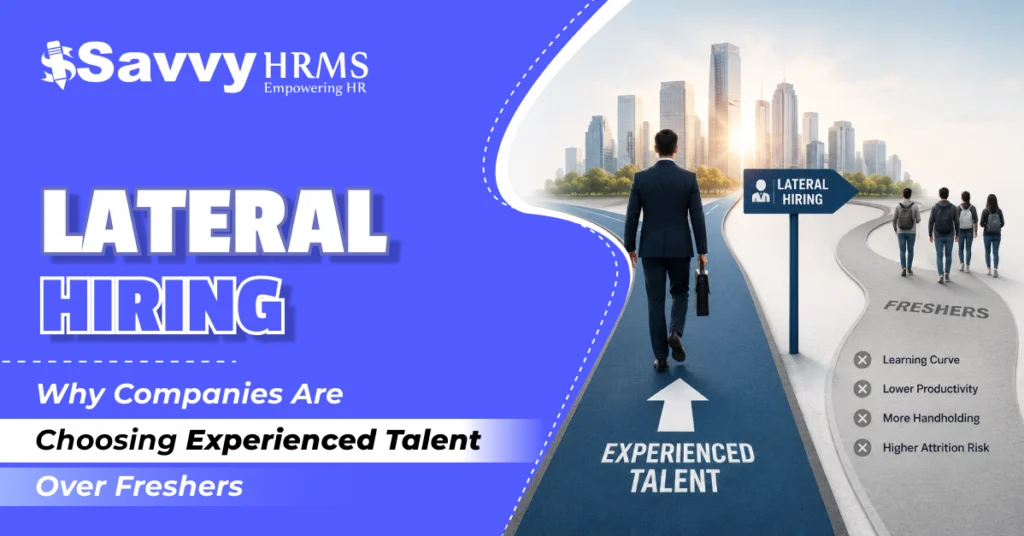

Are Companies Shifting Their Focus from Freshers to Experienced Professionals?
The job market has developed significantly over the past few years. Organizations today operate in a highly competitive environment where speed, efficiency, and expertise often determine success. As a result, many organizations are increasingly turning to lateral hiring to fill critical positions and strengthen their workforce.
While fresh graduates bring passion and a willingness to learn, experienced professionals offer something that businesses often need immediately: industry knowledge, practical skills, and the ability to contribute from day one. This growing preference for experienced talent has made lateral hiring a key recruitment strategy across industries.
In this blog, we will explore what lateral hiring is, why companies prefer it, its benefits, challenges, and how modern HRMS and recruitment software can simplify the entire process.
What Is Lateral Hiring?
Lateral hiring refers to the recruitment of professionals who already possess relevant work experience and are hired into roles at a similar level or higher than their current position. Unlike campus hiring, which focuses on fresh graduates, lateral hiring targets candidates who have already developed industry-specific skills and expertise.
For example, if a company hires a software developer with five years of experience from another organization, it is considered lateral hiring.
Organizations commonly use lateral recruitment when they need:
- Specialized skills and expertise
- Immediate productivity
- Leadership capabilities
- Industry-specific knowledge
- Faster project execution
Today, lateral hiring plays an important role in helping businesses address talent shortages and maintain a competitive edge.
What Are the Key Benefits of Lateral Hiring?
1. Faster Time-to-Productivity
One of the biggest advantages of lateral hiring is that experienced professionals require minimal training. They are already familiar with industry practices, tools, and workflows, allowing them to contribute quickly.
Instead of spending months onboarding a new employee, organizations can benefit from immediate productivity.
2. Access to Specialized Skills
Many industries face skill shortages, particularly in technology, healthcare, finance, and manufacturing sectors. Lateral hiring allows businesses to acquire professionals with specific technical or functional expertise.
This helps organizations close skill gaps more efficiently than training freshers from scratch.
3. Reduced Training Costs
Training and development require significant investments of time and money. Experienced employees generally need less guidance, which can significantly reduce onboarding and training expenses.
4. Improved Business Performance
Professionals with industry experience often bring proven strategies, best practices, and valuable insights from previous organizations. Their expertise can help improve productivity, efficiency, and overall business performance.
5. Stronger Leadership Pipeline
Many organizations use lateral hiring to recruit managers, team leaders, and senior executives. Experienced professionals often possess leadership skills that help organizations build stronger teams and achieve strategic goals.
6. Better Problem-Solving Capabilities
Employees with prior experience have likely faced similar challenges before. Their ability to analyze situations and make informed decisions can benefit the organization in various ways.
What Is the Process for Lateral Hiring in India?
Although the exact recruitment process may vary across organizations, most companies follow a structured lateral hiring process.
Step 1: Identify Hiring Requirements
The process begins with identifying workforce needs and defining the skills, qualifications, and experience required for the role.
Step 2: Create a Detailed Job Description
A clear job description helps attract suitable candidates by outlining responsibilities, required skills, experience levels, and expectations.
Step 3: Source Candidates
Recruiters use different channels to source experienced professionals, including:
- Job portals
- Professional networking platforms
- Employee referrals
- Recruitment agencies
- Internal talent databases
Step 4: Screen Applications
Recruiters review resumes and shortlist candidates whose qualifications and experience align with the role.
Step 5: Conduct Interviews and Assessments
Selected candidates undergo technical evaluations, behavioral interviews, and skill assessments to determine their suitability.
Step 6: Verify Background and References
Organizations conduct background verification and reference checks to ensure the candidate’s credentials and employment history are accurate.
Step 7: Offer and Negotiation
Once a suitable candidate is identified, the company extends an offer and negotiates compensation, benefits, and joining timelines.
Step 8: Onboarding
The final stage involves onboarding the employee and integrating them into the organization smoothly.
When Should Companies Choose Lateral Hiring?
Lateral hiring may not be the ideal solution for every role. However, it becomes particularly valuable in certain situations.
1. When Immediate Expertise Is Needed
Organizations working on critical projects often require professionals who can start contributing immediately.
2. When Filling Specialized Roles
Some positions demand high skills that fresh graduates may not possess. In such cases, lateral hiring becomes essential.
3. During Rapid Business Expansion
Companies experiencing growth often need experienced professionals who can handle responsibilities without extensive supervision.
4. When Building Leadership Teams
Managerial and senior-level roles usually require prior leadership experience, making lateral recruitment the preferred approach.
5. To Replace Key Employees
When experienced employees leave, organizations often look for lateral hires who can quickly take over responsibilities and maintain continuity.
What Are the Common Challenges of Lateral Hiring?
Although lateral hiring offers various benefits, it also comes with challenges that organizations must address.
1. Higher Salary Expectations
Experienced professionals often expect competitive salaries, performance incentives, and comprehensive benefits. While their expertise can deliver immediate value, organizations may need to allocate larger recruitment budgets to attract and secure top talent.
2. Intense Competition for Talent
The demand for skilled professionals continues to rise across industries. Companies frequently compete for the same talent pool, making it challenging to attract qualified candidates and stand out as an employer of choice.
3. Longer Notice Periods
Many experienced candidates are required to serve notice periods before leaving their current employers. This can extend hiring timelines and create delays when organizations need critical positions filled quickly.
4. Cultural Fit Concerns
A candidate may possess excellent technical skills and relevant experience, but success also depends on how well they align with the company’s culture, values, work style, and team dynamics.
5. Candidate Drop-Offs
Experienced professionals often receive multiple job offers during their job search. As a result, some candidates may withdraw from the hiring process or decline offers at the final stage.
6. Skill Validation Challenges
Resumes and interviews may not always provide a complete picture of a candidate’s capabilities. Organizations should use assessments, practical tests, and structured interviews to accurately evaluate skills and expertise.
Best Practices for Effective Lateral Hiring
To maximize the success of lateral hiring, organizations should follow proven best practices.
1. Define Job Requirements Clearly
Clearly defining job responsibilities, required skills, and expectations helps attract qualified candidates while reducing mismatches and improving the overall effectiveness of the hiring process.
2. Prioritize Skills Over Job Titles
Instead of focusing only on previous designations, evaluate candidates based on their skills, achievements, and practical experience to identify the best fit.
3. Build a Strong Employer Brand
A positive employer reputation, supportive work culture, and growth opportunities can help attract experienced professionals and encourage them to join your organization.
4. Improve Candidate Experience
Maintaining clear communication, timely updates, and a smooth recruitment process helps create a positive impression and keeps candidates engaged throughout hiring.
5. Use Structured Interviews
Structured interviews with consistent questions and evaluation criteria help recruiters assess candidates fairly, minimise bias, and make more informed hiring decisions.
6. Leverage Employee Referrals
Employee referral programs can help organizations access qualified candidates faster, improve hiring quality, and reduce recruitment costs and time-to-hire.
7. Maintain Talent Pipelines
Building relationships with potential candidates in advance creates a strong talent pool, enabling organizations to fill vacancies more quickly when opportunities arise.
What Is the Difference Between Lateral Hiring vs Fresh Hiring?
Understanding the difference between lateral hiring and fresh hiring helps organizations choose the right recruitment strategy.
| Factor | Lateral Hiring | Fresh Hiring |
| Experience | Experienced professionals | Fresh graduates |
| Training Requirement | Low | High |
| Time-to-Productivity | Faster | Slower |
| Salary Cost | Higher | Lower |
| Skill Availability | Specialized skills | Entry-level skills |
| Leadership Potential | Immediate | Long-term development |
| Recruitment Goal | Immediate business impact | Future workforce development |
Both approaches have their place within an organization’s talent strategy. Many successful companies maintain a balanced mix of experienced professionals and fresh graduates.
How Can HRMS and Recruitment Software Simplify Lateral Hiring?
Managing lateral hiring manually can be time-consuming and resource-intensive. This is where modern HRMS and recruitment software become valuable.
1. Automated Candidate Sourcing
Recruitment software can help identify qualified candidates from multiple channels, reducing sourcing efforts.
2. Resume Screening
AI-powered screening tools can automatically shortlist candidates based on predefined criteria.
3. Centralized Candidate Management
Recruiters can track applicants, interview schedules, assessments, and communications from a single platform.
4. Faster Collaboration
Hiring managers and recruiters can collaborate efficiently throughout the recruitment process.
5. Interview Scheduling
Automated scheduling minimizes administrative work and improves candidate experience.
6. Data-Driven Hiring Decisions
Advanced analytics provide insights into hiring metrics such as time-to-hire, source effectiveness, and candidate quality.
7. Enhanced Candidate Experience
Automated updates and simplified communication keep candidates engaged throughout the hiring journey.
By digitising recruitment workflows, organizations can significantly improve the efficiency and effectiveness of their lateral hiring process.
Conclusion
As businesses continue to face developing skill requirements and competitive market conditions, lateral hiring has emerged as a strategic approach to acquiring experienced talent. Organizations increasingly prefer experienced professionals because they bring specialised expertise, faster productivity, stronger problem-solving capabilities, and leadership potential.
However, successful lateral hiring requires a structured recruitment process, effective candidate evaluation, and the right technology to manage hiring activities efficiently.
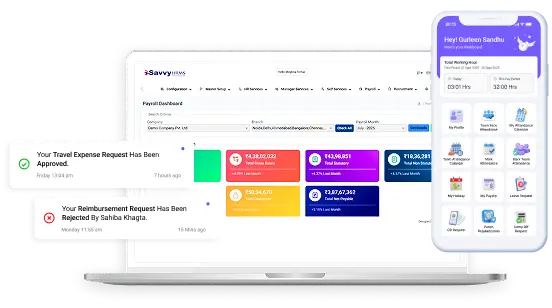
This is where Savvy HRMS can make a difference. With advanced recruitment automation, applicant tracking, candidate management, interview scheduling, and analytics capabilities, Savvy HRMS helps organizations simplify lateral hiring while improving hiring quality and reducing recruitment timelines.









Ready to Hire the Right Talent Faster?
Discover how Savvy HRMS Recruitment Management Software can simplify your lateral hiring process, enhance recruiter productivity, and help your organization attract top experienced professionals with ease