

Types of Recruitment in HRM: Complete Guide with Examples


-
AuthorRuchika Rajput
-
 Last Updated
August 06, 2026
Last Updated
August 06, 2026
-
 Reading Time
7 Mins
Reading Time
7 Mins
Finding the right employees is among the main responsibilities of any HRM department. Regardless of whether you need to fill a certain vacancy or hire a larger number of employees, your hiring process will be successful if you manage to choose the appropriate recruitment types.
Many companies try to find candidates as fast as possible, but actually, they have to find the proper type of recruitment that fits the position, the goals of the company, the budget, and the timeframe. It is sometimes better to promote an internal employee to the position than to look for a new candidate.
This is where the knowledge about types of recruitment in HRM becomes relevant. All of them have some advantages, disadvantages, and the most suitable occasions to use. The ability to find the right recruitment type can save HR professionals both money and time.
In this blog, you will learn about the types of recruitment, recruitment methods, their examples, and characteristics.
What Are the Different Types of Recruitment in HRM?
In Human Resource Management (HRM), recruitment is generally divided into two main types:
- Internal Recruitment
- External Recruitment
Both recruitment methods help organizations fill job vacancies, but they differ in where the candidates come from.
1. Internal Recruitment
Internal recruitment means filling a vacant position by selecting someone who already works within the organization. Instead of searching outside the company, HR identifies existing employees who have the required skills, experience, or potential for the role.
Internal recruitment is commonly used for promotions, transfers, leadership positions, and career development opportunities.
Methods of Internal Recruitment:
1. Promotion
Employees can be promoted to more senior roles due to their performance, experience, and expertise.
Example:
A Senior Software Engineer gets promoted to an Engineering Manager.
2. Transfer
Employees transfer from one department or location to another without getting any promotions.
Example:
HR Executive transfers from the Delhi location to the Bangalore location.
3. Internal Job Posting (IJP)
Companies make vacancies open internally before posting jobs externally.
Example:
Marketing Executive applies for an internal vacancy for the Digital Marketing Manager role.
4. Employee Referrals (Internal Recommendation)
Employees can refer other employees who belong to other departments or who previously worked with them.
5. Rehire of Ex-Employees
Companies can also call back ex-employees who have a good performance record with the firm.
Advantages of Internal Recruitment:
- Quick recruitment process
- Lower cost of recruiting
- Boosts employee morale
- Career progression
- Employees know the organizational culture
- Decreases the time of onboarding
Limitations of Internal Recruitment:
- Narrow scope of candidates
- A few new perspectives
- Intra-organizational competition among the employees
- Skills gap in the old role
2. External Recruitment
External recruitment involves hiring candidates from outside the organization. It helps businesses access a larger talent pool and bring in new perspectives, skills, and expertise.
This recruitment method is widely used when companies need specialized talent, rapid expansion, or fresh innovation.
Methods of External Recruitment:
1. Job Portals
The organization posts the vacancy on well-known job portals where applicants can apply online.
Such portals are LinkedIn, Indeed, and Naukri.
2. Company Career Website
Job vacancies may be advertised by the company itself on its website.
3. Campus Recruitment
The organizations recruit employees directly from universities and colleges.
4. Recruitment Agencies
This process is carried out with the help of staffing and recruiting agencies that find appropriate candidates for vacant jobs.
5. Employee Referrals
Current employees refer their associates who fit the available positions.
6. Social Media Recruitment
Social media recruiting involves using different social networks, such as LinkedIn, Facebook, and X, to engage potential applicants.
7. Walk-in Interviews
Interviews may be conducted on an unscheduled basis when candidates just come in and apply.
8. Recruitment Events and Job Fairs
The organization participates in career fairs to meet several job hunters.
9. Professional Networking
Recruiters build relationships through industry events, conferences, and professional communities.
Advantages of External Recruitment:
- Larger candidate pool
- Access to specialized talent
- Fresh perspectives and innovation
- Greater diversity
- Supports business expansion
Limitations of External Recruitment:
- Higher hiring costs
- Longer recruitment cycle
- More extensive onboarding
- Greater hiring risks
- Increased training requirements
What Is the Difference Between Internal and External Recruitment?
Both internal and external recruitment are effective hiring strategies, but they serve different business needs.
| Basis | Internal Recruitment | External Recruitment |
| Source of Candidates | Existing employees | Outside candidates |
| Hiring Speed | Faster | Slower |
| Recruitment Cost | Lower | Higher |
| Talent Pool | Limited | Large |
| Innovation | Limited | High |
| Employee Motivation | High | Moderate |
| Training Required | Less | More |
| Cultural Fit | Already established | Needs onboarding |
| Career Growth | Encourages promotions | Doesn’t directly support internal growth |
When Should You Choose Internal Recruitment?
Internal recruitment works best when:
- Leadership positions need to be filled
- Existing employees are ready for promotion
- Hiring needs to happen quickly
- The budget is limited
- The company wants to improve employee retention
When Should You Choose External Recruitment?
External recruitment is ideal when:
- Specialized skills are required
- Business is expanding rapidly
- No suitable internal candidate exists
- Fresh ideas are needed
- Large-scale hiring is planned
What Are Some Examples of Recruitment Types in Action?
Understanding recruitment becomes easier with practical examples.
Example 1: Internal Promotion
A company needs a new Sales Manager. Instead of hiring externally, they promote the highest-performing Sales Executive who has consistently exceeded targets.
Recruitment Type: Internal Recruitment
Example 2: Campus Recruitment
A software company visits engineering colleges to recruit fresh graduates for trainee developer roles.
Recruitment Type: External Recruitment
Example 3: Employee Referral
An employee recommends a former colleague for an open HR Manager position. After interviews, the candidate is selected.
Recruitment Type: External Recruitment (Employee Referral)
Example 4: Internal Job Posting
A finance company announces an opening for Assistant Finance Manager on its internal career portal. Existing employees apply before external hiring begins.
Recruitment Type: Internal Recruitment
Example 5: Recruitment Agency
A manufacturing company urgently needs experienced plant managers. It partners with a recruitment agency to identify suitable candidates.
Recruitment Type: External Recruitment
Example 6: Transfer
An organization transfers an experienced HR Executive from one regional office to another to support business expansion.
Recruitment Type: Internal Recruitment
Example 7: Social Media Recruitment
A startup advertises vacancies on LinkedIn and receives hundreds of qualified applications within days.
Recruitment Type: External Recruitment
How to Choose the Right Type of Recruitment?
There isn’t a single recruitment method that works for every hiring situation. The right choice depends on your organization’s goals, available talent, budget, and hiring urgency.
Here are a few factors to consider before selecting the right types of recruitment:
1. Identify the Job Requirements
Start by understanding the role. Does it require specialized skills, leadership experience, or fresh talent? Clearly defining the job helps determine whether internal or external recruitment is more suitable.
2. Assess Internal Talent
Before searching outside the organization, evaluate whether existing employees have the skills, experience, or potential to take on the role. Promoting internal talent can save time and strengthen employee engagement.
3. Consider Your Hiring Timeline
If the position needs to be filled quickly, internal recruitment is often the faster option because existing employees are already familiar with the company’s culture and processes.
4. Evaluate Recruitment Costs
External recruitment often involves advertising expenses, agency fees, assessments, and onboarding costs. Internal recruitment is generally more cost-effective, especially for recurring hiring needs.
5. Think About Long-Term Business Goals
Organizations looking to encourage employee growth and improve retention may prioritize internal recruitment. On the other hand, businesses looking for innovation, specialized expertise, or rapid expansion may benefit more from external hiring.
6. Balance Fresh Perspectives with Internal Growth
A healthy recruitment strategy often combines both approaches. Internal recruitment rewards existing employees, while external recruitment introduces new ideas and skills that support business growth.
Conclusion
Understanding the types of recruitment is important for building a successful workforce. While internal recruitment helps organizations develop existing talent and reduce hiring costs, external recruitment provides access to a broader talent pool, specialized skills, and fresh perspectives.
Rather than depending on just one approach, successful organizations combine both recruitment types based on their hiring objectives, workforce planning, and business growth strategy. Choosing the right recruitment method at the right time not only improves hiring efficiency but also contributes to long-term employee satisfaction and organizational success.
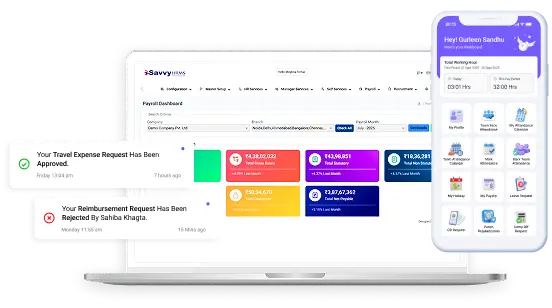
Managing multiple recruitment channels, applications, interviews, and candidate communications manually can quickly become confusing. That’s where Savvy HRMS Recruitment Management Software makes a difference. It simplifies every stage of the hiring process, from posting job openings and tracking applicants to scheduling interviews and collaborating with hiring teams, all from a single, user-friendly platform.
Whether you’re hiring internally, sourcing external candidates, or managing high-volume recruitment, Savvy HRMS helps you recruit smarter, faster, and more efficiently.










Ready to simplify your recruitment process?
Explore Savvy HRMS Recruitment Management Software today and discover how you can hire the right talent faster while delivering a smooth hiring experience for both recruiters and candidates.