


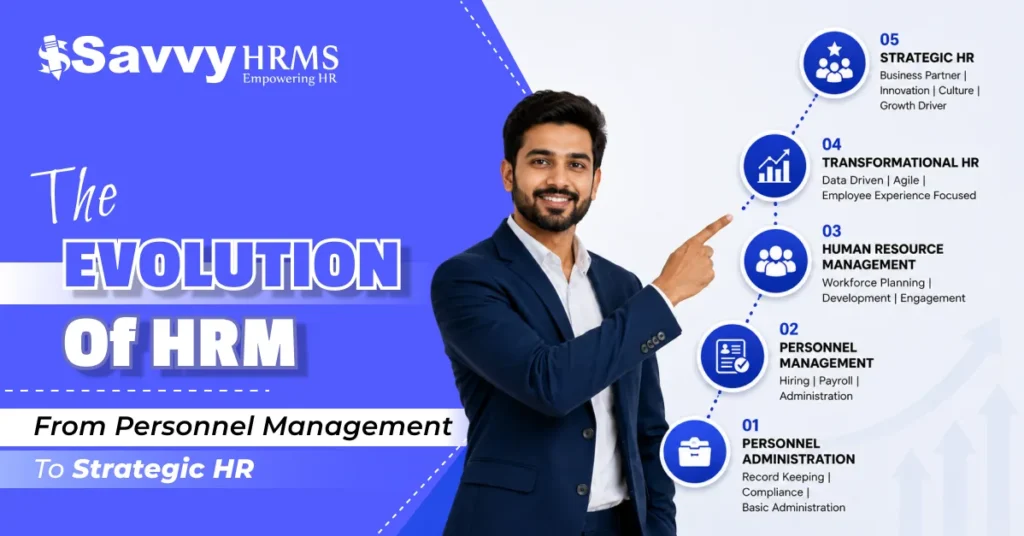

There have been many changes in the workplace over the years, and the function of Human Resource Management (HRM) has also evolved. From being the only function involved with recruiting workers, keeping their records, and issuing salaries, HRM has today become an integral part of the strategy behind business growth.
HR managers are no longer seen as only administrators. Rather, they are now regarded as business partners, culture makers, talent managers, and even innovators. The evolution of HRM can be attributed to the changing ways of thinking in organizations, from managing people to engaging people and linking the workforce with business goals.
This blog will examine the history of the evolution of HRM, its current position, and its future prospects.
What is the Evolution of HRM?
The evolution of HRM is defined as the process through which human resources practices have changed from being purely administrative in nature to strategic, where employee development and organizational culture are at the center of operations.
Previously, HR handled routine tasks like attendance, pay, documentation, and compliance, among others. However, with changing times and industries becoming increasingly competitive, there was an understanding that people were the most important resource of a company.
Modern HRM pays attention to:
- Talent management
- Employee engagement
- Learning and development
- Workforce planning
- Diversity and inclusion
- Performance management
- Strategic decision-making
The evolution of HRM has ensured that organizations have become more productive while enhancing worker satisfaction at the same time.
History and Evolution of HRM
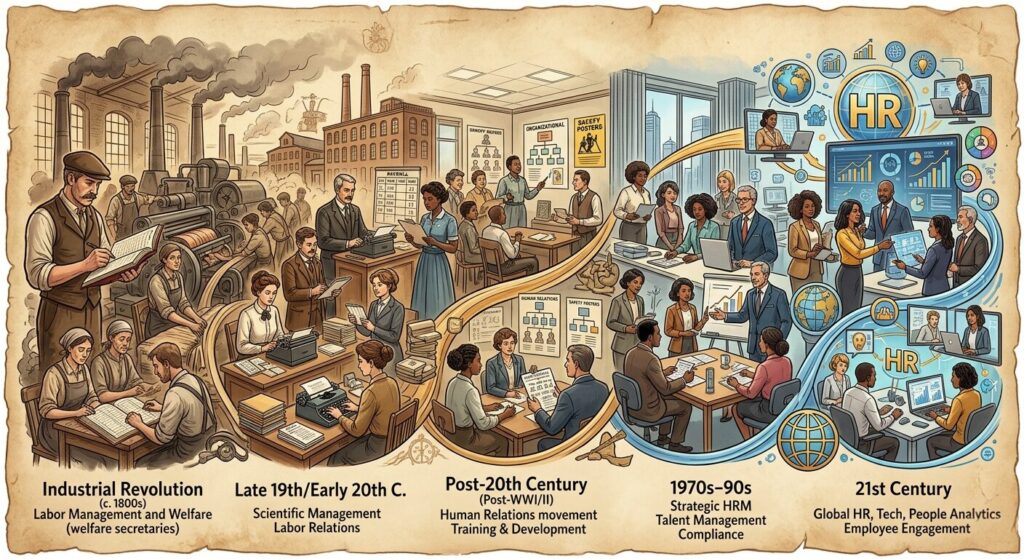
The history and Evolution of HRM date back to the era of the Industrial Revolution, which took place in the latter half of the 18th century. At that time, factories hired many people; however, little was done regarding their protection and good working conditions. In this respect, organizations were more concerned about their productivity rather than about employees’ welfare.
With time, labor unions appeared, labor regulations were developed, and companies started employing personnel departments dealing with recruiting, remunerating, and maintaining good relationships with staff members.
In the middle of the 20th century, the idea of Human Resource Management substituted the term personnel management. The companies understood that motivated and competent employees were key to success.
In the 80s and 90s of the last century, HRM turned into a strategic business activity, with an importance placed on developing leaders, managing organizational culture, and coordinating HR practices and business strategies.
At present times, modern HRM is powered by new technologies, analytics, employee experiences, and global workforce management. HR specialists now have a powerful influence on organizational culture and efficiency.
Development and Evolution of HRM
1. Functional Development of HRM
Functional Evolution in HRM reveals how the department shifted from mere payroll and attendance management to become people-focused, concerned about their growth and productivity.
Key Areas of Functional Development in HRM Include:
1. Recruitment and Talent Acquisition
Today’s HR is focused on recruiting talented individuals with the help of structured recruitment techniques, employer branding, and successful talent acquisition strategies aligned with company objectives.
2. Employee Training and Development
Learning and skill improvement have become an integral part of modern organizations; companies arrange workshops and training programs for better employee development.
3. Performance Management
Yearly appraisals have been replaced by constant feedback systems designed to ensure employees enhance their performance and stay motivated enough to achieve organizational objectives.
4. Employee Engagement
One of HR’s functions is ensuring that there is positive engagement within the organization. Thus, HRs work to improve communication between employees, make them feel satisfied with their jobs, and motivate them.
5. Compensation and Benefits
Modern HRM provides talented individuals with competitive salaries, bonuses, wellness programs, insurance, and different kinds of flexible benefits.
6. Compliance and Employee Relations
In modern HRM, HRs make sure that employers follow labor laws and maintain healthy relations with employees.
2. Technological Development in HRM
Technological advances in the evolution of HRM led to the automation of HR functions, enabling organizations to become more efficient, accurate, and effective in managing their workforce.
Major Technological Advancements in HRM Include:
1. HR Automation
HR automation simplifies the execution of boring tasks such as payroll processing, attendance recording, leave approval, and record-keeping of employees’ details.
2. AI-Powered Recruitment
AI-powered recruiting assists HR personnel in screening applications, selecting qualified applicants, and recruiting talent effectively.
3. Cloud-Based HR Systems
Cloud-based HR systems enable companies to access their employees’ details remotely and monitor their performance from anywhere at any time.
4. Employee Self-Service Portals
An employee self-service portal enables staff members to submit their leave applications, view their payslips, update their profiles, and maintain attendance records.
5. HR Analytics and Insights
HR analytics offer actionable insights into employee performance, productivity, engagement, and turnover.
6. Remote Workforce Management
HR technology makes it easy for organizations to manage remote employees through various HR software programs.
3. Strategic Development of HRM
From the above discussion, it is clear that the strategic development of HRM demonstrates how HR has transformed from a purely administrative function to become a strategic partner in the organization.
Important Strategic Developments in HRM Include:
1. Workforce Planning
Through strategic HR, organizations can anticipate future workforce requirements and create hiring strategies.
2. Leadership Development
Organizations develop leadership skills in their personnel and engage in succession planning.
3. Employee Retention Strategies
Retention strategies are developed by HRM, including training, promotion, and other engagement programs.
4. Organizational Culture Building
The modern HRM department plays a significant role in developing organizational culture in the organization.
5. Diversity and Inclusion
In terms of strategy, HRM looks to promote diversity within the organization by creating an inclusive environment.
6. Alignment with Business Goals
HRM strategies look to align employees’ contributions to organizational productivity and success.
4. Global and Cultural Development in HRM
The global and cultural changes in the evolution of HRM involve managing different employees from various backgrounds, accommodating international labor management practices, and creating inclusive workplaces.
Key Global and Cultural Developments in HRM Include:
1. Cross-Cultural Management
HR manages the impact of culture to facilitate communication, collaboration, and cooperation between globally-based employees.
2. Global Talent Management
The organizations recruit internationally-based employees to leverage their unique competencies and develop strong teams.
3. International Labor Compliance
Global HRM teams guarantee labor law and taxation compliance in different countries and regions.
4. Remote and Distributed Teams
Digital technology is used by HRM departments to manage remote workers based in different locations and time zones.
5. Diversity and Equal Opportunities
HRM guarantees equal treatment and opportunity regardless of employees’ gender, culture, and nationality.
6. Employee Engagement Globally
HRM guarantees consistency in engaging employees and maintaining communication regardless of the number of countries where they operate.
Why the Evolution of HRM Matters Today?
The evolution of Human Resource Management (HRM) is important in modern times as companies have come to realize the importance of their employees to the survival and sustainability of the business. Modern Human Resource Management is more than just administration, as it facilitates employee engagement, productivity, positive culture within the workplace, and overall business growth.
Why Modern HRM Is Important Today?
- Improves Employee Engagement: Ensures that employees remain motivated and committed to the organization.
- Supports Business Growth: Creates alignment between HR strategy and business objectives.
- Enhances Productivity: Facilitates better employee training and performance management.
- Encourages Workplace Innovation: A positive workplace enhances innovation.
- Strengthens Employee Retention: Facilitates employee retention.
HRM evolution has enabled modern HRM to become a strategic practice that facilitates organizational adaptation to modern trends.
The Future of HRM
The future of HRM will continue to be shaped by technology, artificial intelligence, employee expectations, and workplace flexibility.
Organizations are increasingly focusing on:
1. Employee Experience
The modern concept of HR concentrates on fostering positive experiences in the workplace to ensure better employee satisfaction, productivity, and loyalty.
2. Mental Health and Wellness
Today, businesses take an active role in nurturing their employees’ mental health and well-being through various wellness programs.
3. AI-Driven HR Processes
Artificial intelligence contributes to improving HR processes by automating operations and making better hiring choices.
4. Hybrid Work Models
These working models allow people to combine remote and office work to achieve a better balance between work and private life.
5. Skills-Based Hiring
The modern approach to recruitment allows for paying more attention to employees’ skills rather than just their academic background.
6. Personalized Learning Programs
Personalized learning and development programs contribute to helping employees develop relevant skills.
7. Predictive Workforce Analytics
The practice of using predictive workforce analytics enables predicting various workforce dynamics to make proper forecasts.
HR professionals will continue evolving from administrators to strategic advisors who influence organizational growth and culture.
Businesses that encourage modern HR practices will be more successful in building agile, innovative, and people-focused workplaces.
Conclusion
The evolution of HRM has led to changes in the nature of work, turning traditional workplace environments into innovative, productive, and strategic spaces focused on employees and aimed at the success of organizations.
In today’s business world, companies require highly developed solutions to improve their HR processes and compete in the changing landscape of the contemporary workforce environment.
Help your organization simplify its HR processes with advanced HR solutions created specifically for modern organizations with the help of Savvy HRMS. Simplify your workforce management with Savvy HRMS.
Ready to enhance your business with advanced HR solutions? Learn more about Savvy HRMS now!
Book a Demo Today