

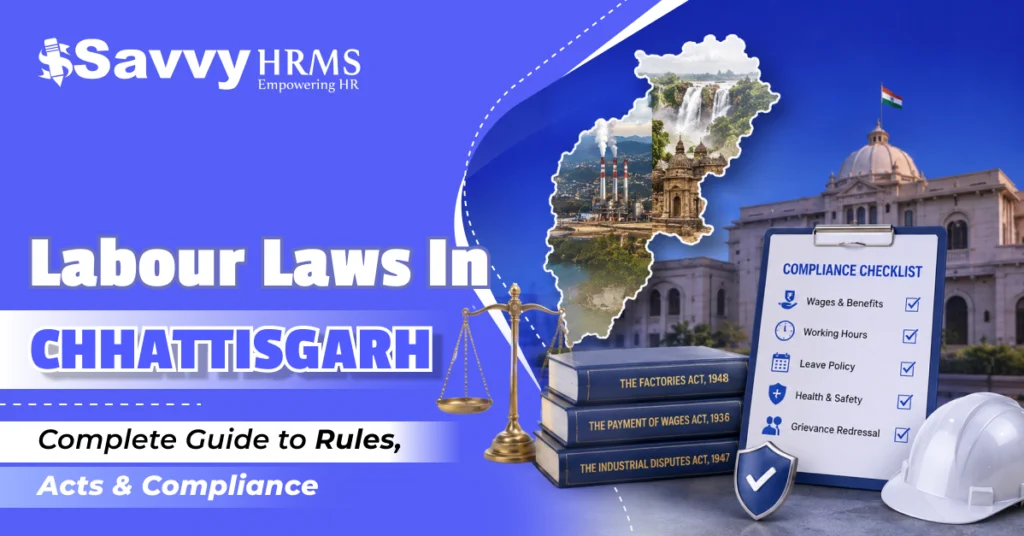
Labour Laws in Chhattisgarh 2026: Complete Guide to Rules, Acts & Compliance


-
AuthorRuchika Rajput
-
 Last Updated
August 17, 2026
Last Updated
August 17, 2026
-
 Reading Time
12 Mins
Reading Time
12 Mins
Running a business in Chhattisgarh means managing much more than hiring people and processing salaries. From minimum wages and working hours to PF, ESI, gratuity, maternity benefits and workplace safety, employers have several legal responsibilities to keep track of.
And this is where labour laws in Chhattisgarh become important.
Whether you operate a manufacturing unit in Bhilai, a construction business in Raipur, a commercial establishment in Bilaspur, or an office in Durg, understanding the applicable labour laws can help you avoid compliance gaps, employee disputes and unnecessary penalties.
The good news? Labour compliance does not have to feel complicated. In this blog, we break down the major Chhattisgarh labour laws in 2026, the rules employers should know, and the practical steps HR teams can take to stay compliant.
Labour Laws Applicable in Chhattisgarh in 2026
The labour law framework in Chhattisgarh includes both state-specific legislation and central labour laws that apply depending on the nature and size of an establishment.
The Chhattisgarh Labour Department lists important legislation covering areas such as factories, minimum wages, payment of wages, maternity benefits, bonus, construction workers and shops and establishments.
The exact laws applicable to a business depend on factors such as:
- Type of establishment
- Number of employees
- Nature of business
- Whether contract labour is engaged
- Whether the business operates a factory
- Whether construction workers are employed
- Employee wage levels and eligibility
So, there is no one-size-fits-all compliance checklist. HR teams need to identify the laws applicable to their specific establishment.
1. Chhattisgarh Shops and Establishments Act: Rules and Compliance
For many offices, shops and commercial establishments, the Chhattisgarh Shops and Establishments (Regulation of Employment and Conditions of Service) Act, 2017 is an important state-specific law. India Code records it as a Chhattisgarh state Act administered by the Labour Department.
The Act regulates employment and service conditions in covered shops and establishments. The legislation provides for matters connected with employment conditions and applies across the state subject to its provisions.
What Does the Shops and Establishments Law Cover?
Depending on applicability, employers need to pay attention to areas such as:
- Registration of establishments
- Working conditions
- Working hours
- Weekly holidays
- Leave and holidays
- Employment records
- Statutory notices
- Conditions of service
The Chhattisgarh Labour Department also provides an online registration facility for shops and establishments, making registration and related processes easier for employers.
2. Minimum Wages in Chhattisgarh 2026
If there is one labour-law topic HR teams should never treat casually, it is minimum wages.
Minimum wage rates can vary according to the applicable employment category, skill level, area, and government notifications. Employers must ensure that eligible employees receive at least the legally prescribed minimum wage.
What Should Employers Check?
Businesses should regularly verify:
- Applicable minimum wage category
- Skill classification of employees
- Applicable geographical or industrial classification
- Basic wage and applicable variable components
- Effective date of the latest notification
- Payroll calculations
A change in minimum wages can directly affect payroll, overtime calculations, and statutory contributions. That’s why HR teams should verify the latest applicable government notification before processing salaries.
For more info, visit: Minimum Wages in Chhattisgarh
3. Factories Act and Factory Labour Compliance in Chhattisgarh
Manufacturing businesses have additional responsibilities because factory operations involve workplace safety, working conditions and employee welfare.
The Chhattisgarh Labour Department provides factory-related services, including factory licence renewal, and identifies requirements relating to worker health, safety and welfare.
Key Areas of Factory Compliance
HR and factory management should monitor:
- Factory registration and licensing
- Working hours and rest intervals
- Overtime
- Health and safety measures
- First-aid facilities
- Welfare provisions
- Employee records
- Accident reporting
- Statutory inspections
For manufacturing hubs such as Bhilai and other industrial areas, keeping factory compliance records updated is particularly important.
4. Payment of Wages and Salary Rules in Chhattisgarh
Employees expect one thing every month: their salary should arrive correctly and on time.
Labour laws relating to payment of wages are designed to regulate wage payments and permissible deductions. The Chhattisgarh Labour Department includes the Payment of Wages Act among the labour legislation applicable within its compliance framework.
What Should HR Teams Maintain?
Employers should pay attention to:
- Timely salary payments
- Accurate wage calculations
- Lawful deductions
- Attendance and wage records
- Overtime payments
- Payslips and payroll documentation
This is also where automated payroll software can make a significant difference by reducing manual calculation errors.
5. Payment of Bonus Rules in Chhattisgarh
The Payment of Bonus Act, 1965 is another important law for eligible establishments and employees.
Bonus compliance involves more than simply calculating a year-end payment. Employers need to determine employee eligibility, calculate the applicable bonus, and maintain appropriate records.
Important Compliance Areas
HR teams should track:
- Employee eligibility
- Applicable wage limits
- Minimum and maximum bonus requirements
- Calculation records
- Payment timelines
- Statutory registers and records
The Chhattisgarh Labour Department lists the Payment of Bonus Act, 1965 among the labour laws covered by its compliance framework.
6. Gratuity Rules for Employees in Chhattisgarh
Gratuity is an important long-term employee benefit and can become a significant liability if businesses do not plan for it properly.
Eligible employees may become entitled to gratuity after completing the required period of continuous service, subject to the applicable law and exceptions.
What Employers Should Do
HR teams should:
- Track employee service periods
- Maintain accurate joining and exit dates
- Identify gratuity eligibility
- Calculate gratuity correctly
- Process eligible payments within the prescribed timeline
- Maintain supporting records
Keeping gratuity data updated throughout an employee’s tenure is much easier than trying to calculate everything at the time of resignation or retirement.
7. EPF and ESI Compliance in Chhattisgarh
Social-security compliance is another major part of labour law compliance in Chhattisgarh.
Depending on applicability, employers may need to comply with Employees’ Provident Fund and ESI requirements.
EPF Compliance
Employers should monitor:
- Establishment registration
- Eligible employee enrolment
- Monthly contributions
- Employee and employer contribution records
- UAN-related information
- Timely deposits
- Electronic filings and records
ESI Compliance
Where ESI applies, HR teams need to ensure:
- Eligible employees are registered
- Contributions are calculated correctly
- Contributions are deposited on time
- Employee details remain updated
- Required records are maintained
A missed statutory contribution may create interest, penalties or additional compliance work, so these processes should ideally be automated.
8. Maternity Benefit Rules in Chhattisgarh
Maternity protection is an important part of employment compliance.
The Maternity Benefit Act, 1961 is included among the labour legislation administered through the state’s labour compliance framework.
What Employers Should Keep in Mind
HR teams should maintain clear processes for:
- Maternity leave requests
- Eligibility verification
- Leave records
- Salary and benefit processing
- Return-to-work procedures
- Protection of eligible employees’ statutory rights
A clear maternity policy helps both employees and employers understand what is available and how requests should be processed.
9. Contract Labour Laws in Chhattisgarh
Many businesses depend on contractors for security, housekeeping, logistics, manufacturing support and other services.
If your organisation engages contract labour, compliance responsibilities can extend beyond your direct employees.
Principal Employer Responsibilities
Depending on applicability, employers may need to manage:
- Establishment registration
- Contractor licensing
- Contractor records
- Wage compliance
- Statutory benefits
- Welfare facilities
- Contractor documentation
- Periodic verification
The Chhattisgarh Labour Department provides registration services for principal employers under the Contract Labour framework.
The safest approach is to treat contractor compliance as part of your own HR compliance process rather than assuming the contractor will handle everything correctly.
10. Building and Other Construction Workers Compliance in Chhattisgarh
Construction businesses have additional compliance responsibilities because construction work involves significant occupational risks.
The BOCW framework focuses on the welfare, safety, and working conditions of construction workers.
Key Areas to Monitor
Construction employers and relevant establishments should consider:
- Establishment registration
- Worker registration and welfare
- Safety measures
- Welfare facilities
- Construction cess requirements
- Contractor compliance
- Required records and documentation
For construction companies operating across Chhattisgarh, keeping worker and project-related compliance records organised is particularly important.
11. Working Hours, Overtime, Weekly Holidays and Leave Rules
Working hours and leave are among the most common day-to-day HR compliance issues.
The applicable rules can depend on whether an employee works in a factory, shop, commercial establishment or another covered workplace.
What HR Should Track
A practical compliance system should monitor:
- Daily working hours
- Weekly working hours
- Rest intervals
- Overtime
- Weekly holidays
- Earned or privilege leave
- Casual and sick leave, where applicable
- Holiday records
Instead of managing these details manually across spreadsheets, businesses can connect attendance, leave and payroll so that working hours and salary calculations remain aligned.
12. Professional Tax in Chhattisgarh
Professional tax is another payroll-related compliance area that employers should evaluate when managing employee salaries in Chhattisgarh.
Where applicable, employers need to understand the relevant registration, deduction, payment, and return requirements.
Why Professional Tax Matters to HR
Professional tax directly affects payroll processing. A missed deduction or incorrect calculation can result in reconciliation issues later.
Therefore, HR and payroll teams should:
- Check whether professional tax applies
- Verify the latest applicable slab
- Deduct the correct amount
- Deposit it within the prescribed timeline
- Maintain records and returns
Because tax requirements can change through government notifications, employers should verify the latest requirements before processing payroll.
Employee Rights Under Labour Laws in Chhattisgarh
Labour laws are not only about employer responsibilities. They also protect employees and provide a framework for fair employment.
Depending on the applicable law, employees may have rights relating to:
- Minimum wages
- Timely payment of salary
- Overtime
- Leave
- Workplace safety
- Social security
- Maternity benefits
- Bonus
- Gratuity
- Fair working conditions
For employers, understanding these rights is equally important because many workplace disputes begin with unclear policies or inconsistent application of employment rules.
Employer Responsibilities Under Labour Laws in Chhattisgarh
For businesses, labour compliance essentially comes down to doing the right things consistently.
A Practical Employer Checklist
Employers should regularly review:
- Registrations and licences
- Employee master data
- Attendance records
- Minimum wage compliance
- Payroll calculations
- PF and ESI contributions
- Leave records
- Bonus and gratuity
- Contract labour records
- Statutory registers
- Returns and filing deadlines
- Workplace safety requirements
The Chhattisgarh Labour Department provides various online labour-related services, including registration and factory-related services, which can support businesses in managing statutory requirements.
Labour Law Compliance Checklist for Businesses in Chhattisgarh
Want a quick way to check whether your HR operations are on track?
Use this basic checklist:
- Establishment registrations are up to date
- Applicable licences have been renewed
- Employees are paid at least the applicable minimum wage
- Attendance and working hours are recorded
- Overtime is calculated correctly
- Leave records are maintained
- PF and ESI contributions are deposited on time
- Bonus and gratuity obligations are tracked
- Contract labour documentation is maintained
- Statutory records are updated
- Required returns are filed
- Workplace safety requirements are being followed
- Payroll deductions are reviewed regularly
This simple checklist can help HR teams identify gaps before they turn into bigger compliance problems.
Penalties for Non-Compliance With Labour Laws in Chhattisgarh
Ignoring labour compliance is rarely a good business strategy.
Depending on the applicable law and nature of the violation, non-compliance may result in penalties, interest, notices, inspections or legal proceedings.
More importantly, poor compliance can affect employee trust.
A delayed salary, incorrect PF contribution, or repeated minimum-wage error may look like a small payroll problem at first. But repeated issues can quickly become employee grievances or legal disputes.
How HRMS Can Help With Labour Law Compliance in Chhattisgarh
Here’s the reality: maintaining labour compliance manually becomes difficult as the employee count grows.
You may have one spreadsheet for attendance, another for leave, separate payroll calculations, PF and ESI data, contractor records, and several statutory deadlines to remember.
That’s a lot of moving parts.
An HRMS can bring these processes together.
What Can an HRMS Automate?
Depending on the platform and configuration, businesses can use HRMS solutions to manage:
- Employee records
- Attendance
- Leave
- Payroll
- Overtime
- PF and ESI calculations
- Salary deductions
- Payslips
- Statutory reports
- Compliance-related records
With Savvy HRMS, businesses can simplify payroll and HR processes, reduce repetitive manual work, and keep important employee information organised in one place.
The goal isn’t simply to automate HR. It’s to make everyday compliance easier to manage and less dependent on spreadsheets.
Conclusion
Understanding labour laws in Chhattisgarh is an important part of running a compliant and employee-friendly business in 2026.
From the Chhattisgarh Shops and Establishments framework and minimum wages to factories, payment of wages, bonus, gratuity, PF, ESI, maternity benefits and contract labour, the exact compliance requirements depend on your business and workforce.
The smartest approach is simple: identify the laws that apply to your organisation, keep your registrations and records updated, monitor statutory deadlines and regularly verify government notifications.
And when HR processes start becoming too complex to manage manually, automation can take a lot of the pressure off your team.

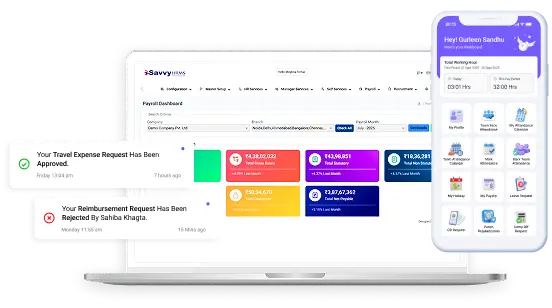









Stay compliant. Stay organised. Build a better workplace with Savvy HRMS.
Ready to make HR compliance simpler?
Frequently Asked Questions (FAQs)
What are the major labour laws applicable in Chhattisgarh?
Major labour laws and compliance areas include shops and establishments legislation, minimum wages, factories, payment of wages, bonus, gratuity, PF, ESI, maternity benefits, contract labour and construction worker welfare, depending on the establishment and workforce.
What are the minimum wages in Chhattisgarh in 2026?
Minimum wages depend on the applicable employment category, skill level, area, and latest government notification. Employers should verify the current notification before processing payroll.
Is the Chhattisgarh Shops and Establishments Act applicable to offices?
The applicability depends on the definition and coverage provided under the state legislation. Businesses should check whether their establishment falls within the Act’s scope and complete applicable registration and compliance requirements. India Code identifies the Chhattisgarh Shops and Establishments Act as a state labour law.
When do PF and ESI apply in Chhattisgarh?
PF and ESI applicability depends on the relevant statutory coverage conditions, establishment type, employee strength, and wage-related criteria. Employers should verify current statutory requirements before determining eligibility.
What should businesses include in their labour law compliance checklist?
A practical checklist should include registrations, licences, minimum wages, attendance, overtime, leave, payroll, PF, ESI, bonus, gratuity, contractor compliance, statutory records, returns and workplace safety requirements.