What Is the Best Employee Engagement Software in 2026


-
AuthorRuchika Rajput
-
 Last Updated
October 26, 2026
-
 Reading Time
20 Mins
Summary: Employee engagement software helps businesses collect feedback, recognize achievements, improve communication, and understand employee sentiment. This guide compares eight employee engagement platforms, including Savvy HRMS, Keka, Darwinbox, greytHR, Microsoft, Qandle, Kredily, and Lattice. Explore their features, benefits, and suitability to choose the right solution for your workforce and engagement goals.
TL;DR
Choosing the best employee engagement software in 2026 depends on your engagement goals, workforce size, and budget.
- Employee engagement software helps businesses collect feedback, recognize contributions, improve communication, and understand employee sentiment.
- Key features include surveys, recognition and rewards, analytics, mobile access, and HRMS integration.
- Important trends include AI-assisted feedback analysis, continuous listening, personalized recognition, and actionable insights.
- This guide compares eight platforms: Savvy HRMS, Keka, Darwinbox, greytHR, Microsoft, Qandle, Kredily, and Lattice.
- Before choosing a platform, compare its features, pricing, privacy controls, integrations, and suitability for your workforce.
- Software can support engagement efforts, but meaningful improvements depend on how organizations respond to employee feedback.
Employee engagement software helps businesses understand employee concerns, recognize contributions, and improve the workplace experience. However, choosing the right solution can be challenging because some platforms focus on surveys and feedback, while others emphasize recognition, communication, or broader people management.
This guide compares eight employee engagement platforms in 2026, covering their key capabilities, potential benefits, limitations, and suitability for different business needs. It also explains which features to prioritize and how to evaluate a platform before investing in one.
What Is Employee Engagement Software?
Employee engagement software is a digital platform that helps organizations understand employee satisfaction, collect feedback, recognize contributions, and improve the overall employee experience. Depending on the platform, it may include surveys, communication tools, rewards, and engagement analytics.
It helps in:
- Collecting employee feedback through surveys and polls.
- Recognizing employee achievements through rewards and appreciation.
- Sharing company updates and announcements across teams.
- Tracking engagement trends through reports and analytics.
- Connecting employee feedback with performance and development.
- Planning improvements based on employee concerns.
For example, HR teams can use employee engagement survey software to understand employee concerns and identify opportunities to improve workplace satisfaction. Ultimately, these tools help organizations turn employee feedback into meaningful improvements.
Top Trends in Employee Engagement Software in 2026
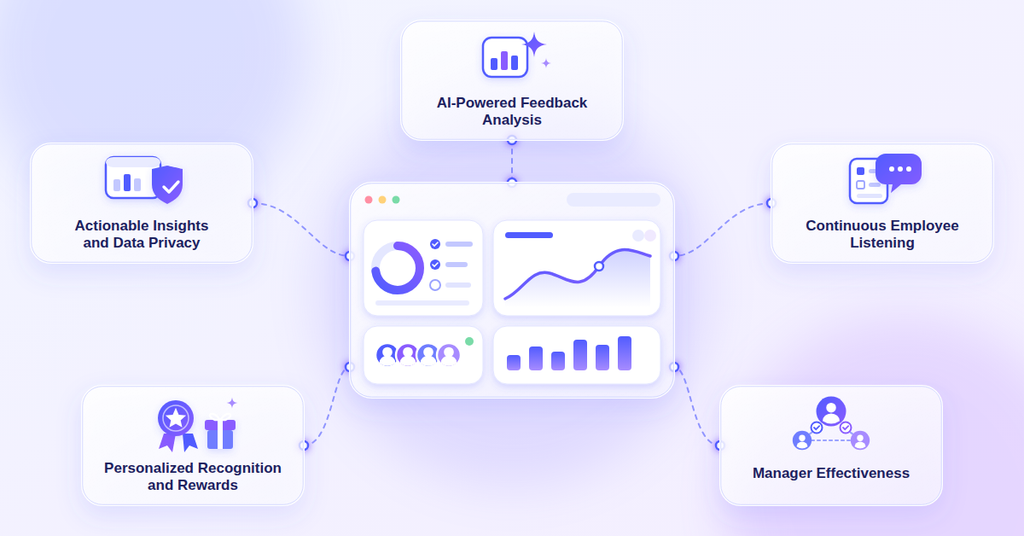
The key employee engagement software trends in 2026 include AI-powered feedback analysis, continuous employee listening, manager effectiveness, personalized recognition, and stronger attention to actionable insights and data privacy.
Here are the key trends shaping employee engagement software in 2026.
1. AI-Powered Feedback Analysis
AI-powered features are helping HR teams summarize written survey responses, identify recurring themes, and understand employee concerns more efficiently.
By analyzing feedback at scale, these tools can help HR teams spot patterns that might otherwise take more time to identify. However, HR teams should review AI-generated findings before making decisions that affect employees.
2. Continuous Employee Listening
Rather than relying only on annual engagement surveys, organizations are adopting more regular feedback methods.
Pulse surveys, quick polls, and feedback check-ins help HR teams understand employee concerns throughout the year. As a result, they can monitor changes in employee sentiment and respond to emerging issues more promptly.
3. Greater Focus on Manager Effectiveness
Since managers have a direct influence on employees’ day-to-day experiences, organizations are paying greater attention to manager effectiveness.
Feedback tools can help identify team-level concerns, understand employees’ experiences with managers, and encourage follow-up conversations. This allows managers to address workplace challenges and provide more relevant support to their teams.
4. Personalized Recognition and Rewards
Employee recognition is becoming an increasingly important part of workplace engagement. Many platforms offer features such as peer appreciation, manager recognition, milestone celebrations, and rewards.
By making recognition more timely and meaningful, organizations can acknowledge employee contributions and encourage a culture of appreciation.
5. Actionable Insights and Employee Data Privacy
Collecting feedback is only the first step. Businesses also need tools that help HR teams identify priorities, plan improvements, and communicate follow-up actions. At the same time, they should review survey anonymity options, access permissions, and data protection practices before choosing a platform. Protecting employee information helps maintain trust in the feedback process.
Overall, when comparing the best employee engagement tool in 2026, look for features that help your organization listen regularly, understand employee needs, recognize contributions, and take meaningful action. The right platform should support your engagement goals while protecting employee trust and privacy.
How Did We Compare Each Employee Engagement Software?
We compared eight shortlisted employee engagement platforms using publicly available product information. The goal was to understand their engagement capabilities, intended use cases, and suitability for different organizational needs.
We considered the following factors:
- Employee engagement features: We reviewed surveys, pulse checks, feedback collection, employee recognition, rewards, and communication tools.
- Reporting and analytics: We examined dashboards, reports, and insights that help HR teams understand employee sentiment.
- Ease of use: We considered how the available features support participation by employees, managers, and HR teams.
- HR integration: We assessed whether engagement tools work independently or alongside broader HR operations, performance management, and employee development.
- Business suitability: We identified which types of organizations each platform may suit based on its published features.
- Pricing transparency: We checked whether pricing information is publicly available or requires a direct enquiry to the vendor.
Our comparison is based on publicly available product information rather than independent hands-on testing of every platform. Features, pricing, and availability may vary by plan, so we recommend confirming the latest details with each vendor before making a decision.
What Are the Best Employee Engagement Platforms?
The best employee engagement platforms depend on your organization’s priorities. Savvy HRMS supports employee surveys within a broader HRMS, Microsoft focuses on engagement measurement, Darwinbox emphasizes employee connections, and Lattice combines engagement insights with people management.
| Software | Best suited for | Key engagement capabilities | Pricing availability |
| Savvy HRMS | Businesses seeking engagement tools within an HRMS | Employee surveys and feedback reporting | Check current plans |
| Keka | Businesses combining HR and talent management | Employee engagement and related HR processes | Contact vendor |
| Darwinbox | Enterprises seeking stronger workplace connections | Employee communication, communities, and recognition | Contact vendor |
| greytHR | Teams seeking regular employee feedback | Polls, surveys, pulse checks, and kudos | Check current plans |
| Microsoft | Organizations measuring workforce engagement | Engagement surveys and workforce insights | Check Microsoft licensing |
| Qandle | Businesses seeking HR-linked engagement capabilities | Employee feedback and recognition features; verify current module details | Contact vendor |
| Kredily | Businesses focused on employee appreciation | Recognition, rewards, and pulse checks; verify current plan details | Check current plans |
| Lattice | Organizations connecting engagement with people management | Engagement surveys, benchmarks, and people insights | Contact vendor |
Pricing, feature availability, and product packaging may change. Confirm the latest details directly with each vendor before making a purchase decision.
Best Employee Engagement Software in 2026
The following platforms address different employee engagement needs. This is a practical shortlist rather than a definitive ranking: the right choice depends on your workforce, required features, integrations, and budget.
1. Savvy HRMS
Savvy HRMS is an integrated human resource management system that includes employee survey tools alongside other HR functions. Its survey capabilities help HR teams collect employee feedback, review responses, and identify areas where workplace communication or employee experience may need improvement.
For businesses that want to manage employee feedback alongside everyday HR operations, Savvy HRMS offers a connected approach. HR teams can create surveys for different employee groups, schedule feedback collection, monitor participation, and review results through reports and analytics.
Key Features
- Flexible survey creation: Create surveys using rating scales, multiple-choice questions, text responses, and Likert scales.
- Department-specific surveys: Customize surveys for different departments, teams, or selected employees.
- Anonymous or identified feedback: Choose the appropriate response setting based on the survey’s purpose and configuration.
- Scheduled surveys and notifications: Schedule surveys periodically and use mobile notifications to encourage participation.
- Reports and analytics: Review visual reports, charts, response trends, and participation rates.
- AI-assisted sentiment analysis: Use AI-based analysis to help identify sentiment in employee survey responses.
- Exportable results: Export survey results to Excel or PDF for further review and reporting.
How Does Savvy HRMS Support Employee Engagement?
Employee engagement requires more than collecting survey responses. HR teams also need to understand employee concerns and decide where improvements may be needed.
That’s where Savvy HRMS comes to support this process by helping organizations organize surveys, gather feedback from relevant employee groups, and review response patterns. Its survey reports and sentiment analysis can help HR teams identify themes that deserve further attention.
Why Choose Savvy HRMS?
Choose Savvy HRMS if your organization wants structured employee feedback collection within a wider HR management platform. Its survey creation, scheduling, reporting, and sentiment analysis capabilities can help HR teams understand employee opinions without treating feedback as a standalone activity.
Best for: Indian businesses that want employee surveys and feedback reporting alongside broader HR operations.
Not best for: Organizations primarily seeking a specialist employee engagement platform with extensive external benchmarking or advanced employee experience research.
2. Keka
Keka combines employee engagement with broader HR and talent management capabilities, making it an option for businesses that want to manage employee-related activities through one platform.
Key Features
- Supports employee engagement initiatives that encourage participation and improve workplace experience.
- Helps gather employee feedback to understand workplace concerns.
- Encourages recognition and appreciation of employee contributions.
- Connects employee development with broader performance management activities.
Why Choose Keka?
Choose Keka if you want employee engagement to work alongside your broader HR and talent management processes. It can help reduce the need to manage employee-related activities across multiple disconnected systems.
Best for: Businesses looking for an integrated HR and talent management platform with employee engagement capabilities.
Not best for: Organizations seeking a dedicated engagement platform primarily for advanced survey research and specialized employee sentiment analysis.
3. Darwinbox
Darwinbox focuses on employee experience through workplace communication, social interaction, recognition, and digital communities. It helps employees stay connected across teams and locations.
Key Features
- Creates communities for teams, departments, and shared interests.
- Helps employees celebrate achievements and recognize colleagues.
- Uses polls and surveys to encourage employee participation and feedback.
- Supports recognition initiatives through points, rewards, and leaderboards.
Why Choose Darwinbox?
Choose Darwinbox if your organization wants to strengthen workplace connections and make employee communication more interactive. Their social and recognition features can help distributed teams participate in a shared company culture.
Best for: Enterprises with multiple teams or locations that want stronger employee communication, recognition, and workplace connections.
Not best for: Businesses whose main requirement is advanced engagement survey analysis without a broader employee experience or social platform.
4. greytHR
greytHR integrated module Engage helps organizations to encourage employee participation through polls, surveys, feedback, and recognition. Their features support regular employee communication instead of relying only on occasional engagement activities.
Key Features
- Collects employee opinions through quick polls and displays results.
- Supports feedback sharing and constructive workplace conversations.
- Lets employees appreciate their colleagues through kudos and recognition.
- Gathers employee sentiment through pulse surveys and eNPS.
Why Choose greytHR?
Choose greytHR if you want practical tools for collecting feedback and recognizing employees regularly. Its polls, surveys, and kudos features can help HR teams encourage participation without making engagement activities overly complicated.
Best for: Businesses seeking straightforward employee feedback, pulse surveys, and recognition tools.
Not best for: Organizations that require extensive employee experience research, advanced benchmarking, or highly specialized engagement analytics without first verifying feature availability.
5. Microsoft
Microsoft focuses on measuring employee engagement through structured surveys and insights. They helps organizations to understand workforce sentiment and identify areas where leaders may need to take action.
Key Features
- Collects employee responses through engagement surveys.
- Aligns engagement measurement with organizational goals.
- Helps identify areas that may need attention based on survey results.
- Fits into the wider Microsoft environment, subject to compatibility and licensing requirements.
Why Choose Microsoft?
Choose Microsoft if your business needs a structured way to measure employee engagement and understand workforce sentiment. It is particularly relevant when leaders want survey findings to inform people strategies and workplace improvements.
Best for: Large organizations that prioritize structured engagement measurement, survey insights, and organization-wide employee feedback.
Not best for: Small businesses seeking a simple recognition tool or a complete HRMS focused on everyday HR administration.
6. Qandle
Qandle offers employee engagement capabilities that help businesses gather feedback, recognize contributions, and monitor engagement trends. Its tools can support regular feedback collection and workplace recognition.
Key Features
- Collects employee feedback through short pulse surveys.
- Gathers employee suggestions and opinions through feedback forms.
- Displays engagement responses and trends through dashboards.
- Lets organizations adapt engagement activities to their requirements.
Why Choose Qandle?
Choose Qandle if you want to combine employee feedback, recognition, and engagement reporting within your HR technology setup. Their survey and dashboard capabilities can help HR teams understand employee concerns and identify areas for improvement.
Best for: Businesses looking for employee feedback, recognition, and engagement reporting in an HR-focused platform.
Not best for: Organizations that need highly specialized employee engagement research or advanced benchmarking beyond the capabilities offered in their selected plan.
7. Kredily
Kredily inbuilt module PeopleXP focuses on employee recognition, rewards, workplace communication, and quick pulse checks. It gives employees ways to appreciate colleagues and share how they feel at work.
Key Features
- Shares company updates, celebrations, and employee posts through a workplace feed.
- Encourages peer recognition through badges and appreciation activities.
- Lets employees earn points and redeem eligible rewards.
- Collects quick employee mood responses through daily pulse checks.
Why Choose Kredily?
Choose Kredily if you want to make employee appreciation part of everyday work. Its workplace feed, recognition badges, rewards, and pulse checks can help businesses encourage participation and build a more connected workplace culture.
Best for: Businesses that want accessible employee recognition, rewards, social updates, and lightweight engagement checks.
Not best for: Organizations that primarily need advanced survey research, detailed engagement benchmarking, or extensive employee experience analytics.
8. Lattice
Lattice combines employee engagement measurement with broader people management capabilities. Its tools help organizations collect employee feedback, understand engagement drivers, and connect insights with performance and development initiatives.
Key Features
- Tracks employee sentiment through recurring pulse surveys.
- Measures employees’ willingness to recommend their workplace through eNPS surveys.
- Collects feedback during onboarding and employee exits.
- Supports comparisons using available engagement benchmark data.
- Helps identify themes and trends in survey responses through AI-assisted analysis.
Why Choose Lattice?
Choose Lattice if you want to connect employee engagement with performance and development. Its surveys, benchmarks, and analysis tools can help HR teams understand workforce sentiment and use those insights to guide workplace improvements.
Best for: Organizations that want engagement surveys and insights connected with performance management and employee development.
Not best for: Businesses looking for a basic, low-cost recognition tool or a standalone solution limited to simple employee polls.
What Features Should You Look for in Employee Engagement Software?
Before choosing employee engagement software, consider which features will help you improve employee participation, collect feedback, and build a better workplace. To make the right choice, here are the key features to look for.
1. Employee Engagement Surveys
First, look for pulse surveys, feedback forms, and engagement questionnaires that help HR teams understand employee opinions, concerns, and satisfaction levels. By collecting feedback regularly, organizations can identify workplace issues early and address employee concerns more effectively.
2. Employee Recognition and Rewards
In addition to collecting feedback, it is important to recognize employees for their contributions. Choose tools that allow managers and colleagues to celebrate achievements and reward employees. As a result, employees may feel more valued, motivated, and connected to the organization.
3. Internal Communication Tools
Along with recognition, effective communication plays an important role in employee engagement. Check for features that help share company updates, announcements, policy changes, and important information across teams and locations. This way, employees can stay informed and connected, regardless of where they work.
4. Engagement Analytics and Reporting
Beyond communication, HR teams need a way to understand whether engagement efforts are working. Look for dashboards and reports that track survey responses, participation rates, employee sentiment, and engagement trends. With these insights, HR teams can identify recurring concerns and make more informed decisions.
5. Performance and Feedback Management
Similarly, consider software that connects employee feedback with performance reviews, goals, and development plans. By linking these processes, managers can use engagement insights to support employee growth, provide relevant feedback, and improve team performance.
6. Mobile Access
Equally important, employee engagement tools should be easy to access on mobile devices. This is particularly useful for remote employees, field staff, and frontline teams who may not regularly use desktop computers. As a result, more employees can participate in surveys, access updates, and engage with workplace initiatives.
7. HRMS Integration
Another important factor is integration with your existing HR systems. Check whether the software connects with your HRMS, employee records, and other HR processes. When these systems work together, organizations can reduce duplicate data entry and manage employee information more efficiently.
What Is the Difference Between Employee Engagement Software and Employee Engagement Survey Software?
Employee engagement tool supports broader activities such as feedback, recognition, communication, and rewards, whereas employee engagement survey software primarily focuses on collecting and analyzing employee opinions through surveys and feedback forms.
| Comparison | Employee Engagement Software | Employee Engagement Survey Software |
| Main purpose | Improve employee engagement through multiple initiatives | Measure employee opinions and workplace sentiment |
| Primary focus | Overall employee experience and engagement | Employee feedback and sentiment analysis |
| Common features | Surveys, recognition, rewards, communication, and analytics | Pulse surveys, questionnaires, feedback forms, and survey reports |
| Feedback collection | Collects feedback through surveys, polls, suggestion boxes, and other channels | Collects feedback mainly through surveys, questionnaires, and feedback forms |
| Employee recognition | May include recognition programs, rewards, badges, and appreciation features | Generally not a core feature |
| Communication | May support announcements, employee updates, and internal communication | Usually focuses on communicating surveys and sharing feedback results |
| Survey capabilities | May include employee surveys as one part of a broader platform | Makes surveys and feedback analysis its primary function |
| Integrations | May integrate with HRMS, payroll, performance management, and communication tools | May integrate with HRMS, analytics tools, and employee data systems |
| Best suited for | Businesses managing multiple employee engagement initiatives | Organizations focused on collecting and analyzing employee feedback |
| Example use case | Running recognition programs, gathering feedback, and improving employee communication | Conducting employee satisfaction surveys and measuring workplace sentiment |
Some platforms combine both types of functionality, while others specialize in surveys or recognition. Before choosing an employee engagement platform, identify whether you mainly need to measure employee sentiment or manage a broader engagement program.
What Are the Benefits of Employee Engagement Software?
Employee engagement software can help organizations collect better feedback, recognize employee contributions, make informed HR decisions, strengthen communication, support manager conversations, and track follow-up actions. However, these benefits depend on how effectively organizations use the tools and respond to employee concerns.
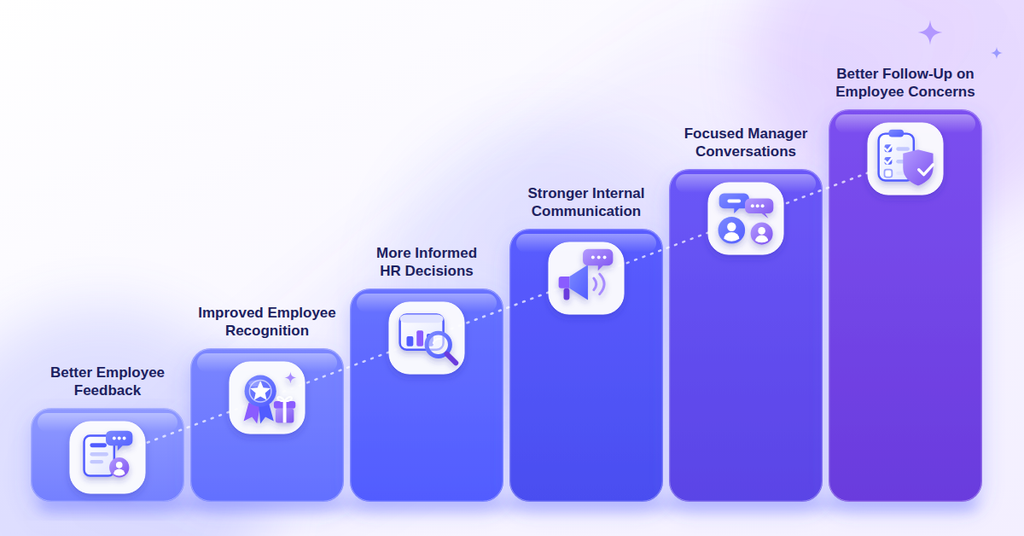
1. Better Employee Feedback
Employee engagement software gives employees structured ways to share their experiences, concerns, and suggestions. Through regular surveys and feedback forms, HR teams can better understand employee needs and identify issues that may otherwise go unnoticed.
2. Improved Employee Recognition
Recognizing employee contributions is essential for creating a positive workplace. Engagement tools can help managers and colleagues acknowledge achievements and celebrate milestones. As a result, employees have more opportunities to feel valued for their work.
3. More Informed HR Decisions
Employee engagement reports help HR teams identify recurring concerns, feedback patterns, and participation trends. Instead of relying only on assumptions, HR professionals can use these insights to make more informed decisions about employee experience initiatives.
4. Stronger Internal Communication
Effective communication helps employees understand company updates, policies, and organizational goals. Employee engagement tool can make important information easier to share across teams and locations. This helps ensure that employees remain informed and connected with the wider organization.
5. More Focused Manager Conversations
Employee feedback can help managers understand where team members may need additional support, guidance, or resources. With a clearer understanding of employee concerns, managers can have more focused conversations and address workplace challenges more effectively.
6. Better Follow-Up on Employee Concerns
Collecting feedback is only the first step as organizations must also take action based on the insights they receive. Employee engagement software can help HR teams organize action plans, track follow-up activities, and communicate improvements to employees. Consequently, employees can see how their feedback contributes to workplace changes.
However, employee engagement software alone cannot guarantee higher engagement or lower attrition. Long-term results depend on leadership, workplace culture, manager behavior, employee trust, and the organization’s willingness to act on the feedback it receives.
How to Choose the Right Employee Engagement Software?
Choose employee engagement software by identifying your main goals, checking essential features, assessing workforce requirements, reviewing integrations and privacy controls, comparing total costs, and evaluating how the platform supports action on employee feedback.
1. Identify Your Main Engagement Goal
Decide whether you need to improve feedback collection, recognition, internal communication, employee wellbeing, or manager effectiveness. This helps narrow the shortlist to products built for your primary requirement.
2. Check the Features You Actually Need
List the essential features before comparing vendors. For example, a company that wants to measure engagement may prioritize anonymous surveys and analytics, while another may need recognition and rewards to encourage appreciation.
3. Consider Your Workforce Size and Structure
A small business may need a simple, easy-to-use platform. A larger organization may require department-level reporting, integrations, role-based access, and support for multiple locations or frontline employees.
4. Review Integrations
Check whether the platform connects with your existing HRMS, payroll system, communication tools, and identity management systems. Integrations can reduce duplicate data entry and help HR teams work more efficiently.
5. Evaluate Privacy and Data Security
Employee feedback can contain sensitive information. Understand how survey anonymity works, who can access responses, how employee data is stored, and which privacy and security requirements the vendor supports.
6. Compare Pricing and Implementation
Look beyond the headline subscription price. Ask about minimum employee counts, implementation fees, training, support, add-on modules, reward budgets, and contract terms.
7. Check How the Platform Supports Action
Collecting feedback is only the first step. Look for reporting and follow-up capabilities that help HR teams and managers identify priorities, assign actions, communicate improvements, and monitor progress.
Conclusion
The best employee engagement software is the one that helps your organization understand employees and turn their feedback into meaningful improvements. Before choosing a platform, compare its core features, pricing, integrations, privacy controls, and suitability for your workforce.
If your priority is employee surveys and feedback, consider a listening-focused platform. If recognition is your main goal, look at tools built around rewards and appreciation. If you want engagement capabilities alongside employee records, performance, and everyday HR operations, an integrated HRMS may be worth evaluating.

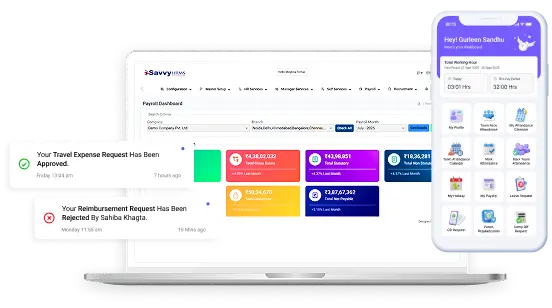


Looking for Employee Engagement Tools Alongside Your HRMS?
Explore how Savvy HRMS can help your team collect employee feedback and manage HR processes in one platform.
Frequently Asked Questions
What is the best employee engagement software in 2026?
The best employee engagement software depends on your business needs. Savvy HRMS may suit businesses looking for employee surveys within a broader HRMS, Microsoft Glint focuses on engagement measurement, Darwinbox emphasizes workplace connections and recognition, and Lattice connects engagement insights with performance management.
What is the difference between employee engagement software and HRMS?
Employee engagement tool focuses on employee feedback, surveys, recognition, communication, and workplace experience. An HRMS manages broader processes such as employee records, attendance, leave, and payroll. Some HRMS platforms also include employee engagement features.
What is employee engagement survey software?
Employee engagement survey software helps organizations collect employee feedback through questionnaires, pulse surveys, and structured forms. Depending on the platform, it may also provide reporting and analytics to help HR teams identify workplace concerns and areas for improvement.
How much does employee engagement software cost?
Pricing varies by vendor, workforce size, features, and implementation requirements. Some vendors publish subscription plans, while others provide custom quotes. Compare the total cost, including required modules, integrations, support, and any additional fees, before making a decision.
Can employee engagement software improve employee retention?
An engagement software can support retention efforts by helping organizations understand employee concerns, recognize contributions, and identify areas for improvement. However, software alone cannot guarantee lower attrition. Results depend on how effectively organizations respond to feedback and address workplace issues.
What should small businesses look for in employee engagement tools?
Small businesses should prioritize ease of use, affordable pricing, simple surveys, recognition features, mobile access, and useful reporting. They should also check whether their existing HRMS already includes the engagement features they need.
How do you choose the right employee engagement platform?
Start by identifying your main goal, such as collecting feedback, improving recognition, or measuring employee sentiment. Then compare features, reporting, privacy controls, integrations, pricing, and suitability for your workforce before selecting a platform.