

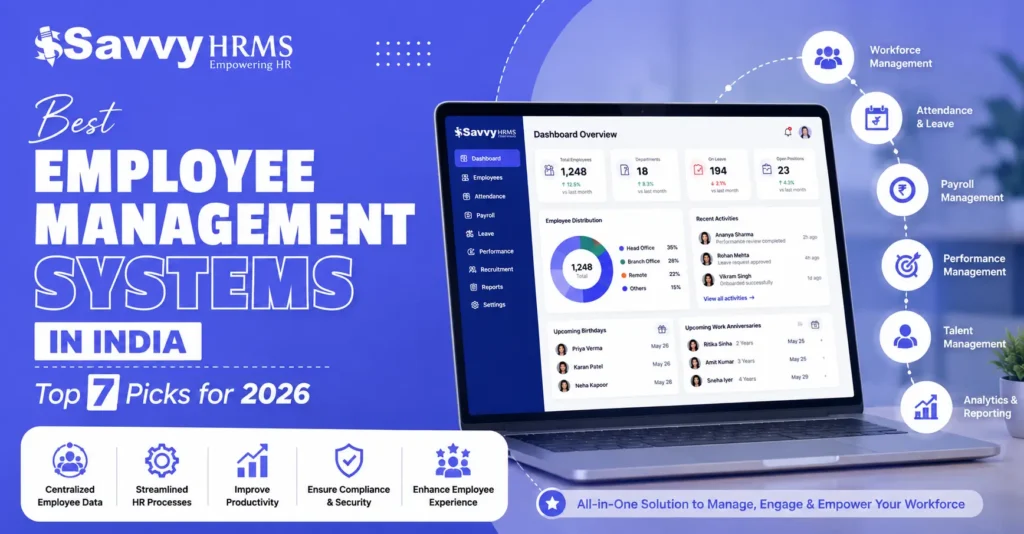
Best Employee Management Systems in India: Top 7 Picks for 2026


-
AuthorRandhir Kumar Jha
-
 Last Updated
August 25, 2026
Last Updated
August 25, 2026
-
 Reading Time
19 Mins
Reading Time
19 Mins
Managing employees becomes increasingly difficult as a business grows. HR teams have to keep track of employee records, attendance, leave, payroll, documents, performance, onboarding, and compliance, often across multiple spreadsheets and disconnected tools.
An employee management system brings these activities together in one place. Instead of switching between different systems, HR teams can manage employee information, automate routine workflows, and give employees easier access to everyday HR services.
But with so many HRMS and employee management platforms available in India, choosing the right one can be confusing. In this guide, we compare 7 best employee management systems based on their features, employee lifecycle capabilities, usability, integrations, support, implementation, and suitability for Indian businesses.
Our Evaluation Methodology
We evaluated these employee management systems based on the factors that matter most to Indian businesses in 2026. Our assessment considers employee data management, attendance and leave, payroll capabilities, onboarding and offboarding, employee self-service, performance management, reporting, workflow automation, integrations, compliance support, ease of use, scalability, and implementation.
We also considered how well each platform can support different business sizes and workforce structures. Pricing is included where vendors publicly disclose it; where pricing depends on employee count, modules, or business requirements, we have noted that businesses generally need to request a customized quote.
What Is an Employee Management System?
An employee management system is software designed to help businesses organize, manage, and automate employee-related processes from a centralized platform.
Think of it as a digital home for your workforce information. Instead of maintaining employee details, attendance records, leave balances, documents, payroll inputs, and HR requests in separate spreadsheets or applications, HR teams can manage them through one connected system.
Modern employee management systems can go much further than simply storing employee records. They can support onboarding, attendance, leave, payroll, performance, employee self-service, workflows, reporting, compliance, and even employee engagement.
For Indian companies, this can be particularly useful because HR operations often involve multiple statutory requirements, salary components, attendance rules, leave policies, and employee documentation.
What Does an Employee Management System Cover?
A modern employee management system can cover almost every major stage of the employee lifecycle. Depending on the platform and package selected, it may include:
- Employee information management: Centralizes employee profiles, job details, organizational information, documents, and employment history.
- Attendance management: Tracks employee attendance, working hours, shifts, overtime, and attendance regularization.
- Leave management: Automates leave applications, approvals, balances, policies, and holiday calendars.
- Payroll management: Connects attendance and employee data with salary processing, deductions, payslips, and statutory calculations.
- Onboarding: Helps HR teams collect documents, complete joining formalities, assign tasks, and create structured onboarding workflows.
- Performance management: Supports goals, reviews, feedback, appraisals, OKRs, and performance tracking.
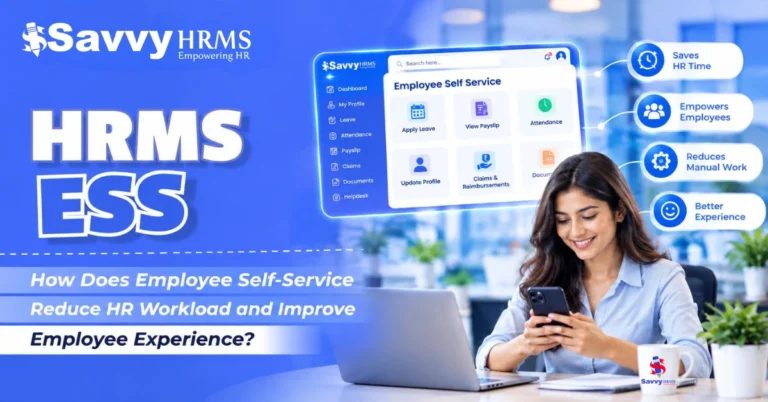
- Employee self-service: Allows employees to access payslips, apply for leave, view attendance, update information, and submit requests.
- Document management: Stores employee documents and HR records digitally with controlled access.
- HR workflows: Automates approvals, reminders, requests, transfers, promotions, confirmations, and other HR processes.
- Reports and analytics: Provides workforce data, dashboards, reports, and insights for better HR decisions.
The exact capabilities vary from one employee management software to another, so businesses should evaluate features based on their actual HR processes rather than simply choosing the platform with the longest feature list.
Why Do Indian Companies Need an Employee Management System?
For many Indian businesses, employee management becomes complicated long before HR teams realize they have outgrown spreadsheets.
A growing workforce means more employee records, more leave requests, more attendance data, more salary changes, more documents, and more approvals. When these processes are handled manually, even a small mistake can create unnecessary HR work.
An employee management system helps address this by creating a centralized source of employee information and automating repetitive processes.
1. Centralized Employee Information
An employee management system keeps employee profiles, documents, job details, attendance records, and other important information in one centralized location, making HR data easier to access and manage.
2. Less Manual HR Work
- Automates repetitive HR tasks and approval workflows.
- Reduces duplicate data entry and spreadsheet dependency.
- Sends automated reminders and notifications.
- Simplifies routine employee requests.
3. Better Attendance and Leave Visibility
HR teams and managers can quickly view attendance, working hours, shifts, leave balances, holidays, and regularization requests without checking multiple records or systems.
4. Easier Payroll Processing
- Connects attendance and leave data with payroll.
- Reduces manual payroll calculations and reconciliation.
- Helps maintain accurate employee salary information.
- Makes payslip generation and payroll reporting easier.
5. Better Employee Experience
Employees can access everyday HR services through self-service portals, reducing their dependency on HR teams for routine requests and improving transparency.
6. Stronger Compliance Processes
- Maintains organized employee and payroll records.
- Supports standardized HR workflows and approvals.
- Helps manage applicable statutory payroll processes.
- Creates better visibility into compliance-related information.
7. Better Decision-Making
HR dashboards and reports turn workforce data into useful insights, helping managers understand headcount, attendance, attrition, performance, and other important employee trends.
What Are the Key Features to Look for in an Employee Management System?
Not every business needs the same employee management software. A startup with 50 employees may have very different requirements from an enterprise with thousands of employees across multiple locations.
However, the following features should be high on your evaluation list:
- Centralized employee database for maintaining accurate employee information.
- Attendance and leave management for tracking time, shifts, leave, and holidays.
- Payroll integration for connecting HR data with salary processing.
- Employee self-service for reducing dependency on HR teams.
- Onboarding and offboarding workflows for structured employee lifecycle management.
- Performance management for goals, appraisals, feedback, and reviews.
- Document management for secure digital employee records.
- Workflow automation for approvals, notifications, and recurring HR tasks.
- Reports and analytics for workforce insights and decision-making.
- Role-based access controls for protecting sensitive employee information.
- Mobile accessibility for employees and managers working across locations.
- Integrations with payroll, accounting, attendance devices, communication tools, and other business applications.
- Scalability so the platform continues to work as the organization grows.
- India-specific payroll and compliance capabilities where required.
7 Best Employee Management Systems for Indian Companies in 2026
The following 7 platforms stand out for different types of Indian businesses. They are not identical products, and each has different strengths depending on company size, HR complexity, workforce structure, and budget.
1. Savvy HRMS
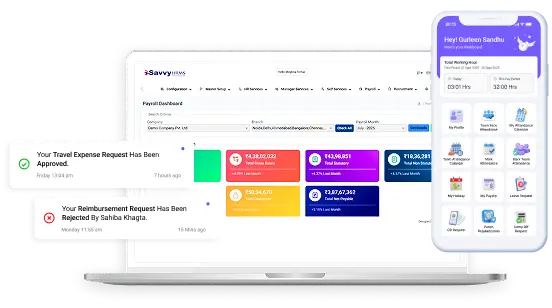
Savvy HRMS is an integrated HRMS and payroll platform designed to help Indian businesses manage employees and HR operations through a centralized system. Its capabilities span employee information, attendance, leave, payroll, onboarding, employee self-service, performance, assets, workflows, analytics, and AI-powered HR automation.
Key Features
- Centralized employee records keep workforce information organized and easily accessible.
- AI-powered face recognition supports attendance with geofencing and anti-spoofing capabilities.
- Attendance, leave, holidays, requests, approvals, and payroll can work together.
- Employee self-service helps employees access HR information and complete routine requests.
- Automated onboarding workflows help HR teams reduce repetitive joining formalities.
- Payroll automation supports salary processing, payslip generation, and statutory compliance processes.
- Performance and appraisal tools help managers monitor goals, reviews, and employee development.
- Asset management tracks company assets allocated, returned, and assigned to employees.
- HR analytics and AI tools provide insights into workforce trends and employee data.
Implementation and Support Reality
Implementation should be evaluated around your existing employee data, attendance devices, payroll structure, workflows, and integrations. For businesses moving from spreadsheets or fragmented HR tools, a phased rollout can make adoption easier. A practical implementation plan should include data migration, configuration, user training, testing, and post-go-live support.
Best For
Indian small, mid-sized, and large businesses looking for an integrated HRMS covering employee management, attendance, payroll, onboarding, performance, and workforce automation.
2. Darwinbox
Darwinbox is an enterprise-focused HR technology platform covering areas such as core HR, payroll, talent management, workforce management, and employee experience. Its India payroll capabilities connect attendance and leave information with salary processing and statutory calculations.
Key Features
- Centralized employee data supports core HR and workforce management.
- Attendance and leave information can sync directly with payroll processes.
- India payroll supports statutory deductions and tax-related calculations.
- Configurable workflows help businesses manage approvals and HR processes.
- Employee self-service supports digital access to common HR activities.
- Payroll supports custom pay groups, frequencies, arrears, and reimbursements.
Implementation and Support Reality
Darwinbox is better suited to organizations with structured HR processes and more complex implementation requirements. Larger businesses should plan for configuration, integrations, data migration, testing, change management, and employee training before full deployment.
Best For
Mid-sized and large enterprises looking for a broad, configurable HR technology platform.
3. greytHR
greytHR is a full-suite HRMS focused strongly on employee records, payroll, attendance, leave, onboarding, employee self-service, HR workflows, and compliance. Its platform brings multiple employee lifecycle processes under one system.
Key Features
- Centralized employee database reduces duplicate and inconsistent workforce information.
- Attendance integrates with leave management and payroll processing.
- Employee self-service provides payslips, leave, attendance, documents, and requests.
- Automated workflows handle approvals, regularization, expenses, and employee transactions.
- HR dashboards and reports provide workforce information for decision-making.
- AI assistant NAVOS supports HR actions across multiple HR processes.
Implementation and Support Reality
greytHR provides extensive online documentation, administrator resources, employee guides, FAQs, videos, and product updates. Implementation complexity will depend on the modules, workforce size, existing payroll setup, integrations, and customization required.
Best For
Indian businesses looking for established HRMS capabilities across employee management, payroll, attendance, leave, and employee self-service.
4. factoHR
factoHR is an HRMS and payroll platform covering employee information, onboarding, workflows, documents, employee self-service, attendance, payroll, analytics, and workforce management. Its platform also offers mobile capabilities and attendance technologies such as face recognition and geofencing.
Key Features
- Centralized employee information keeps workforce data organized securely.
- Digital onboarding simplifies employee forms and document collection.
- Employee self-service allows employees to manage common HR activities.
- Face recognition and geofencing support modern attendance management.
- Workforce dashboards provide insights into attendance, attrition, and payroll.
- Workflow automation reduces repetitive approvals and administrative HR tasks.
Implementation and Support Reality
factoHR implementation should be planned around employee data migration, payroll configuration, attendance integration, workflow setup, and employee adoption. Businesses should confirm implementation timelines, training, support channels, and integration requirements during vendor discussions.
Best For
Businesses seeking an integrated HRMS with payroll, attendance, employee self-service, and workforce analytics.
5. Qandle
Qandle positions itself as an all-in-one HR platform covering recruitment, attendance, payroll, employee records, performance, employee helpdesk, analytics, and other employee lifecycle processes. It also emphasizes customizable workflows and integrations.
Key Features
- Centralized employee profiles store workforce data and documents securely.
- GPS, biometric, and web attendance support flexible workforce tracking.
- Automated payroll includes tax and compliance-related calculations.
- Performance tools support goals, OKRs, reviews, and feedback.
- HR helpdesk manages employee questions, tickets, and knowledge resources.
- Dashboards provide customizable workforce metrics and HR reports.
Implementation and Support Reality
Qandle offers multiple HR modules, so implementation can range from relatively straightforward to more involved depending on the processes being automated. Businesses should map workflows, integrations, permissions, and employee data before deployment.
Best For
Growing businesses that want customizable HR workflows across employee management, payroll, attendance, performance, and employee support.
6. Zimyo
Zimyo offers a broad HRMS with employee management, payroll, attendance, leave, employee self-service, onboarding, helpdesk, assets, workflows, learning, and other HR capabilities. Its employee management module supports employee profiles, organizational structures, roles, permissions, and centralized employee information.
Key Features
- Centralized employee profiles provide a complete workforce information view.
- Organizational charts help visualize reporting structures and team relationships.
- Role-based permissions control employee data access and editing rights.
- Attendance and leave connect with payroll for salary calculations.
- Employee helpdesk helps automate and track HR queries.
- Learning tools support employee development and training programs.
Implementation and Support Reality
Zimyo’s broad module coverage means businesses should identify which modules they actually need before implementation. Data migration, permissions, payroll configuration, attendance rules, integrations, and employee training should be included in the rollout plan.
Best For
Businesses wanting a broad HRMS with employee management, workforce automation, payroll, attendance, helpdesk, and additional HR modules.
7. PeopleStrong
PeopleStrong is a broad HCM platform designed particularly for organizations with complex workforce and employee lifecycle requirements. Its platform covers core HR, payroll, leave and attendance, recruitment, onboarding, performance, learning, career and skills, and succession planning.
Key Features
- Unified employee records provide a single view of workforce information.
- Dynamic workflows automate HR processes, approvals, and lifecycle activities.
- Employee lifecycle management tracks events from hire through exit.
- Attendance supports shifts, overtime, geotagging, and geofencing.
- Payroll connects employee data with automated salary processing.
- Performance, learning, skills, and succession support broader talent management.
Implementation and Support Reality
PeopleStrong is designed for larger and more complex organizations, so implementation generally requires structured planning around processes, integrations, data, permissions, and employee adoption. Its enterprise positioning makes implementation methodology an important part of vendor evaluation.
Best For
Large enterprises and organizations requiring comprehensive HCM, workforce management, payroll, and talent capabilities.
Comparison Table of the 7 Best Employee Management Systems
| Software | Best For | Key Features | Employee Management Capabilities | Integrations | Ease of Use | Support & Implementation | Pricing |
| Savvy HRMS | All Indian Businesses | Core HR, payroll, attendance, leave, onboarding, performance, AI | Employee records, ESS, lifecycle workflows, assets, analytics | Accounting, WhatsApp/SMS, SSO, AD, biometric and other integrations | User-friendly and centralized | Demo-led implementation and configuration based on business requirements | Contact vendor |
| Darwinbox | Mid-sized and large enterprises | Core HR, payroll, talent, workforce management | Lifecycle management, workflows, payroll-linked attendance and leave | Enterprise integrations and APIs | Highly configurable | Structured enterprise implementation | Custom pricing |
| greytHR | Indian businesses needing HRMS + payroll | Payroll, attendance, leave, ESS, onboarding, workflows | Employee records, lifecycle, documents, self-service | APIs and payroll/attendance ecosystem | Generally straightforward | Extensive help resources plus implementation support | Plan-dependent |
| factoHR | Growing businesses | Core HR, payroll, attendance, ESS, analytics | Employee data, onboarding, workflows, documents, self-service | Attendance, payroll and business integrations | Mobile-friendly and accessible | Implementation depends on modules and configuration | Custom pricing |
| Qandle | Customizable HR operations | HR, payroll, attendance, performance, helpdesk | Profiles, documents, lifecycle, workflows, ESS | Slack, Teams, Zoom and other connectors | Flexible and customizable | Support options vary by plan | Plan-dependent |
| Zimyo | Businesses wanting broad HRMS coverage | Core HR, payroll, attendance, leave, helpdesk, assets | Profiles, org charts, permissions, lifecycle, ESS | Payroll, attendance and business integrations | Intuitive interface | Module-based implementation | ₹80-₹160/user/month for listed Basic/Standard plans; Enterprise custom |
| PeopleStrong | Large and complex organizations | HCM, payroll, workforce, talent, learning | Hire-to-exit lifecycle, workflows, ESS, workforce data | Enterprise ecosystem and integrations | Mobile-first, enterprise-oriented | Structured implementation methodology | Custom pricing |
Pricing and capabilities can change by plan, employee count, modules, implementation scope, and vendor negotiations. Businesses should confirm the latest commercial terms directly with the vendor before purchasing.
How Does an Employee Management System Simplify Employee Lifecycle Management?
An employee’s journey in a company involves much more than simply joining the organization and receiving a salary. From the first day of onboarding to performance reviews, promotions, transfers, and eventual exit, HR teams handle various activities at every stage.
This is where an employee management system becomes useful. It connects different employee-related processes in one place, so HR teams don’t have to maintain separate spreadsheets, documents, or systems for every stage.
For example, it can help with:
- Onboarding: Collect employee documents, complete joining formalities, and assign onboarding tasks.
- Employee records: Keep personal, professional, salary, and employment information updated.
- Attendance and leave: Track attendance, working hours, shifts, leave balances, and requests.
- Performance: Manage goals, appraisals, feedback, and performance reviews.
- Employee changes: Record promotions, transfers, department changes, and salary revisions.
- Self-service: Let employees access payslips, apply for leave, check attendance, and raise HR requests.
- Offboarding: Manage resignation, approvals, asset returns, documentation, and exit processes.
The real advantage is that all these stages remain connected. When an employee moves from one stage to another, HR doesn’t have to start the process from scratch or update the same information across multiple tools.
This creates a smoother employee experience while helping HR teams save time, reduce errors, and keep employee information organized throughout the entire employee lifecycle.
How Does It Help HR Teams Manage Attendance, Leave, and Payroll?
Attendance, leave, and payroll are closely connected, but when they are managed separately, even a small mismatch can create extra work for HR. An employee’s attendance affects leave balances, working hours, overtime, and sometimes even the final salary calculation.
An employee management system brings these processes together, making it easier to keep the information consistent and up to date.
For example, HR teams can:
- Track attendance: Monitor working hours, shifts, late marks, overtime, and attendance regularization from one place.
- Manage leave: Employees can apply for leave, managers can approve requests, and HR can automatically track available leave balances.
- Connect attendance with payroll: Approved attendance, leave, overtime, and other relevant data can flow into payroll calculations.
- Reduce manual reconciliation: HR teams spend less time comparing spreadsheets and correcting mismatched attendance or leave records.
- Give employees self-service access: Employees can check attendance, view leave balances, apply for leave, and access payslips without repeatedly contacting HR.
This connection makes the entire process more straightforward. Instead of HR collecting attendance data from one system, leave information from another, and payroll inputs from spreadsheets, everything can work together within a single employee management platform.
For growing Indian companies, this can mean fewer manual errors, faster payroll processing, and better visibility into employee attendance and leave data.
How Does an Employee Management System Support HR Compliance in India?
HR compliance can quickly become complicated when a business has to keep track of employee records, payroll, attendance, leave, deductions, and different statutory requirements. Doing all of this manually can increase the chances of missed deadlines, incorrect calculations, or incomplete records.
An employee management system helps bring these processes into one structured platform. Instead of maintaining compliance-related information across different spreadsheets and files, HR teams can keep employee and payroll data organized and easier to access.
It can support HR teams by helping with:
- Employee records: Maintain organized employee information and required documentation.
- Payroll calculations: Automate applicable salary deductions and payroll-related calculations.
- Attendance and leave records: Keep accurate records that can feed into payroll processing.
- Statutory processes: Support applicable requirements related to PF, ESI, professional tax, TDS, and other payroll compliance areas.
- Approvals and workflows: Maintain structured approval processes for salary changes, employee requests, and other HR activities.
- Reports and records: Generate reports that make it easier to review payroll and workforce information.
- Access control: Restrict sensitive employee and payroll information to authorized users.
However, an important point is that HR software does not automatically make a company compliant. Businesses still need to understand the laws applicable to their industry, workforce, and location and configure their HR processes accordingly.
When properly configured, an employee management system can make compliance easier to manage by keeping information organized, reducing manual work, and giving HR teams better visibility into important employee and payroll processes.
What Are the Benefits of Using an Employee Management System for Growing Indian Businesses?
Growth is usually a good problem to have, but HR administration can become difficult very quickly.
A business that manages 30 employees through spreadsheets may struggle when it reaches 150. A company managing 500 employees manually may find it extremely difficult when it expands to multiple locations or thousands of employees.
An employee management system gives growing businesses a structured foundation.
1. Centralized Workforce Information
An employee management system keeps employee profiles, documents, attendance, leave, and other workforce information in one place, making it easier for HR teams to access and update records.
2. Reduced Administrative Workload
- Automates repetitive HR tasks and approval processes.
- Reduces manual data entry and follow-ups.
- Sends notifications and reminders automatically.
- Simplifies routine employee requests.
3. Better Scalability
As the workforce grows, HR processes can become harder to manage manually. An employee management system provides a structured platform that can support additional employees, teams, departments, and locations.
4. Improved Employee Self-Service
- Employees can apply for leave independently.
- Payslips and HR documents remain easily accessible.
- Employees can check attendance and leave balances.
- Routine HR requests can be submitted online.
5. More Accurate HR Data
Centralizing employee information reduces duplicate entries and scattered records. HR teams can work with more consistent and up-to-date employee data across different HR processes.
6. Better Workforce Visibility
- Track headcount and employee movements.
- Monitor attendance and leave patterns.
- Review performance information.
- Analyze attrition and workforce trends.
7. Stronger Process Consistency
Standardized workflows help HR teams follow the same processes for approvals, onboarding, employee changes, leave requests, and other routine activities across departments.
8. Better Collaboration Between HR and Managers
- Managers can approve leave and attendance requests.
- Managers can participate in performance reviews.
- HR and managers can access relevant employee information.
- Approval responsibilities become clearer.
9. Easier Integration
Connecting the employee management system with payroll, attendance devices, accounting platforms, communication tools, and other applications helps reduce data silos and unnecessary manual transfers.
10. More Time for Strategic HR
When routine administrative work is automated, HR teams can spend less time searching for information or following up on requests and more time focusing on employee development, engagement, and workforce planning.
How to Choose the Best Employee Management System for Your Business?
There is no single employee management system that is perfect for every company.
The best choice depends on your employee count, HR processes, industry, locations, budget, payroll complexity, and future growth plans.
Before making a decision, ask the following questions:
1. What problems are you trying to solve?
Do you primarily need employee records and attendance, or do you need a complete HRMS covering payroll, performance, recruitment, onboarding, and analytics?
2. How many employees do you have?
Choose a platform that can comfortably handle your current workforce while also supporting your expected growth.
3. Does it support Indian payroll and HR requirements?
If payroll is part of your requirement, verify the platform’s support for the statutory processes applicable to your organization.
4. Can employees use it easily?
A technically powerful system will not deliver much value if employees and managers avoid using it. Check the web interface, mobile application, employee self-service, and approval experience.
5. Can it integrate with your existing systems?
Check compatibility with accounting software, attendance devices, biometric systems, communication platforms, recruitment tools, identity systems, and other applications you already use.
6. How flexible are workflows and permissions?
Every organization has different approval structures. Make sure you can configure departments, roles, reporting managers, approval levels, and access permissions.
7. What does implementation involve?
Ask about data migration, configuration, integrations, training, testing, go-live support, and post-implementation assistance.
8. What will the total cost be?
Don’t look only at the monthly software fee. Consider implementation, integrations, additional modules, support, customization, and future employee growth.
9. How secure is employee data?
Ask about authentication, role-based access, encryption, backups, audit logs, disaster recovery, and the vendor’s overall security practices.
10. Can the platform grow with you?
Your HR software should not become the next bottleneck. Choose a system that can support additional employees, locations, departments, workflows, and HR modules as your business grows.
Conclusion
The right employee management system can transform HR from a collection of disconnected administrative tasks into a more organized, automated, and employee-friendly operation. Platforms such as Darwinbox, greytHR, factoHR, Qandle, Zimyo, and PeopleStrong offer different strengths, while the best choice ultimately depends on your organization’s size, processes, workforce structure, and growth plans.
For Indian businesses looking for a broader HRMS that brings employee management, attendance, leave, payroll, onboarding, performance, assets, workflows, analytics, and AI-powered capabilities together, Savvy HRMS
is worth considering. Its focus on integrated HR operations can help growing organizations reduce manual work while creating a simpler experience for HR teams, managers, and employees.