

Top 5 HR Software for Remote and Hybrid Teams in India in 2026


-
AuthorChandra Shekhar Verma
-
 Last Updated
September 23, 2026
Last Updated
September 23, 2026
-
 Reading Time
19 Mins
Reading Time
19 Mins
Top 5 HR software for remote and hybrid teams in India in 2026 can help businesses manage attendance, leave, payroll, employee information, performance, workflows, and employee communication from a centralized platform. With distributed teams becoming more common, businesses need HR technology that works beyond the traditional office environment.
Remote and hybrid work have changed how companies manage employees. HR teams now need to coordinate people working from home, offices, different cities, client locations, and flexible schedules while maintaining accurate attendance, leave records, payroll inputs, and employee engagement.
The right HR software for remote and hybrid teams makes these processes easier by providing cloud-based access, mobile HR tools, digital workflows, employee self-service, remote attendance, payroll automation, and real-time workforce information. For Indian businesses, India-specific payroll and statutory compliance capabilities are equally important.
In this blog, we’ll explore the top 5 HR software for remote and hybrid teams in India in 2026, comparing their key features, benefits, ideal use cases, and overall suitability for modern workplaces.
How We Ranked This HR Software for Remote and Hybrid Teams
We ranked these HR software platforms based on how effectively they can support remote and hybrid workforce management rather than simply comparing the number of HR features available.
The evaluation considers the following criteria:
| Evaluation Criteria | What We Considered |
| Remote & Hybrid Attendance | Mobile attendance, online attendance, GPS, geofencing, biometric or face recognition capabilities |
| Core HR | Centralized employee records, documents, employee lifecycle management |
| Leave Management | Digital leave requests, approvals, balances, and workflows |
| Payroll | Automated payroll, salary processing, deductions, and payroll integration |
| Employee Self-Service | Employee access to attendance, leave, payslips, documents, and requests |
| Mobile Accessibility | Availability of mobile-based HR functions for distributed employees |
| Workflow Automation | Digital approvals, notifications, reminders, and configurable workflows |
| Analytics & Reporting | Workforce dashboards, attendance reports, payroll reports, and HR insights |
| Integration | Ability to connect HR with payroll, ERP, accounting, attendance, and other systems |
| Scalability | Suitability for growing businesses and different workforce sizes |
| India-Specific HR Needs | Payroll and statutory compliance requirements relevant to Indian organizations |
| Overall Fit | How well the platform supports remote, hybrid, and distributed workforce requirements |
This approach helps identify software that can support the complete HR lifecycle instead of focusing only on one function such as attendance or payroll.
At A Glance
| Rank | HR Software | Best For | Overall Fit |
| 1 | Savvy HRMS | Growing and mid-to-large Indian businesses with distributed or hybrid workforces | ⭐⭐⭐⭐⭐ |
| 2 | Darwinbox | Enterprises looking for a broad digital employee experience platform | ⭐⭐⭐⭐⭐ |
| 3 | HRMantra | Businesses looking for integrated HR, attendance, payroll, and employee management | ⭐⭐⭐⭐½ |
| 4 | factoHR | Growing businesses needing attendance, payroll, ESS, and workforce automation | ⭐⭐⭐⭐½ |
| 5 | greytHR | Indian businesses seeking established HR and payroll automation | ⭐⭐⭐⭐½ |
Note: Overall fit is our editorial assessment based on the criteria above. It is not a vendor rating or third-party review score.
1. Savvy HRMS
Overview
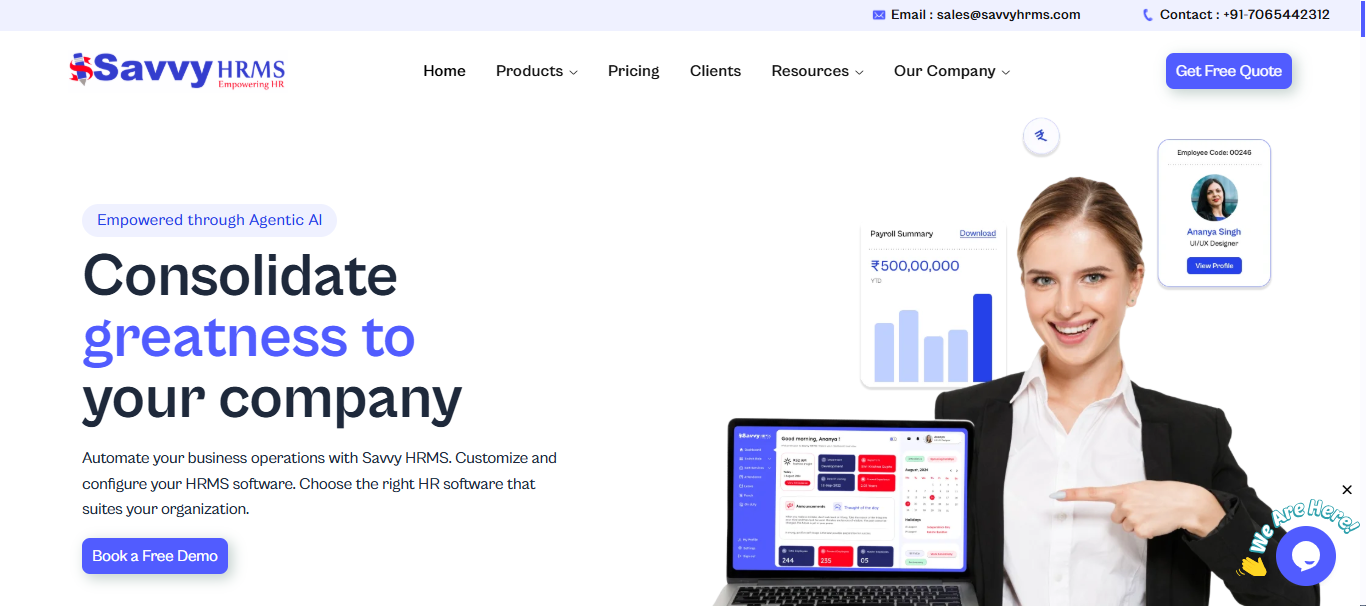
Savvy HRMS is a comprehensive HRMS and payroll platform built for Indian businesses managing office, remote, hybrid, and distributed teams. With 20+ HR modules, it supports core HR, attendance, leave, payroll, performance, recruitment, employee self-service, workflows, analytics, mobile attendance, face recognition, and work-from-home management.
Key Features
- Remote & Mobile Attendance: Lets employees mark attendance digitally from approved locations using mobile or web-based access.
- Face Recognition Attendance: Enables secure attendance tracking through face recognition for convenient and reliable employee verification.
- Work-from-Home Management: Helps HR teams manage work-from-home requests, approvals, policies, and employee work schedules.
- Shift & Roster Management: Makes it easier to create, assign, and manage shifts and rosters for distributed teams.
- Leave Management: Allows employees to apply for leave digitally while managers can review and approve requests remotely.
- Automated Payroll: Connects attendance, leave, deductions, and other payroll inputs to simplify accurate salary processing.
- Employee Self-Service: Gives employees access to payslips, attendance, leave balances, requests, documents, and other HR services.
- Performance Management: Helps managers set goals, track performance, conduct reviews, and monitor employee progress digitally.
- HR Analytics & Reports: Provides workforce reports and HR insights to help businesses monitor attendance, employee data, payroll, and workforce trends.
Who Should Choose Savvy HRMS?
Savvy HRMS is a strong choice for Indian businesses that want one integrated HR platform for remote, hybrid, office, field, and multi-location employees. It is particularly suitable for organizations that need configurable HR policies, attendance flexibility, payroll automation, employee self-service, and extensive HR functionality as they grow.
Businesses with complex workforce structures can also benefit from its broad module coverage. Organizations managing multiple locations, shifts, different attendance policies, or a combination of office and remote employees can use configurable HR workflows rather than maintaining separate systems for every workforce process.
Who Might Not Need Savvy HRMS?
Very small businesses with only basic HR requirements may not need a comprehensive HRMS with extensive modules. If an organization only needs a simple employee directory or basic leave tracking, a smaller point solution may be sufficient.
However, businesses expecting their workforce or HR requirements to grow may benefit from adopting an integrated platform earlier rather than adding separate tools for attendance, payroll, leave, employee self-service, and performance management later.
Best For
Indian SMEs, mid-sized businesses, large enterprises, multi-location organizations, and companies managing a combination of remote, hybrid, office, field, and distributed employees.
Why it stands out
Its combination of broad HR functionality, remote-friendly attendance options, payroll, employee self-service, configurable workflows, mobile access, and India-focused HR capabilities makes Savvy HRMS one of the strongest overall choices for remote and hybrid teams in India in 2026.
2. Darwinbox
Overview
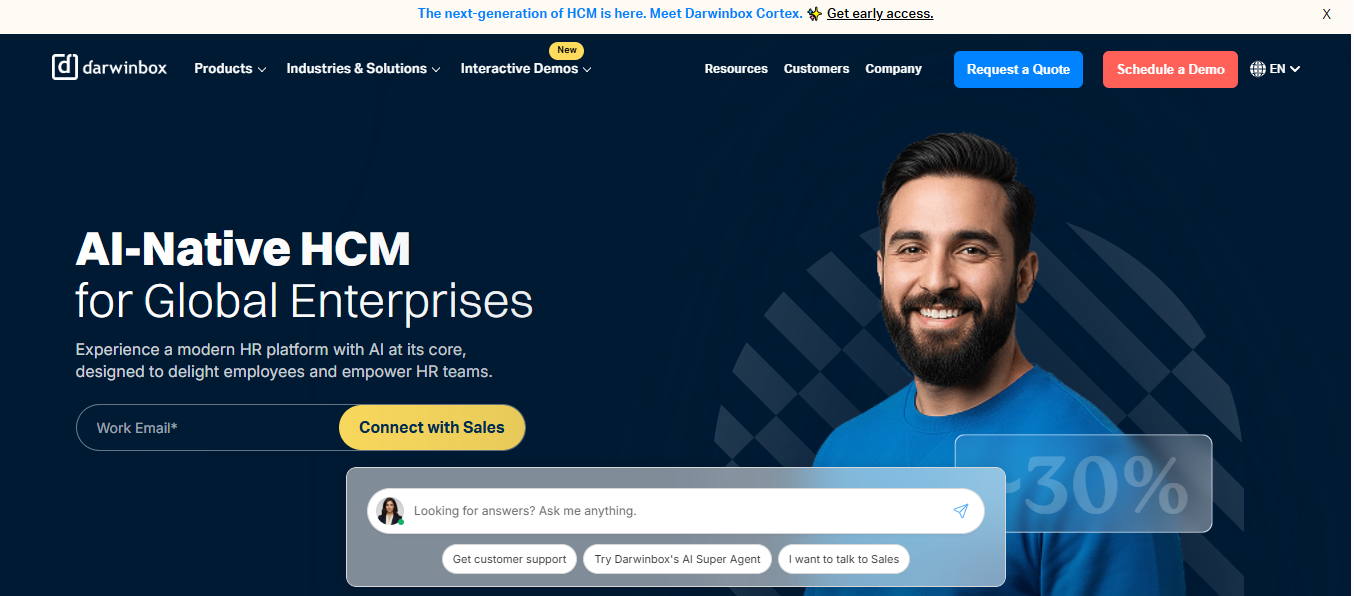
Darwinbox is a cloud-based HCM platform designed for organizations managing complex employee lifecycles. It combines core HR, talent management, workforce management, payroll, performance, recruitment, and employee experience capabilities for digitally connected workplaces.
Key Features
- Core HR Management: Centralizes employee records, documents, and workforce information.
- Attendance Management: Supports digital attendance and workforce tracking across locations.
- Payroll Management: Helps automate salary processing and payroll-related HR operations.
- Performance Management: Enables goal setting, reviews, feedback, and performance tracking.
- Talent Management: Supports recruitment, onboarding, learning, and employee development.
- Employee Experience: Provides digital tools for employee engagement and self-service.
Who Should Choose Darwinbox?
Darwinbox is suitable for large organizations that need an enterprise-focused HCM platform covering multiple stages of the employee lifecycle through one centralized digital environment.
It can be particularly useful for companies with complex workforce structures, multiple locations, and broader requirements around talent, performance, employee experience, and workforce management.
Who Might Not Need Darwinbox?
Small businesses with straightforward HR, attendance, leave, and payroll requirements may not need such a broad enterprise-oriented HCM platform.
Organizations looking for a simpler implementation or primarily requiring basic HR administration may find a less complex HRMS more appropriate.
Best For
Large enterprises requiring comprehensive HCM, talent management, workforce management, and employee experience capabilities.
3. HRMantra
Overview
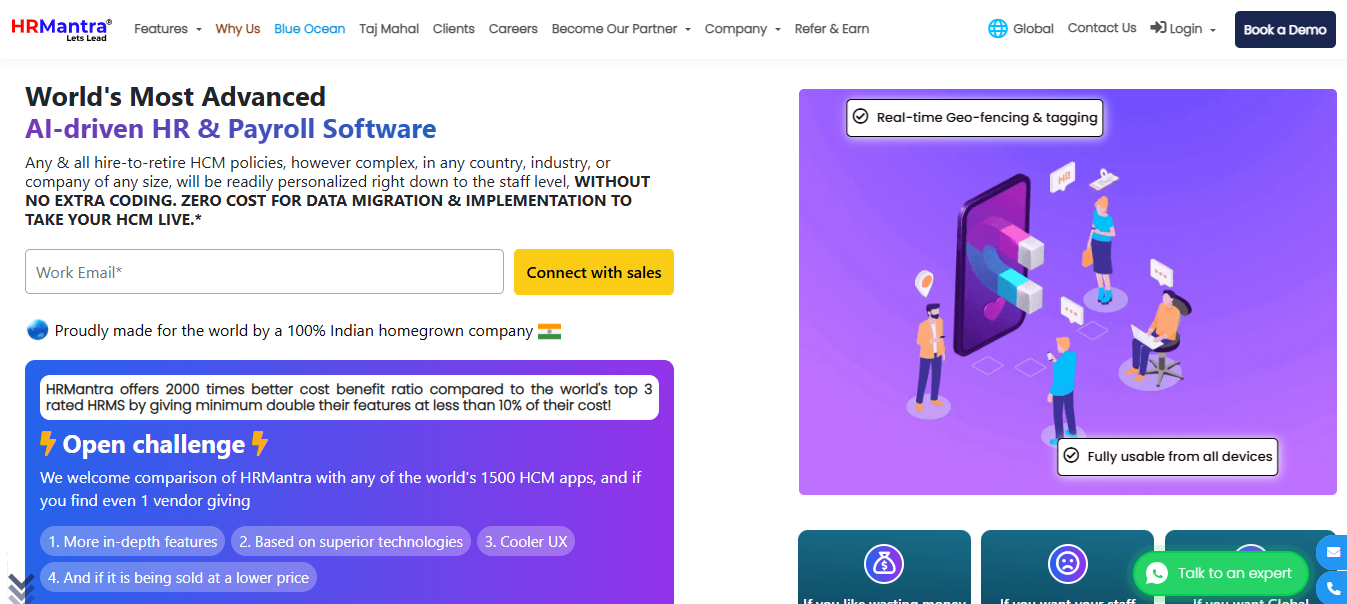
HRMantra is an integrated HR and payroll platform offering tools for attendance, leave, payroll, recruitment, performance, training, employee self-service, and workforce administration. It helps businesses manage multiple HR processes through a centralized system.
Key Features
- Attendance Management: Tracks employee attendance across different work environments.
- Payroll Management: Supports salary processing and payroll administration.
- Leave Management: Simplifies leave applications, approvals, and tracking.
- Employee Self-Service: Enables employees to access and manage routine HR activities.
- Performance Management: Supports appraisals, reviews, and employee performance tracking.
- Mobile HR: Provides mobile access to selected employee and HR processes.
Who Should Choose HRMantra?
HRMantra can suit businesses looking for an integrated HRMS that combines payroll, attendance, leave, recruitment, performance, and employee self-service within one platform.
It may be useful for organizations wanting to consolidate several HR processes and reduce dependency on separate tools for routine employee management activities.
Who Might Not Need HRMantra?
Businesses requiring only basic attendance or leave tracking may not need a complete HRMS with multiple employee-management capabilities.
Companies searching for a highly specialized solution for one specific HR function may prefer a dedicated application instead of an integrated platform.
Best For
Businesses seeking integrated HR, payroll, attendance, leave, performance, and employee self-service capabilities.
4. factoHR
Overview
factoHR is an HRMS platform focused on automating employee management, attendance, leave, payroll, onboarding, performance, analytics, and employee self-service. Its workforce-management capabilities make it relevant for growing and distributed teams.
Key Features
- Online Attendance: Enables employees to record attendance digitally.
- Geofencing: Supports location-based attendance management for eligible employees.
- Face Verification: Provides touchless attendance and employee verification capabilities.
- Payroll Management: Connects attendance and leave data with payroll processes.
- Employee Self-Service: Gives employees digital access to common HR services.
- Shift & Roster Management: Helps organizations manage schedules and workforce deployment.
Who Should Choose factoHR?
factoHR can be considered by growing organizations that need attendance, payroll, employee self-service, and workforce automation in one centralized HRMS platform.
It can be particularly useful for businesses managing multiple locations, flexible schedules, remote employees, or employees who frequently require mobile access to HR services.
Who Might Not Need factoHR?
Small teams with very simple employee structures may not require a comprehensive HRMS covering multiple workforce-management processes.
Businesses that only need basic attendance tracking could consider a more focused attendance solution instead of implementing a broader HR platform.
Best For
Growing businesses requiring attendance, payroll, employee self-service, and workforce-management automation.
5. greytHR
Overview
greytHR is a cloud-based HR and payroll platform that helps businesses manage employee records, attendance, leave, payroll, onboarding, documents, workflows, and employee self-service. It is widely suited to organizations digitizing routine HR operations.
Key Features
- Core HR: Centralizes employee profiles, records, and HR information.
- Payroll Management: Supports salary processing and payroll administration.
- Attendance Management: Helps track employee attendance and related requests.
- Leave Management: Enables digital leave applications, approvals, and balances.
- Employee Self-Service: Provides access to payslips, leave, attendance, and HR requests.
- HR Analytics: Provides reports and workforce information for HR teams.
Who Should Choose greytHR?
greytHR can be suitable for Indian businesses looking to digitize HR, payroll, attendance, leave, and employee self-service through a centralized cloud-based platform.
It may work well for organizations that want established HR automation capabilities while giving employees digital access to everyday HR information and services.
Who Might Not Need greytHR?
Very small organizations with minimal HR processes may not require a complete HR and payroll platform with multiple administrative capabilities.
Businesses requiring highly specialized workforce-management features should evaluate whether greytHR’s functionality aligns with their specific operational and remote-work requirements.
Best For
Indian SMEs and growing organizations seeking HR, payroll, attendance, leave, and employee self-service automation.
| HR Software | Best For | Biggest Advantage | Potential Integration | Ideal Employee Size |
| Savvy HRMS | Remote, hybrid, multi-location and large Indian businesses | Broad HRMS coverage with remote-friendly attendance, payroll, workflows and mobile HR | ERP, accounting, biometric, SSO, WhatsApp and other business systems | 50 – 50,000+ |
| Darwinbox | Enterprise HR and HCM | Broad employee lifecycle and HCM capabilities | Enterprise business systems and HR ecosystem | 500+ |
| HRMantra | Integrated HR and payroll management | Wide HR functionality across employee lifecycle processes | Payroll, attendance, mobile and business systems | 100 – 5,000+ |
| factoHR | Growing businesses and distributed teams | Attendance, payroll and employee self-service integration | Attendance, payroll, ERP/accounting and business tools | 50 – 5,000+ |
| greytHR | Indian SMEs and growing organizations | Strong HR, payroll and employee self-service ecosystem | Accounting, ERP, attendance and third-party systems | 50 – 5,000+ |
Note: Employee-size ranges are indicative suitability ranges for comparison, not vendor-imposed limits.
Which HR Software Is Good for Which Businesses?
The best HR software for remote and hybrid teams depends on the organization’s size, workforce structure, HR complexity, and need for automation.
1. For SMEs and Growing Businesses
factoHR and greytHR can be a strong option for businesses that want to start with core HR and gradually use additional modules as their workforce grows. Its broad module coverage can help businesses avoid managing separate applications for payroll, attendance, leave, performance, employee self-service, and other HR processes.
Savvy HRMS can also be considered by growing businesses that want integrated HR, attendance, payroll, and employee self-service.
2. For Large Enterprises
Large Organizations can consider Savvy HRMS for comprehensive HR and payroll management. Its broad HRMS capabilities, 20+ modules, and support for attendance, leave, payroll, performance, employee self-service, and workforce management make it suitable for businesses managing remote, hybrid, and multi-location teams.
Darwinbox can also be considered by enterprises requiring extensive HR modules, configurable policies, multi-location workforce management, and payroll integration.
3. For Multi-Location Businesses
Organizations with employees working across offices, remote locations, plants, branches, or field locations should prioritize attendance flexibility, shift management, location-based attendance, mobile access, payroll integration, and real-time reporting.
Savvy HRMS and factoHR are particularly relevant for businesses that need multiple attendance methods and workforce-management capabilities.
4. For Payroll-Focused Businesses
If payroll accuracy, attendance integration, statutory compliance, salary processing, and employee access to payslips are priorities, businesses should evaluate Savvy HRMS, greytHR, factoHR, and HRMantra based on their payroll requirements and implementation needs.
What Features Should You Look for in HR Software for Remote and Hybrid Teams?
Choosing HR software for remote and hybrid employees requires looking beyond basic employee records. The software should make HR processes accessible regardless of where employees work.
1. Remote Attendance Management
Remote teams need flexible ways to record attendance. Look for web-based attendance, mobile attendance, GPS or geofencing where appropriate, face recognition, biometric integration, shift management, and attendance regularization.
The right solution should allow HR teams to create different attendance policies for office employees, remote employees, field employees, and hybrid workers.
2. Mobile HR Access
Employees working remotely should not need to access a desktop system for every HR request.
A good HRMS for remote employees should allow workers to:
- Mark attendance
- Apply for leave
- View attendance
- Check leave balances
- Download payslips
- Submit requests
- Access HR documents
- Track approvals
- Receive HR notifications
3. Employee Self-Service
Employee self-service is especially valuable for distributed teams. It reduces dependency on HR for routine requests and gives employees direct access to information.
For example, greytHR’s ESS functionality allows employees to manage attendance, leave, payslips, documents, and other HR processes digitally.
4. Payroll Integration
Remote attendance becomes much more valuable when it connects directly with payroll.
The HR software should ideally connect attendance, leave, overtime, deductions, reimbursements, and other relevant payroll inputs so HR does not have to manually transfer information between systems.
5. Configurable Workflows
Hybrid businesses often have different approval structures depending on department, location, employee grade, or manager.
Look for configurable workflows that can automate:
- Leave approvals
- Attendance regularization
- Expense approvals
- Employee requests
- Payroll inputs
- Onboarding tasks
- HR document approvals
6. Real-Time Reporting and Analytics
HR teams need visibility into distributed workforce trends.
Useful dashboards can include:
- Attendance trends
- Absence patterns
- Overtime
- Leave utilization
- Headcount
- Attrition
- Payroll information
- Workforce distribution
- Employee performance
7. Security and Access Control
Because remote HR systems can be accessed from different locations and devices, security should be a major selection criterion.
Businesses should evaluate authentication, role-based access, data protection, SSO, two-factor authentication, audit trails, and access permissions.
Savvy HRMS, for example, lists multiple login and authentication options including SSO, Active Directory, 2FA, QR code, and biometric login capabilities.
8. Integration Capabilities
HR software should fit into the existing technology ecosystem rather than create another data silo.
Check whether it can integrate with:
- Payroll and accounting systems
- ERP platforms
- Biometric devices
- Attendance systems
- Communication tools
- SSO providers
- Recruitment systems
- Expense platforms
- APIs and other business applications
How Does HR Software Help Manage Remote and Hybrid Employees?
HR software helps manage remote and hybrid employees by centralizing employee data and automating attendance, leave, payroll, employee requests, workflows, communication, and reporting. This gives HR teams visibility into distributed employees without requiring everyone to work from the same physical location.
1. Centralized Employee Information
Remote employees may be spread across different cities or locations. A centralized HRMS keeps employee records, documents, salary information, attendance, leave, and other HR data in one system.
2. Easier Remote Attendance
Modern attendance systems can offer mobile, online, GPS, geofencing, face recognition, or other digital attendance options.
This is useful for organizations where employees do not report to a fixed office every day.
3. Faster Leave Management
Employees can apply for leave digitally, while managers can approve or reject requests from their own devices.
This eliminates email-based leave requests and reduces the risk of outdated leave records.
4. Automated Payroll Inputs
When attendance and leave data are connected with payroll, HR teams can reduce manual calculations and reconciliation.
This is particularly important for hybrid organizations where employees may have different schedules, shifts, work locations, overtime arrangements, or attendance rules.
5. Better Employee Experience
Remote employees can feel disconnected from traditional HR processes when everything depends on physical forms or office visits.
Employee self-service solves this by giving workers digital access to HR information and services.
6. Improved HR Visibility
HR managers can use reports and dashboards to understand attendance, leave, headcount, workforce trends, and other metrics across different locations.
This helps HR make decisions based on centralized workforce data instead of spreadsheets collected from individual managers.
What Factors Should You Consider When Choosing HR Software for Remote Teams in India?
Before selecting HR software for remote and hybrid teams in India, businesses should evaluate both technology capabilities and Indian HR requirements.
1. Workforce Structure
First, identify how your employees work.
Do you have:
- Fully remote employees?
- Hybrid employees?
- Office-based employees?
- Field employees?
- Employees across multiple cities?
- Multiple shifts?
- Contractors or third-party workers?
The answer will determine which attendance and workforce-management features you need.
2. Attendance Requirements
Do not select HR software based only on whether it offers “attendance management.”
Check exactly how attendance can be captured.
For example:
- Mobile attendance
- Web attendance
- GPS
- Geofencing
- Face recognition
- Biometric integration
- QR-based attendance
- Shift management
- Roster management
- Attendance regularization
3. Payroll and Compliance
For Indian businesses, payroll cannot be separated from compliance.
Evaluate whether the platform can support relevant statutory calculations and payroll requirements, including PF, ESI, TDS, Professional Tax, and other applicable requirements.
4. Employee Self-Service
A strong ESS system can significantly reduce HR workload in remote organizations.
Employees should be able to independently perform routine activities without contacting HR for every request.
5. Mobile Experience
A remote workforce needs HR services available beyond the office desktop.
Check whether the mobile application provides meaningful HR functionality rather than simply offering limited access to employee information.
6. Integration
Consider your existing ERP, accounting, attendance, payroll, communication, and authentication systems.
An HRMS with suitable integration capabilities can reduce duplicate data entry and create a more connected HR ecosystem.
7. Scalability
Choose software based not only on today’s employee count but also on your expected workforce growth.
A platform that works for 100 employees should ideally continue supporting the organization as it expands to several hundred or thousands of employees.
8. Customization and Workflows
Every organization has different HR policies.
The software should allow businesses to configure:
- Leave policies
- Attendance policies
- Approval levels
- Work-from-home policies
- Shift rules
- Payroll structures
- Employee permissions
- Notifications
- HR workflows
9. Implementation and Support
Even feature-rich HR software can fail if implementation is difficult.
Before purchasing, evaluate:
- Implementation process
- Data migration
- Training
- Customer support
- Configuration assistance
- Integration support
- Post-implementation service
10. Total Cost of Ownership
Do not compare only the subscription price.
Consider implementation, integrations, additional modules, employee licenses, support, customization, migration, and future scalability.
Why Is HR Software Becoming Important for Remote and Hybrid Work in India?
The move toward remote and hybrid work has changed the operational requirements of HR teams. Traditional HR processes built around physical attendance registers, paper forms, spreadsheets, and office-based approvals are less effective when employees work from different locations.
A modern HRMS for remote and hybrid workforce management creates a digital layer connecting employees, managers, HR teams, payroll, and business processes.
Instead of asking employees to visit HR for routine activities, companies can provide self-service access. Instead of collecting attendance spreadsheets from different managers, HR can use centralized attendance data. Instead of manually transferring leave data into payroll, integrated systems can automate the flow.
This makes HR operations more scalable and gives employees a more consistent experience regardless of where they work.
Which HR Software Is Best for Remote and Hybrid Teams in India in 2026?
There is no single HR software that is perfect for every business. The right choice depends on workforce size, HR complexity, budget, attendance requirements, payroll needs, integrations, and the degree of remote or hybrid work.
However, based on the evaluation criteria used in this comparison, Savvy HRMS stands out as the strongest overall option for Indian businesses looking for comprehensive HR software for remote and hybrid teams in 2026.
Its combination of broad HR modules, remote-friendly attendance options, payroll, employee self-service, mobile capabilities, configurable workflows, analytics, and India-focused HR functionality makes it particularly suitable for organizations that want to manage multiple HR processes from one platform.
Darwinbox is worth considering for enterprises seeking a broad HCM and employee-experience platform. HRMantra can suit organizations looking for integrated HR and payroll functionality. factoHR is relevant for growing businesses focused on attendance, payroll, ESS, and workforce automation, while greytHR is a strong option for businesses seeking established HR and payroll automation with employee self-service.
Conclusion
Remote and hybrid work have changed how businesses manage employees, making flexible and accessible HR technology increasingly important. The right HR software can simplify attendance, leave, payroll, employee self-service, workflows, and workforce management.
The 5 HR software covered in this guide offer different strengths for managing distributed teams. Businesses can choose based on their workforce size, HR processes, remote attendance requirements, payroll needs, integrations, and desired level of automation.
Ultimately, the best HR software for remote and hybrid teams in India is one that fits your organization’s specific working model, supports employees across locations, simplifies HR operations, and can scale as your workforce and requirements grow.







Take the next step toward simpler HR management.
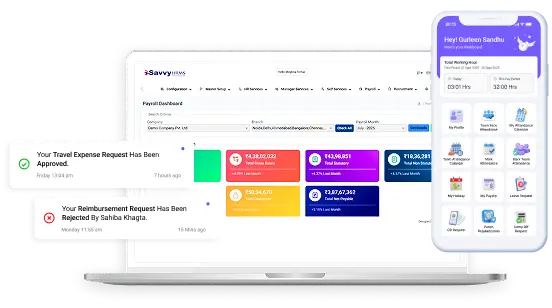
Book a personalized demo of Savvy HRMS and explore the features designed to help you manage your workforce efficiently from anywhere.
Frequently Asked Questions (FAQs)
1. What is the best HR software for remote and hybrid teams in India?
The best HR software depends on your business size, workforce structure, budget, and HR requirements. Key options include Savvy HRMS, Darwinbox, HRMantra, factoHR, and greytHR.
2. What features should HR software for remote teams have?
HR software for remote teams should ideally include remote attendance, mobile access, leave management, payroll integration, employee self-service, workflow automation, performance management, analytics, and secure employee data management.
3. How does HR software help manage hybrid employees?
HR software centralizes employee information and simplifies attendance, leave, payroll, approvals, employee requests, and workforce reporting, allowing HR teams to manage employees across office and remote locations efficiently.