

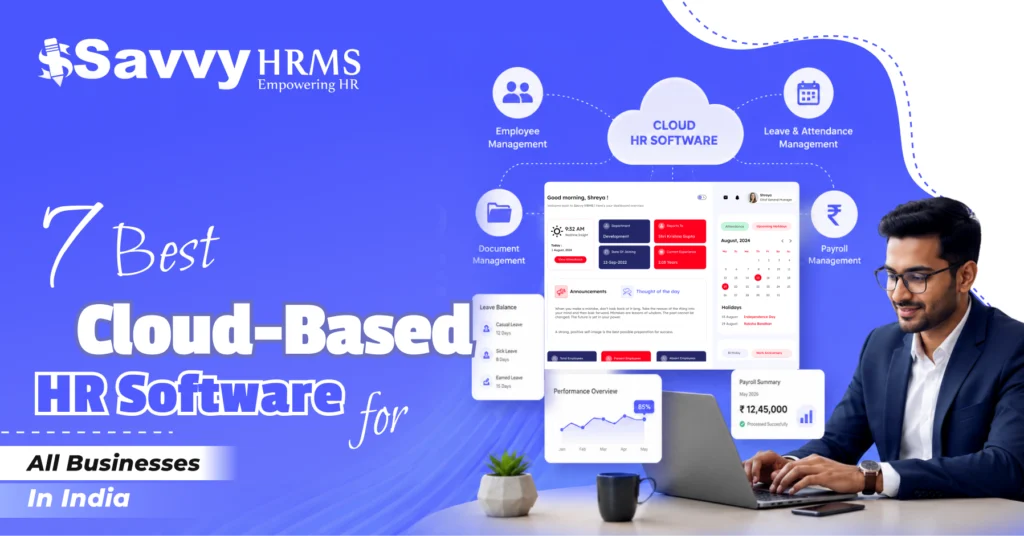

Best cloud-based HR software can help businesses in India simplify HR operations, automate repetitive tasks, and manage employee information from a single platform. From attendance and leave to payroll, recruitment, and performance, cloud HR solutions make everyday HR management faster and more organized.
As businesses grow, managing HR through spreadsheets and disconnected tools can become difficult. Cloud-based HR software provides a centralized system where HR teams, managers, and employees can access relevant information, complete tasks, and manage workflows from anywhere.
But with so many HRMS platforms available, how do you know which one is right for your business? In this guide, we compare 7 best cloud-based HR software in India for 2026, looking at their features, benefits, security, suitability, and key capabilities to help you make a more informed decision.
Our Evaluation Methodology
Choosing the best cloud-based HR software requires more than simply comparing the number of features. A good HRMS should solve real business problems, be easy for employees to use, support business growth, and provide the right level of security.
For this comparison, we evaluated the software based on the following factors:
- Core HR: Employee records, documents, organization structures, and employee lifecycle management.
- Payroll: Salary processing, deductions, payroll reports, and statutory requirements.
- Attendance and leave: Attendance tracking, shifts, leave policies, approvals, and employee self-service.
- Recruitment and onboarding: Hiring workflows, candidate management, offer management, and onboarding.
- Performance management: Goals, appraisals, feedback, reviews, and employee development.
- Employee experience: Self-service, mobile access, communication, and HR helpdesk.
- Automation and analytics: Automated workflows, dashboards, reports, and workforce insights.
- Security: Access controls, authentication, data protection, backups, and audit trails.
- Scalability: Ability to support businesses as their workforce and HR requirements grow.
- India-specific requirements: Payroll, compliance, workforce policies, and business needs relevant to Indian organizations.
The final choice should depend on your employee count, industry, HR processes, required modules, implementation requirements, and budget.
What Is Cloud-Based HR Software?
Cloud-based HR software is an online human resource management solution that allows businesses to manage employee-related processes through cloud infrastructure. Instead of installing software on individual computers or maintaining their own HR servers, organizations can access the platform through supported web browsers or mobile applications.
A cloud HRMS can bring multiple HR processes together in one centralized system. Depending on the software, these may include employee management, attendance, leave, payroll, recruitment, onboarding, performance management, expenses, learning, and HR analytics.
For example, an employee can apply for leave through the system, a manager can approve the request, and the approved information can automatically become available to the relevant HR and payroll workflows.
This connected approach can reduce repetitive data entry and make HR processes easier to track.
Cloud-based HR software is also useful for businesses with employees working from different offices, branches, factories, client locations, or remote environments. Authorized users can access relevant HR services without being physically present in the HR department.
Why Are Indian Businesses Switching to Cloud-Based HR Software?
Why are more Indian businesses moving from spreadsheets and traditional HR systems to cloud-based HR software? The main reason is simple: as a business grows, managing people manually becomes increasingly difficult.
More employees mean more attendance records, leave applications, payroll information, documents, approvals, and compliance-related tasks. When all of this is managed through separate files and systems, HR teams can easily spend more time on administration than on people-focused work.
A cloud HRMS brings these activities together in one place. HR teams can manage employee information, attendance, leave, payroll, recruitment, performance, and other HR processes without constantly switching between different tools.
What is driving this shift?
- Growing workforce: More employees mean more HR data and processes to manage.
- Less manual work: Automation reduces repetitive HR tasks and follow-ups.
- Easy employee access: Employees can manage leave, attendance, payslips, and requests themselves.
- Remote accessibility: HR teams and employees can access the system from different locations.
- Better data visibility: HR leaders can view workforce information through dashboards and reports.
- Fewer errors: Connected HR processes can reduce repetitive data entry and manual mistakes.
- Easier scalability: Businesses can expand their HR operations without constantly changing systems.
Another important factor is the changing workplace. Indian businesses increasingly have employees working across offices, branches, factories, field locations, and remote environments. A cloud-based HR software makes it easier to keep HR processes connected across these different locations.
Cost and convenience also matter. Businesses don’t necessarily want to invest heavily in maintaining their own HR infrastructure. With cloud HR software, much of the technical infrastructure and software maintenance is handled by the provider.
Most importantly, businesses are looking for a better employee experience. Instead of asking HR for every small update or document, employees can often access information and complete routine HR tasks themselves.
In short, Indian businesses are switching to cloud-based HR software because they want HR operations to be simpler, faster, more connected, and easier to scale.
What Are the Key Benefits of Cloud-Based HR Software for Businesses?
1. Centralized Employee Data
All important employee information can be maintained in one centralized system instead of multiple spreadsheets and folders.
2. Reduced Manual Work
Automated workflows can reduce repetitive work related to attendance, leave, payroll inputs, onboarding, approvals, and employee requests.
3. Anywhere Access
HR teams, managers, and employees can access relevant information from different locations through supported web and mobile applications.
4. Better Employee Self-Service
Employees can manage many HR activities independently, including leave applications, attendance checks, payslip downloads, expense claims, and personal information.
5. Improved Payroll Accuracy
Connecting employee data, attendance, leave, and payroll can reduce repetitive data entry and improve payroll processing accuracy.
6. Faster HR Processes
Digital approvals and automated workflows can reduce delays in processes that previously depended on emails, paperwork, or manual follow-ups.
7. Easier Workforce Management
HR teams can monitor employee information, attendance, leave, performance, workforce movement, and other HR metrics from centralized dashboards.
8. Scalability
Cloud HR software can support businesses as they add employees, departments, locations, and new HR processes.
9. Better Reporting and Analytics
HR leaders can use reports and dashboards to understand workforce trends and make more informed decisions.
What Features Should You Look for in Cloud-Based HR Software?
Before selecting a cloud HRMS, businesses should identify the HR processes they want to automate.
Important features to consider include:
- Core HR and employee information management
- Employee self-service and manager self-service
- Attendance and shift management
- Leave management
- Payroll management
- Statutory compliance support
- Recruitment and applicant tracking
- Employee onboarding
- Performance management
- Learning and development
- Travel and expense management
- Employee asset management
- HR analytics and reporting
- Mobile application
- Workflow automation
- Role-based access control
- Integrations and APIs
- Approval workflows
- Document management
- Notifications and alerts
- Data security and backups
For Indian organizations, payroll and compliance capabilities should receive particular attention. Businesses should verify whether the software supports their specific payroll structures, workforce policies, locations, and statutory requirements.
What Makes Cloud HR Software Secure for Managing Employee Data?
HR software contains sensitive information such as employee identities, salary details, bank information, tax information, attendance records, personal documents, and performance data.
Therefore, security should be one of the most important factors when selecting cloud-based HR software.
Look for features such as:
1. Role-Based Access Control
Role-based access control ensures employees, managers, HR teams, finance teams, and administrators can access only the employee information and HR functions relevant to their responsibilities.
2. Multi-Factor Authentication
Multi-factor authentication adds an extra layer of account protection by requiring users to verify their identity through more than one authentication method before accessing HR data.
3. Data Encryption
Data encryption helps protect sensitive employee information while it is being transmitted and stored, making it harder for unauthorized individuals to access or understand the data.
4. Audit Trails
Audit trails record important activities and changes within the HRMS, helping organizations track who accessed, modified, approved, or updated specific employee information and records.
5. Backup and Disaster Recovery
Reliable backup and disaster recovery processes help protect HR data against unexpected incidents, system failures, or data loss while supporting faster recovery and business continuity.
6. Security Certifications
Businesses should review whether the HR software provider follows recognized security standards and maintains relevant certifications or independent assessments that demonstrate its commitment to protecting customer data.
7. Privacy and Data Governance
Strong privacy and data governance practices help organizations understand how employee information is collected, stored, processed, accessed, retained, and securely deleted throughout its lifecycle.
For Indian businesses, data privacy is also becoming increasingly important with the Digital Personal Data Protection Act, 2023. Organizations should understand their responsibilities when processing employee personal data and evaluate whether their HR software supports appropriate privacy and security practices.
7 Best Cloud-Based HR Software for Businesses in India
The following are 7 cloud-based HR software solutions that businesses in India can consider in 2026:
- Savvy HRMS
- Kredily
- Darwinbox
- ZingHR
- factoHR
- HRMantra
- BambooHR
Each platform has different strengths, so the best option depends on the organization’s size, requirements, budget, and HR priorities.
1. Savvy HRMS
Overview
Savvy HRMS is a comprehensive cloud-based HRMS designed to help businesses manage multiple HR processes through one centralized platform. It covers areas such as core HR, recruitment, attendance, leave, payroll, performance, learning, expenses, employee assets, and workforce management.
The platform focuses on simplifying HR operations through automation, employee self-service, mobile access, analytics, and connected workflows. This makes it suitable for businesses looking to manage the employee lifecycle without depending on multiple disconnected HR systems.
Key Features
- Core HR centralizes employee profiles, documents, roles, and employment history.
- Recruitment management simplifies requisitions, applications, interviews, and hiring workflows.
- Attendance management supports biometric, mobile, face-recognition, and location-based tracking.
- Payroll management connects salary processing with attendance and employee information.
- Performance management supports goals, appraisals, feedback, and employee development.
- Leave management simplifies policies, balances, applications, approvals, and holiday administration.
- Travel and expense management digitizes claims, approvals, reimbursements, and business travel.
- Employee self-service lets employees manage requests and access HR information independently.
- HR automation and analytics help reduce repetitive work and improve workforce visibility.
Best For
Best for Indian SMEs and large businesses looking for an integrated cloud HRMS for HR, payroll, attendance, recruitment, performance, compliance, and employee self-service.
2. Kredily
Overview
Kredily is an India-focused cloud HRMS and payroll platform that helps businesses manage employee records, attendance, leave, payroll, onboarding, documents, and self-service, making it suitable for startups and growing organizations seeking accessible HR technology.
Key Features
- Employee records centralize profiles, documents, salary information, and reporting structures.
- Attendance supports mobile, GPS, selfie, geofencing, and biometric-based processes.
- Leave management handles policies, accruals, balances, approvals, and encashment.
- Payroll connects attendance and leave information with salary processing.
- Employee self-service provides access to payslips, attendance, leave, claims, and HR information.
- Workforce insights help organizations understand headcount, cost, absenteeism, and employee trends.
Best For
Best for startups and growing Indian businesses looking for accessible cloud HRMS, payroll, attendance, leave, and employee self-service capabilities.
3. Darwinbox
Overview
Darwinbox is a cloud-based HCM platform covering core HR, recruitment, onboarding, payroll, performance, talent, engagement, analytics, and workforce management, with mobile-first capabilities designed for enterprises seeking connected employee experiences and scalable HR operations.
Key Features
- Core HR provides centralized employee lifecycle and organizational information.
- Recruitment supports requisitions, candidate management, hiring workflows, and analytics.
- Mobile HR allows employees to complete HR tasks from different locations.
- Performance management supports goals, reviews, feedback, and employee development.
- Employee engagement includes surveys, recognition, communication, and feedback capabilities.
- People analytics provides workforce insights for HR and business leaders.
Best For
Best for mid-sized and large organizations seeking enterprise HCM with strong mobile, talent management, analytics, and employee experience capabilities.
4. ZingHR
Overview
ZingHR is a cloud-based HCM platform covering recruitment, onboarding, workforce management, payroll, performance, talent, engagement, and analytics, with automation and AI capabilities designed for larger organizations managing complex workforce structures and employee lifecycle processes.
Key Features
- AI-powered recruitment supports candidate sourcing, screening, matching, and hiring workflows.
- Workforce management handles attendance, shifts, leave, rostering, and field employees.
- Payroll supports automated salary processing and statutory requirements.
- Performance management supports KPIs, OKRs, BSC, and 360-degree feedback.
- Workforce analytics provides dashboards and insights for HR decision-making.
- Mobile capabilities allow employees and managers to access HR services remotely.
Best For
Best for larger enterprises requiring configurable cloud HCM, workforce management, payroll, analytics, and AI-powered HR automation.
5. factoHR
Overview
factoHR is a cloud-based HR and payroll platform that helps Indian businesses manage core HR, onboarding, attendance, leave, payroll, expenses, self-service, and workforce processes with configurable workflows, mobile access, and integrations.
Key Features
- Core HR manages employee data, organizational structures, transfers, and documents.
- Attendance supports biometric integration, shifts, rosters, and attendance policies.
- Payroll manages salary processing, deductions, statutory requirements, and reports.
- Employee self-service provides access to payslips, tax information, leave, and requests.
- Expense management supports employee claims, approvals, and reimbursements.
- Mobile applications provide attendance, leave, approvals, and payroll access.
Best For
Best for Indian businesses looking for configurable HR, payroll, attendance, compliance, expense management, and employee self-service capabilities.
6. HRMantra
Overview
HRMantra is an integrated cloud HRMS platform that helps organizations manage employee information, recruitment, attendance, leave, payroll, performance, and other HR processes through a centralized system, reducing dependence on separate workforce management tools.
Key Features
- Core HR maintains employee information and organizational records centrally.
- Recruitment supports candidate management and hiring workflows.
- Attendance and leave simplify workforce time and absence management.
- Payroll supports salary processing and payroll-related HR activities.
- Performance management helps manage employee evaluations and organizational goals.
- Reporting provides workforce information for HR decision-making.
Best For
Best for organizations seeking an integrated HRMS covering core HR, payroll, attendance, recruitment, leave, performance, and workforce management.
7. BambooHR
Overview
BambooHR is a cloud-based people management platform covering employee information, recruitment, onboarding, time tracking, performance, reporting, compensation, and employee experience, making it suitable for growing organizations prioritizing user-friendly HR management and centralized workforce management
Key Features
- HR data management centralizes employee records, information, and reporting.
- Applicant tracking helps manage recruitment and candidate workflows.
- Onboarding creates structured experiences for new employees.
- Time and attendance connects employee time information with HR processes.
- Performance management supports reviews, feedback, goals, and employee development.
- Employee experience tools support engagement, feedback, and workplace communication.
Best For
Best for growing businesses prioritizing easy-to-use HR management, employee experience, people analytics, reporting, and connected workforce data.
Quick Comparison of the 7 Cloud-Based HR Software
| HR Software | Best For | Key Strength |
| Savvy HRMS | Indian SMEs & large businesses | Integrated HR, payroll, compliance & automation |
| Kredily | Startups & growing businesses | Accessible HRMS and payroll |
| Darwinbox | Mid-sized & large enterprises | Enterprise HCM and employee experience |
| ZingHR | Large enterprises | Workforce management and automation |
| factoHR | Indian businesses | Payroll, attendance and HR automation |
| HRMantra | Growing & established organizations | Integrated HR management |
| BambooHR | Growing/global businesses | User experience and people management |
Note: Features, plans, pricing, integrations, and availability can change. Businesses should verify current capabilities and India-specific requirements directly with the respective software providers before making a purchase decision.
How to Choose the Best Cloud-Based HR Software for Your Business?
There is no single best cloud-based HR software for every organization. The right choice depends on your employee count, industry, HR processes, budget, and future growth plans.
Start by identifying the HR activities you want to automate. Do you need only core HR and attendance, or are you looking for payroll, recruitment, onboarding, performance, expenses, learning, and analytics as well?
Consider the following factors before making a decision.
1. Business Size
Choose software that matches your current workforce while being capable of supporting future employee growth.
2. Required HR Modules
Make a list of the modules you actually need. Avoid paying for unnecessary features that your HR team may never use.
3. Payroll and Compliance
For Indian businesses, verify support for relevant payroll calculations, statutory requirements, taxation, reports, and applicable state-level requirements.
4. Ease of Use
A complicated HRMS can reduce employee adoption. Look for a platform that HR teams, managers, and employees can understand easily.
5. Mobile Access
Mobile applications can be especially useful for field employees, remote teams, managers, and organizations with multiple locations.
6. Integrations
Check whether the software can connect with payroll, accounting, ERP, biometric devices, identity systems, communication tools, and other business applications.
7. Security
Ask about access controls, authentication, encryption, backups, audit logs, data protection, and security certifications.
8. Scalability
Think beyond today’s employee count. The HRMS should be capable of supporting additional employees, locations, departments, and processes.
9. Customer Support
Implementation assistance, training, documentation, customer support, and issue resolution can significantly influence the overall HRMS experience.
10. Total Cost
Don’t compare only subscription prices. Consider implementation, customization, integrations, additional modules, support, and future expansion costs.
The best approach is to shortlist two or three platforms and request a product demonstration using your actual HR requirements.
How Much Does Cloud-Based HR Software Cost in India?
The cost of cloud-based HR software in India varies depending on the vendor, employee count, modules, pricing model, implementation requirements, integrations, and support.
Common pricing models include:
- Per-employee pricing
- Per-user pricing
- Monthly or annual subscriptions
- Module-based pricing
- Fixed packages
- Free or freemium plans
- Customized enterprise pricing
For example, some providers offer basic HR features at little or no cost, while advanced payroll, performance, recruitment, analytics, and enterprise modules may require paid plans.
Instead of asking only, “How much does the software cost?”, businesses should ask, “What will the complete HRMS cost for my organization?”
Before purchasing, clarify:
- Is implementation included?
- Is employee onboarding included?
- Are mobile apps included?
- Are integrations charged separately?
- Are additional modules billed separately?
- Is customer support included?
- Does the price change when employee numbers increase?
- Are customization and training charged separately?
This gives you a more realistic picture of the total cost of cloud HR software.
Cloud HR Software vs Traditional HR Software: What’s the Difference?
| Factor | Cloud HR Software | Traditional HR Software |
| Access | Accessible online from supported devices | Often dependent on local installation |
| Infrastructure | Generally managed by the provider | More infrastructure managed by the business |
| Updates | Usually handled by the provider | May require manual upgrades |
| Scalability | Generally easier to scale | May require additional infrastructure |
| Remote Work | Well suited to distributed teams | May require additional configuration |
| Maintenance | Lower infrastructure maintenance for business | Greater internal maintenance requirements |
| Deployment | Usually faster | Can take longer |
| Cost Model | Commonly subscription-based | Often involves licensing and infrastructure costs |
Cloud-based software does not automatically mean better. Businesses should still evaluate security, reliability, support, compliance, integrations, usability, and total cost before choosing their HR technology.
Why Is Savvy HRMS a Strong Cloud HRMS Choice for Indian Businesses?
When businesses start looking for the best cloud HRMS in India, they usually want more than just an employee database. They need a solution that can handle everyday HR activities, reduce manual work, support employees, and grow along with the organization. This is where Savvy HRMS can be a strong choice.
Savvy HRMS brings multiple HR functions together in one cloud-based platform, including Core HR, recruitment, attendance, leave, payroll, performance management, learning, travel and expense, employee assets, and employee self-service. Instead of managing each process through separate tools, HR teams can work from one connected system.
What makes Savvy HRMS a strong option?
- All-in-one HR management: Manage multiple HR processes from a centralized platform.
- India-focused payroll: Support payroll and compliance-related requirements relevant to Indian businesses.
- Employee self-service: Let employees manage leave, attendance, payslips, requests, and other HR activities.
- Attendance automation: Simplify attendance tracking, shifts, biometric integration, and workforce monitoring.
- Recruitment and onboarding: Manage hiring and new-employee processes through connected workflows.
- Performance management: Set goals, conduct appraisals, collect feedback, and monitor employee performance.
- Cloud accessibility: Give authorized users access to HR information from different locations and devices.
- Automation and analytics: Reduce repetitive HR work while gaining better visibility through reports and dashboards.
- Scalable HR management: Support changing workforce requirements as the business grows.
The biggest advantage is convenience. HR teams don’t have to keep jumping between spreadsheets, emails, attendance systems, and separate HR applications for routine tasks. With connected cloud-based HR software, information can move more smoothly between different HR processes.
For Indian businesses that want to simplify HR operations while bringing HR, payroll, attendance, recruitment, performance, and employee management under one roof, Savvy HRMS can be a practical cloud HRMS option to consider.
Conclusion
The right cloud-based HR software can make HR operations more connected, automated, and accessible. From employee records and attendance to payroll, recruitment, performance, expenses, and compliance, cloud HRMS can help businesses reduce manual work and improve everyday workforce management.
For Indian businesses, the best choice should not be based only on the number of features. Consider India-specific payroll capabilities, security, scalability, ease of use, integrations, employee experience, implementation support, and total cost. Among the options discussed, Savvy HRMS is a strong choice for businesses looking for a comprehensive cloud HRMS with broad HR automation capabilities.

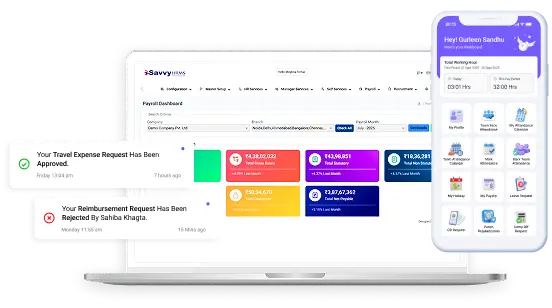









Ready to simplify your HR operations?
Explore Savvy HRMS and book a free demo to see how a cloud-based HRMS can support your business.
Frequently Asked Questions (FAQs)
1. What is cloud-based HR software?
Cloud-based HR software is an online HR management solution that helps businesses manage employee data, attendance, leave, payroll, recruitment, performance, and other HR processes from a centralized platform.
2. Is cloud-based HR software suitable for small businesses?
Yes. Cloud-based HR software can be useful for small businesses by automating routine HR tasks, reducing paperwork, improving employee self-service, and providing an affordable way to manage growing workforce requirements.
3. Is cloud HR software secure?
Cloud HR software can provide strong security through features such as role-based access, authentication, encryption, backups, audit trails, and data protection controls. Businesses should evaluate the provider’s security practices before choosing a platform.
4. How much does cloud-based HR software cost in India?
The cost varies depending on employee count, features, modules, implementation, integrations, and pricing models. Providers may offer per-employee, subscription-based, module-based, or customized enterprise pricing.
5. Which cloud-based HR software is best for Indian businesses?
The best cloud HR software depends on business size, HR requirements, budget, payroll needs, security expectations, scalability, and required integrations. Businesses should compare multiple platforms before making a decision.