

10 Best AI Recruiting Software in 2026 for Smarter Hiring


-
AuthorC.S. Verma
-
 Last Updated
September 01, 2026
Last Updated
September 01, 2026
-
 Reading Time
18 Mins
Reading Time
18 Mins
Hiring the right people is getting harder, not easier. Recruiters need to source candidates faster, screen hundreds of resumes, schedule interviews, manage communication, and still deliver a great candidate experience. That is where AI recruiting software is becoming increasingly valuable for modern HR teams.
Instead of replacing recruiters, AI can handle repetitive recruitment tasks and help hiring teams work with better information. From AI-powered resume screening and candidate matching to automated job descriptions, interview assistance, and candidate engagement, recruiting technology is changing how companies hire.
For Indian businesses, the right platform can offer even more value when recruitment connects with HRMS, payroll software, onboarding, attendance, employee management, and compliance. In this guide, we compare 10 AI-enabled recruiting and HR platforms to help you understand their features, ideal use cases, and what to consider before choosing one.
Our Evaluation Methodology
We evaluated these platforms based on how effectively they can support the modern recruitment lifecycle rather than looking at AI as a standalone feature.
Our evaluation considered AI capabilities, candidate sourcing, resume screening, applicant tracking, interview management, candidate experience, automation, onboarding, HRMS integration, payroll connectivity, analytics, scalability, and suitability for Indian businesses.
We also considered how closely each platform connects recruitment with the broader employee lifecycle. This matters because recruitment does not end when a candidate accepts an offer. The next steps often include document collection, onboarding, employee records, payroll setup, compliance, and workforce management.
Important: Feature availability, AI capabilities, pricing, and integrations can vary by plan and may change over time. Businesses should confirm the latest details with the vendor before purchasing.
What Is AI Recruiting Software and How Does It Work?

AI recruiting software is technology that uses artificial intelligence, automation, machine learning, natural-language processing, or intelligent matching to simplify recruitment tasks and help recruiters make faster, data-informed decisions.
In a traditional recruitment process, recruiters may manually publish jobs, review resumes, shortlist candidates, send emails, schedule interviews, collect feedback, and update spreadsheets.
AI recruiting software can automate or assist with many of these activities.
For example, an AI recruiting platform may:
- Generate job descriptions from basic role information.
- Analyze resumes and extract candidate information.
- Match candidates with suitable job requirements.
- Rank or recommend candidates based on defined criteria.
- Automate candidate communication.
- Assist with interview questions and assessments.
- Summarize interview conversations.
- Provide recruitment analytics.
- Automate repetitive hiring workflows.
- Support digital onboarding after selection.
However, AI should assist hiring decisions rather than blindly make them. Recruiters and hiring managers should remain involved, particularly when evaluating candidate suitability, fairness, culture fit, and final hiring decisions.
Why Are Businesses Switching to AI Recruiting Software in 2026?
Recruitment teams are dealing with higher application volumes, skill shortages, faster-changing job requirements, and growing expectations from candidates.
AI recruiting software can make the hiring process faster, more organized, and more effective by helping HR teams automate repetitive tasks and make better-informed hiring decisions. Some of the key benefits include:
1. Faster Candidate Screening
Recruiters can spend hours reviewing resumes for a single position. AI-powered screening and matching can help identify relevant profiles faster.
2. Better Recruitment Automation
Recruitment workflows can automate repetitive activities such as emails, interview scheduling, status updates, and candidate movement between hiring stages.
3. Improved Candidate Experience
Candidates increasingly expect quick communication. Automated notifications, chatbots, scheduling, and candidate portals can reduce unnecessary waiting.
4. More Data-Driven Hiring
Recruitment analytics can help HR teams monitor metrics such as time-to-hire, source effectiveness, candidate conversion, and hiring pipeline performance.
5. Stronger HR Integration
For Indian organizations, connecting recruitment with HRMS, payroll, onboarding, attendance, and compliance can reduce duplicate data entry after hiring.
The shift is therefore not simply about using AI. It is about creating a faster, more connected, and more measurable recruitment process.
What Are the Key Features to Look for in AI Recruiting Software?
Before choosing an AI recruiting platform, look beyond the word “AI.” A useful solution should solve actual recruitment problems.
Key features include:
1. AI Resume Parsing and Candidate Matching
AI recruiting software can automatically extract candidate details from resumes and match skills, experience, qualifications, and job requirements to identify relevant applicants faster.
2. Applicant Tracking and Automated Screening
An applicant tracking system organizes candidates throughout the hiring pipeline, while automated screening helps recruiters evaluate applications using predefined criteria and assessments.
3. AI-Powered Job Description and Candidate Sourcing
AI can create relevant job descriptions while supporting candidate sourcing across career pages, job boards, referrals, social channels, and other recruitment platforms.
4. Interview Management and Candidate Engagement
Recruiters can schedule interviews, collect feedback, automate candidate communication, send notifications, and provide timely updates throughout different stages of the recruitment process.
5. Recruitment Analytics and Reporting
Recruitment analytics provide insights into hiring performance, time-to-hire, candidate sources, conversion rates, recruitment funnel performance, and overall hiring effectiveness for HR teams.
6. Digital Onboarding and HRMS Integration
Selected candidates can move smoothly into onboarding while recruitment data connects with HRMS, employee records, payroll, attendance, and other workforce management processes.
7. Compliance, Security, and Access Controls
AI recruiting software should protect sensitive candidate information while supporting appropriate compliance practices, secure access controls, data privacy, and responsible management of recruitment records.
What Are the Benefits of Using AI Recruiting Software?
The biggest benefit is not simply “doing recruitment with AI.” It is reducing repetitive work while giving recruiters more time to focus on people.
AI recruiting software can help organizations:
- Reduce manual resume screening.
- Shorten recruitment cycles.
- Improve candidate-job matching.
- Automate repetitive communication.
- Standardize recruitment workflows.
- Improve candidate engagement.
- Centralize candidate information.
- Generate recruitment insights.
- Improve collaboration between recruiters and hiring managers.
- Connect recruitment with onboarding and HR operations.
For growing businesses, integrating recruitment with broader HR and payroll software can also reduce the need to repeatedly enter employee information after hiring.
10 Best AI Recruiting Software in 2026 for Smarter Hiring
Our list includes:
- Savvy HRMS
- Zoho Recruit + Zoho People
- Darwinbox
- Qandle
- Kredily
- Keka
- greytHR
- Zappyhire
- HRMantra
- ZingHR
The platforms differ considerably. Some are comprehensive HRMS suites with recruitment modules, while others have stronger dedicated recruitment or ATS capabilities.
1. Savvy HRMS
Overview
Savvy HRMS is an integrated HRMS platform for Indian businesses that combines recruitment with core HR, payroll, attendance, onboarding, performance, compliance, and other workforce management processes. Its recruitment module includes AI-powered job descriptions, resume parsing, deep-search capabilities, candidate screening, interview management, offer generation, and digital onboarding.
Key Features
- AI-generated job descriptions tailored to specific positions and requirements.
- AI deep search analyzes resumes beyond simple keyword matching.
- Resume parsing creates structured candidate profiles from uploaded resumes.
- Intelligent screening helps recruiters identify potentially suitable candidates faster.
- Candidate sourcing supports career pages, LinkedIn, Glassdoor, and internal postings.
- Manpower planning and budgeting connect recruitment with workforce requirements.
- Multi-requisition management helps recruiters handle multiple open positions simultaneously.
- Interview scheduling and assessments organize candidate evaluation workflows.
- Digital onboarding converts selected candidates into employees smoothly.
Savvy HRMS also extends AI beyond recruitment through capabilities such as AI onboarding automation, intelligent salary processing, employee attrition prediction, attendance intelligence, and an intelligent appraisal engine.
Best For
Best for Indian businesses looking for an integrated HRMS covering AI-enabled recruitment, onboarding, payroll, attendance, employee management, and statutory compliance.
2. Zoho Recruit + Zoho People
Overview
Zoho Recruit provides dedicated AI recruitment capabilities, while Zoho People supports broader HR management and onboarding. Together, they can connect recruitment, candidate evaluation, employee records, and HR operations.
Key Features
- Zia matches candidates using skills, experience, and job requirements.
- AI Assist generates job descriptions, emails, notes, and messages.
- AI profile summaries help recruiters review candidate information faster.
- Sourcing bots engage candidates and collect application information automatically.
- AI assessments support structured and role-specific candidate evaluation.
- Interview transcription creates summaries from recorded video interviews.
Best For
Best for organizations wanting dedicated AI recruiting capabilities alongside a broader Zoho HR ecosystem.
3. Darwinbox
Overview
Darwinbox is an enterprise HR technology platform with AI-enabled recruitment capabilities. Its recruitment offering focuses on skills-powered hiring, automation, candidate management, and improving recruitment speed across the employee lifecycle.
Key Features
- AI-enabled skills-based recruitment supports smarter candidate identification.
- Independent ATS capabilities help automate recruitment workflows.
- Candidate information can be managed within centralized hiring workflows.
- Recruitment automation reduces repetitive manual activities for hiring teams.
- Integrated HR capabilities connect hiring with employee lifecycle processes.
- Enterprise-focused architecture supports complex organizational recruitment requirements.
Best For
Best for mid-sized and enterprise organizations looking for an integrated, skills-focused HR technology platform.
4. Qandle
Overview
Qandle is an integrated HR platform offering recruitment, payroll, employee management, attendance, and other HR functions. Its recruitment solution supports automated screening, multi-channel job posting, candidate tracking, hiring workflows, and candidate communication.
Key Features
- AI-powered resume screening helps identify relevant candidate profiles.
- Job posting reaches 75+ job boards and social channels.
- Visual applicant pipelines make candidate progress easier to track.
- Automated communication keeps candidates updated throughout recruitment.
- Custom workflows adapt recruitment stages to organizational processes.
- Recruitment connects with broader HR and payroll operations.
Best For
Best for growing businesses that want recruitment automation alongside broader HR, payroll, and workforce management capabilities.
5. Kredily
Overview
Kredily is an India-focused HR and payroll platform that combines HRMS, payroll, attendance, compliance, and AI capabilities. Its newer AI offering focuses strongly on HR and payroll intelligence rather than positioning itself only as a recruiting platform.
Key Features
- AI copilot answers HR and payroll questions using business data.
- Workforce intelligence provides workforce metrics and early warnings.
- Attrition insights can help HR teams identify workforce risks.
- Payroll automation supports repetitive salary-processing activities.
- HRMS connects employee information with payroll and compliance.
- AI is designed with human oversight in workflows.
Best For
Best for Indian businesses prioritizing AI-assisted HR, payroll, workforce intelligence, and compliance alongside recruitment operations.
6. Keka
Overview
Keka combines HR, payroll, and recruitment capabilities with AI-powered hiring tools. Its recruitment platform supports job distribution, applicant tracking, AI screening, interviews, assessments, offer management, and workflow automation.
Key Features
- AI-powered job descriptions accelerate recruitment content creation.
- AI screening helps surface relevant candidates faster.
- Job distribution reaches multiple boards and career channels.
- Applicant tracking provides real-time visibility into candidate pipelines.
- Automated interview scheduling reduces recruiter coordination work.
- Offer management supports faster digital hiring workflows.
Best For
Best for growing Indian companies wanting recruitment, HR, payroll, performance, and employee management in one platform.
7. greytHR
Overview
greytHR Recruit is an ATS designed to manage job posting, candidate sourcing, screening, interviews, hiring, and reporting. Its recruitment offering includes AI-powered skill-based shortlisting and a pre-screening AI bot.
Key Features
- AI-powered skill-based shortlisting identifies relevant candidates.
- Lisa pre-screening AI bot supports initial candidate evaluation.
- Job posting helps recruiters create and publish openings.
- Interview scheduling reduces manual coordination between candidates and panels.
- Centralized candidate management keeps recruitment information organized.
- Recruitment integrates with broader hire-to-retire HR processes.
Best For
Best for organizations wanting recruitment software connected to a broader HRMS and payroll environment.
8. Zappyhire
Overview
Zappyhire is an AI-powered recruitment automation platform built for enterprise hiring teams. It helps organizations automate screening, candidate engagement, interviews, hiring workflows, and offer processes while giving recruiters better visibility and control across the recruitment lifecycle.
Key Features
- AI resume screening ranks candidates based on role fit, skills, experience, and hiring criteria.
- Automated candidate engagement reduces manual follow-ups through email, SMS, WhatsApp, and chatbot workflows.
- Interview scheduling automates coordination between candidates, recruiters, and hiring panels.
- AI assessments and video interviews support structured candidate evaluation at scale.
- Custom workflows and fields help enterprises adapt the platform to complex hiring processes.
- Offer letter automation supports faster offer creation, approvals, and customization.
- Analytics and dashboards help teams track hiring performance, recruiter productivity, and pipeline movement.
Best For
Best for mid-sized and enterprise organizations that want to automate high-volume or complex recruitment workflows while maintaining flexibility, compliance, and control.
9. HRMantra
Overview
HRMantra is a comprehensive HRMS platform covering recruitment and broader employee lifecycle processes. It is designed for organizations looking to manage HR operations through an integrated system rather than using isolated recruitment tools.
Key Features
- Recruitment workflows help manage candidate hiring activities.
- Applicant tracking keeps candidate information organized.
- Resume management supports centralized candidate data.
- Interview processes help structure candidate evaluation.
- HRMS integration connects recruitment with employee management.
- Payroll and HR functions support post-hiring operations.
Best For
Best for organizations seeking a broader HRMS with recruitment, employee management, payroll, and workforce administration capabilities.
10. ZingHR
Overview
ZingHR offers AI-enabled recruitment through its Recruitment 2.0 platform, including an AI recruitment co-pilot, AI-generated interview questions, AI interviews, candidate engagement, video job descriptions, and digital onboarding.
Key Features
- AI recruitment co-pilot supports intelligent hiring recommendations.
- AI-generated interview questions improve interview preparation.
- AI interviews add automation to candidate evaluation.
- Video job descriptions can improve candidate engagement.
- Candidate marketplaces help recruiters discover potential talent.
- Digital onboarding supports a smoother post-offer experience.
Best For
Best for organizations looking for AI-enabled recruitment with candidate engagement, interviews, onboarding, and broader HR capabilities.
Best AI Recruiting Software Comparison Table
| Software | Best For | AI Recruiting Capabilities | Key Strength | HRMS/Payroll |
| Savvy HRMS | Indian businesses seeking end-to-end HR | JD generation, resume parsing, deep search, screening | Integrated HR + recruitment | Yes |
| Zoho Recruit + People | Businesses using the Zoho ecosystem | Matching, AI Assist, chatbot, assessments | Dedicated AI recruiting | Yes |
| Darwinbox | Mid-market & enterprises | Skills-powered recruitment and automation | Enterprise HR platform | Yes |
| Qandle | Growing businesses | AI resume screening and recommendations | Recruitment + HR automation | Yes |
| Kredily | Indian SMEs | AI HR/payroll intelligence | Payroll & HR automation | Yes |
| Keka | Growing Indian companies | AI JD, screening and predictive insights | Hiring + HR + payroll | Yes |
| greytHR | SMBs & enterprises | AI shortlisting and pre-screening | Hire-to-retire HRMS | Yes |
| Zappyhire | Indian businesses | Resume parsing, sourcing, JD generation | Recruitment-to-payroll integration | Yes |
| HRMantra | Broad HR management | Recruitment automation capabilities | Comprehensive HRMS | Yes |
| ZingHR | Enterprise hiring teams | AI co-pilot, AI interviews, AI questions | AI recruitment + engagement | Yes |
Feature availability can differ by plan, implementation, geography, and product version. Verify current capabilities directly with each vendor.
How We Evaluated These AI Recruiting Tools
We looked beyond whether a vendor simply uses the word AI in its marketing.
Our evaluation focused on six practical areas.
1. Recruitment Automation
The software should automate repetitive tasks such as resume screening, interview scheduling, candidate communication, job posting, follow-ups, and recruitment workflow management to save recruiters valuable time.
2. AI Capabilities
- AI-powered candidate matching and recommendations
- Automated resume screening and parsing
- AI-generated job descriptions and content
- Interview assistance and intelligent insights
3. Candidate Experience
A strong platform should simplify applications, improve communication, automate interview scheduling, provide timely updates, and create a smoother experience from application through onboarding.
4. HR Integration
- HRMS and employee database integration
- Payroll and attendance connectivity
- Digital onboarding workflows
- Performance and workforce management integration
5. Indian Business Requirements
For Indian organizations, we considered support for local HR processes, payroll management, statutory compliance, employee records, attendance, onboarding, and other country-specific workforce requirements.
6. Scalability
- Supports increasing hiring volumes
- Handles multiple recruiters and departments
- Supports multiple locations and teams
- Adapts to growing workforce requirements
This approach is particularly useful because the “best” AI recruiting software depends on the organization. A startup may prioritize affordability and simplicity, while a large enterprise may prioritize automation, integrations, analytics, security, and complex workflows.
How Does AI Recruiting Software Improve Candidate Sourcing and Screening?
Candidate sourcing and screening are two areas where AI can save recruiters significant time.
Instead of manually searching through every application, AI can analyze candidate information against predefined job requirements.
For example, suppose a company is hiring a payroll specialist.
Instead of simply searching resumes for the phrase “payroll,” an intelligent system can potentially consider related skills, experience, qualifications, job history, and other defined criteria.
This can help recruiters create a more relevant shortlist.
Modern platforms can also assist with:
- Resume parsing
- Candidate matching
- Skill-based screening
- Candidate ranking
- Job-description creation
- Candidate sourcing
- Pre-screening questions
- Interview assessments
The important point is that AI recommendations should support recruiter judgment rather than automatically determine who gets hired.
How Does AI Improve the Candidate Experience During Recruitment?
Candidates do not see your recruitment process as a series of HR workflows. They experience it as a conversation with your company.
Long application forms, delayed responses, unclear interview schedules, and poor communication can make candidates lose interest.
AI can improve this experience by helping automate:
- Candidate questions
- Application updates
- Interview scheduling
- Pre-screening
- Job recommendations
- Email communication
- Interview reminders
- Offer communication
Chatbots are particularly useful for answering common candidate questions outside normal working hours.
But automation should not remove the human touch.
Candidates should still have opportunities to communicate with recruiters and hiring managers when they need clarification or support.
How Can AI Recruiting Software Help Reduce Hiring Bias?
This is one of the most important, and most misunderstood, areas of AI recruitment.
AI does not automatically eliminate bias.
In fact, an AI system can reproduce or amplify bias if the underlying data, criteria, or recruitment process is biased.
However, AI can support more consistent recruitment when organizations use:
- Structured screening criteria
- Standardized assessments
- Skills-based matching
- Consistent interview questions
- Clearly defined job requirements
- Auditable recruitment workflows
- Human review of AI recommendations
- Regular monitoring of hiring outcomes
For example, instead of allowing every recruiter to interpret “good candidate” differently, an organization can establish consistent skills, experience, qualifications, and assessment criteria.
Still, businesses should never assume that an AI-generated shortlist is automatically unbiased.
Human oversight, transparent criteria, regular testing, and appropriate governance remain essential.
How Much Does AI Recruiting Software Cost in 2026?
There is no single standard price for AI recruiting software.
Pricing can depend on:
- Number of employees
- Number of recruiters
- Number of active jobs
- AI features
- ATS functionality
- Payroll requirements
- HRMS modules
- Integrations
- Implementation services
- Support requirements
- Enterprise customization
Some vendors offer free or entry-level plans, while enterprise HR platforms generally use customized pricing.
For Indian businesses, don’t compare only the recruitment subscription.
Calculate the total cost of ownership including recruitment, HRMS, payroll software, integrations, implementation, support, and compliance requirements.
How to Choose the Right AI Recruiting Software for Your Business?
Choosing AI recruiting software becomes easier when you start with your recruitment problems rather than the software’s feature list.
Ask these questions:
1. Do You Need a Dedicated ATS or Complete HRMS?
If recruitment is your only requirement, a dedicated ATS may be enough.
If you also need payroll, attendance, onboarding, leave, performance, employee management, and compliance, an integrated HRMS may provide better long-term value.
2. How Much Recruitment Automation Do You Need?
Identify which tasks consume the most recruiter time.
If your biggest problem is resume screening, prioritize AI matching and parsing.
If communication is the problem, look for candidate engagement and automation.
If interview coordination is slow, prioritize scheduling and interview management.
3. Does It Support Indian HR Requirements?
For Indian businesses, consider support for:
- Payroll
- Statutory compliance
- Employee records
- Onboarding
- Attendance
- Leave
- Tax-related processes
- Reports
- Data security
4. Can It Integrate With Existing Systems?
Your recruitment system should not create another data island.
Check integrations with:
- HRMS
- Payroll software
- Job boards
- Calendars
- Assessment platforms
- Background verification
- Accounting systems
- Communication platforms
5. Is the AI Explainable and Governable?
Ask vendors how AI recommendations are generated, what information is used, how administrators can control criteria, and what human-review mechanisms are available.
6. Can the Platform Scale?
The software should work not only for today’s hiring volume but also when your organization doubles or triples its workforce.
What Are the Challenges and Limitations of AI Recruiting Software?
| Challenge / Limitation | What It Means for Businesses |
| Potential AI Bias | AI can reproduce existing biases if trained on biased data or poorly defined recruitment criteria. |
| Incorrect Recommendations | AI may misinterpret candidate information and recommend unsuitable profiles, requiring human verification. |
| Data Privacy Concerns | Recruitment systems handle sensitive candidate data, making privacy, security, and access controls essential. |
| Over-Automation | Excessive automation can make recruitment feel impersonal and reduce meaningful human interaction. |
| Poor Data Quality | Incomplete, outdated, or inconsistent candidate data can affect AI-generated recommendations and insights. |
| Implementation Challenges | Integrating AI recruiting software with existing HRMS, payroll, and HR workflows may require time and planning. |
| Employee Training | Recruiters and HR teams need adequate training to use AI tools effectively and responsibly. |
| Limited Human Judgment | AI can assist with recruitment decisions but cannot fully understand qualities such as cultural fit, motivation, or interpersonal skills. |
| Changing AI Capabilities | AI features evolve quickly, making continuous evaluation, updates, and vendor support important. |
| Cost Considerations | Advanced AI features, integrations, implementation, and support can increase the overall software investment. |
AI Recruiting Software vs. Traditional Recruitment: What’s the Difference?
| Factor | Traditional Recruitment | AI Recruiting Software |
| Resume Screening | Mostly manual | AI-assisted and automated |
| Candidate Matching | Manual evaluation | Skills and criteria-based matching |
| Job Descriptions | Written manually | AI-assisted generation |
| Communication | Mostly manual | Automated workflows and chatbots |
| Interview Scheduling | Email-based coordination | Automated scheduling |
| Candidate Data | Spreadsheets and separate systems | Centralized candidate database |
| Analytics | Manual reports | Real-time recruitment dashboards |
| Onboarding | Separate HR process | Can connect directly with recruitment |
| Recruiter Role | High administrative workload | More focus on decision-making and engagement |
| Hiring Decisions | Primarily human | AI-assisted, human-led |
The key difference is simple: traditional recruitment depends heavily on manual execution, while AI recruiting software automates repetitive activities and provides intelligent assistance to recruiters.
AI should enhance the recruiter, not remove the recruiter from the process.
Conclusion
AI recruiting software is changing how businesses source, screen, engage, and hire candidates in 2026. From AI-powered resume matching and job-description generation to automated communication, interview support, onboarding, and recruitment analytics, these platforms can significantly reduce repetitive HR work.
However, the best software is not necessarily the one with the most AI features. It is the platform that fits your hiring process, integrates with your HR and payroll operations, supports your compliance requirements, protects candidate data, and gives recruiters useful automation without removing human judgment.









Looking to make recruitment faster, smarter, and more connected with your HR operations?
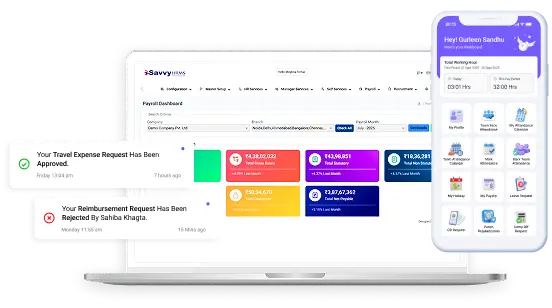
Explore Savvy HRMS and see how AI-powered recruiting, digital onboarding, payroll, compliance, and workforce management can work together in one platform.
Frequently Asked Questions (FAQs)
1. What is AI recruiting software?
AI recruiting software uses artificial intelligence to automate and simplify hiring activities such as candidate sourcing, resume screening, matching, communication, interviews, and recruitment analytics.
2. How does AI recruiting software help recruiters?
It reduces repetitive work by automating tasks such as resume screening, candidate matching, interview scheduling, job posting, follow-ups, and candidate communication, allowing recruiters to focus on strategic hiring.
3. Can AI recruiting software reduce hiring bias?
AI can support more consistent and structured hiring processes, but it cannot completely eliminate bias. Human oversight, standardized criteria, and regular monitoring are still important.