



Losing a job is never easy. Whether it’s due to company restructuring, layoffs, business closure, or organizational changes, employees often face financial uncertainty while looking for their next opportunity. This is where severance pay comes into the picture.
But what exactly does severance pay meaning, and is it mandatory in India? Who qualifies for it? How is it calculated? More importantly, how can HR teams manage severance payments accurately while staying compliant with labor laws?
If you have been searching for answers to these questions, you’re in the right place. In this blog, we’ll explain everything about severance pay, including its meaning, eligibility, calculation, legal aspects, and how HRMS software can simplify the entire process for employers.
Let’s get started.
What is Severance Pay?
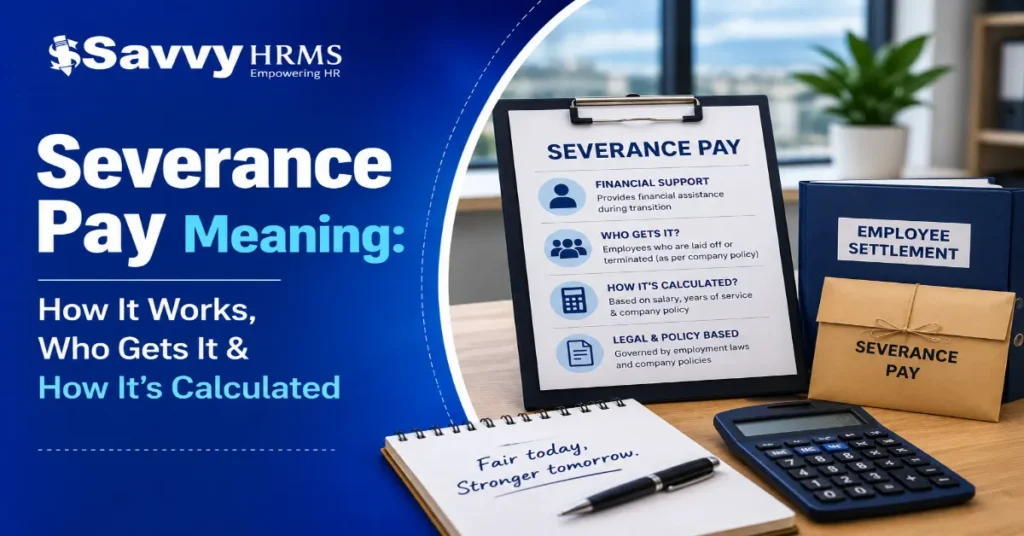
Severance pay is a financial compensation that an employer provides to an employee when their employment ends under specific circumstances, such as layoffs, downsizing, restructuring, business closure, or redundancy.
Simply put, severance pay refers to a payment made by an employer to support employees during the transition period after their employment ends. It acts as temporary financial assistance while employees search for new job opportunities.
Unlike a regular monthly salary, severance pay is generally a one-time payment. Depending on company policies and applicable labor laws, it may include more than just salary compensation.
A severance package may include:
- Compensation based on years of service
- Notice period pay (if applicable)
- Payment for unused leave
- Gratuity (where applicable)
- Bonus or incentives due
- Retirement benefits
- Medical insurance continuation (in some organizations)
- Outplacement or career transition assistance
It’s important to understand that severance pay differs from final settlement, gratuity, and notice pay. While all of these may be processed together during an employee’s exit, each has its own purpose and legal considerations.
Is Severance Pay Compulsory in India?
One of the most common questions employers and employees ask is whether severance pay is compulsory in India.
The answer is it depends on the reason for termination and the applicable labor laws.
Indian labor laws do not require employers to pay severance compensation for every employee separation. However, severance-related payments become mandatory in some situations, particularly during retrenchment, layoffs, establishment closures, or other legally defined cases.
Depending on the circumstances, employers may also need to comply with statutory obligations related to:
- Retrenchment compensation
- Notice period or pay instead of notice
- Gratuity under applicable laws
- Leave encashment
- Full and Final (FnF) settlement
Many organizations also choose to provide severance pay voluntarily as part of their employee welfare policies, even when it is not legally required.
For HR professionals, understanding the applicable labor regulations and company policies is essential before determining severance payments.
Who is Eligible for Severance Pay in India?
Eligibility for severance pay in India depends on various factors, including employment type, reason for termination, company policy, and applicable labor regulations.
Employees may be eligible for severance pay in situations such as:
1. Retrenchment
Employees whose positions become redundant due to restructuring or workforce reduction may receive severance compensation if legal conditions are met.
2. Business Closure
If an organization shuts down its operations, eligible employees may receive compensation based on applicable labor provisions.
3. Layoffs Due to Economic Reasons
Companies facing financial challenges may offer severance packages to employees affected by workforce reductions.
4. Organizational Restructuring
During mergers, acquisitions, or internal restructuring, employers may provide severance benefits to impacted employees.
5. Company Policy or Employment Contract
Some organizations include severance benefits within employment agreements or HR policies, regardless of statutory requirements.
6. Mutual Separation Agreements
Employees leaving through mutually agreed separation arrangements may receive negotiated severance compensation.
Not every employee leaving an organization automatically qualifies for severance pay. Employees who resign voluntarily, retire normally, or are terminated due to serious misconduct may not be eligible, depending on company policy and applicable legal provisions.
How to Calculate the Severance Pay in India?
There is no single formula that applies to every employer because severance pay calculation depends on the reason for separation, statutory requirements, employment contracts, collective agreements, and company policies.
Generally, HR teams consider the following factors while calculating severance pay:
1. Employee’s Last Drawn Salary
The employee’s latest basic salary and other eligible salary components are generally considered during calculation.
2. Length of Service
Employees with longer service periods often receive higher severance compensation.
3. Reason for Separation
The calculation may vary depending on whether the separation is due to retrenchment, restructuring, layoffs, or business closure.
4. Employment Agreement
Some organizations specify severance formulas within employment contracts.
5. Company Policy
Many companies establish internal severance policies that define compensation based on years of service or employee grade.
Example
Suppose an employee:
- Last drawn monthly salary: ₹60,000
- Years of service: 8 years
- Company policy: One month’s salary for every completed year of service
The estimated severance pay would be:
₹60,000 × 8 = ₹4,80,000
The actual amount may differ depending on legal requirements, notice pay, gratuity, leave encashment, taxes, and other settlement components.
Since every organization follows different policies, HR teams should always verify calculations before processing final settlements.
What Are the Key Factors That Determine Severance Pay?
Several factors influence how much severance compensation an employee receives.
1. Years of Service
The length of an employee’s service is one of the most important factors in determining severance pay. Employees with longer tenures often receive higher compensation because of their continued contribution and loyalty to the organization.
2. Salary Structure
An employee’s last drawn salary, including eligible pay components, plays a significant role in severance calculations. Higher salaries generally result in larger severance payments, depending on company policy and applicable regulations.
3. Reason for Employment Termination
The reason behind an employee’s separation, such as layoffs, retrenchment, restructuring, or business closure, can directly impact severance eligibility and the amount of compensation provided by the employer.
4. Company Policy
Many organizations have internal HR policies that define severance pay rules, eligibility criteria, and calculation methods. These policies help ensure consistency, transparency, and fairness across all employee separations.
5. Employment Contract
Some employment contracts include specific clauses related to severance pay. These contractual terms may highlight eligibility, compensation amounts, or additional benefits offered when employment is terminated.
6. Applicable Labor Laws
Employers must comply with relevant labor laws when determining severance pay. Legal requirements may vary depending on the reason for termination, employee category, and applicable employment regulations.
7. Employee Position
An employee’s role or designation may influence severance benefits. Senior executives and key management personnel often receive customized severance packages based on their employment agreements and responsibilities.
8. Collective Bargaining Agreements
In joined organizations, collective bargaining agreements may include negotiated severance provisions. These agreements establish standardized compensation terms, ensuring fair treatment for eligible employees during workforce reductions.
Why Do Employers Offer Severance Pay?
Although severance pay is not always mandatory, many organizations choose to provide it because it benefits both employees and employers.
Here are some of the key reasons.
1. Supports Employees Financially
Job loss often creates financial stress. Severance pay provides temporary financial support while employees search for new opportunities.
2. Builds Employer Brand
Organizations that treat departing employees fairly strengthen their reputation as responsible employers.
3. Encourages Positive Employee Relations
Providing severance compensation demonstrates empathy and professionalism during difficult transitions.
4. Reduces Legal Risks
Well-structured severance agreements may help minimize disputes related to employment termination.
5. Improves Organizational Reputation
Former employees often become future clients, business partners, or even rejoin the organization. A respectful exit process leaves a lasting positive impression.
6. Maintains Workplace Morale
Employees who remain with the organization observe how departing colleagues are treated. Fair severance practices help maintain trust and confidence.
7. Supports Smooth Workforce Transitions
Severance packages often reduce uncertainty and help organizations manage restructuring more effectively.
What Does Severance Pay Usually Include?
A severance package can include several financial and non-financial benefits depending on company policy.
Common components include:
- Severance Compensation
- Notice Pay
- Leave Encashment
- Gratuity
- Bonus or Incentives
- Retirement Benefits
- Health Insurance Continuation
- Career Transition Support
- Full and Final Settlement
The exact contents of a severance package differ from one organization to another.
How HRMS Software Helps Manage Severance Pay
Managing employee exits manually can quickly become complex, especially when HR teams must calculate severance pay, leave encashment, gratuity, statutory deductions, and final settlements accurately.
This is where a modern HRMS makes the process much easier.
1. Automates Final Settlement
HRMS software automatically calculates salary dues, leave balances, notice pay, gratuity, and other settlement components, reducing manual effort.
2. Ensures Payroll Accuracy
Integrated payroll modules minimize calculation errors and ensure employees receive accurate payments.
3. Maintains Compliance
HRMS helps organizations align exit processes with applicable labor laws and internal HR policies.
4. Centralizes Employee Records
All employment details, salary history, leave records, attendance, and service duration remain available in one secure platform.
5. Generates Reports Instantly
HR teams can access settlement reports, payroll summaries, audit trails, and compliance documents whenever required.
6. Simplifies Approval Workflows
Automated approval processes help HR, payroll, finance, and management collaborate efficiently during employee separation.
7. Improves Employee Experience
Employees receive transparent settlement details, faster processing, and timely communication, leading to a smoother exit experience.
For organizations handling multiple employee exits, HRMS software significantly reduces administrative workload while improving accuracy and compliance.
Conclusion
Understanding the severance pay meaning is essential for both employers and employees. While severance pay is not mandatory in every situation in India, offering fair compensation during employee exits helps ensure legal compliance, supports employees financially, and strengthens an organization’s employer brand. Having a clear severance policy also makes the separation process more transparent and efficient.
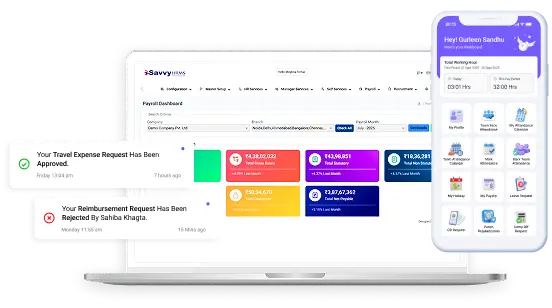
Managing severance pay, payroll, full-and-final settlements, gratuity, and statutory compliance manually can be complex and time-consuming. Savvy HRMS simplifies the entire employee exit process by automating calculations, simplifying payroll, ensuring compliance, and enabling accurate full-and-final settlements, all through a single, easy-to-use HRMS platform.










Ready to simplify severance pay management and automate your HR processes?
Discover how our all-in-one HRMS solution can help your business save time, reduce errors, and stay compliant.