

Shift Roster Meaning: A Complete Guide to Shift Scheduling & Management


-
AuthorRuchika Rajput
-
 Last Updated
May 11, 2026
Last Updated
May 11, 2026
-
 Reading Time
10 Mins
Reading Time
10 Mins
The modern-day workplace is not a 9-to-5 pattern anymore. Team members work through different time zones, businesses have operations running around the clock, and employees are made to work on rotational shifts. For such situations, it becomes important that an effective shift roster be implemented.
With an organized duty schedule, there won’t be any chances of confusion, stress, and quick decision-making. Regardless of whether the organization belongs to the healthcare, business process outsourcing, manufacturing, or retail sector, shift rostering will play an important part.
Let’s break this down in a simple and easy-to-understand way!
What is Shift Roster?
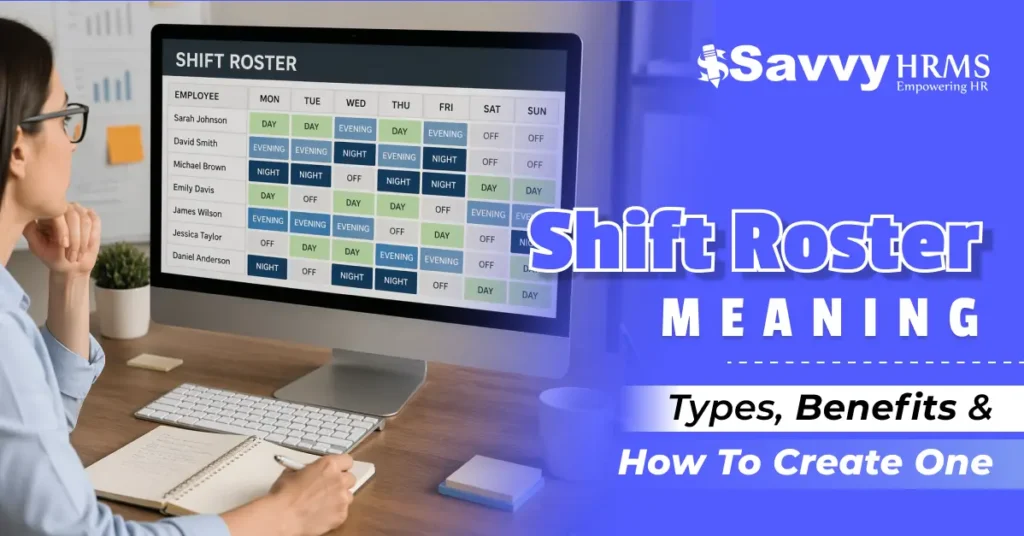
Shift roster meaning is referred to as a plan or timetable where employees are assigned to work on specific shifts within a specified time frame. It defines when an employee is supposed to be at work, without any overlapping and gaps.
In other words, a shift roster specifies for an employee the following things:
- Working hours
- Shift timing
- Off days
- Change in shift, if any
The above definition is sometimes used as a synonym for the term duty roster meaning. Both terms refer to a systematic assignment of employees to duties or shifts.
A typical sample of a duty roster can contain the following details:
- Morning shifts
- Evening shifts
- Night shifts
- Weekends off for different employees
- Employee Assignments
For instance, a simple shift roster sample would be in line with that of a duty chart format, wherein shifts are allocated to employees depending on the days of the week.
This kind of process plays an important role in shift scheduling and management.
Importance of Shift Roster for Modern Organizations
In today’s modern business world, the issue of shift management is critical as far as business development is concerned in the highly competitive world of today. Without an efficient shift roster management system, a business may experience a range of negative outcomes, starting from inefficient allocation of the workforce.
Here’s why a shift roster is so important:
1. Smooth Operations
A carefully designed and implemented duty schedule guarantees full shift coverage. In the case of business organizations functioning around-the-clock, such coverage is important.
2. Improves Employee Productivity
The availability of information on shifts helps avoid stress related to a lack of knowledge on the part of employees, who may not know when they should appear for duty.
3. Supports Workforce Management
The basis of effective workforce management is proper planning of workforce usage. Efficient shift roster management provides a means to improve workforce allocation in time.
4. Reduced Conflicts & Confusions
With no system of shift planning in place, misunderstandings may occur among employees. In the absence of any misunderstanding regarding duties, however, conflicts and other unpleasant outcomes will be minimized.
5. Improved Work-Life Balance
Efficient shift rostering allows balancing work and personal life among employees through equal workload distribution among staff members and the provision of sufficient rest time.
What are the Different Types of Shift Rosters?
Organizations use different types of shift rostering models depending on their needs. Here are the most common ones:
1. Fixed Shift Roster
Under a fixed shift roster, all employees perform a certain shift each day. It is an easy and predictable form of rosters that makes employees’ lives easier.
2. Rotational Shift Roster
Under a rotational shift roster, employees can rotate through shifts. This roster type promotes equity in workloads and prevents restlessness and is popular in the BPO, health care, and manufacturing sectors.
3. Split Shift
Split shift means that employees perform two separate shifts on the same day with a gap. Split shifts are helpful during busy periods, and careful planning is required.
4. On-Call Shift
An on-call shift entails being ready to attend at any time if required. Such shifts are very helpful in emergency situations, and this form of shift is common in the IT and health care sectors.
5. Flexible Shift Roster
A flexible shift roster provides employees with the freedom to select their shifts. Employees get greater satisfaction, and it helps to ensure a better work-life balance.
Shift Scheduling Software vs Manual Duty Chart Format
| Aspect | Shift Scheduling Software | Manual Duty Chart Format |
| Time & Effort | Fast and automated | Time-consuming and manual |
| Accuracy | Minimal errors | Prone to mistakes |
| Flexibility | Easy shift change updates | Difficult to modify |
| Accessibility | Accessible anytime | Limited access |
| Workforce Management | Data-driven insights | No analytics |
| Scalability | Handles large teams easily | Hard to manage at scale |
| Communication | Instant updates | Manual communication |
Why is Manual Shift Rostering a Problem for Organizations?
Many organizations still depend on manual methods for shift planning, but this approach comes with several challenges.
1. Time-Consuming Process
Manually preparing a shift roster sample may take hours, particularly when managing a significant number of people. Manually maintaining records might cause managers to invest too much time in schedule alterations and availability changes.
2. High Chances of Errors
Errors that may occur during manual entries include:
- Shift conflicts
- Shifts not allocated
- Inaccurate schedules
Such mistakes may have a negative impact on shift scheduling and management processes.
3. Difficult to Manage Shift Changes
When shift management is done manually, shift change may be challenging because it might result in misunderstandings between the parties involved.
4. Lack of Real-Time Updates
Without an automatic notification process, the team member will receive the schedule only after receiving a phone call from the manager, which causes unnecessary delays and also affects shift management.
5. Poor Workforce Optimization
Without automating, it becomes challenging to manage employees’ work hours according to the organization’s needs. Overstaffing or understaffing will result, making workforce management less productive.
6. No Data Insights
A manual shift management approach does not offer reporting tools for analyzing various aspects of the organization’s operations.
How to Optimize Shift Management Effectively?
Improving shift scheduling and management requires a strategic process. Here are practical ways to improve your process:
1. Plan ahead of time
Planning your shift roster ahead of time makes it easier for employees to know what work shifts they will have. Planning this ahead of time reduces last-minute confusion and allows coordination.
2. Use Data for Better Decisions
Use previous data to anticipate the number of employees you need to hire based on different trends. This approach is important since it can help optimize your workforce management.
3. Ensure balanced workload
Balance the allocation of shifts among the employees to prevent cases of overworking and fatigue. This strategy will help you maintain optimal levels of productivity at all times.
4. Automate Scheduling
It is easier to manage shifts using the appropriate shift scheduling software. This tool will allow us to save time and reduce errors when scheduling and allocating shifts.
5. Enable Easy Shift Changes
Give employees the ability to make shift changes within the scheduling system. This feature will minimize complications and ensure that employees can adjust to sudden shift changes.
6. Maintain Compliance
Make sure that your shift duty roster complies with the labor laws and company policies. Compliance with this principle will make it easier to allocate shifts without legal problems.
7. Maintain clear communication
Keep employees informed about their schedules and any updates in real-time. Clear communication reduces confusion, builds trust, and supports effective shift scheduling and management.
Best Practices for Shift Rostering and Workforce Management
1. Keep the shift roster simple and clear
The shift roster design should not be complex. Employees should be able to review their duty schedule easily, minimizing any complications that might arise.
2. Plan schedules in advance
When you have already shifted planning in advance, it helps to give the workers the certainty they need. It will also help to manage the shifts in case of emergencies.
3. Maintain consistency in scheduling
Frequent or unnecessary shift changes can disturb routines. A constant schedule builds trust, improves productivity, and makes overall shift management more stable.
4. Allow flexibility when needed
Even with proper shift rostering, flexibility matters. Allowing employees to request swaps or changes improves satisfaction and keeps the system practical without affecting workflow.
5. Use a standardized duty chart format
Following a consistent duty chart format keeps the roster management organized. It also makes it easier for both employers and employees to track and understand schedules.
6. Leverage shift scheduling software
Using shift scheduling software or shift rostering software minimizes manual effort, reduces errors, and boosts overall efficiency. It also strengthens the workforce management.
7. Clearly communicate schedules
Keep employees ahead of their schedules and any changes to those schedules through clear communication.
8. Constantly analyze and improve
Shift planning must continue to improve as your organization continues to grow. Consistent review of your process for managing shift rosters will help you improve over time.
How Savvy HRMS Helps in Shift Rostering?
Managing shifts manually can be confusing, especially as your team grows. This is where tools like Savvy HRMS come into play.
Savvy HRMS simplifies shift rostering by automating and simplifying the entire process.
1. Automation of Shift Scheduling
Using automated shift scheduling helps managers to be able to design and modify shift rosters within minutes. This helps save time and effort, and increases efficiency.
2. Simplified Shift Planning
Smart solutions have made shift planning easy using templates and automation tools that help managers efficiently allocate shifts.
3. Instant Notifications
Employees receive instant notifications for any shift change, ensuring everyone stays updated. This improves communication, reduces confusion, and keeps daily operations running without issues.
4. Centralized Roster Management
Having a single system in place for roster management makes it easier for managers to manage and control the entire process of shift roster management.
5. Improved Workforce Management
Workforce management involves managing staffing ratios by having an ideal number of employees scheduled in shifts. This helps increase efficiency without overstaffing or understaffing.
6. Employee Self-Service
Employees will be in control when it comes to reviewing, swapping, and allocating shifts since there will be no need for managerial disturbances.
7. Analytics and Data Insights
Advanced tools enable managers to collect data on attendance, shift trends, and other insights useful for improved decision-making in shift planning.
Conclusion
Knowing the shift roster meaning is important when designing an effective scheduling process. The good shift roster or shift scheduling helps in ensuring smooth operation, increasing employee satisfaction, and boosting productivity.
Although it is still possible to see manual shift roster formats in use, such techniques do not serve contemporary companies due to their inability to meet the demands of modern businesses. Organizations today require smarter solutions for shift management, roster management, and workforce management.
However, through embracing new approaches to scheduling, such as using shift roster software, organizations will improve their shift management, roster management, and workforce management processes.
Ultimately, efficient shift rostering should not only be viewed as the distribution of shifts but as the creation of balance, efficiency, and productivity.
So, are you ready to simplify your shift rostering? Switch to Savvy HRMS and manage your shift scheduling with ease, accuracy, and complete control.
Book a Demo TodayFAQ
1. What is a Shift Roster?
A shift roster is a work schedule that assigns employees to specific shifts, working hours, and days. It helps organizations manage workforce availability, ensure smooth operations, and distribute work fairly among employees. Shift rosters are commonly used in businesses that operate in multiple shifts or require continuous staffing.
2. What does roster mean in work?
In a workplace, a roster refers to a planned list or schedule that shows when employees are expected to work. It includes details such as shift timings, workdays, weekly offs, and employee assignments. Rosters help managers organize staffing efficiently and ensure that all operational needs are covered.
3. What is a 7-day shift roster?
A 7-day shift roster is a scheduling system designed to manage employee shifts across all seven days of the week, including weekends. Employees usually work in rotating schedules so that the business can maintain operations every day while still providing weekly off and balanced workloads for staff members.
4. What is a 24×7 shift roster?
A 24×7 shift roster is a scheduling arrangement used by organizations that operate continuously, 24 hours a day and 7 days a week. Employees are divided into different shifts, such as morning, evening, and night shifts, to ensure uninterrupted business operations. This type of roster is commonly used in industries like healthcare, manufacturing, IT support, and customer service.