


Harvard Model of HRM: A Strategic Approach to People Management in Modern Organizations


-
AuthorRuchika Rajput
-
 Last Updated
June 29, 2026
Last Updated
June 29, 2026
-
 Reading Time
8 Mins
Reading Time
8 Mins
Put simply, the key drivers of performance, innovation, and sustainable success are the people within an organisation and their ability to drive performance, innovation, and sustain long-term success.
What role do employees play in this?
Organisations that are aware of this truth invest in the development of their employees, build strong relationships, and create meaningful experiences for their employees in their workplace.
The Harvard Model of HRM is an excellent framework that focuses on placing people at the centre of all organizational decisions.
What is exceptional about this model? It provides a balance between the achievement of business objectives and the welfare of employees, the expectations of key stakeholders, and the current and future realities within the workplace.
By taking this strategic approach to human resource management, organisations can create strong organizational cultures, improve employee engagement, and achieve sustainable growth.
Want to get started? As workplaces continue to change rapidly, the Harvard Model of HRMS will continue to serve as a roadmap for modern-day people management processes and practices that result in long-term business success.
What is the Harvard Model of HRM?
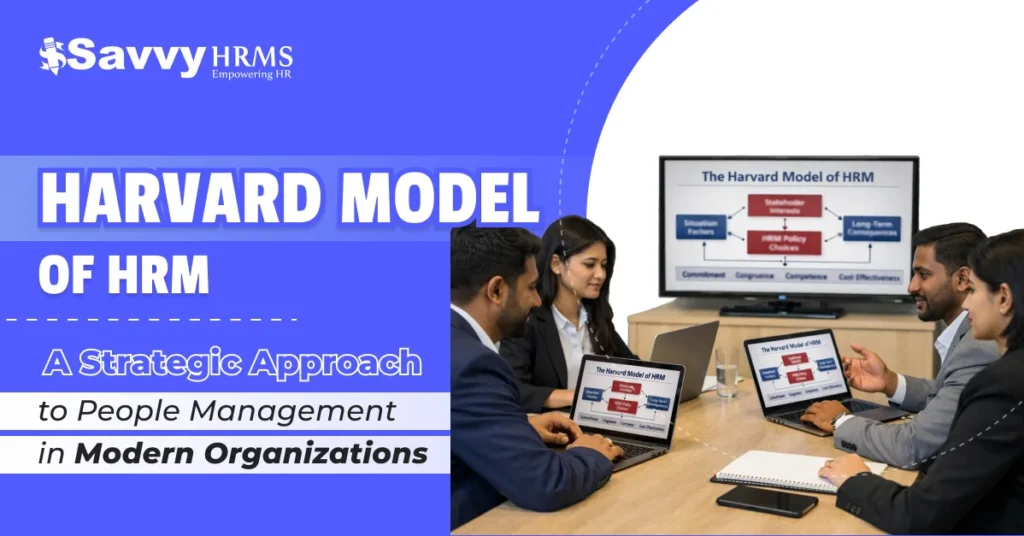
The Harvard model of HRM is a strategic human resource management framework. It focuses on the relationship between employees, management, and an organization’s overall performance. The model integrates HR policies with stakeholder needs and provides a basis for making balanced decisions that promote the long-term success of an organization and engage employees.
The Harvard model of HRM considers HR to be an asset rather than an expense. Situational variables, stakeholder expectations, HRM policies, and long-term consequences are all considered important in the development of a sustainable workplace and achieving competitive advantage through people-oriented strategies.
Why is the Harvard Model of HRM Important?
The Harvard Model of HRM is important because it promotes organizations to create balanced HR strategies that consider employees, contributors, and business goals simultaneously.
The Harvard Model of HRM is important as it:
1. Builds Employee Engagement
Encouragement of participatory management, along with open communication, boosts mutual trust and employee commitment. When employees are highly engaged, they generally demonstrate increased levels of productivity and innovation and are better aligned with the values and purpose of the business.
2. Facilitates Strategic Workforce Decision-Making
When HR policies are aligned with the organization’s overall strategic direction, they enable management to make informed decisions concerning its workforce. Such decisions will lead to long-term sustainable businesses, improved operational efficiencies, and a competitive advantage for the organization.
3. Creates Better Relationships at Work
Through collaboration between supervisors and employees, the number of conflicts is decreased, and the level of trust is strengthened. Creating healthy relationships within the workplace results in cultivating a positive culture of work, which enhances teamwork, confidence, and overall productivity.
4. Emphasizes Long-Term Thinking
The focus of the HR function is to have long-term sustainable outcomes rather than focusing only on short-term results. The long-term view allows organizations to build a stable workforce practice, providing for growth, continuity, and consistency in the organization.
5. Balances the Interests of All Stakeholders
A balanced approach to addressing the needs of employees, management and leadership, investors and society, submits policies that are fair to all stakeholders and promotes ethical decision-making and sustainable corporate reputation.
6. Builds an Organization’s Culture
Consistent HR practices and employee-centered policies shape the organization’s values. A strong culture builds motivation, retention of top performers, and alignment with the organization’s strategic vision.
7. Enhances Sustainable Performance
Sustainable HR practices align employee satisfaction with the organization’s objectives, resulting in an improvement in performance management. Sustainable HR practices promote innovation, agility, and adaptability in today’s rapidly changing business environment.
What are the Important Factors of the Harvard Model of HRM?
The Harvard Model of HRM includes important elements shaping HR policies and outcomes, ensuring organizations achieve balanced performance, employee satisfaction, and strategic success.
1. Stakeholders Interests
- Fair wages, growth prospects, and engaging company cultures are what employees want from their employers.
- For management, their main concern is productivity, efficiency, and developing strategies to meet their company goals.
- Most investors are looking for returns through continued profit, sustainable development, and good risk management practices.
- Government and society want companies to employ people ethically and follow all relevant regulations.
- Trade Unions support the rights of employees, provide a safe work environment, and provide fair pay for the work performed.
2. Situational Factors
- The skills of the workforce, their demographics, and job expectations all influence the HR Strategy.
- The overall business strategy is what determines the HR priorities and how employees will be recruited and hired.
- Labour Market Conditions (the availability of jobs) affect the way companies recruit, retain, and pay their employees.
- Work processes will often change due to technology, as will the skills required to effectively perform the work.
- Organizational cultures establish leadership and management styles, methods of communication, and methods of engaging employees.
- Legal or economic conditions can affect HR laws or policy decisions.
3. HRM Policy Choices
- The flow of HR includes recruitment management, talent development, and talent management.
- Reward Systems define how employees are paid and are given bonuses for their performance.
- The influence of employees encourages them to participate in the decision-making process.
- Work Systems define how the job is going to be performed and in what way teams will be structured.
- Performance Management is used to measure employee contributions and then improve as necessary.
4. HR Outcomes
- Commitment to the company is with employees who feel loyal and engaged.
- Competence means having the skills and ability to perform at an expected level.
- Confirming means that any time an employee’s goals and the organisation’s goals are aligned, they will be working towards the same objectives.
- Cost-effectiveness means that HR is being used in the best possible way.
- Long-term HR outcomes provide the basis for continued development of the company and maintaining the company’s reputation.
What are the Advantages and Disadvantages of the Harvard Model of HRM?
Advantages of the Harvard Model of HRM
- Encourages an employee-focused organization, which leads to improved employee satisfaction, motivation, and retention of employees.
- Facilitates alignment between human resource policies and organizational goals.
- Facilitates participative management and collaborative decision-making.
- Improves organizational culture through HR practices that are communicated consistently throughout the organization.
- Focuses on a long-term approach to workforce development and sustainability.
- Balances multiple stakeholder interests effectively.
- Improves the overall adaptive capability and performance of the organization.
Disadvantages of the Harvard Model of HRM
- Implementation may be complex and require significant resources.
- The organization must have strong commitment from senior leaders and a supportive organizational structure.
- It can be difficult to balance the various expectations of different stakeholders.
- The results of an organization’s proactive HR practices may not be seen immediately.
- Highly centralized or rigid organizations may not benefit from this approach.
- Assessing the effectiveness of HR practices can be difficult because they are often measured qualitatively.
How Do You Make the Harvard Model Actually Work?
1. Integrating HR Strategy with Business Goals
It is essential for organizations to collaborate their HR and Corporate Strategic Planning; this allows HR initiatives to improve the organization’s growth, innovation, and long-term sustainability aligned with the competitive demands of the marketplace.
2. Actively Involving Stakeholders in Decision-Making
To create an effective HR policy, it is important to engage all stakeholders, including employees, managers, and investors, in the process. Working together increases transparency and trust and aligns human resources with overall organizational goals, developing both balanced and effective human resource management strategies.
3. Developing Flexible HR Policies
Establishing flexible HR policies will allow the organization to accommodate new (and changing) workforce requirements and adapt policies as its business develops. In addition, flexibility in HR creates an organization that is stronger and able to engage in innovation by maintaining HR practices that remain relevant within a continually developing economic environment.
4. Investing in Employee Development
Providing continuous opportunities for learning, skill development, and leadership is essential to creating a stronger workforce, ultimately leading to increased productivity and continued growth and competitiveness of an organization.
5. Evaluating HR Outcomes and Adjusting Strategies
It is important that HR processes are evaluated on an ongoing basis using various performance metrics and feedback methods to create a process of continual improvement in order to ensure HR remains effective, aligned with organizational goals, and responsive to changes in stakeholder expectations.
Conclusion
Through the use of the Harvard Model of HRM, an organization has an overall method for managing its strategic HR while taking into account the needs of each stakeholder involved. The underlines on a long-term view of the organization, employee commitment, and flexibility based on the situation allow for an overall improvement in performance and the creation of a culture that can be sustained for years to come. In order to utilize this model effectively, organizations should have structured HR processes in place, invest in developing their workforce, and assess the results of their investment on a consistent basis. To assist organizations in the successful adaptation of this model, software like Savvy HRMS can enhance and improve the efficiency of HR processes, data-driven decisions, and the overall experience of employees working for the organization.