


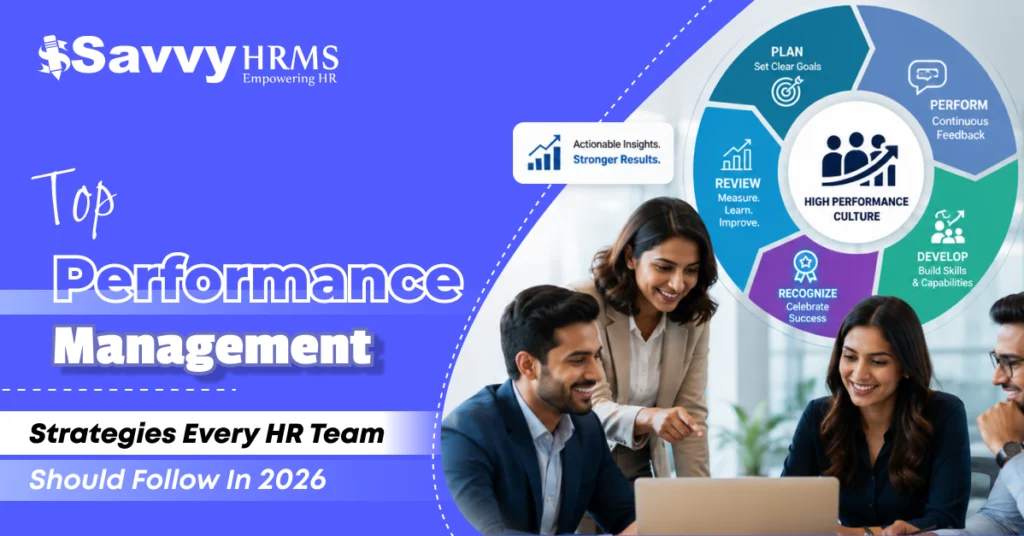

Employee performance has always been one of the biggest factors behind organizational success. However, in 2026, performance management is no longer just about annual reviews and ratings. Today’s workforce expects regular feedback, clear goals, growth opportunities, and recognition for their contributions.
At the same time, HR teams are under pressure to improve productivity, retain top talent, and build a high-performance culture. Traditional performance management methods often fail to meet these expectations because they focus on evaluations rather than continuous development.
This is where modern performance management strategies come into play. By adopting the right approach, organizations can motivate employees, align individual goals with business objectives, and create an environment where people consistently perform at their best.
In this blog, we will explore the top performance management strategies every HR team should follow in 2026, best practices for implementation in India, and how HRMS software can simplify the entire process.
What is Performance Management?
Performance management is a continuous process that helps organizations monitor, evaluate, and improve employee performance while aligning it with overall organizational goals.
Unlike traditional appraisal systems that focus only on annual reviews, modern performance management emphasizes ongoing communication, goal tracking, employee development, and continuous feedback.
The primary objectives of performance management include:
- Setting clear performance expectations
- Aligning employee goals with business objectives
- Providing regular feedback and coaching
- Identifying skill gaps and training needs
- Recognizing achievements and rewarding performance
- Improving employee engagement and productivity
When implemented effectively, performance management creates a culture of accountability, transparency, and continuous improvement.
Top Performance Management Strategies in 2026
1. Shift from Annual Reviews to Continuous Feedback
Employees no longer want to wait an entire year to understand how they are performing. Continuous feedback allows managers to address challenges, recognize achievements, and guide employees in real time.
Regular check-ins help employees stay motivated and make necessary improvements before small issues become major problems.
Benefits:
- Faster performance improvement
- Better employee engagement
- Stronger manager-employee relationships
2. Set SMART Goals
One of the most effective performance management strategies is goal setting.
SMART goals are:
- Specific
- Measurable
- Achievable
- Relevant
- Time-bound
When employees clearly understand what success looks like, they can focus their efforts more effectively and contribute meaningfully to organizational growth.
3. Align Individual Goals with Business Objectives
Employees perform better when they understand how their work contributes to company success.
HR teams should ensure that departmental goals and individual objectives are aligned with broader business priorities. This alignment creates purpose and improves accountability throughout the organization.
4. Implement OKRs for Better Performance Tracking
Objectives and Key Results (OKRs) have become increasingly popular among organizations looking to improve performance management.
OKRs help teams:
- Define determined objectives
- Measure progress through key results
- Improve focus and transparency
- Encourage collaboration
Many organizations now use quarterly OKRs instead of annual goal-setting frameworks.
5. Use Data-Driven Performance Management
Modern HR leaders depend on workforce analytics to make informed decisions.
Rather than evaluating employees based on assumptions, organizations can use data to measure:
- Goal completion rates
- Productivity levels
- Training effectiveness
- Employee engagement
- Performance trends
Data-driven performance management improves fairness and reduces bias during evaluations.
6. Encourage Two-Way Feedback
Performance conversations should not be one-sided.
Employees should also have opportunities to provide feedback about:
- Management support
- Workplace challenges
- Career development needs
- Organizational processes
Two-way communication strengthens trust and creates a more transparent work environment.
7. Focus on Employee Development
High-performing organizations view performance management as a growth tool rather than a monitoring system.
Managers should work closely with employees to:
- Identify strengths
- Address skill gaps
- Create learning plans
- Support career progression
Employees who see growth opportunities are more likely to remain engaged and committed.
8. Recognize and Reward High Performance
Recognition remains one of the most powerful motivators in the workplace.
Whether through incentives, awards, promotions, or public appreciation, recognizing employee contributions encourages continued excellence.
Timely recognition can significantly improve morale and productivity.
9. Build a Coaching Culture
Managers are increasingly expected to act as coaches rather than supervisors.
Coaching helps employees:
- Solve problems independently
- Improve decision-making skills
- Develop leadership capabilities
- Increase confidence
Organizations that embrace coaching often experience stronger performance outcomes and higher employee satisfaction.
10. Leverage AI and Automation
Artificial intelligence is transforming performance management in 2026.
AI-powered systems can help HR teams:
- Track employee goals
- Analyze performance trends
- Identify high performers
- Predict development needs
- Generate actionable insights
Automation also reduces administrative workload and improves efficiency.
11. Personalize Performance Management
Every employee is different.
Modern performance management strategies recognize that individual employees may require different development plans, feedback approaches, and performance goals.
Personalized performance management improves engagement and creates more meaningful employee experiences.
12. Strengthen Manager Accountability
Managers play an important role in employee performance.
Organizations should ensure managers are accountable for:
- Conducting regular reviews
- Providing constructive feedback
- Supporting employee growth
- Addressing performance concerns promptly
Strong managerial involvement significantly improves performance management success.
Best Practices for Implementing Performance Management in India
Implementing performance management successfully requires more than choosing the right strategy. HR teams must also consider organizational culture, workforce diversity, and local business practices.
1. Establish Clear Performance Expectations
Employees should clearly understand their responsibilities, goals, and performance standards from the beginning.
Clear expectations eliminate confusion and improve accountability.
2. Create a Transparent Review Process
Transparency builds trust.
Employees should understand how performance is measured, how ratings are assigned, and how rewards are determined.
3. Invest in Manager Training
Many managers struggle with performance conversations.
Providing training on coaching, feedback delivery, and employee development helps ensure more effective performance discussions.
4. Encourage Continuous Learning
Upskilling and reskilling are becoming essential in India’s rapidly developing workforce.
Organizations should integrate learning and development initiatives into their performance management framework.
5. Use Technology for Consistency
Manual processes often lead to delays, errors, and inconsistencies.
Performance management software helps standardize processes, improve visibility, and maintain accurate records.
How Do You Manage Employee Performance Using HRMS?
Managing employee performance manually can become confusing as organizations grow. HRMS software simplifies performance management by centralizing processes and providing real-time visibility.
A modern HRMS helps organizations:
1. Goal Setting and Tracking
HRMS enables employees and managers to set clear objectives, track progress continuously, and make timely adjustments, ensuring alignment with business goals throughout the year.
2. Continuous Feedback
Continuous feedback tools encourage regular communication between managers and employees, helping address challenges quickly, recognize achievements, and support ongoing performance improvement.
3. Performance Reviews
HRMS automates appraisal cycles, simplifies evaluations, and maintains accurate performance records, making reviews more efficient, transparent, and consistent across the organization.
4. Employee Development Planning
Managers can identify skill gaps, create personalized development plans, and recommend training programs that help employees grow and achieve career objectives.
5. Analytics and Reporting
Advanced analytics provide actionable insights into employee performance, productivity trends, and goal achievement, helping HR leaders make informed workforce decisions.
6. Recognition and Rewards
Built-in recognition features allow organizations to celebrate employee achievements, reinforce positive behaviors, boost morale, and encourage a culture of high performance.
By automating routine tasks and providing actionable insights, HRMS software allows HR professionals to focus on strategic workforce development.
Why Savvy HRMS Delivers Better Performance Management Outcomes?
Organizations need more than spreadsheets and manual reviews to manage employee performance effectively. They need a system that supports continuous feedback, goal alignment, and data-driven decision-making.
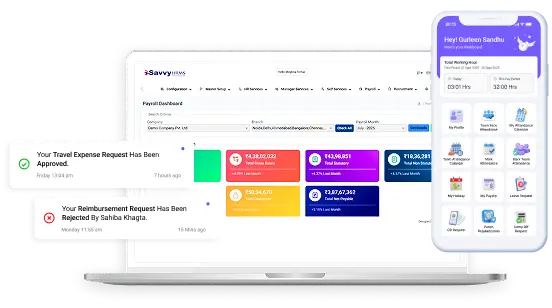
Savvy HRMS offers a comprehensive Performance Management System designed to help businesses create a culture of growth and accountability.
With Savvy HRMS, organizations can:
- Set and track employee goals effortlessly
- Conduct structured performance reviews
- Enable continuous feedback and coaching
- Monitor performance trends through analytics
- Improve employee engagement and productivity
- Align workforce objectives with business goals
The platform simplifies performance management processes while providing HR teams and managers with complete visibility into employee performance.
Whether you’re a growing business or a large enterprise, Savvy HRMS helps transform performance management from a periodic task into a continuous strategic advantage.
Conclusion
Performance management in 2026 is all about creating a culture of continuous improvement, meaningful feedback, employee development, and goal alignment. Organizations that adopt modern performance management strategies are better positioned to improve productivity, employee engagement, and long-term business success.
To simplify performance reviews, track goals effectively, and drive better workforce outcomes, businesses need the right technology partner. Savvy HRMS empowers organizations with an advanced performance management solution that simplifies processes and helps employees perform at their full potential.









Ready to Transform Your Performance Management Process?
Discover how Savvy HRMS's intelligent Performance Management System can help your organization improve employee performance, boost engagement, and achieve business goals faster.