


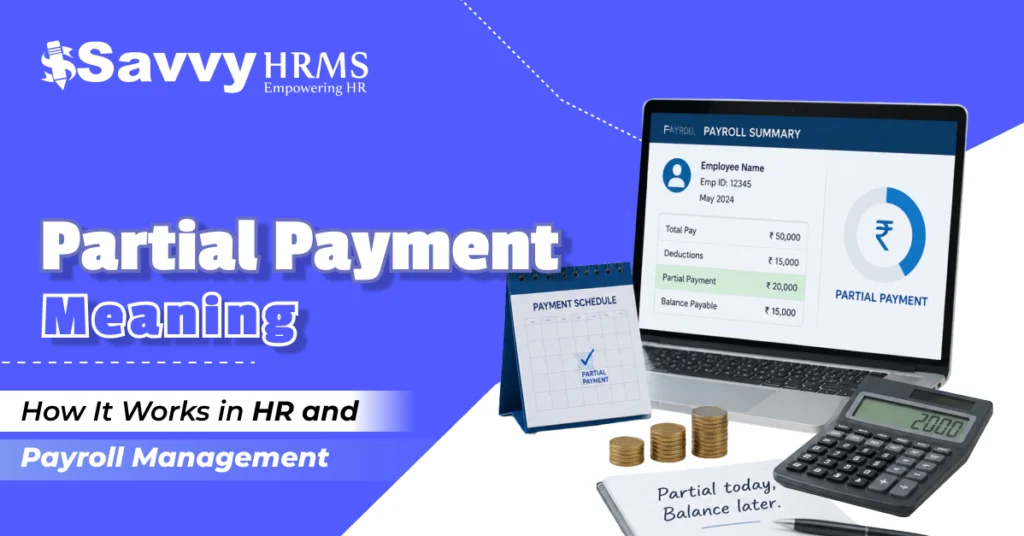

Managing employee salaries and business payments becomes easier when companies understand the concept of partial payments. In modern HR and payroll operations, partial payments are commonly used to handle salary advances, delayed payouts, deductions, and flexible payment arrangements.
The concept of partial payment meaning is especially important for businesses that want to maintain smooth financial operations while ensuring employees receive timely compensation. It helps organizations manage payroll challenges without disrupting employee satisfaction or compliance processes.
Businesses of all sizes use partial payments in payroll management, vendor transactions, and invoice settlements. Understanding how partial payments work can help HR teams improve payroll accuracy, maintain transparency, and simplify payment processes more effectively.
What Is Partial Payment Meaning?
Partial payment means paying only a portion of the total amount due instead of making the complete payment at once. The remaining balance is usually paid later according to agreed terms and timelines.
In HR and payroll management, partial payments are often used when employees receive salary advances, when payroll is processed in stages, or when deductions affect the final salary amount. Businesses may also use partial payments for contractors, vendors, or freelancers.
For example, if an employee’s monthly salary is ₹40,000 but the company pays ₹25,000 initially and the remaining ₹15,000 later, the first amount is considered a partial payment.
Partial payments can occur for several reasons, including:
- Salary advances
- Employee loans
- Payroll corrections
- Delayed attendance approvals
- Leave deductions
- Cash flow management
- Vendor payment agreements
This payment method helps organizations maintain financial flexibility while ensuring employees or vendors still receive payments on time.
What Are the Benefits of Partial Payments?
Partial payments offer multiple advantages for both employers and employees. They improve payment flexibility and help organizations manage payroll operations more efficiently.
1. Better Cash Flow Management
One major benefit of partial payments is improved cash flow management. Companies facing temporary financial constraints can distribute payments in stages instead of delaying them entirely.
This helps businesses continue operations without creating major payroll disruptions.
2. Improved Employee Satisfaction
Employees appreciate receiving at least a portion of their salary during emergencies or payroll delays. Partial salary payments help reduce financial stress and maintain trust between employees and employers.
3. Easier Payroll Adjustments
Sometimes payroll calculations are delayed due to attendance issues, overtime approvals, reimbursements, or tax deductions. Partial payments allow HR teams to release a basic amount first while completing final calculations later.
4. Reduced Payment Defaults
Partial payments help companies avoid complete non-payment situations. Instead of postponing the entire salary or invoice amount, organizations can release part of the payment immediately.
5. Flexible Payment Structures
Businesses often work with freelancers, consultants, and vendors who agree to milestone-based payments. Partial payments make these arrangements easier and more manageable.
6. Better Financial Planning
Partial payment systems help businesses plan budgets more effectively. Companies can allocate funds across different operational needs while continuing payroll processing smoothly.
How to Create an Invoice for a Partial Payment?
Creating an invoice for a partial payment requires clarity and proper documentation. A well-structured invoice helps avoid confusion and ensures both parties understand the remaining balance.
Here are the key steps to create a partial payment invoice:
1. Mention the Total Amount
Clearly specify the full invoice amount before mentioning the partial payment received or requested.
Example:
- Total Invoice Amount: ₹50,000
2. Specify the Partial Payment Amount
Mention the amount already paid or the amount currently due.
Example:
- Partial Payment Received: ₹20,000
- Remaining Balance: ₹30,000
3. Include Payment Terms
Always define the payment schedule and due dates for the remaining amount.
This improves transparency and prevents payment disputes later.
4. Add Invoice Reference Numbers
Invoice numbers help businesses track partial transactions more accurately within accounting and payroll systems.
5. Mention Tax Details
Include GST or applicable taxes to maintain proper financial compliance.
6. Use Payroll or HRMS Software
Modern HRMS and payroll software simplify invoice generation and payment tracking. Automated systems reduce errors and improve record management significantly.
What Is the Role of Partial Payments in HR and Payroll Management?
Partial payments play a very important role in HR and payroll management. They help organizations handle salary processing challenges while ensuring employees continue receiving timely compensation.
1. Managing Salary Advances
Employees sometimes request salary advances for personal emergencies. HR teams can process partial salary payments while adjusting the remaining balance in future payroll cycles.
2. Handling Payroll Delays
Payroll delays may happen due to technical issues, attendance mismatches, or banking problems. Partial payments help organizations release temporary salary amounts while resolving pending calculations.
3. Managing Employee Deductions
Partial payroll payments are useful when employee deductions such as unpaid leave, tax adjustments, or loan recoveries affect the salary amount.
4. Supporting Contractual Employees
Contract workers and freelancers often receive payments based on completed work milestones. HR departments use partial payments to manage these flexible payment structures efficiently.
5. Improving Payroll Accuracy
Instead of rushing payroll calculations, HR teams can release partial payments first and finalize remaining adjustments later. This improves payroll accuracy and reduces disputes.
6. Maintaining Employee Trust
Timely communication and partial salary disbursement help maintain employee confidence during financial or operational challenges.
How Is Partial Pay Calculated in Payroll?
Partial pay calculation depends on various factors, including working days, attendance, deductions, salary structure, and company policies.
Below are the common methods used to calculate partial payments in payroll management.
1. Pro-Rata Salary Calculation
Partial salary is often calculated on a pro-rata basis.
The formula generally used is:
Partial Salary = (Monthly Salary ÷ Total Working Days) × Days Worked
For example:
- Monthly Salary = ₹30,000
- Total Working Days = 30
- Days Worked = 15
The employee receives:
₹15,000 as partial salary payment.
2. Salary Advance Method
If an employee takes a salary advance, the amount is deducted from the final salary.
Example:
- Monthly Salary = ₹40,000
- Advance Paid = ₹10,000
- Remaining Salary = ₹30,000
3. Leave Deduction Calculation
When employees take unpaid leave, payroll teams calculate partial pay after deducting leave amounts.
4. Joining or Exit Payroll Calculation
Employees joining or leaving mid-month usually receive partial salary based on actual working days.
5. Incentive or Bonus Delays
Sometimes bonuses or incentives are processed separately. HR teams release base salary first and the remaining incentive amounts later as partial payments.
Using payroll software helps automate these calculations and reduces manual errors significantly.
Legal Compliance for Partial Payments in India
Businesses must follow Indian labor laws and payroll regulations while managing partial salary payments. Compliance is important to avoid legal issues and employee dissatisfaction.
1. Payment of Wages Act, 1936
Under the Payment of Wages Act, employers must pay salaries within the prescribed timelines. Delayed or incomplete payments without valid reasons may result in penalties.
2. Employment Agreements
Companies should clearly define partial payment policies in employment contracts or HR policies. This ensures transparency between employers and employees.
3. Salary Slips and Documentation
Organizations must maintain accurate salary records, including:
- Partial payment details
- Deduction records
- Salary adjustments
- Advance payments
Proper documentation helps during audits and compliance reviews.
4. Statutory Deductions
Even during partial salary payments, employers must comply with statutory deductions such as:
- Provident Fund (PF)
- Employee State Insurance (ESI)
- Professional Tax
- TDS
5. Timely Communication
Employees should always be informed about partial salary disbursement timelines and pending balances. Clear communication reduces misunderstandings and improves trust.
6. Digital Payroll Compliance
Modern HRMS software helps organizations maintain payroll transparency, automate calculations, and ensure labor law compliance more effectively.
Best Practices for Managing Late Fees/Partial Payments
Managing partial payments properly requires strong processes and clear communication. Businesses should adopt best practices to avoid confusion, disputes, or compliance issues.
1. Set Clear Payment Policies
Organizations should define clear policies for:
- Salary advances
- Partial salary releases
- Vendor payments
- Late fee charges
- Deduction management
2. Use Automated Payroll Software
Payroll automation reduces manual calculation errors and improves payment tracking accuracy.
HRMS software can automate:
- Salary calculations
- Deduction adjustments
- Payment reminders
- Invoice tracking
- Payroll reports
3. Maintain Proper Documentation
Always document every partial payment transaction carefully. Maintain records of:
- Payment dates
- Payment amounts
- Remaining balances
- Approval history
4. Communicate Transparently
Employees and vendors should receive clear communication regarding:
- Payment schedules
- Pending balances
- Deduction reasons
- Delayed payment timelines
Transparency improves trust and reduces conflicts.
5. Monitor Outstanding Balances
Regularly review pending balances to avoid long-term payment issues.
Automated dashboards in HRMS software make tracking easier and more efficient.
6. Ensure Legal Compliance
Follow labor laws, payroll regulations, and tax requirements while processing partial payments.
Compliance failures can lead to penalties and reputational damage.
7. Create Flexible Payment Workflows
Businesses should build flexible payroll workflows that support emergency payments, salary advances, and staged payment processing.
This improves operational efficiency and employee satisfaction.
Conclusion
Understanding partial payment meaning is important for modern businesses managing payroll, employee compensation, and financial operations. Partial payments offer flexibility, improve cash flow management, and help organizations handle payroll challenges more efficiently while maintaining employee trust and operational continuity.
With advanced payroll solutions like Savvy HRMS, businesses can automate partial payment calculations, manage salary adjustments, track deductions, and maintain compliance effortlessly. Savvy HRMS helps HR teams simplify payroll operations, reduce errors, and improve the overall employee payment experience.

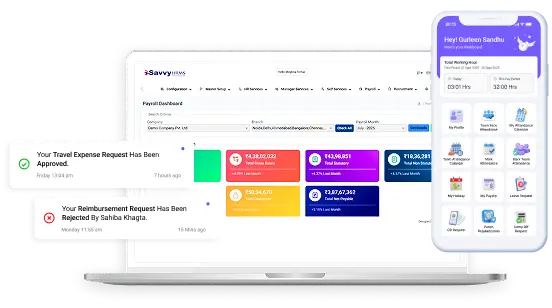









Looking to simplify payroll processing and manage partial payments more efficiently?
Discover how Savvy HRMS can automate your HR and payroll operations with smarter, faster, and fully compliant solutions