




Have you heard about the latest EPF new rule and wondered what the new ₹25,000 wage ceiling actually means for you? Whether you are an employee checking your PF deductions, an employer managing costs, or an HR professional handling payroll, this change is worth understanding.
The Union Cabinet has approved increasing the EPFO wage ceiling for mandatory coverage from ₹15,000 to ₹25,000 per month. The revised ceiling is effective from 17 September 2026, and the government expects more than 51 lakh additional employees to come under mandatory EPFO coverage.
But does this mean everyone earning ₹25,000 will automatically have PF deducted on ₹25,000? Will take-home salary change? What happens to employers, EPS, EDLI, and payroll processing?
Let’s understand the new EPFO rules in simple terms and see what employees, employers, and HR teams need to know.
What Is the EPF New Rule for 2026?
So, what exactly is the EPF new rule for 2026?
The major change is the increase in the statutory wage ceiling for mandatory EPFO coverage from ₹15,000 to ₹25,000 per month. The government expects this change to expand mandatory EPFO coverage to more than 51 lakh additional employees.
The revised wage ceiling is effective from 17 September 2026. The Ministry of Labour & Employment and EPFO are responsible for taking the necessary legal and administrative steps for implementation.
EPF New Rule at a Glance
| Particular | Earlier | New Rule 2026 |
| EPFO mandatory wage ceiling | ₹15,000/month | ₹25,000/month |
| Increase | – | ₹10,000/month |
| Effective date | Earlier framework | 17 September 2026 |
| Expected additional coverage | – | 51+ lakh employees |
| Main change | Existing mandatory coverage threshold | Expanded mandatory coverage |
In Simple Words
The change means the wage threshold used for mandatory EPFO coverage has been raised.
It does not mean that:
- Every employee will automatically contribute PF on ₹25,000.
- Every employee’s take-home salary will decrease by the same amount.
- All EPFO rules have changed because of this one announcement.
- The ₹25,000 ceiling is the same thing as the separate 2026 withdrawal reforms.
The actual PF treatment still depends on the applicable EPFO provisions and the employee’s circumstances.
What Has Changed in the EPFO Wage Ceiling from ₹15,000 to ₹25,000?
The previous mandatory coverage wage ceiling was ₹15,000 per month. The Union Cabinet has now approved increasing it to ₹25,000 per month, a ₹10,000 increase in the threshold.
The government says the change is intended to widen the social-security net and bring more employees under mandatory EPFO coverage.
Earlier EPFO Wage Ceiling
- Wage ceiling: ₹15,000 per month
- Employees above the applicable threshold could fall outside mandatory coverage, subject to the relevant EPFO provisions.
- The ceiling had been ₹15,000 since September 2014.
New EPFO Wage Ceiling
- Revised ceiling: ₹25,000 per month
- Effective date: 17 September 2026
- Expected additional mandatory coverage: more than 51 lakh employees.
What Is the Practical Difference?
The most important difference is the expanded coverage threshold.
Employees who were previously outside mandatory EPFO coverage because their applicable wages exceeded ₹15,000 may now fall within the revised threshold, provided they meet the relevant conditions.
Why Has the EPFO Wage Ceiling Been Increased to ₹25,000?
Why increase the ceiling now?
According to the government’s announcement, the wage ceiling had remained unchanged at ₹15,000 since 2014. The latest increase is intended to align the framework with sustained wage growth, rising incomes, and the expansion of formal employment.
Key Reasons Behind the Change
The government has highlighted several objectives:
- Expand social-security coverage
- Bring more employees under mandatory EPFO coverage
- Strengthen long-term retirement security
- Support formalisation of employment
- Extend applicable EPFO-linked benefits to a wider workforce
- Align the ceiling with changing wage levels
Expected Coverage Expansion
The government estimates that more than 51 lakh additional employees could come under mandatory EPFO coverage because of the revised ceiling.
Government Financial Impact
The government estimates an additional annual expenditure of approximately ₹11,339 crore associated with the increased ceiling.
Who Will Be Covered Under the New EPF Wage Ceiling?
One of the biggest questions surrounding the new EPFO rules is: who will actually be covered?
The answer is not simply “everyone earning ₹25,000 or less.” EPFO coverage depends on the applicable statutory provisions, establishment coverage, employee status, and relevant wage conditions.
Employees Who May Be Particularly Affected
The change is especially relevant to:
- Employees previously above the ₹15,000 threshold
- Employees whose applicable wages fall within the revised ₹25,000 threshold
- Employees working in establishments covered by the applicable EPFO provisions
- Employees who meet the relevant mandatory-coverage conditions
Important: ₹25,000 Does Not Mean Automatic Identical Treatment
The revised ceiling should not be interpreted as a universal instruction that every employee earning ₹25,000 must have the same PF calculation.
HR teams should consider:
- Applicable EPFO provisions
- Employee’s EPF membership status
- Relevant PF wages
- Establishment coverage
- Applicable contribution rules
- Existing employee records
Simple Examples
| Employee | Applicable Monthly Wages | What HR Should Do |
| Employee A | ₹14,000 | Check existing EPFO applicability |
| Employee B | ₹18,000 | Review under revised ceiling |
| Employee C | ₹25,000 | Verify applicable coverage and PF rules |
| Employee D | ₹30,000 | Do not assume coverage only from gross salary |
The table is illustrative. Actual eligibility should be determined using the applicable EPFO provisions and employee circumstances.
For more info, visit: https://www.pmindia.gov.in/
How Will the New EPF Rule Affect Employees?
For employees, the EPF new rule can mean a broader opportunity for coverage under the EPFO social-security framework.
The government’s announcement specifically refers to provident fund savings, pension, and insurance protection under the applicable EPFO schemes.
1. Wider EPFO Coverage
Some employees who were previously outside mandatory EPFO coverage may now fall within the revised wage threshold, subject to the applicable conditions.
2. Retirement Savings
For newly covered employees, applicable employee contributions can build their provident fund savings over time.
3. Potential Impact on Take-Home Salary
If an employee becomes subject to an employee PF deduction, their net salary may change.
4. Access to Applicable Social Security Benefits
EPFO coverage can provide access to applicable:
- EPF benefits
- EPS-related pension benefits
- EDLI insurance protection
What Employees Should Check
Employees should look at their:
- Salary structure
- PF wage
- Employee PF deduction
- Employer contribution
- EPF account details
- Payslip after implementation
How Will the ₹25,000 Wage Ceiling Affect EPF Contributions?
This is where many employees and employers may have questions.
Does a ₹25,000 wage ceiling mean that PF will automatically be calculated on ₹25,000 for everyone?
No, not necessarily.
The wage ceiling primarily relates to mandatory EPFO coverage, while the actual contribution calculation depends on the applicable EPFO provisions and the wages considered for contribution.
Coverage vs. Contribution
| Concept | Meaning |
| Wage ceiling | Threshold relevant to mandatory EPFO coverage |
| PF wages | Wage components considered for PF contribution |
| Employee contribution | Amount deducted from employee wages |
| Employer contribution | Employer’s applicable statutory contribution |
This distinction is important because the ₹25,000 ceiling should not automatically be treated as the contribution base for every employee.
What Payroll Teams Should Check
Before calculating contributions, payroll teams should verify:
- Employee EPFO eligibility
- Relevant PF wages
- Applicable contribution rate
- Employee contribution
- Employer contribution
- EPS allocation, where applicable
- Statutory configuration
Why This Matters
A payroll system should not simply apply:
₹25,000 × PF rate = PF contribution
for every employee.
Instead, the system should apply the relevant EPFO rules to the employee’s applicable wage and coverage status.
Will the New EPF Rule Reduce Employees’ Take-Home Salary?
For some newly covered employees, yes, take-home salary may be affected because an employee PF contribution can become a payroll deduction.
However, the exact impact depends on the employee’s applicable PF wages and contribution structure.
Before and After: Illustrative Example
| Salary Component | Before Coverage | After Applicable PF Coverage |
| Applicable PF wages | ₹XX | ₹XX |
| Employee PF | ₹0 | ₹XX |
| Other deductions | ₹XX | ₹XX |
| Net salary | ₹XX | ₹XX |
This is only an illustrative format. The actual amount must be calculated using the employee’s applicable wages and statutory rules.
Why the Deduction Is Not Simply a “Loss”
The employee contribution becomes part of the employee’s provident fund savings, subject to the applicable EPFO framework.
Therefore, employees should look at both:
- Immediate impact: Possible change in take-home salary
- Long-term impact: Additional retirement savings and applicable social-security coverage
How Will the New EPF Rule Affect Employers?
The revised wage ceiling can create additional work for employers because more employees may fall within mandatory EPFO coverage.
The government expects more than 51 lakh additional employees to come under mandatory EPFO coverage.
Key Employer Impacts
1. Employee Eligibility Review
HR teams should review employee records to identify workers who may fall within the revised ₹25,000 wage ceiling. This helps businesses determine which employees may require EPFO coverage or payroll updates.
HR teams should check:
- Applicable monthly wages
- Existing EPFO membership
- Employee category
- Establishment coverage
- Relevant EPFO eligibility conditions
2. Payroll Configuration
The revised wage ceiling may require businesses to review their payroll software and update relevant EPFO eligibility and contribution settings. Accurate configuration helps ensure consistent calculations during monthly payroll processing.
Payroll settings to review:
- PF eligibility rules
- Applicable PF wage components
- Employee contribution settings
- Employer contribution settings
- EPS-related configurations
- Payslip calculations
3. Employer Contributions
Employers may have additional contribution obligations when employees become newly covered under the applicable EPFO framework. The actual financial impact will depend on the number of affected employees and their applicable PF wages.
Businesses should assess:
- Number of newly affected employees
- Applicable contribution amounts
- Monthly payroll impact
- Contribution reporting requirements
4. EPFO Records
Accurate employee and EPFO records become increasingly important when coverage expands. HR teams should review existing information and ensure relevant employee details, contribution records, and statutory documentation remain consistent.
Records worth reviewing include:
- Employee EPFO details
- UAN information
- PF contribution records
- Employee nominations
- Payroll and statutory reports
5. Employee Communication
Clear communication can help employees understand how the revised EPFO wage ceiling may affect their salary and benefits. HR teams should explain applicable changes before employees notice unexpected differences in their payslips.
HR teams can communicate changes related to:
- PF deductions
- Take-home salary
- Payslip details
- EPFO membership
- Applicable retirement benefits
- Relevant employee queries
Employer Compliance Checklist
- Review affected employee records
- Verify applicable wages
- Check PF configuration
- Validate contribution calculations
- Review statutory reports
- Check employee payslips
- Communicate applicable changes
- Monitor official implementation guidance
What Does the EPF New Rule Mean for EPS and Pension Benefits?
The Employees’ Pension Scheme (EPS) is part of the broader EPFO framework and should be considered separately from EPF savings.
The government has stated that the expanded EPFO coverage will give more employees an opportunity to access applicable provident fund, pension, and insurance protection.
EPF vs EPS
| EPF | EPS |
| Provident-fund savings | Pension-related benefit |
| Primarily retirement savings | Pension framework |
| Contribution framework applies | Employer contribution allocation is governed by applicable rules |
| Account balance can be tracked | Pension benefits depend on applicable EPS conditions |
What Employees Should Understand
The ₹25,000 wage ceiling:
- Expands the mandatory coverage threshold
- Does not automatically specify an individual’s pension amount
- Does not replace EPS eligibility conditions
- Does not mean every employee will receive the same pension benefit
Employees should therefore distinguish EPF contribution from EPS pension entitlement.
What Does the New EPF Rule Mean for EDLI Insurance Benefits?
The Employees’ Deposit Linked Insurance Scheme (EDLI) is another component associated with EPFO coverage.
The government has specifically referred to insurance protection along with provident-fund savings and pension protection when explaining the broader social-security impact of the revised wage ceiling.
What Is EDLI?
EDLI provides insurance-related protection to eligible EPFO members, subject to the scheme’s applicable conditions.
Why Does the Wage Ceiling Matter?
As mandatory EPFO coverage expands, more employees may come within the applicable EPFO social-security framework.
HR Teams Should Remember
EDLI should not be treated as simply another payroll deduction.
HR teams should maintain:
- Accurate employee records
- Correct EPFO membership information
- Relevant nomination details
- Proper statutory records
- Updated employee documentation
Actual EDLI benefits remain subject to the applicable scheme provisions and eligibility conditions.
EPF New Rule: Impact on Payroll Processing
For payroll teams, the EPF new rule is more than a change in one number.
A higher wage ceiling can mean that payroll teams need to identify additional employees, review configurations, and ensure contributions are processed correctly.
Payroll Areas That May Need Review
| Payroll Area | What HR Should Check |
| Employee Master | EPFO eligibility |
| Salary Structure | Applicable PF wages |
| Payroll Settings | Contribution configuration |
| Employee Deduction | PF deduction |
| Employer Contribution | Applicable contribution |
| Payslip | Correct PF display |
| Reports | Statutory reporting |
| Records | EPFO-related information |
Why Payroll Automation Matters
When an organisation has hundreds or thousands of employees, manually checking every employee can become time-consuming and error-prone.
A properly configured payroll system can help with:
- Employee-level calculations
- Salary processing
- Statutory deductions
- Employer contribution tracking
- Payslip generation
- Payroll reports
- Employee records
- Compliance workflows
What Should HR and Payroll Teams Do After the EPF Wage Ceiling Change?
Instead of waiting until payroll processing becomes complicated, HR teams can follow a structured review process.
Step 1: Identify Potentially Affected Employees
HR teams should review employee salary and payroll data to identify individuals who may fall within the revised ₹25,000 wage ceiling and require further EPFO eligibility assessment.
- Review employee salary records
- Identify potentially affected employees
- Check existing EPFO coverage
- Separate relevant employee categories
Step 2: Review Applicable PF Wages
Do not depend only on gross salary. Review the salary components that are relevant for determining PF contributions.
- Basic wages
- Applicable PF components
- Existing PF wage
- Contribution basis
Step 3: Review EPFO Eligibility
Verify each potentially affected employee against the applicable mandatory EPFO coverage conditions before making changes to payroll.
- Check eligibility conditions
- Verify existing membership
- Review employee status
- Confirm applicable coverage
Step 4: Check Payroll Configuration
Payroll settings should be reviewed carefully to ensure the revised wage ceiling and applicable contribution rules are correctly reflected in the payroll system.
- PF settings
- Contribution rates
- Wage components
- Employee categories
- Employer contribution settings
Step 5: Validate Calculations
Run test payroll calculations before applying changes to the final payroll. This helps HR teams identify incorrect PF deductions, contribution amounts, or configuration issues.
- Compare expected and calculated contributions
- Check employee deductions
- Verify employer contributions
- Resolve calculation differences
Step 6: Check Payslips
Review sample payslips to ensure statutory deductions and salary figures are displayed correctly after any applicable payroll changes.
- PF deductions
- Employer contributions
- Net salary
- Other statutory deductions
Step 7: Review Records and Reports
- Check EPFO-related reports
- Verify employee records
- Compare payroll and statutory data
- Correct inconsistencies
Step 8: Communicate With Employees
Clear communication helps employees understand applicable changes in PF deductions, take-home salary, or EPFO information and reduces confusion when updated payroll appears in their payslips.
- Explain applicable changes
- Highlight PF deductions
- Clarify payslip changes
- Address employee questions
Step 9: Monitor Further Guidance
Continue monitoring official EPFO and Ministry of Labour & Employment updates for implementation guidance, clarifications, or additional instructions related to the revised wage ceiling.
How Can HRMS Software Help Businesses Manage the New EPF Rule?
When new EPFO rules affect payroll, having employee information and payroll processing in separate spreadsheets can make compliance management more difficult.
An integrated HRMS can help businesses centralise employee information and payroll processes.
1. Centralised Employee Data
HR teams can maintain employee salary, employment, and statutory information in one centralised system, making it easier to review employee records when EPFO coverage or payroll requirements change.
2. Payroll Processing
Payroll software can automate salary calculations and applicable statutory deductions, helping HR teams process payroll accurately while reducing manual work and calculation errors during regulatory changes.
3. PF Contribution Management
Configured payroll rules can help calculate employee and employer PF contributions consistently, ensuring applicable deductions are reflected accurately based on employee wages and payroll settings.
4. Payslip Generation
Employees can receive detailed payslips showing relevant salary components, PF deductions, employer contributions, and net salary, helping them understand how applicable payroll changes affect their earnings.
5. Payroll Reports
HR teams can use payroll reports to review employee-level deductions, PF contributions, salary components, and statutory information, making it easier to identify discrepancies and maintain accurate records.
6. Employee Self-Service
Employee self-service features allow employees to access payslips, salary information, and relevant payroll details independently, reducing routine queries and improving transparency around applicable PF deductions.
7. Compliance Workflows
A centralised HRMS can help HR teams establish consistent payroll and compliance workflows, making it easier to implement process changes when statutory requirements, contribution rules, or EPFO guidelines are updated.
EPF New Rule 2026 vs. Earlier EPFO Wage Ceiling
The change can be understood more easily through a simple comparison.
| Factor | Earlier Position | EPF New Rule 2026 |
| Mandatory EPFO wage ceiling | ₹15,000/month | ₹25,000/month |
| Increase | – | ₹10,000/month |
| Effective date | Earlier framework | 17 September 2026 |
| Expected additional coverage | – | 51+ lakh employees |
| Main focus | Existing mandatory coverage | Expanded mandatory coverage |
The official announcement states that the revised ceiling is intended to widen mandatory EPFO coverage and strengthen social-security protection.
What Does This Mean for Businesses?
The key change for employers is not simply the ₹10,000 increase in the threshold. It is the possibility that a larger number of employees may now fall within mandatory EPFO coverage.
EPF New Rule 2026: Key Benefits and Challenges for Employers and Employees
The impact of the revised ceiling can be looked at from both employee and employer perspectives.
Potential Benefits for Employees
- Wider access to EPFO coverage
- Greater opportunity for retirement savings
- Applicable pension protection
- Applicable insurance protection
- Increased participation in formal social security
The government expects the change to bring more than 51 lakh additional employees under mandatory EPFO coverage.
Operational Considerations for Employers
Employers may need to manage:
- Additional employee records
- Payroll configuration changes
- Contribution calculations
- EPFO-related administration
- Employee communication
- Statutory reporting
- Compliance monitoring
A Key Point to Remember
The revised wage ceiling expands the mandatory coverage threshold, but employers should not assume that every employee will have the same contribution amount.
Employee-level rules and applicable PF wages still matter.
Conclusion
The EPF new rule 2026 increases the mandatory EPFO wage ceiling from ₹15,000 to ₹25,000 per month, effective 17 September 2026. The government expects the change to expand mandatory EPFO coverage to more than 51 lakh additional employees.
For employees, employers, and payroll teams, the key is understanding the difference between the coverage threshold and actual contribution calculation. Businesses should review employee records, payroll configurations, and statutory processes while monitoring further implementation guidance.

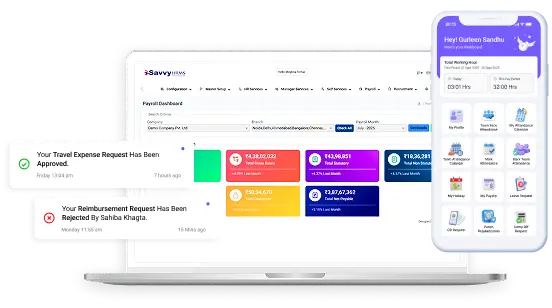









Ready to simplify payroll, employee management and compliance?
Explore Savvy HRMS and manage your HR processes from one integrated platform.
Frequently Asked Questions (FAQs)
1. Is the PF limit ₹15,000 or ₹21,000?
The EPF wage ceiling for mandatory coverage was increased from ₹15,000 to ₹25,000 per month, effective 17 September 2026. The ₹21,000 figure is not the current EPF wage ceiling.
2. What are the major changes to the EPF in 2026?
A major 2026 change is the increase in the EPFO wage ceiling from ₹15,000 to ₹25,000 per month. Separate EPFO withdrawal-related changes have also been discussed or introduced and should not be confused with the wage-ceiling change.
3. Can I withdraw 100% of my PF amount?
PF withdrawal depends on the reason for withdrawal and the applicable EPFO rules. Certain circumstances may allow withdrawal of the eligible amount, while other situations have specific limits or conditions. Employees should check the applicable withdrawal provisions before applying.
4. How much PF is deducted for a ₹21,000 salary?
If ₹21,000 is the employee’s applicable PF wage, the employee’s standard EPF contribution is generally 12% of PF wages, which would be ₹2,520 per month. The exact calculation depends on the wages considered for PF purposes and applicable rules.
5. What is the new EPF wage ceiling in 2026?
The EPFO wage ceiling for mandatory coverage has been increased from ₹15,000 to ₹25,000 per month, effective 17 September 2026. This change expands mandatory EPFO coverage to additional eligible employees.
6. Does the ₹25,000 EPF wage ceiling mean everyone earning below ₹25,000 will get PF?
Not automatically. The revised ceiling relates to the wage limit for mandatory EPFO coverage. Actual applicability depends on the employee’s circumstances, establishment coverage, existing EPFO membership, and other applicable conditions.
7. Will the new EPF rule reduce my take-home salary?
For employees who become newly covered or whose applicable PF contributions change, the employee’s PF deduction may affect take-home salary. However, the actual impact depends on applicable PF wages and contribution calculations.