Due Diligence: Meaning, Types, Process and Importance in Business



-
AuthorRaghvendra Bhardwaj
-
 Last Updated
November 18, 2026
-
 Reading Time
19 Mins
TL;DR
- Due diligence meaning: It is a process of checking and verifying important information before making a business or investment decision.
- Why it matters: It helps businesses to identify financial risks, hidden liabilities, legal issues and other potential problems.
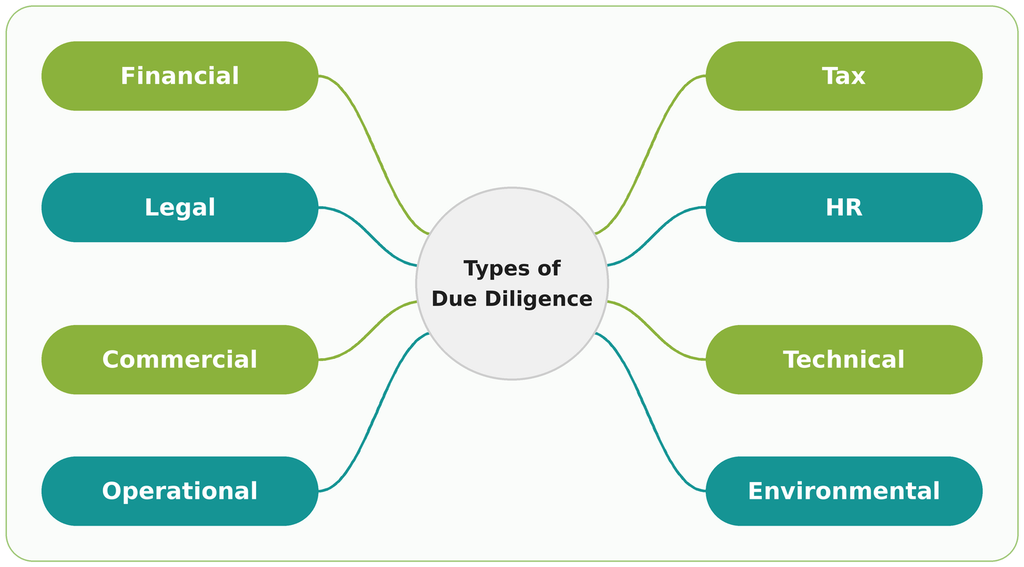
- Types of due diligence: Common types include financial, legal, commercial, operational, tax, HR, technical and environmental due diligence.
- Due diligence in finance: It involves reviewing revenue, expenses, profits, cash flow, assets, loans and financial liabilities.
- Due diligence report: It summarises the investigation’s findings, supporting documents, identified risks and recommendations.
- Due diligence process: It involves defining objectives, collecting documents, reviewing records, identifying risks and preparing a report.
- Documents required: Common documents include financial statements, tax returns, legal agreements, employee records, payroll details and operational reports.
Imagine investing in a company that looks profitable, only to discover later that it has unpaid loans, pending legal cases or hidden financial problems. Such surprises can turn a promising business opportunity into a costly mistake.
This is why due diligence matters. Before investing in a business, acquiring a company or entering into a partnership, it is important to check the facts and understand the possible risks. But what exactly does due diligence involve, and what should businesses look for?
In simple terms, due diligence is the process of investigating and verifying information about a company, investment or business transaction before making a decision. It covers different areas, including financial records, legal agreements, business operations, taxation and employee-related information.
In this guide, we will explain the due diligence meaning, its different types, the financial checks involved, the documents required and how to prepare a due diligence report. Whether you are a business owner, investor, HR professional or decision-maker, understanding this process can help you make more informed business decisions.
What Is Due Diligence?
Due diligence is a systematic investigation of a company, individual, investment or business transaction to verify information, evaluate potential risks and make an informed decision. It involves examining relevant records, financial information, legal documents and operational activities before proceeding with a transaction.
In simple terms, due diligence means checking the facts before making a commitment.
For example, suppose Company A plans to acquire Company B. Before completing the acquisition, Company A examines Company B’s financial statements, outstanding loans, legal disputes, employee agreements, tax records and business operations. This investigation helps Company A to understand the actual financial position and potential risks associated with the acquisition.
Due diligence is not limited to mergers and acquisitions. Businesses also conduct it before:
- Investing in another company or startup.
- Entering into a business partnership.
- Purchasing property or other major assets.
- Signing agreements with important vendors.
- Expanding into a new market.
- Acquiring another organisation.
The scope of due diligence depends on the purpose, size and complexity of the transaction.
What Is the Meaning of Due Diligence in Business?
In business, due diligence means checking a company or business partner carefully before making an important decision. It helps businesses to understand who they are dealing with, identify possible risks and verify whether the information shared is accurate.
For example, before entering into a partnership, a company may check its potential partner’s:
- Financial condition and business performance.
- Ownership and management details.
- Customers and business relationships.
- Legal agreements and obligations.
- Regulatory and statutory compliance.
- Market reputation and business operations.
These checks help businesses to decide whether the partnership is a good fit. If they find unpaid debts, legal disputes or financial problems then they may ask for more information, discuss better terms or reconsider the agreement before moving forward.
Why Is Due Diligence Important for Businesses?
Due diligence is important because it helps businesses to verify information, identify potential problems and understand the risks associated with a transaction before making a commitment. It supports better financial planning, reduces uncertainty and helps decision-makers to evaluate whether an opportunity is worth pursuing.
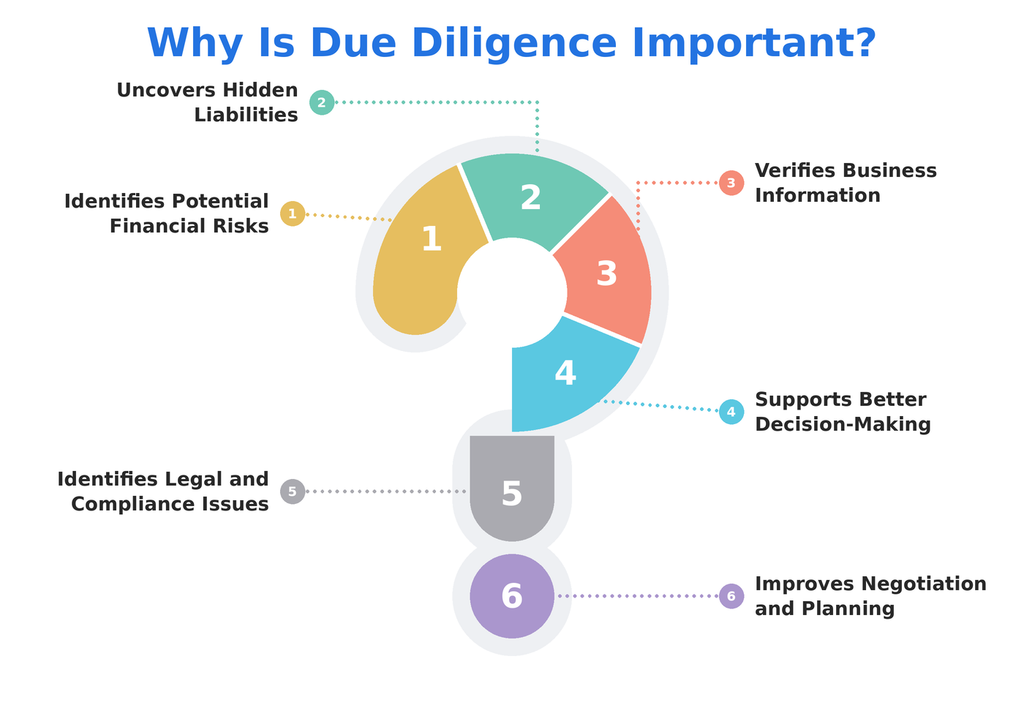
Let’s see why businesses conduct due diligence as explained below:
1. Identifies Potential Financial Risks
First, reviewing financial statements, debts, cash flow and revenue records helps businesses to understand another company’s financial condition.
For example, this review can reveal problems such as falling profits, unpaid debts or incorrect financial information. This allows businesses to identify financial concerns before committing.
2. Uncovers Hidden Liabilities
Apart from financial risks, a company may also have obligations that are not shared during initial discussions. These could include pending legal cases, unpaid taxes, employee dues or contractual obligations.
Therefore, due diligence helps to identify such issues before completing a business transaction.
3. Verifies Business Information
Similarly, businesses need to check whether the information shared by another company is correct before agreeing.
By reviewing financial records, contracts, ownership details and other documents, they can confirm important business information and avoid relying on unverified claims.
4. Supports Better Decision-Making
Once businesses have verified the relevant information then they can get a clearer picture of a potential investment or partnership. This makes it easier for decision-makers to understand the benefits and possible risks.
Based on these findings, they can move forward, negotiate better terms or avoid the opportunity.
5. Helps Identify Legal and Compliance Issues
In addition to financial and business checks, reviewing licences, registrations, contracts and statutory records helps to identify legal or compliance-related problems.
This gives businesses a better understanding of their obligations and allows them to address issues before finalising a transaction.
6. Improves Negotiation and Planning
Finally, when businesses understand another company’s financial position, strengths and weaknesses then they can negotiate better terms.
Moreover, these findings help them to plan for additional expenses, operational changes and possible risks after completing the transaction.
What Are the Different Types of Due Diligence?
Core types of due diligence are: financial, legal, commercial, operational, tax, HR, technical and environmental due diligence. Each type focuses on a different area of a business to help identify risks and verify important information before making a decision.
Businesses choose the type of due diligence based on the nature of the transaction and the information they need to verify. Let’s understand each type in detail.
1. Financial Due Diligence
Financial due diligence involves checking a company’s financial records to understand its financial health before an investment, acquisition or business transaction. It includes reviewing revenue, expenses, profits, cash flow, assets, debts and liabilities.
For example, before acquiring a company, an investor may check its annual revenue, profit margins, outstanding loans and working capital. This helps them to understand whether the business is financially stable and worth investing in.
2. Legal Due Diligence
Legal due diligence involves reviewing a company’s legal documents, agreements and records to identify any issues that could affect a business transaction.
It generally includes checking:
- Business registration and incorporation documents.
- Customer and vendor agreements.
- Employee contracts.
- Intellectual property rights.
- Pending legal cases and notices.
- Business licences and regulatory approvals.
By reviewing these documents, businesses can identify legal problems and understand their obligations before agreeing.
3. Commercial Due Diligence
Commercial due diligence focuses on a company’s market position, customers, competitors and business opportunities. It helps investors to understand how the company performs in its industry and whether it has room to grow.
For instance, before acquiring a business, an investor may look at its customer base, market demand, customer retention and competitors. This helps them to understand whether the company has a strong market position and future growth opportunities.
4. Operational Due Diligence
Operational due diligence examines how a company manages its daily business activities. It helps to identify problems in internal processes, infrastructure, supply chains and overall business operations.
For example, a business may review production capacity, inventory management, vendor relationships, employee workflows and operating costs. These checks help identify areas where the company may need improvements.
5. Tax Due Diligence
Tax due diligence involves checking a company’s tax records, returns, payments and outstanding tax obligations. It helps businesses to identify unpaid taxes, filing errors, pending assessments and other tax-related risks.
Depending on the company, this review may include income tax returns, GST records, tax assessments, notices and payment details. As a result, businesses can get a clearer picture of their tax position before completing a transaction.
6. HR Due Diligence
HR due diligence focuses on a company’s employees, employment practices, salary expenses and workforce-related obligations. It helps businesses to understand potential employee-related risks during mergers, acquisitions or restructuring.
Some important areas to review include:
- Employee records and employment agreements.
- Salary structures and payroll expenses.
- Employee benefits and incentives.
- Pending salaries and other employee dues.
- PF, ESI and other applicable statutory obligations.
- Employee turnover and organisational structure.
For this reason, maintaining accurate employee and payroll records can make HR due diligence easier and help businesses to verify workforce-related information.
7. Technical Due Diligence
Technical due diligence involves checking a company’s technology, IT infrastructure, software systems and technical capabilities. It helps businesses to understand whether their technology is reliable, secure and suitable for future requirements.
This type of due diligence is particularly important when acquiring a technology company or software business. The review may cover software licences, cybersecurity practices, IT assets, system performance and technology-related risks.
8. Environmental Due Diligence
Environmental due diligence examines whether a company’s business activities, properties or operations involve environmental risks or regulatory issues.
For example, businesses may review environmental permits, waste management practices, pollution records and the handling of hazardous materials. This helps to identify potential environmental liabilities and understand whether the company follows applicable environmental requirements.
What Is Financial Due Diligence and What Does It Cover?
Due diligence in finance means checking a company’s financial records to understand how well the business is doing. It helps buyers, investors and lenders verify the company’s income, expenses, debts and other financial details before making an important business decision.
It is not just about looking at financial statements. Businesses also check how money comes in, where it is spent, what payments are pending and whether the company can manage its financial responsibilities.
Here are eight important areas covered during due diligence in finance:
1. Revenue and Profitability Analysis
This involves checking how much money a company earns and how much profit it makes. Businesses review sales records, income, expenses, profit margins and regular sources of revenue.
For example, if a company earns most of its income from one customer, it could face financial difficulties if that customer stops doing business with it. Reviewing this information helps buyers to understand whether the company’s earnings are stable.
2. Balance Sheet Verification
A balance sheet shows what a company owns and what it owes. Reviewing sheet gives buyers and investors a better understanding of the company’s financial position.
This may include checking:
- Company assets, such as buildings, equipment and cash.
- Outstanding loans and other debts.
- Unpaid bills and financial obligations.
- The value of company-owned assets.
These checks help to identify financial obligations that may not be immediately clear.
3. Cash Flow Assessment
Cash flow assessment checks how much money comes into and goes out of a business. It helps to determine whether the company has enough money to pay salaries, bills, suppliers and other regular expenses.
For example, a company may make good profits but still struggle to pay its bills if customers do not clear their payments on time. So always checking cash flow helps to identify such problems.
4. Outstanding Loans and Financial Liabilities
Businesses also need to check how much money a company owes and when those payments are due. This may include business loans, interest payments, repayment dates, guarantees and unpaid amounts.
For example, a company may have several ongoing loans that require monthly repayments. So, knowing about these commitments helps buyers to understand the company’s existing financial responsibilities before taking over the business.
5. Payroll Expenses and Employee-Related Liabilities
Employee salaries, bonuses, benefits and other payments are part of a company’s regular expenses. Therefore, financial due diligence may also involve checking salary records, payroll expenses, pending salaries, employee benefits and applicable statutory deductions.
Businesses can use reliable payroll software to maintain salary records, calculate employee payments and manage payroll information. These organized records can help businesses to review employee-related expenses during financial assessments.
6. Tax and Statutory Obligations
This involves checking whether a company has paid its taxes and other required contributions on time. Depending on the business, the review may include income tax, GST, PF, ESI, Professional Tax and TDS records.
It also helps to identify unpaid taxes, pending payments or mistakes in tax filings that could create financial problems later.
7. Working Capital Assessment
Working capital assessment checks whether a company has enough short-term resources to manage its daily operations. It generally includes available cash, money customers need to pay, pending supplier payments and stock or inventory.
For example, a company may have plenty of sales but still struggle to pay its suppliers because many customers have not paid their bills. Reviewing working capital helps identify such cash shortages.
8. Financial Forecasts and Projections
Finally, businesses review a company’s plans for future income, expenses and growth. This may include expected sales, future costs, planned investments and estimated cash flow.
For example, if a company plans to open new branches, buyers may check whether its expected income will be enough to cover the additional costs. This helps them to understand whether the company’s growth plans are realistic.
What Is Included in a Due Diligence Report?
A due diligence report is a document that summarises the findings of an investigation into a company, investment or business transaction. It presents verified information, identified risks, potential liabilities and recommendations to help decision-makers evaluate the transaction.
The report’s structure depends on the purpose and scope of the investigation. However, a typical due diligence report may include the following sections:
| Report component | Information included |
| Executive summary | Overview of the investigation and major findings |
| Company background | Business activities, ownership and organisational structure |
| Financial assessment | Revenue, expenses, assets, liabilities and cash flow |
| Legal assessment | Contracts, licences, disputes and legal obligations |
| Tax assessment | Tax filings, payments and outstanding dues |
| HR assessment | Employee records, salaries, benefits and workforce obligations |
| Operational assessment | Business processes, infrastructure and operational risks |
| Risk assessment | Identified issues, their potential impact and severity |
| Recommendations | Suggested actions and considerations before proceeding |
What Makes a Good Due Diligence Report?
A good due diligence report should explain what was checked, what was found and whether any issues need attention. It should present information clearly, support findings with proper documents and help decision-makers to understand the possible risks before moving ahead with a business deal.
A useful due diligence report generally includes:
- Clear Findings: A summary of important observations, such as financial problems, pending payments, legal disputes or gaps in business records.
- Supporting Documents: Relevant records, agreements, financial statements and other documents that support the findings.
- Risk Classification: A clear indication of which issues are high, medium or low priority so businesses know what needs immediate attention.
- Financial Impact: Details of possible costs, unpaid amounts, liabilities or other financial losses, wherever they can be estimated.
- Recommendations: Practical suggestions on what to do next, such as asking for additional documents, resolving pending issues or changing the terms of an agreement.
However, a due diligence report cannot guarantee that every possible risk has been identified. Its accuracy depends on the information available, the scope of the review and how carefully the documents and details have been checked.
How to Conduct Due Diligence? (Step-by-Step Process)
To conduct due diligence, businesses need to identify what they want to check, collect the required documents, verify the information and identify possible risks. Following a step-by-step process helps to ensure that important financial, legal and operational details are not missed before making a business decision.
Let’s understand below how to conduct due diligence as shown below:
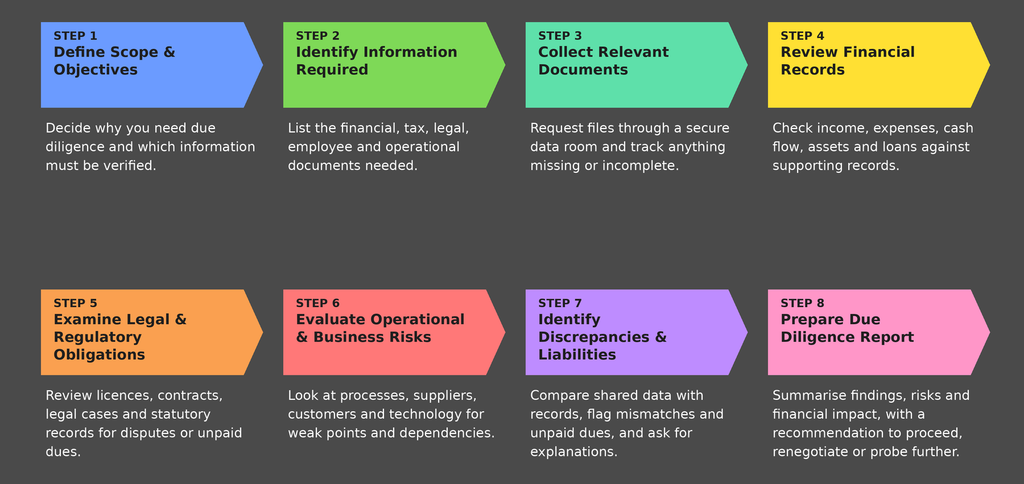
Step 1: Define the Scope and Objectives
First, decide why you need to conduct due diligence and what information you want to verify.
For example, if a company plans to acquire a manufacturing business, it may need to check its financial records, machinery, inventory, legal obligations and production capacity. However, when investing in a technology startup, the focus may be on its software, technology, intellectual property and customer contracts.
Step 2: Identify the Information Required
Once the objectives are clear, prepare a list of the information and documents needed for the review. This may include:
- Financial statements and bank records.
- Tax returns and payment details.
- Business registration documents.
- Legal agreements and contracts.
- Employee and payroll records.
- Business and operational reports.
The documents required will depend on the type of business and the purpose of the investigation.
Step 3: Collect Relevant Documents
Next, request the required documents from the company or business partner being reviewed. These documents may be shared through a secure online folder or virtual data room so that authorized people can access them.
Always keep track of the documents you receive and make a list of anything that is missing or incomplete. This will make the review process easier.
Step 4: Review Financial Records
After collecting the documents, examine the company’s financial records to understand its financial condition. Check its income, expenses, profits, cash flow, assets, loans and outstanding payments.
Also, compare the figures with supporting records to check whether the information is accurate. If you notice unusual expenses or differences in the records, investigate them further.
Step 5: Examine Legal and Regulatory Obligations
Review the company’s registration documents, business licences, agreements, legal cases and statutory records. This helps to identify pending legal disputes, unpaid obligations or regulatory issues that could affect the business.
For example, if a company has an ongoing legal case or has not fulfilled certain contractual obligations, these issues should be considered before finalising the deal.
Step 6: Evaluate Operational and Business Risks
Now, look at how the company manages its daily operations. This may involve checking its internal processes, employees, technology, suppliers, customers and overall business model.
For example, if a company depends on only one major supplier, any disruption in that relationship could affect its operations. Identifying such risks helps buyers understand whether the business can continue running smoothly.
Step 7: Identify Discrepancies and Potential Liabilities
Compare the information shared by the company with the documents and records collected during the investigation. Look for missing details, incorrect figures, unusual expenses, unpaid dues and other possible liabilities.
If something does not match, then ask the company for an explanation or additional documents. Record these findings so they can be included in the final report.
Step 8: Prepare the Due Diligence Report
Finally, prepare a report that summarises everything found during the investigation. Include important observations, supporting documents, possible risks, financial impact and recommendations.
Based on the findings, decision-makers can decide whether to proceed with the transaction, negotiate better terms or investigate certain issues further.
What Documents Are Required for Due Diligence?
The documents required for due diligence depend on the type of investigation and transaction. However, businesses generally examine financial statements, tax records, legal agreements, employee information, payroll records and operational documents to verify important information.
The following table provides a general checklist.
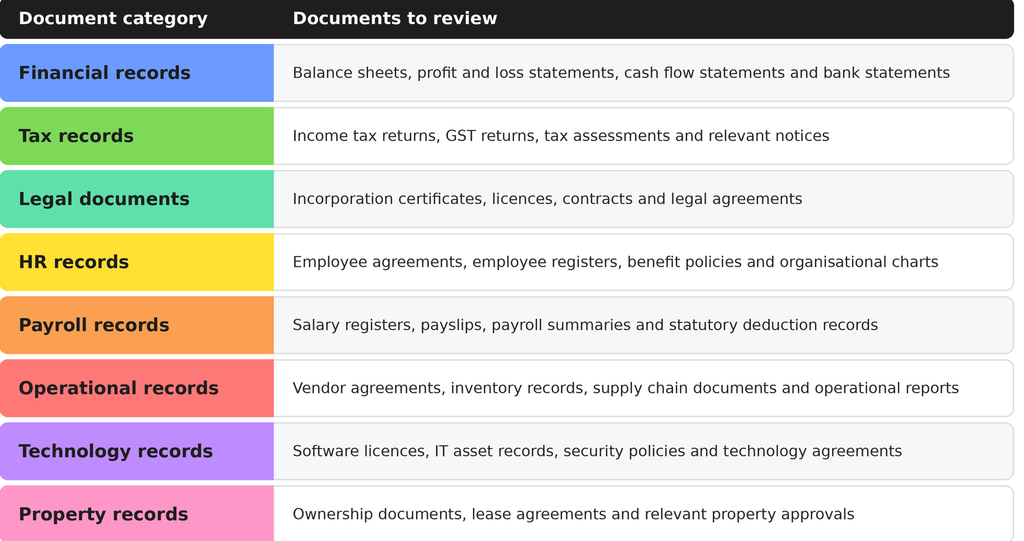
Not every transaction requires every document listed above. The reviewing team should prepare a document checklist based on the transaction’s objectives, industry and applicable legal requirements.
What Is the Difference Between Due Diligence and an Audit?
Due diligence and an audit both involve checking business records, but their purposes are different. Due diligence helps buyers and investors to understand a company’s financial condition, business operations and possible risks before making a decision.
An audit checks financial records or other specific information to see whether they are accurate and meet the required standards.
Let’s see how they differ:
| Basis of comparison | Due diligence | Audit |
| Purpose | Evaluates risks and verifies information before a business decision | Examines financial statements or other specified subject matter against applicable criteria |
| Scope | Depends on the transaction and investigation objectives | Defined by the audit engagement and applicable standards |
| Timing | Commonly conducted before an investment, acquisition or transaction | May be conducted periodically or for a specific purpose |
| Focus | Financial, legal, operational, commercial and other relevant areas | Financial reporting, compliance or other specified subject matter |
| Outcome | Due diligence report with findings, risks and recommendations | Audit report or conclusion |
| Primary users | Investors, buyers, lenders and business decision-makers | Shareholders, management, regulators and other stakeholders |
An audit may provide information that supports due diligence, but it does not replace a transaction-specific investigation. Businesses may need both depending on the nature of the decision.
Conclusion
Overall, Due diligence helps businesses to make informed decisions by verifying important information and identifying potential risks before entering into investments, acquisitions, partnerships or other transactions. It covers several areas, including financial performance, legal obligations, business operations, taxation and employee-related responsibilities.
A structured due diligence process allows decision-makers to analyze financial records, assess liabilities, verify documents and prepare a report of their findings. For financial and HR assessments, organised payroll records can also help businesses review employee compensation, salary expenses and statutory deductions.
By maintaining accurate financial, employee and compliance information, organizations can make the investigation process more organized and support better business decisions.







Make Payroll Records Easier to Manage with Savvy HRMS
Frequently Asked Questions
1. What Is Due Diligence in Simple Terms?
Due diligence means checking and verifying important information before making a business, investment or financial decision. It helps individuals and organizations understand potential risks, confirm facts and avoid unexpected liabilities.
2. What Are the Four Main Types of Due Diligence?
Four commonly discussed types are financial, legal, commercial and operational due diligence. However, the exact categories depend on the transaction and may also include tax, HR, technical and environmental due diligence.
3. Who Performs Due Diligence?
Due diligence is generally performed by professionals such as financial analysts, chartered accountants, lawyers, tax specialists, HR professionals, consultants and industry experts. The team depends on the nature and complexity of the investigation.
4. How Long Does Due Diligence Take?
The duration depends on the size of the business, complexity of the transaction, availability of documents and scope of the investigation. A straightforward review may take a few weeks, while complex mergers and acquisitions can require several months.
5. What Is a Due Diligence Report?
A due diligence report is a document that records the findings of an investigation into a business, investment or transaction. It generally includes company information, financial assessments, legal findings, identified risks and recommendations.
6. What Is Financial Due Diligence?
Financial due diligence is the examination of a company’s financial records, performance, assets, liabilities, cash flow and financial obligations. It helps investors and acquiring companies evaluate financial health and identify potential risks before completing a transaction.