What Should HR Do When Employees Take Frequent Emergency Leaves?


-
AuthorSatyam Chauhan
-
 Last Updated
November 13, 2026
-
 Reading Time
15 Mins
TL;DR
- Frequent emergency leave can result from health concerns, family responsibilities, personal emergencies or workplace stress.
- HR should review employee attendance and leave records to identify recurring absence patterns.
- Private conversations can help managers to understand the reasons behind repeated leave requests.
- A clear Emergency Leave Policy should explain eligibility, notification procedures, documentation and approval responsibilities.
- HR should provide appropriate support while maintaining consistent attendance expectations.
- Employee Leave Management systems can help to track absences, manage approvals and plan work more effectively.
Employees may need emergency leave due to sudden illness, family emergencies, accidents or unexpected personal situations. While occasional emergency leave is a normal part of the workplace, frequent last-minute requests can make it difficult for HR teams to manage attendance, allocate work and maintain productivity.
For HR professionals, the challenge is to balance employee needs with business requirements. However, repeated emergency leave requests should not automatically be treated as misuse. Instead, HR should understand the reasons behind the absences, review attendance patterns and follow a fair and consistent approach.
A structured Emergency Leave Management process can help organizations handle unexpected absences while supporting employees and maintaining workplace continuity.
Why Do Employees Take Frequent Emergency Leaves?
Employees frequently take emergency leave due to recurring health problems, family responsibilities, personal emergencies, workplace stress and caregiving needs. Let’s understand them in more depth as defined below:
1. Recurring Health Problems
Employees dealing with ongoing health concerns may need to take leave unexpectedly for medical appointments, treatment or recovery. Sometimes, certain conditions can also cause unpredictable symptoms, making it difficult to plan absences.
2. Family Responsibilities and Caregiving
Employees may need to take emergency leave to care for their sick children, elderly parents or other family members. As sudden hospitalisation, accidents or unexpected caregiving responsibilities can require immediate attention.
3. Personal and Household Emergencies
Unexpected situations such as home damage, vehicle accidents, urgent legal matters or other personal difficulties may require employees to step away from work.
4. Mental Health and Workplace Stress
High workloads, prolonged stress and personal difficulties can affect employee wellbeing. Some employees may need time away from work to manage these challenges.
5. Lack of Work-Life Balance
Employees who struggle to balance professional and personal responsibilities may find it difficult to manage unexpected situations. In some cases, inadequate flexibility or limited support at work can contribute to repeated unplanned absences.
Not every repeated emergency leave request has the same cause. Core HR should understand the employee’s circumstances before deciding whether further attendance-related action is necessary.
How Can HR Identify Patterns in Frequent Emergency Leaves?
HR teams should monitor employee attendance and leave records to understand whether emergency leave requests are occasional or becoming a recurring pattern. So, identifying these trends early allows managers to address concerns before they affect team productivity.
Let’s see some ways that help HR to identify frequent emergency leave:
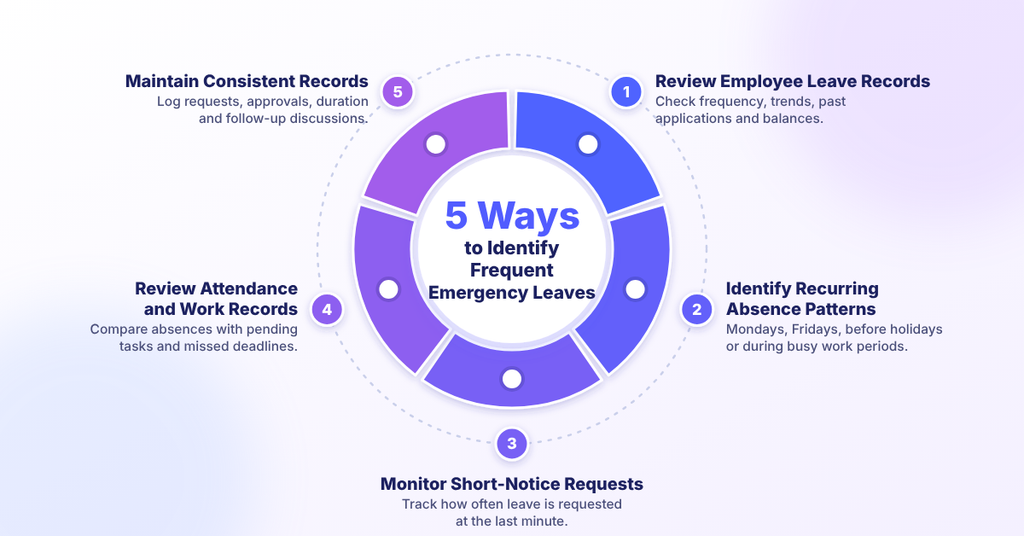
1. Review Employee Leave Records
First, check how often employees take emergency leave and whether their requests are increasing. Also, review previous leave applications, approval records and remaining leave balances to get a clear picture.
2. Identify Recurring Absence Patterns
Next, notice if employees often request leave on Mondays, Fridays, before holidays or during busy work periods. Although these patterns do not always mean misuse, they may need further discussion.
3. Monitor Short-Notice Leave Requests
Additionally, keep track of how often employees ask for leave at the last minute. While emergencies can happen anytime, frequent short-notice requests may require HR to understand the employee’s situation.
4. Review Attendance and Work Records
Along with leave details, compare attendance management records with pending tasks and missed deadlines. This helps HR to understand whether frequent absences are affecting daily work or creating extra pressure on other team members.
5. Maintain Consistent Records
Finally, record leave requests, approval dates, absence duration and follow-up discussions. This makes it easier for HR to understand repeated absences and make fair decisions based on actual records rather than assumptions.
For example: An employee takes emergency leave on four Mondays within two months. Instead of immediately assuming misuse, the HR team should review the records and speak privately with the employee to understand the reason behind the repeated absences.
What HR Should Do for Frequent Emergency Leaves?
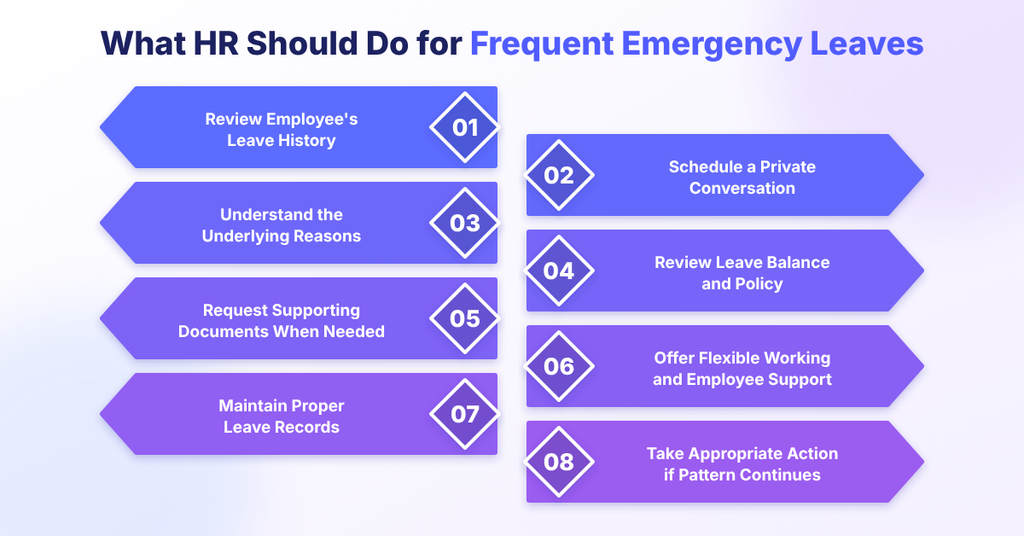
When employees frequently take emergency leave, HR should review their leave records, understand the reasons behind their absences and offer suitable support. At the same time, HR must ensure that employees follow the company’s leave policy and attendance procedures.
The aim is to understand the employee’s situation, address any concerns and maintain a smooth workflow. Here are some steps HR can follow:
1. Review the Employee’s Leave History
HR should first check the employee’s previous leave requests, attendance records and available leave balance. This helps to identify how often the employee has taken emergency leave and whether the requests follow a particular pattern.
Also, consider the reason for each absence. For example, repeated medical appointments may need a different approach from absences where the employee has not communicated with their manager.
This review helps HR to understand the situation before speaking with the employee, rather than making assumptions about their behaviour.
2. Schedule a Private Conversation
If an employee frequently requests emergency leave, then HR should arrange a private meeting to understand their situation.
Avoid discussing their attendance in front of colleagues or bringing it up during team meetings. Instead, explain the pattern you have noticed and ask if they are facing any difficulties that may be affecting their attendance.
For example, a manager could say:
“We have noticed that you have needed emergency leave several times recently. We understand that unexpected situations can happen. Is anything affecting your attendance, or is there any support we can provide?”
This makes it easier for employees to share their concerns without feeling uncomfortable or judged.
3. Understand the Underlying Reasons
HR should give employees a chance to explain why they need emergency leave frequently. The reasons may be related to their health, family responsibilities or personal circumstances.
HR does not need to ask for unnecessary personal details. Instead, they should focus on understanding whether the employee needs temporary flexibility, workplace support or information about other available leave options.
4. Review the Employee’s Leave Balance and Company Policy
Once HR understands the situation, check the employee’s available leave balance and the company’s leave policy. This helps HR to explain which leave options are available to the employee.
Check whether the employee has enough casual leave, sick leave or other eligible leave. If they have used all their available leave then explain the options allowed under company policy and applicable laws.
Also, clarify whether emergency leave can be adjusted against another leave category or treated as unpaid leave, where permitted.
This helps employees to understand how their leave will be managed and avoids confusion about salary deductions or leave adjustments.
5. Request Supporting Documents When Needed
HR can ask for supporting documents when they are reasonably required under the company’s leave policy or applicable rules.
Depending on the situation, these may include:
- Medical certificates or hospital records.
- Documents related to medical appointments.
- Relevant accident-related records.
- Other reasonable supporting documents.
However, avoid asking employees to share unnecessary personal or medical information, especially when they are dealing with a sensitive situation.
It is also important to explain the document requirements in advance and give employees reasonable time to submit them if they cannot do so immediately.
6. Offer Flexible Working Arrangements and Employee Support
If an employee’s frequent emergency leave is linked to ongoing personal or family responsibilities, HR can consider suitable work arrangements to support them.
Depending on the job role and business needs, these may include:
- Flexible working hours for a temporary period.
- Work-from-home or hybrid arrangements, where possible.
- Changes to shift timings.
- Temporary workload adjustments.
- Employee assistance or wellbeing support.
For example, an employee caring for an elderly parent may need time to attend medical appointments. If their role allows it, adjusting their working hours may help them manage these responsibilities without taking a full day off each time.
However, these arrangements should be fair and follow company policies and applicable legal requirements.
7. Maintain Proper Leave Records
HR should maintain clear records of emergency leave requests, approvals, leave adjustments and follow-up discussions because proper records make it easier to track absences and manage leave consistently.
These records can help HR:
- Track repeated leave requests.
- Maintain correct leave balances.
- Review employee attendance.
- Identify recurring absence patterns.
- Apply leave policies consistently.
- Prepare for future attendance discussions.
At the same time, keep personal and medical information confidential. Only authorized people should have access to these records.
8. Take Appropriate Action if the Pattern Continues
If frequent absences continue even after discussions and support then HR should review the situation again before deciding on any action.
Consider the following points:
- Is the employee following the company’s leave procedure?
- Are there valid reasons for the repeated absences?
- Does the employee have any statutory or protected leave entitlement?
- Has HR considered suitable workplace support or adjustments?
- Are similar cases being handled fairly across the organization?
In the case of unauthorized absence or misuse of the leave policy, HR can implement the company’s disciplinary process according to the law and due process.
However, HR should not take disciplinary action simply because an employee has requested emergency leave several times. The decision should be based on the facts and circumstances of the case.
How Can HR Manage Work When Employees Take Emergency Leave Frequently?
Frequent unexpected absences can affect project deadlines, customer service and daily operations. Therefore, HR should have a plan to maintain work continuity without placing excessive pressure on other employees.
Let’s see some practical ways to manage workplace responsibilities.
1. Share Urgent Tasks
When an employee takes emergency leave, the manager should check which tasks need immediate attention and assign them to other team members. However, make sure the extra work is shared fairly.
2. Maintain Backup Resources
Train other employees to handle important tasks when someone is absent. Also, keep work instructions and process details handy so that work does not stop because one employee is unavailable.
3. Plan Team Workloads
Managers should regularly check upcoming deadlines, pending tasks and team availability. This makes it easier to adjust work and assign responsibilities when someone needs unexpected leave.
4. Maintain Clear Communication
Employees should know how to inform their managers when they cannot come to work. Managers should also update the team about any changes in tasks or responsibilities without sharing personal details.
5. Monitor Attendance and Leave Trends
HR should regularly check leave and attendance records to see if certain teams are facing frequent absences. This helps to identify staffing gaps and make better work arrangements.
How Can HR Prevent Frequent Emergency Leave Requests?
HR cannot prevent genuine emergencies, but it can create workplace policies and support systems that make unexpected absences easier to manage.
The following practices can help organizations to reduce avoidable attendance disruptions.
1. Establish a Clear Emergency Leave Policy
An informative Emergency Leave Policy should explain the circumstances under which an employee may apply for emergency leave, and who they should notify and how to make such a request.
It should also clarify documentation requirements, leave adjustments and approval responsibilities.
Set clear guidelines so everyone knows what they are responsible for and managers know how to deal with requests.
2. Encourage Early Communication
Employees should be encouraged to inform their reporting managers as soon as they know they are unable to attend work.
Although advance notice may not always be possible during emergencies, timely communication helps managers arrange alternative work coverage.
3. Promote Employee Wellbeing
Workplace stress, excessive workloads and inadequate work-life balance can contribute to employee attendance difficulties.
HR should encourage open communication, promote healthy working practices and provide access to appropriate employee wellbeing resources.
4. Train Managers to Handle Unexpected Absences
Managers should understand how to respond when employees request emergency leave. Training should cover communication, confidentiality, leave approval procedures and attendance management.
This helps to prevent inconsistent decisions and unnecessary conflicts between employees and managers.
5. Use Technology to Track Employee Leave and Attendance
Managing leave requests through spreadsheets, emails and manual registers can make it difficult to identify recurring absence patterns.
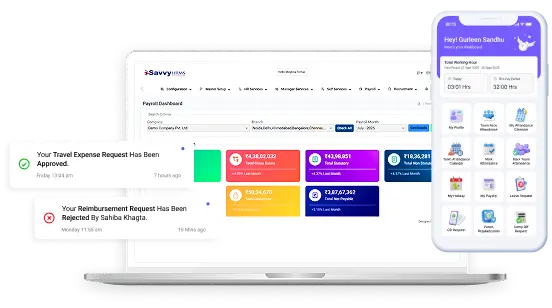
Using Employee Leave Tracking and attendance management tools can help HR to maintain accurate records, monitor leave balances and review employee attendance.
A centralized system also makes it easier to manage approvals and access relevant reports when required.
What Are the Emergency Leave Rules in India?
If you are managing employee leaves in India, it is important to understand that there is no single emergency leave rule for every organization. The leave an employee can take depends on the labour laws applicable to their workplace, state rules, type of establishment, employee category and company policy.
The four Labour Codes came into effect on 21 November 2025, bringing several central labour laws together. However, employers still need to check which specific rules apply to their organization.
So, what should HR teams keep in mind while managing emergency leave? Here are a few important points:
- Check Applicable Leave Entitlements: First, understand which leave benefits employees are entitled to under the laws that apply to your organization. This may include annual leave, sick leave and other types of leave.
- Follow State-Specific Rules: Leave rules can differ across states. Therefore, check the relevant state Shops and Establishments Act and rules before setting leave entitlements.
- Make Company Leave Policies Clear: Explain which emergency leave benefits your company provides and how they differ from statutory leave. This helps employees to understand what leave they can request.
- Set Simple Leave Procedures: Let employees know whom to inform and how to request emergency leave. At the same time, allow flexibility when an unexpected situation makes it difficult to give advance notice.
- Keep Documentation Requirements Reasonable: Explain when employees may need to submit supporting documents. However, avoid asking for unnecessary details or making it difficult to take genuine emergency leave.
- Treat Every Employee Fairly: Apply the same leave rules consistently. Before rejecting a request or taking disciplinary action, check whether the employee is entitled to any statutory protection.
For example, Section 22 of the Delhi Shops and Establishments Act, 1954, provides for privilege leave and sickness or casual leave for employees covered by the Act. This is why HR should check the law applicable to their establishment instead of assuming that the same leave rules apply everywhere.
If you want to check the applicable requirements, you can refer to the Ministry of Labour and Employment and the relevant state labour department.
| Important: If you are creating or updating an emergency leave policy, it is better to consult a legal professional. This is especially important when dealing with statutory leave entitlements, medical situations or disciplinary matters. |
Conclusion
Overall, Frequent emergency leave requests can create challenges for HR teams, but handling them requires more than just monitoring attendance records or enforcing leave policies. HR should understand the reasons behind repeated absences, communicate with employees, provide appropriate support and establish clear attendance expectations.
A well-defined Emergency Leave Policy, consistent documentation and effective Employee Leave Management practices can help organizations balance employee wellbeing with business continuity.
With the right processes and technology, HR teams can manage unexpected absences more efficiently while creating a fair and supportive workplace
Frequently Asked Questions About Emergency Leave
1. How many emergency leaves can an employee take?
There is no single emergency leave limit applicable to every employee in India. The number of days depends on the applicable statutory entitlements, company leave policy and the circumstances of the request.
2. Can HR question employees who frequently take emergency leaves?
Yes. HR can have a private and professional conversation with employees to understand recurring absence patterns. However, discussions should be respectful, confidential and focused on attendance requirements and available support.
3. Can an employer reject repeated emergency leave requests?
An employer may assess leave requests according to applicable laws and company policies. However, genuine statutory leave entitlements and legally protected absences must be respected. Repeated requests should not automatically be rejected simply because an employee has taken emergency leave before.
4. Can HR ask employees to provide proof of emergency leave?
Yes, where reasonable and permitted under the applicable policy and law. HR can request relevant supporting documents for certain situations, but should avoid unnecessary personal information requests.
5. How should managers handle repeated last-minute leave requests?
Managers should review the employee’s attendance history, speak privately with them, understand the underlying circumstances and clarify the leave notification procedure. They should also arrange work coverage to minimize disruption.
6. How can HR reduce frequent employee absenteeism?
HR can address recurring absence concerns through clear leave policies, regular employee communication, wellbeing initiatives, appropriate workplace flexibility and consistent attendance monitoring.
7. What is the difference between emergency leave and sick leave?
Emergency leave generally refers to time off requested due to an unexpected situation, such as a family emergency or accident. Sick leave is specifically associated with an employee’s illness or medical condition. The exact definitions and entitlements depend on applicable laws and company policies.
8. How does employee leave tracking help HR?
Employee leave tracking helps HR maintain accurate records of leave requests, approvals, balances and absence history. It also makes it easier to identify recurring patterns and prepare attendance reports.