



TL;DR
- Payroll management software helps startups automate salary calculations, deductions, payslips, and payroll records.
- Look for PF, ESI, TDS, Professional Tax, and other statutory compliance capabilities.
- Integrating attendance, leave, overtime, reimbursements, and incentives with payroll can reduce manual data entry.
- Employee self-service gives employees easy access to payslips, salary details, and tax information.
- Startups can evaluate options such as Savvy HRMS, greytHR, Keka HR, ZingHR, and HRMantra based on their specific needs.
- Consider pricing, security, integrations, ease of use, scalability, reporting, and customer support before choosing.
- Test the software with a realistic payroll scenario before implementation.
- The right payroll platform should support your startup’s current workforce and future growth.
Payroll usually isn’t the first thing founders think about when starting a business. Hiring people, getting customers, building the product, and growing the company naturally take priority. Then payday arrives, and suddenly payroll becomes a big task.
As your team grows, there is much more to handle than simply transferring salaries. Attendance, leave, deductions, taxes, reimbursements, payslips, and statutory requirements all need to be calculated and recorded correctly.
A good payroll management software for startups can take much of this repetitive work off your team’s plate. But before choosing one, it’s important to understand what features startups actually need and which options are available in India.
What Is Payroll Management Software and Why Do Startups Need It?
Payroll management software is a digital system that helps businesses calculate, process, manage, and record employee salaries and related payroll activities. Depending on the platform, it can manage salary structures, deductions, taxes, attendance, leave, reimbursements, payslips, statutory compliance, reports, and employee payroll information.
For startups, payroll can become increasingly difficult to manage manually as the workforce expands. A small team may initially calculate salaries using spreadsheets, but increasing employee numbers, different salary structures, attendance adjustments, reimbursements, incentives, loans, and statutory deductions can make manual processing time-consuming.
Payroll management software for startups brings these activities into a centralized system.
Why do startups use payroll software?
A payroll system can help startups:
- Automate recurring salary calculations
- Reduce manual data entry
- Generate employee payslips
- Maintain salary records
- Calculate applicable deductions
- Manage payroll inputs from attendance and leave
- Support statutory payroll processes
- Generate payroll reports
- Maintain employee payroll information
- Create a more consistent payroll workflow
The exact features differ between payroll software providers, so startups should evaluate products according to their employee size, payroll structure, compliance requirements, and expected growth.
What Features Should Startups Look for in Payroll Software in India?
The right payroll management software should combine payroll automation, compliance support, employee data management, reporting, security, and scalability.
Startups should particularly evaluate the following features:
1. Automated Salary Calculation
Payroll software should automatically calculate salaries using salary structures, attendance, leave, deductions, overtime, incentives, reimbursements, and other payroll components, reducing manual calculations and reducing salary-processing errors.
2. Payroll Compliance Management
Choose software that supports Indian payroll requirements such as PF, ESI, TDS, and professional tax, while helping HR teams manage statutory calculations, reports, and compliance-related processes.
3. Attendance, Leave and Payroll Integration
Integration between attendance, leave, and payroll allows employee workdays, absences, overtime, and loss-of-pay data to flow directly into salary calculations without repeated manual data entry.
4. Payslips and Employee Self-Service
Employees should be able to access digital payslips, salary details, tax information, reimbursements, and other payroll records through employee portals or mobile applications without depending on HR teams.
5. Payroll Reports and Analytics
Payroll software should provide useful reports covering salary registers, deductions, tax information, statutory details, payroll summaries, and other insights that help HR and finance teams review payroll efficiently.
6. Security and System Integrations
Since payroll contains sensitive employee information, startups should look for role-based access, secure authentication, and integrations with HRMS, accounting, banking, attendance, expense, and other business systems.
7. Scalability and Ease of Use
The software should remain easy to manage as the startup grows, supporting more employees, locations, salary structures, payroll complexity, and users without creating unnecessary administrative work.
Which Is the Best Payroll Management Software for Startups in India?
There is no single payroll management software that is best for every startup. The appropriate choice depends on factors such as employee count, budget, payroll complexity, statutory requirements, attendance integration, HR requirements, and expected business growth.
Some payroll software options startups can evaluate include:
| Payroll Software | Key Areas to Evaluate |
| Savvy HRMS | Payroll automation, salary structures, statutory compliance, integrations, reporting |
| greytHR | Payroll, compliance, employee self-service, reporting, attendance and HRMS |
| Keka HR | Payroll, compliance, attendance, leave, employee experience and HR workflows |
| ZingHR | Payroll automation, attendance integration, compliance, analytics and HCM |
| HRMantra | Payroll, HR management, attendance and employee administration |
The important consideration is not simply which platform has the longest feature list. Startups should evaluate whether the software’s features match their actual payroll process.
For example, a 20-employee startup with straightforward salary structures may have different requirements from a 150-employee startup operating across multiple states.
What Are the Top Payroll Software Options for Startups in India?
Several payroll and HRMS platforms are available to Indian businesses. Startups can compare them based on payroll functionality, compliance, integrations, employee experience, pricing, and scalability.
1. Savvy HRMS
Overview
Savvy HRMS provides payroll management functionality alongside broader HR processes. It supports salary processing, configurable salary structures, attendance integration, statutory compliance, employee salary information, and payroll reporting. Startups can use these capabilities to manage recurring payroll activities while connecting attendance and other employee data with salary calculations in one system.
Key Features
Key features include salary structures, automated salary processing, variable salary, loans and advances, increments and promotions, statutory compliance, attendance integration, salary verification, salary slips, payroll integrations, and payroll reporting. These features help HR teams manage regular payroll calculations and related employee compensation processes.
Best For
Best for startups and large enterprises also looking for payroll software that combines salary processing, attendance integration, statutory compliance, reporting, and broader HR workflows while supporting changing employee numbers and salary structures.
2. greytHR
Overview
greytHR combines payroll with broader HRMS capabilities, supporting salary processing, compliance, payslips, employee self-service, reimbursements, loans, settlements, and other employee payroll-related processes.
Key Features
Key features include salary structures, payroll processing, payslips, reimbursements, loans, arrears, bank transfers, final settlements, PF, ESI, professional tax, TDS, and tax reports.
Best For
Best for startups looking for an established HRMS approach that combines payroll, compliance, employee self-service, attendance integration, reporting, and other core employee management processes.
3. Keka HR
Overview
Keka HR provides payroll alongside HR and workforce management features, connecting salary processing with attendance, leave, compliance, compensation, and employee financial information.
Key Features
Key features include salary processing, payroll rules, loans and advances, compensation management, compliance, attendance and leave integration, PF, ESI, TDS, professional tax, and Form 16.
Best For
Best for startups wanting payroll integrated with HR and workforce management, particularly where attendance, leave, compensation, employee experience, compliance, and reporting are important requirements.
4. ZingHR
Overview
ZingHR provides payroll within a broader human capital management platform, covering payroll processing, statutory compliance, employee tax processes, settlements, dashboards, analytics, and workforce management.
Key Features
Key features include automated payroll processing, statutory compliance, payroll dashboards, full-and-final settlement, analytics, tax processes, and integration between attendance, leave, time, and payroll.
Best For
Best for startups evaluating a broader HCM platform where payroll needs to connect with workforce management, attendance, leave, compliance, analytics, and other HR processes.
5. HRMantra
Overview
HRMantra combines payroll with HR management, attendance, employee administration, and workforce processes, giving startups an option for managing payroll alongside broader HR activities.
Key Features
Key features include payroll processing, attendance and leave integration, statutory compliance, employee self-service, reporting, employee administration, workforce management, integrations, and scalability.
Best For
Best for startups looking for integrated payroll and HR management capabilities, particularly those requiring attendance, employee administration, compliance, reporting, and workforce processes within one platform.
The right choice ultimately depends on the startup’s requirements rather than the number of features offered by any individual platform.
How Does Payroll Software Help Indian Startups Manage Salaries and Payslips?
Payroll management software centralizes employee salary information and can automate many repetitive payroll activities.
A general payroll workflow can include:
Employee Data → Salary Structure → Attendance & Leave Inputs → Payroll Calculation → Deductions → Statutory Calculations → Verification → Payslip Generation → Payroll Reports → Salary Disbursement
Instead of manually collecting information from spreadsheets, HR teams can use integrated employee and attendance data as payroll inputs.
Payroll software can also help maintain consistent records of salary revisions, deductions, reimbursements, incentives, loans, and other payroll components.
How are payslips managed?
A payroll platform can generate digital payslips after payroll processing. Depending on the software, employees may access payslips through an employee portal, mobile application, email, or downloadable documents.
This can reduce routine HR requests such as:
- “Can you send my payslip?”
- “What was deducted from my salary?”
- “What is my year-to-date salary?”
- “Where can I find my tax information?”
Employee self-service can therefore reduce administrative workload while giving employees faster access to their payroll information.
How Does Payroll Software Handle PF, ESI, TDS, and Other Payroll Compliance?
Payroll software can automate or support statutory calculations and compliance-related payroll processes, but employers remain responsible for ensuring that their payroll practices meet applicable legal requirements.
For Indian startups, important payroll-related areas can include:
- Provident Fund (PF)
- Employee State Insurance (ESI)
- Tax Deducted at Source (TDS)
- Professional Tax (PT), where applicable
- Labour Welfare Fund, where applicable
- Gratuity-related calculations
- Bonus-related calculations
- Tax declarations and investment information
- Statutory reports and returns
The exact compliance requirements depend on factors such as employee eligibility, salary levels, business location, establishment type, and applicable laws.
Payroll software can reduce manual calculations by applying configured rules to employee salary data and generating relevant reports.
However, startups should not assume that payroll software automatically guarantees compliance. HR and finance teams should verify that the software supports the specific rules applicable to their organization and that statutory information is kept up to date.
Can Payroll Software Automate Attendance, Leave and Salary Calculations?
Yes. Payroll software can automate salary calculations using attendance and leave information when these modules are integrated or synchronized with payroll.
This is particularly useful for startups where salary calculations depend on:
- Present and absent days
- Paid and unpaid leave
- Loss of pay
- Overtime
- Shift work
- Late attendance
- Incentives
- Variable pay
- Reimbursements
- Attendance corrections
Without integration, HR teams may need to export attendance information and manually enter payroll inputs.
An integrated HRMS can create a more connected workflow:
Attendance → Leave → Payroll Inputs → Salary Calculation → Payslip
This can reduce duplicate data entry and improve consistency between workforce records and payroll calculations.
However, startups should check whether the software provides genuine integration or simply allows HR teams to upload attendance files manually.
How Much Does Payroll Software Cost for Startups in India?
Payroll software pricing in India varies significantly depending on employee count, modules, payroll complexity, implementation requirements, and pricing model.
Common pricing structures include:
- Per-employee pricing
- Monthly subscription
- Annual subscription
- Base fee plus per-employee charges
- Module-based pricing
- Custom enterprise pricing
A startup should calculate the total cost instead of comparing only the advertised monthly subscription.
Important cost considerations include:
- Software subscription
- Implementation
- Data migration
- Employee onboarding
- Training
- Customer support
- Additional modules
- Integrations
- Payroll-related services
- Additional employee charges
What should startups ask about pricing?
Before purchasing payroll software, ask:
- Is pricing based on employees or users?
- Are payroll and HR modules priced separately?
- Are implementation charges applicable?
- Are integrations included?
- Is customer support included?
- Are there additional charges when employee numbers increase?
- Is there an annual commitment?
- Are statutory compliance updates included?
A low initial subscription may not necessarily represent the lowest overall cost if important features require additional modules.
Is Cloud-Based Payroll Software Better for Startups?
Cloud-based payroll software can be a practical option for startups because it allows HR and finance teams to access payroll systems without maintaining traditional on-premises infrastructure.
Cloud payroll can provide benefits such as:
- Remote access
- Centralized employee information
- Automatic software updates
- Easier collaboration
- Employee self-service
- Reduced infrastructure requirements
- Integration with cloud applications
- Mobile access, depending on the provider
However, cloud-based does not automatically mean better for every business.
Startups should also evaluate:
- Data security
- Access controls
- Backup policies
- Audit logs
- Vendor support
- Data export capabilities
- Integration options
- System availability
- Data retention policies
The right approach depends on the startup’s operational model, security requirements, workforce structure, and technology environment.
Can Payroll Software Scale With a Growing Startup?
Yes, scalable payroll management software can support startups as they grow, provided the platform can accommodate increasing employee numbers and payroll complexity.
Growth can introduce new requirements, including:
- More employees
- Multiple departments
- Multiple locations
- Different salary structures
- Additional statutory requirements
- More complex attendance policies
- Variable compensation
- New approval workflows
- Additional HR users
- Multiple business entities
- Advanced reporting
A payroll system that works well for a 20-person startup may not be suitable when the company reaches several hundred employees.
What should startups check for scalability?
Look at:
- Maximum employee capacity
- Multi-location support
- Multiple salary structures
- Multiple entities
- Role-based permissions
- Workflow customization
- API and integrations
- Reporting capabilities
- Pricing as employee numbers increase
- Support and implementation capacity
Startups should consider their expected growth over the next two to three years rather than selecting software only according to their current employee count.
How Secure Is Payroll Software for Managing Employee Salary Data?
Payroll software should protect sensitive employee information through access controls, authentication, permissions, encryption, monitoring, and appropriate data-security practices.
Payroll data may contain:
- Salary information
- Bank account details
- PAN-related information
- Tax information
- PF details
- Employee identification data
- Reimbursement records
- Loan information
Startups should therefore evaluate security before selecting payroll management software.
Important security questions include:
- Does the system provide role-based access?
- Can administrators restrict payroll permissions?
- Does the platform support multi-factor authentication?
- Is sensitive data encrypted?
- Are user activities logged?
- How are backups managed?
- How is employee access removed after separation?
- How does the provider handle data retention?
- Can payroll administrators access only the information relevant to their role?
Security should be considered alongside usability and functionality rather than treated as an optional feature.
How Should Startups Compare Payroll Software Before Choosing One?
The easiest way to compare payroll management software is to create a checklist based on the startup’s actual payroll requirements.
| Evaluation Factor | What Startups Should Check |
| Payroll processing | Salary calculation, revisions, deductions, and payroll cycles |
| Compliance | PF, ESI, TDS, PT, and applicable statutory requirements |
| Attendance | Integration with attendance and shift data |
| Leave | Automatic leave and LOP inputs |
| Payslips | Generation, distribution and employee access |
| Employee self-service | Mobile and web access to payroll information |
| Reporting | Payroll, statutory and management reports |
| Security | Access controls, authentication and data protection |
| Integrations | HRMS, accounting, banking and other tools |
| Scalability | Employee and business growth |
| Pricing | Subscription, per-employee and additional costs |
| Support | Implementation, training and ongoing support |
A simple payroll software comparison framework
- For a small startup: Prioritize ease of use, basic payroll, compliance, payslips, attendance integration, and affordability.
- For a growing startup: Add workflow automation, employee self-service, analytics, integrations, and advanced reporting.
- For a multi-location startup: Pay greater attention to state-specific compliance, multiple salary structures, attendance policies, and centralized reporting.
This approach gives startups a more practical way to compare payroll software instead of selecting a platform based only on brand recognition.
What Are the Common Payroll Challenges Startups Face in India?
Startups commonly encounter payroll challenges as employee numbers and compensation structures become more complex.
1. Manual Payroll Calculations
Managing payroll through spreadsheets becomes increasingly difficult as employee numbers grow. HR teams must calculate salaries, deductions, overtime, reimbursements, and other components accurately every month.
2. Payroll Errors
Manual data entry can result in incorrect attendance, deductions, tax calculations, or salary inputs. Even small mistakes can cause incorrect payouts and additional correction work.
3. Compliance Complexity
Indian payroll includes requirements related to PF, ESI, TDS, professional tax, and other applicable regulations. Keeping calculations and records updated can be challenging for growing startups.
4. Disconnected HR Systems
When attendance, leave, expenses, employee information, and payroll are maintained separately, HR teams may repeatedly transfer data, increasing administrative effort and the possibility of errors.
5. Payslip Requests
Creating and distributing payslips manually can consume valuable HR time every month. Employees may also need repeated assistance to access salary and deduction details.
6. Salary Revisions
Increments, promotions, bonuses, reimbursements, and changing salary structures can make monthly payroll more complicated. Manual updates increase the chances of missed changes or incorrect salary calculations.
7. Employee Queries
Employees frequently need information about payslips, deductions, tax details, reimbursements, and salary calculations. Without self-service access, HR teams may spend significant time answering routine queries.
8. Lack of Reporting
Manual payroll processes can make it difficult to prepare accurate and timely reports. HR and finance teams may spend additional time consolidating payroll data for analysis.
Payroll management software addresses many of these challenges by bringing employee data, payroll processing, reporting, and related workflows into a centralized system.
What Should Startups Check Before Buying Payroll Software?
Before purchasing payroll management software, startups should conduct a practical evaluation rather than depending only on feature lists.
1. Define Your Payroll Requirements
Start by listing your salary structures, employee categories, attendance rules, leave policies, deductions, reimbursements, incentives, and statutory requirements. This helps identify which payroll features your startup actually needs.
2. Calculate Your Current Payroll Workload
Measure the time your HR or finance team currently spends on payroll each month. Include salary calculations, verification, payslips, reports, corrections, and employee queries to understand potential automation benefits.
3. Check Compliance Capabilities
Before choosing software, verify whether it supports the statutory requirements applicable to your employees and business.
- PF and ESI calculations
- TDS and professional tax
- Statutory reports
- Tax-related documents
- Compliance updates
4. Test Attendance and Leave Integration
Check whether attendance and leave information can automatically flow into payroll. This is especially important for startups using different work schedules, overtime rules, leave policies, or loss-of-pay calculations.
5. Review Employee Experience
Look for employee self-service features that reduce routine HR queries.
- Digital payslips
- Tax information
- Salary details
- Reimbursement information
- Payroll-related documents
6. Understand Pricing
Ask providers to explain pricing based on your actual employee count and requirements. Check whether implementation, integrations, additional modules, support, or future employee additions involve separate charges.
7. Evaluate Security
Payroll contains sensitive salary and employee information, so security should be reviewed carefully.
- Role-based access
- Authentication controls
- Data protection
- Audit logs
- Backup procedures
8. Check Scalability
Consider whether the software can support your startup as it grows. It should handle increasing employees, locations, salary structures, users, and payroll complexity without creating unnecessary administrative work.
9. Request a Product Demonstration
A live demonstration allows HR and finance teams to see how the software handles actual payroll workflows. Ask providers to show commonly used processes instead of only presenting feature lists.
10. Check Support and Implementation
Understand what assistance is available during implementation and after launch.
- Data migration
- Payroll configuration
- Employee setup
- User training
- Technical support
- Payroll-related assistance
11. Compare the Total Cost
Don’t compare software based only on its advertised subscription price. Consider implementation, support, integrations, additional modules, employee growth, and other recurring or one-time costs.
12. Test a Realistic Payroll Scenario
Ask the provider to demonstrate a complete payroll cycle using realistic situations, including attendance changes, leave, loss of pay, incentives, deductions, tax calculations, and payslip generation.
This gives startups a better understanding of how the software may perform during an actual payroll cycle.
Conclusion
Payroll management software can help Indian startups move away from spreadsheet-based salary processing toward a structured and automated payroll workflow. The right platform can simplify salary calculations, payslips, attendance inputs, statutory processes, reporting, and employee self-service.
Startups should compare software based on their actual requirements rather than choosing only by popularity. Savvy HRMS, greytHR, Keka HR, ZingHR, and HRMantra can all be evaluated based on features, compliance needs, pricing, security, integrations, employee experience, and scalability.










Ready to simplify payroll management?
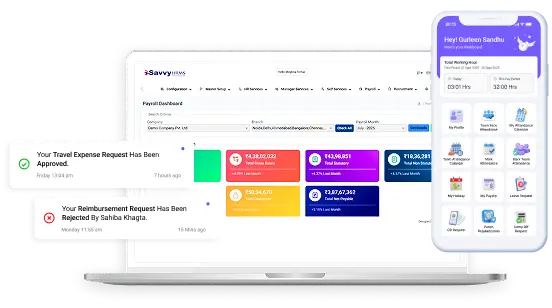
Explore Savvy HRMS to automate salary processing, attendance integration, compliance, payslips, and other payroll activities, all from one platform. Make payroll easier to manage as your startup grows.
Frequently Asked Questions (FAQs)
1. What is the best payroll software for startups?
The best payroll software for startups depends on employee count, payroll complexity, compliance needs, budget, and required integrations. Options such as Savvy HRMS, greytHR, Keka HR, ZingHR, and HRMantra can be compared based on these requirements.
2. Which software is best for payroll?
Payroll software should be evaluated based on salary automation, statutory compliance, attendance integration, payslips, reporting, security, scalability, and pricing. The right choice depends on the startup’s specific payroll and HR requirements.
3. Why should startups use payroll management software?
Payroll management software can automate salary calculations, deductions, payslips, tax-related processes, and payroll reporting. It can also reduce repetitive manual work and help HR teams manage payroll more efficiently as the business grows.
4. What features should startups look for in payroll software?
Startups should look for automated salary calculations, statutory compliance, attendance and leave integration, payslips, employee self-service, payroll reports, security, integrations, scalability, and easy-to-use payroll workflows.
5. How much does payroll software cost for startups in India?
Payroll software pricing varies based on employee count, features, modules, implementation, integrations, and support. Startups should compare the complete cost rather than looking only at the basic subscription price.
6. Can payroll software manage PF, ESI, and TDS?
Yes, many payroll platforms support statutory payroll processes such as PF, ESI, TDS, and professional tax. However, startups should verify the specific compliance calculations, reports, and updates supported by each software before choosing one.