



A growing IT company can quickly outgrow spreadsheets, emails, and disconnected HR tools. As teams expand across departments and locations, keeping employee information accurate, accessible, and updated becomes increasingly difficult for HR teams.
That is where core HR software becomes valuable. It centralizes employee records, onboarding, documents, workflows, self-service, and organizational information, helping HR teams reduce repetitive work while giving employees and managers easier access.
But with so many HRMS platforms available, choosing the right one can feel confusing. This guide explores 8 core HR software solutions for mid-sized IT companies, comparing their features, strengths, and ideal use cases.
What Is Core HR Software and Why Do Mid-Sized IT Companies Need It?
Core HR software is a centralized system that helps businesses manage important employee information and everyday HR processes. It brings employee profiles, organizational structures, documents, onboarding, workflows, approvals, and other workforce information into one organized platform for easier management.
For mid-sized IT companies, Core HR software becomes especially useful as teams grow and HR processes become more complex. Instead of depending on spreadsheets, emails, and disconnected tools, HR teams can automate routine activities, improve data accuracy, support employee self-service, and maintain better workforce visibility.
Why Do Mid-Sized IT Companies Need Core HR Software?
- Centralized employee data: Keep employee profiles, job details, documents, and organizational information in one accessible system.
- Reduced manual work: Automate repetitive HR tasks, approvals, notifications, and employee lifecycle processes.
- Better employee self-service: Allow employees to access information, submit requests, and manage routine HR activities independently.
- Simplified organizational management: Easily manage departments, designations, reporting structures, locations, and employee movements.
- Improved data accuracy: Reduce duplicate entries and errors caused by maintaining employee information across multiple spreadsheets.
- Faster HR processes: Simplify onboarding, transfers, promotions, confirmations, exits, and other employee lifecycle activities.
- Scalable HR operations: Support workforce growth without increasing administrative complexity at the same pace.
- Better workforce visibility: Give HR leaders and managers useful dashboards, reports, and employee information for better decisions.
What Should Mid-Sized IT Companies Look for in Core HR Software?
Choosing core HR software should go beyond simply checking whether a platform stores employee information. Mid-sized IT companies should consider how well the system fits their current processes and whether it can support future workforce growth.
The most important considerations include:
- Centralized employee data: Employee information should remain accessible from one secure location.
- Employee self-service: Employees should be able to handle routine requests without depending on HR.
- Workflow automation: Approvals and repetitive HR tasks should move automatically through defined workflows.
- Organization management: HR should be able to manage departments, reporting structures, roles, and locations.
- Document management: Employee documents should be stored digitally and remain easy to retrieve.
- Scalability: The platform should continue working efficiently as employee numbers increase.
- Integrations: Core HR should connect smoothly with payroll, attendance, recruitment, and other systems.
- Reporting and analytics: HR leaders should be able to turn workforce data into useful insights.
- Security and access controls: Sensitive employee information should be protected through appropriate permissions.
The best solution is therefore not necessarily the platform with the longest feature list. It is the one that provides the right combination of functionality, usability, automation, scalability, and value for the company’s needs.
What Are the Key Features of Core HR Software for Mid-Sized IT Companies?
A modern Core HRMS should make employee management simpler while reducing repetitive administrative work. The most useful capabilities generally include:
1. Employee Database Management
Centralize employee profiles, job details, employment history, contact information, and other important records, making workforce information easier to maintain and access.
2. Employee Self-Service
Allow employees to update personal information, access documents, submit requests, and complete routine HR activities without depending entirely on HR teams.
3. Organization Management
Manage departments, designations, reporting managers, locations, teams, and organizational hierarchies from one centralized system as the company continues growing.
4. Digital Document Management
Store employee documents, letters, forms, certificates, and records digitally, helping HR teams organize important information and retrieve documents whenever required.
5. Onboarding Management
Digitize joining processes, document collection, onboarding checklists, approvals, and new-hire activities to create a smoother and more structured employee experience.
6. Workflow Automation
Automate repetitive HR processes, approvals, notifications, tasks, and follow-ups, helping HR teams save time and maintain consistent processes across departments.
7. Role-Based Access
Give employees, managers, and HR teams access to relevant information based on their responsibilities, helping protect sensitive employee data and maintain control.
8. HR Dashboards
Provide real-time workforce information through dashboards, reports, and analytics, helping HR professionals monitor employee data and make more informed decisions.
9. Integrations
Connect Core HR with payroll, attendance, recruitment, finance, performance, and other business applications to create a more connected HR technology ecosystem.
For IT organizations, these capabilities are particularly valuable because they help HR handle a workforce that can change quickly without increasing administrative complexity at the same pace.
8 Best Core HR Software for Mid-Sized IT Companies
The following platforms are worth considering based on their Core HR capabilities, employee management tools, automation, scalability, and broader HRMS functionality.
1. Savvy HRMS
Overview
Savvy HRMS is an integrated HRMS designed to simplify employee management through centralized data, configurable workflows, employee records, policies, dashboards, notifications, and bulk HR operations. Its Core HR module focuses on making everyday HR administration more structured and scalable.
For mid-sized IT companies, Savvy HRMS brings essential HR processes together while allowing organizations to configure roles, rights, approval flows, employee transitions, and workforce information. This makes it suitable for companies that want flexibility without making HR operations unnecessarily complicated.
Key Features
- Centralized employee profiles, documents, roles, departments, and employment history.
- Dynamic HR configurations for flexible processes and organizational requirements.
- Role and rights management for controlled access across HRMS modules.
- N-level approval workflows for streamlined HR decision-making.
- Automated probation, confirmation, and notice-period tracking.
- Employee self-service for profiles, documents, leave, attendance, and requests.
- Recruitment and onboarding integration for seamless employee lifecycle management.
- Attendance, leave, and payroll management through connected HRMS modules.
- Performance and expense management integrated with employee records and workflows.
- Promotion and transfer management for smooth employee movements.
Best for: Mid-sized and large IT companies looking for flexible, scalable, and integrated HRMS capabilities across core HR and wider HR operations.
2. Darwinbox
Overview
Darwinbox offers a broad HCM platform with Core HR capabilities focused on employee data, organizational structures, workflows, and employee lifecycle management. Its platform is designed for organizations looking for scalable and configurable HR operations.
Key Features
- Centralized employee information and organizational structure management.
- Configurable workflows supporting different HR processes and approvals.
- Employee lifecycle management from hiring through exit.
- Workforce management integrated with broader HCM capabilities.
- Analytics and reporting for workforce and HR decision-making.
Best for: Mid-sized and growing organizations seeking a broad, configurable HCM ecosystem.
3. Keka
Overview
Keka provides Core HR capabilities covering employee profiles, organization structures, onboarding, documents, roles, privileges, assets, analytics, and employee exits. Its platform also connects Core HR with payroll, attendance, performance, and other HR functions.
Key Features
- Employee profiles and organization tree for centralized workforce management.
- Onboarding and preboarding workflows for smoother employee joining.
- Role and privilege management for controlled system access.
- Employee document management for organized digital records.
- Analytics and reports for workforce visibility and HR decisions.
- Employee exit management for structured offboarding processes.
Best for: Mid-sized businesses wanting a user-friendly HRMS covering Core HR and broader employee management.
4. greytHR
Overview
greytHR combines Core HR with employee lifecycle management, workflows, documents, employee self-service, reporting, and integrated HR processes. Its platform also supports organizational information, employee directories, letters, policies, and HR dashboards.
Key Features
- Centralized employee database with extensive employee information categories.
- Organization charts and employee directories for workforce visibility.
- Digital document management and automated employee letter filing.
- Customizable workflows for approvals, tasks, and HR processes.
- Employee self-service for information, documents, forms, and policies.
- HR dashboards and reports supporting data-driven workforce decisions.
Best for: Mid-sized Indian businesses looking for established HR and payroll functionality with strong employee self-service.
5. factoHR
Overview
factoHR provides Core HR capabilities focused on centralized employee information, onboarding, workflow automation, digital documents, organization structures, and employee self-service. It also offers broader workforce management through an integrated HRMS platform.
Key Features
- Centralized employee information management for accurate workforce records.
- Automated onboarding with digital forms and document collection.
- Workflow automation for approvals and repetitive HR activities.
- Digital document management for secure employee records.
- Employee self-service for information updates and HR requests.
- Organization charts and customizable employee data fields.
Best for: Growing businesses wanting Core HR alongside attendance, payroll, onboarding, and employee self-service.
6. ZingHR
Overview
ZingHR provides an integrated HCM platform covering Core HR, payroll, workforce management, onboarding, performance, engagement, analytics, and other employee lifecycle processes. Its platform emphasizes unified employee data and automation across HR functions.
Key Features
- Centralized employee lifecycle management across connected HR processes.
- Digital onboarding to simplify new-hire integration and documentation.
- Employee and manager self-service for everyday HR activities.
- Workforce management covering attendance, leave, and scheduling.
- Automated employee lifecycle workflows from confirmation to separation.
- HR analytics and dashboards for data-driven workforce decisions.
Best for: Mid-sized and larger organizations looking for an extensive HCM platform with automation.
7. Qandle
Overview
Qandle is an HRMS platform offering employee management, workflows, attendance, leave, employee self-service, analytics, and integrations. Its Core HR capabilities are designed to centralize workforce information while reducing repetitive HR administration.
Key Features
- Scalable employee database for centralized workforce information management.
- HR workflows designed to simplify repetitive administrative processes.
- Employee self-service for faster access to HR information.
- Attendance, leave, shift, and timesheet management capabilities.
- HR analytics and customizable reports for workforce insights.
- Third-party integrations supporting connected business operations.
Best for: Mid-sized companies looking for flexible HR workflows, employee self-service, and connected HR operations.
8. HRMantra
Overview
HRMantra is an HRMS platform that brings together employee information, attendance, leave, payroll, recruitment, performance, and other HR processes. It is designed to help organizations automate routine HR activities through a centralized platform.
Key Features
- Centralized employee information for simplified HR administration.
- Employee onboarding and lifecycle management capabilities.
- Attendance and leave management for workforce tracking.
- Payroll and statutory compliance support for Indian businesses.
- Performance management for employee goals and evaluations.
- HR reports and analytics for workforce decision-making.
Best for: Mid-sized Indian businesses looking for a broad HRMS covering Core HR and connected HR functions.
Comparison table for the 8 Best Core HR Software for Mid-Sized IT Companies
| Core HR Software | Core Strength | Best For |
| Savvy HRMS | Core HR, workflows, roles, dashboards, bulk operations | Mid-sized and large IT companies looking for a flexible HRMS |
| Darwinbox | Enterprise Core HR and HCM | Growing organizations needing broad HCM |
| Keka | Core HR, employee experience, HRMS | Mid-sized businesses seeking user-friendly HR |
| greytHR | Core HR, payroll, ESS, reporting | Indian businesses needing established HRMS |
| factoHR | Core HR, onboarding, workflows, ESS | Growing businesses needing integrated HR |
| ZingHR | HCM, automation, employee lifecycle | Organizations seeking extensive HCM |
| Qandle | HR workflows, ESS, analytics | Businesses wanting flexible HR operations |
| HRMantra | HRMS, payroll, attendance, Core HR | Indian businesses seeking broad HR automation |
How Did We Select the Best Core HR Software for Mid-Sized IT Companies?
We evaluated each platform based on the factors that matter most to growing IT companies, including Core HR capabilities, automation, scalability, usability, integrations, employee experience, and overall HRMS functionality.
1. Core HR Capabilities
We considered employee database management, organizational structures, employee lifecycle management, documents, workflows, and other essential capabilities needed for effective HR administration.
2. Scalability
- Supports growing employee numbers
- Handles multiple departments and locations
- Offers configurable workflows
- Supports changing organizational structures
3. Automation & Workflows
We looked at how effectively each platform automates repetitive HR activities, approvals, notifications, onboarding tasks, employee movements, and other time-consuming administrative processes.
4. Employee Self-Service
- Profile and information management
- Leave and attendance requests
- Document access
- Employee queries and requests
- Manager self-service
5. Integrations
We assessed whether Core HR can connect with important HR and business systems such as payroll, attendance, recruitment, performance, and finance.
6. User Experience
Ease of navigation, accessibility, mobile availability, dashboards, and overall usability were considered to determine how easily HR teams, managers, and employees can adopt the platform.
7. Security & Access Control
- Role-based permissions
- Controlled employee data access
- Approval hierarchies
- Secure document management
- Administrative controls
8. Overall Value
We considered the balance between features, scalability, usability, integrations, automation, and broader HRMS capabilities to identify platforms offering practical value for mid-sized IT companies.
What Are the Benefits of Core HR Software for Mid-Sized IT Companies?
1. Centralized Employee Information
Core HR software keeps employee profiles, documents, job details, and employment history in one centralized system, making information easier to access, update, and manage.
2. Reduced Administrative Work
Automation reduces repetitive HR tasks such as data entry, approvals, notifications, document handling, and routine requests, allowing HR teams to focus on higher-value activities.
3. Improved Employee Self-Service
Employees can access documents, update information, submit requests, and manage routine HR activities independently, reducing their dependency on HR teams for everyday requirements.
4. Better Workforce Visibility
HR teams and managers can access accurate employee information, organizational data, dashboards, and reports, helping them understand workforce trends and make informed decisions.
5. Faster HR Processes
Automated workflows simplify onboarding, approvals, transfers, promotions, confirmations, and other employee lifecycle activities, helping HR teams complete processes faster with fewer manual follow-ups.
6. Easier Workforce Scaling
As IT companies add employees, departments, locations, and teams, Core HR software provides structured processes that help HR manage organizational growth without unnecessary complexity.
7. Improved Data Accuracy and Security
Centralized records, role-based access, and controlled workflows help reduce data inconsistencies while ensuring sensitive employee information is accessible only to authorized users.
How Can Core HR Software Help IT Companies Manage a Growing Workforce?
As an IT company grows, HR processes that once felt manageable can quickly become complicated. More employees mean more records, approvals, departments, managers, documents, and everyday requests for the HR team.
Core HR software brings these activities into one connected system. Instead of constantly switching between spreadsheets, emails, and separate tools, HR teams can manage employee information and workflows more efficiently while giving employees greater self-service.
- Manage employee growth: Add and manage employees without creating additional administrative complexity.
- Simplify onboarding: Automate joining tasks, documentation, approvals, and onboarding workflows.
- Handle organizational changes: Easily manage promotions, transfers, departments, reporting managers, and locations.
- Reduce repetitive HR work: Automate routine approvals, notifications, employee updates, and administrative tasks.
- Support employee self-service: Let employees access documents, update information, and submit HR requests independently.
- Improve workforce visibility: Give HR and managers centralized employee information, dashboards, and reports.
- Maintain data accuracy: Keep employee information updated across connected HR processes and modules.
- Scale with the business: Support expanding teams, new locations, departments, and increasingly complex HR requirements.
How Much Does Core HR Software Cost for Mid-Sized IT Companies?
There is no single price for core HR software because vendors use different pricing models. Cost can depend on employee count, selected modules, implementation requirements, integrations, support, and whether payroll or other HR functions are included.
Some providers use per-employee pricing, while others offer packages based on employee numbers and selected modules. greytHR, for example, provides different plans and a pricing calculator based on team size and requirements. factoHR also publishes plan structures based on employee numbers and selected functionality.
For a mid-sized IT company, the cheapest platform may not necessarily be the most economical choice. A low-cost system that requires extensive manual work or additional applications can become expensive over time.
Instead, businesses should calculate the total cost of ownership, including:
- Software subscription or licensing
- Implementation and configuration
- Data migration
- Integrations
- Employee training
- Support and maintenance
- Additional modules
- Future scalability
The best approach is to request a customized quote based on your employee count and required modules before making a final decision.
How to Choose the Right Core HR Software for Your IT Company?
1. Identify Your HR Requirements
Start by identifying your current HR challenges, manual processes, employee management gaps, and areas where automation could save your HR team time and effort.
2. Check Essential Core HR Features
- Employee database management
- Employee self-service
- Organization management
- Workflow automation
- Document management
- Onboarding management
- HR dashboards and reports
3. Consider Scalability
Your Core HR software should support increasing employee numbers, new departments, multiple locations, changing reporting structures, and developing HR requirements without creating unnecessary complexity.
4. Evaluate Integration Capabilities
- Payroll integration
- Attendance and leave integration
- Recruitment integration
- Performance management integration
- Expense management integration
- Finance and business-system integrations
5. Prioritize User Experience
Choose a platform with simple navigation and accessible features so HR teams, managers, and employees can complete everyday activities without extensive training or technical assistance.
6. Review Security and Access Controls
- Role-based permissions
- Employee data access controls
- Approval hierarchies
- Secure document management
- Administrative controls
7. Compare Pricing and Overall Value
Look beyond the subscription price and consider implementation, available modules, integrations, support, employee count, and long-term scalability when evaluating the overall investment.
8. Request a Product Demo
- Test important HR workflows
- Explore employee self-service
- Review dashboards and reports
- Check integrations
- Understand implementation and support
9. Think About Future Growth
Select Core HR software that can adapt as your workforce expands, helping you manage additional employees, departments, locations, and increasingly complex HR processes.
Conclusion
For mid-sized IT companies, Core HR software is becoming an important part of building efficient and scalable HR operations. Centralized employee data, automated workflows, self-service, digital documents, organization management, and analytics can reduce administrative effort while giving HR and managers better workforce visibility.
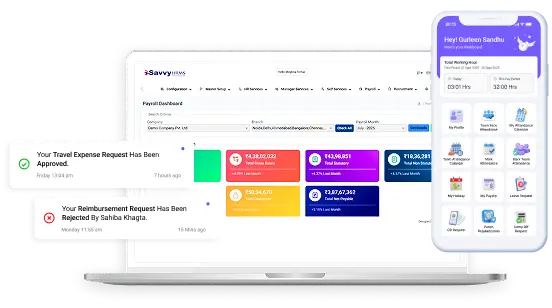
Among the options discussed, Savvy HRMS is a compelling choice for organizations looking for a flexible and integrated HRMS experience. Its Core HR capabilities, configurable workflows, roles and rights, dashboards, notifications, bulk operations, and employee lifecycle support can help growing IT businesses manage HR with greater simplicity and control.








Transform everyday HR into a simpler, smarter experience with Savvy HRMS.
Book your personalized demo today.
Frequently Asked Questions (FAQs)
1. What is Core HR software, and why do IT companies need it?
Core HR software centralizes employee information, organizational structures, documents, workflows, onboarding, approvals, and other essential HR processes. For mid-sized IT companies, it helps reduce manual work, improve data accuracy, and manage a growing workforce more efficiently.
2. What features should mid-sized IT companies look for in Core HR software?
Important features include employee database management, employee self-service, organization management, workflow automation, document management, onboarding, role-based access, HR dashboards, reporting, integrations, and scalability.
3. How does Core HR software help IT companies manage workforce growth?
Core HR software provides structured processes for managing new hires, departments, locations, reporting structures, promotions, transfers, documents, and employee requests. This allows HR teams to manage increasing employee numbers without relying heavily on spreadsheets and manual processes.
4. How much does Core HR software cost for a mid-sized IT company?
The cost varies depending on employee count, modules, implementation, integrations, customization, support, and pricing models. Businesses should evaluate the total cost of ownership rather than comparing subscription prices alone.
5. Which is the best Core HR software for mid-sized IT companies?
The best Core HR software depends on the company’s workforce size, HR requirements, integrations, budget, and growth plans. Savvy HRMS is an option for mid-sized IT companies looking for centralized Core HR, configurable workflows, employee self-service, organization management, and integrated HR processes.