

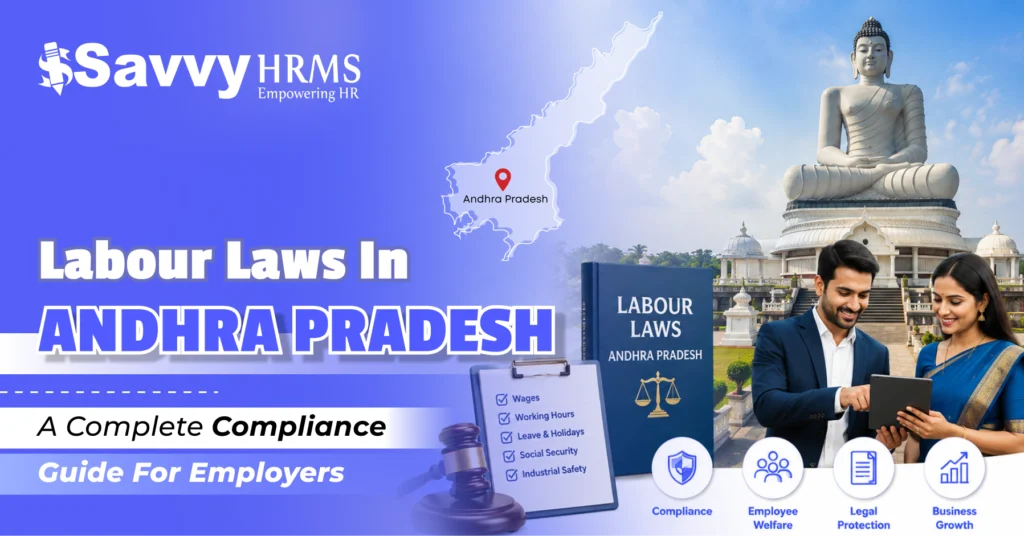
Labour Laws in Andhra Pradesh: A Complete Compliance Guide for Employers


-
AuthorSalilendra Kumar
-
 Last Updated
August 11, 2026
Last Updated
August 11, 2026
-
 Reading Time
15 Mins
Reading Time
15 Mins
Running a business in Andhra Pradesh is about more than just driving growth; it’s also about staying compliant with labour laws. Whether you’re a startup, an MSME, or a large enterprise, understanding the Labour Laws in Andhra Pradesh is important for protecting your employees, avoiding legal penalties, and ensuring smooth business operations.
These laws regulate every stage of the employee lifecycle, including:
- Minimum wages and timely salary payments
- Working hours, overtime, and leave policies
- Workplace safety and employee welfare
- EPF, ESI, gratuity, and maternity benefits
- Industrial relations and dispute resolution
With the introduction of India’s four Labour Codes, the country’s labour law framework is gradually becoming more simplified. However, until the new Codes are fully implemented, employers in Andhra Pradesh must continue complying with the applicable Central Acts and state-specific labour laws.
In this blog, we’ll break down the important Labour Laws in Andhra Pradesh, discuss who they apply to, and highlight the essential compliance requirements every employer should know to build a legally compliant and employee-friendly workplace.
Major Labour Laws in Andhra Pradesh: Applicability and Compliance Guide
Labour law compliance isn’t about following a single regulation; it’s about understanding how different Central and state laws work together. Depending on the nature of your business, industry, and workforce size, several labour laws may apply simultaneously.
Here’s a detailed look at the major labour laws every employer in Andhra Pradesh should know.
1. Industrial Relations Code, 2020
The Industrial Relations Code, 2020 consolidates three important labour legislations into one comprehensive framework. Its objective is to promote balanced industrial relations, simplify dispute resolution mechanisms, and create a balanced relationship between employers and employees.
Although the Code has been enacted, employers should continue complying with the applicable existing laws until the Code is fully implemented in the state.
1. Industrial Disputes Act, 1947
The Industrial Disputes Act, 1947 was enacted to prevent and resolve disputes between employers and employees. It lays down procedures for handling layoffs, retrenchment, strikes, lockouts, disciplinary actions, and compensation.
Applicability
The Act generally applies to industrial establishments where disputes arise between employers and workmen.
Employer Compliance
- Establish a proper grievance redressal mechanism.
- Follow statutory procedures before retrenchment or closure.
- Maintain disciplinary records and employee documentation.
- Provide compensation wherever legally applicable.
- Resolve disputes through prescribed legal channels.
Following these provisions helps businesses maintain industrial peace while reducing the chances of prolonged legal disputes.
2. Trade Unions Act, 1926
The Trade Unions Act, 1926 gives employees the legal right to form and register trade unions for protecting their interests and promoting collective bargaining.
Applicability
Applicable to establishments where employees form or become members of registered trade unions.
Employer Compliance
- Respect employees’ right to form trade unions.
- Avoid unfair labour practices.
- Encourage transparent communication between management and employee representatives.
- Participate in collective bargaining wherever required.
Healthy employer-employee relationships often lead to better productivity and fewer workplace conflicts.
3. Industrial Employment (Standing Orders) Act, 1946
The Industrial Employment (Standing Orders) Act, 1946 requires employers to clearly define employment conditions and workplace rules. It promotes transparency by ensuring employees understand the organization’s service conditions.
Applicability
Applicable to industrial establishments that meet the prescribed employee threshold under the Act.
Employer Compliance
- Prepare and certify Standing Orders where applicable.
- Clearly communicate company policies to employees.
- Define working hours, leave policies, disciplinary procedures, and termination rules.
- Keep employment policies updated whenever changes occur.
Having clearly documented employment conditions reduces ambiguity and improves workplace discipline.
2. Occupational Safety, Health and Working Conditions Code, 2020
A safe workplace is one of the most important aspects of labour law compliance. The Occupational Safety, Health and Working Conditions (OSH) Code, 2020 brings together several laws related to workplace safety, health, and employee welfare under one umbrella.
Until the Code is fully implemented, employers must continue complying with the relevant existing Acts and Andhra Pradesh-specific rules.
1. Factories Act, 1948
The Factories Act, 1948 regulates the health, safety, welfare, and working conditions of employees working in factories. It also prescribes standards for sanitation, ventilation, machinery safety, hazardous operations, and employee welfare facilities.
Applicability
Generally applicable to factories employing:
- 10 or more workers with the support of power.
- 20 or more workers without the support of power.
Employer Compliance
Employers are required to:
- Obtain factory registration and licences.
- Maintain proper lighting, ventilation, and sanitation.
- Install safety equipment and emergency exits.
- Conduct periodic safety inspections.
- Provide Personal Protective Equipment (PPE) where necessary.
- Maintain accident records and health registers.
- Organize regular employee safety training.
A proactive approach towards workplace safety not only ensures legal compliance but also improves employee confidence and productivity.
2. Andhra Pradesh Factories Rules, 1980
The Andhra Pradesh Factories Rules, 1980 supplement the Factories Act by prescribing detailed procedures, forms, registers, inspections, and reporting requirements for factories operating in the state.
Employer Compliance
Businesses covered under these Rules should:
- Maintain statutory registers and inspection records.
- Notify the authorities about accidents and dangerous occurrences.
- Conduct medical examinations wherever required.
- Display mandatory notices inside the factory.
- Submit prescribed returns within stipulated timelines.
- Preserve employee attendance and wage records.
These operational requirements help regulatory authorities monitor workplace safety and ensure factories comply with statutory standards.
3. Andhra Pradesh Shops and Establishments Act, 1988
Not every business operates as a factory. Offices, retail stores, restaurants, hotels, educational institutions, IT companies, and commercial establishments are generally governed by the Andhra Pradesh Shops and Establishments Act, 1988.
The Act regulates important aspects of employment, including:
- Working hours
- Weekly holidays
- Overtime
- Leave entitlement
- Wage payment
- Appointment letters
- Employee service conditions
- Termination procedures
Applicability
Applicable to most shops and commercial establishments operating within Andhra Pradesh.
Employer Compliance
Employers should ensure that they:
- Register their establishment under the Act.
- Issue appointment letters to employees.
- Maintain attendance and wage registers.
- Display statutory notices at the workplace.
- Provide weekly holidays and eligible leave.
- Maintain employee service records.
- Comply with prescribed working hour limits.
Proper compliance under this Act creates a transparent work environment while protecting both employer and employee interests.
4. Andhra Pradesh Shops and Establishments Rules, 1990
The Andhra Pradesh Shops and Establishments Rules, 1990 provide detailed operational guidelines for implementing the Act. These Rules explain how employers should maintain records and comply with employment standards.
Some of the important areas covered include:
- Daily and weekly working hours
- Overtime calculations
- Weekly holidays
- Leave records
- Employee registers
- Wage registers
- Inspection procedures
Employer Compliance
To remain compliant, employers should:
- Maintain all prescribed statutory registers.
- Record employee attendance accurately.
- Ensure overtime payments are calculated correctly.
- Preserve leave records and service registers.
- Keep employment records readily available during inspections.
Maintaining accurate documentation is often one of the simplest yet most effective ways to demonstrate labour law compliance during inspections or audits.
3. Code on Social Security, 2020
Providing social security benefits is one of the most important responsibilities of an employer. The Code on Social Security, 2020 consolidates multiple social welfare laws into a single framework with the objective of extending financial protection and social security benefits to employees across different sectors.
While the Code is yet to be fully implemented, employers in Andhra Pradesh should continue complying with the existing Acts that remain in force.
1. Employees’ Provident Funds and Miscellaneous Provisions Act, 1952
The Employees’ Provident Funds and Miscellaneous Provisions Act, 1952 (EPF Act) helps employees build long-term financial security through mandatory provident fund contributions.
Applicability
- Normally applicable to organizations employing 20 or more employees.
- Certain organizations may voluntarily opt for EPF coverage.
Employer Compliance
Employers are required to:
- Register the establishment with the EPFO.
- Deduct employee PF contributions from salaries.
- Deposit both employer and employee contributions within the prescribed due date.
- File monthly and annual statutory returns.
- Maintain employee PF records and nomination details.
Timely PF compliance helps employees build retirement savings while protecting employers from penalties and interest on delayed payments.
2. Employees’ State Insurance Act, 1948
The Employees’ State Insurance (ESI) Act, 1948 provides medical care and financial assistance to eligible employees during sickness, maternity, disability, or employment-related injuries.
Applicability
Applicable to eligible establishments and employees covered under the ESI scheme, subject to the prescribed employee threshold and wage limit.
Employer Compliance
Employers should:
- Register eligible employees under the ESI scheme.
- Deduct employee contributions where applicable.
- Deposit contributions by the due date.
- Maintain ESI records and registers.
- Report workplace accidents promptly.
ESI ensures employees receive medical benefits while reducing financial stress during emergencies.
3. Payment of Gratuity Act, 1972
The Payment of Gratuity Act, 1972 provides a lump-sum retirement benefit to employees as a reward for long and continuous service.
Applicability
Generally applicable to establishments employing 10 or more employees.
Employees who complete five years of continuous service are generally eligible for gratuity, subject to the provisions of the Act.
Employer Compliance
Employers should:
- Calculate gratuity accurately based on the applicable formula.
- Pay gratuity within the prescribed timeline.
- Maintain employee service records.
- Preserve gratuity payment documentation for future reference.
4. Employees’ Compensation Act, 1923
The Employees’ Compensation Act, 1923 provides compensation to employees or their dependents in case of injury, disability, or death arising out of and during the course of employment.
Applicability
Applicable to employees covered under the provisions of the Act, particularly where ESI coverage does not apply for the specific employment or circumstance.
Employer Compliance
- Report workplace accidents promptly.
- Pay compensation wherever legally applicable.
- Maintain accident records.
- Implement adequate workplace safety measures to reduce occupational risks.
5. Andhra Pradesh Tax on Professions, Trades, Callings and Employments Act, 1987 (Professional Tax)
Professional Tax is a state levy applicable to eligible salaried employees and professionals based on the prescribed income slabs.
Applicability
Applicable to employers responsible for deducting Professional Tax from eligible employees’ salaries wherever required under Andhra Pradesh law.
Employer Compliance
- Register for Professional Tax.
- Deduct Professional Tax from eligible employees.
- Deposit the deducted amount within the particular period.
- File applicable returns.
- Maintain deduction and payment records.
Proper Professional Tax compliance helps businesses avoid interest, penalties, and notices from state authorities.
6. Maternity Benefit Act, 1961
The Maternity Benefit Act, 1961 protects the employment rights of women employees during pregnancy and after childbirth.
The Act aims to ensure that women employees receive adequate leave, financial support, and job protection during maternity.
Applicability
Applicable to establishments covered under the Act.
Employer Compliance
Employers should:
- Grant maternity leave as prescribed by law.
- Ensure payment of maternity benefits wherever applicable.
- Avoid discrimination based on pregnancy.
- Maintain confidentiality and employment continuity.
- Display notices regarding employee maternity rights.
Supporting maternity benefits not only fulfils legal obligations but also contributes to an inclusive and employee-friendly workplace.
4. Code on Wages, 2019
The Code on Wages, 2019 consolidates wage-related legislation into a single framework to ensure fair and timely payment of wages to employees across different industries.
This Code includes various important laws, including the Minimum Wages Act, 1948 and the Equal Remuneration Act, 1976, with the objective of simplifying wage compliance.
1. Equal Remuneration Act, 1976
The Equal Remuneration Act, 1976 promotes equal pay for equal work and prohibits gender-based discrimination in recruitment and remuneration.
Employer Compliance
Employers should:
- Ensure equal wages for men and women performing the same or similar work.
- Avoid discrimination during recruitment, promotions, or transfers.
- Maintain transparent wage structures.
- Preserve payroll records to demonstrate compliance.
Equal pay practices help organizations build a fair and diverse workplace while ensuring legal compliance.
2. Minimum Wages Act, 1948
The Minimum Wages Act, 1948 ensures that employees receive wages not lower than the rates notified by the government for scheduled employments.
In Andhra Pradesh, employers must pay employees according to the latest minimum wage notifications applicable to their industry, skill category, and location.
Employer Compliance
- Pay wages at or above the notified minimum wage rates.
- Review revised wage notifications regularly.
- Maintain wage registers.
- Ensure timely payment of salaries.
- Preserve payroll records for inspections.
Failure to pay minimum wages can lead to legal action, financial penalties, and employee disputes.
For more info, visit: Minimum Wages in Andhra Pradesh
5. Andhra Pradesh Minimum Wages Rules, 1953
The Andhra Pradesh Minimum Wages Rules, 1953 provide detailed procedures for implementing the Minimum Wages Act within the state.
These Rules cover:
- Wage calculation
- Wage registers
- Attendance records
- Overtime wages
- Wage slips
- Inspection procedures
1. Payment of Wages Act, 1936
The Payment of Wages Act, 1936 regulates the timely payment of wages and limits unauthorized deductions from employees’ salaries.
Employer Compliance
Employers should:
- Pay wages within the prescribed timelines.
- Avoid unauthorized deductions.
- Issue wage slips.
- Maintain payroll records.
- Keep payment documentation readily available for inspection.
2. Andhra Pradesh Payment of Wages Rules, 1937
These Rules prescribe the forms, registers, and documentation required for implementing the Payment of Wages Act within Andhra Pradesh.
Employers should maintain:
- Wage registers
- Deduction registers
- Overtime records
- Attendance records
- Wage payment documentation
Accurate payroll documentation plays an important role in demonstrating compliance during labour inspections.
3. Payment of Bonus Act, 1965
The Payment of Bonus Act, 1965 requires eligible employers to pay annual bonuses to qualifying employees based on the provisions of the Act.
Applicability
Generally applicable to establishments employing 20 or more employees, subject to the eligibility criteria prescribed under the Act.
Employer Compliance
- Determine employee eligibility.
- Calculate bonus accurately.
- Disburse bonus within the prescribed time.
- Maintain bonus registers and supporting records.
Proper bonus compliance improves employee morale while reducing the risk of labour disputes.
6. Andhra Pradesh Labour Welfare Fund Rules
The Andhra Pradesh Labour Welfare Fund is established to promote the welfare and well-being of workers by supporting initiatives related to healthcare, education, housing, recreation, and other social welfare activities.
Eligible employers are required to contribute to the Labour Welfare Fund as prescribed under the applicable rules.
Employer Compliance
- Register under the Labour Welfare Fund, wherever applicable.
- Deduct employee contributions where required.
- Deposit employer and employee contributions within the due dates.
- Maintain contribution records.
- File prescribed returns and documentation.
Regular compliance with Labour Welfare Fund requirements demonstrates an employer’s commitment to employee welfare while ensuring adherence to state labour regulations.
Employer Compliance Checklist in Andhra Pradesh
Keeping up with labour law compliance is not just about knowing the regulations; it’s about implementing them consistently. Missing a filing deadline, maintaining incomplete records, or overlooking statutory contributions can result in penalties and legal complications. A well-defined compliance process helps businesses stay organized and inspection-ready throughout the year.
Here’s a practical checklist every employer in Andhra Pradesh should follow:
✔ Register Your Establishment
Ensure your business is registered under the applicable labour laws, such as the Andhra Pradesh Shops and Establishments Act or the Factories Act, depending on the nature of your business.
✔ Issue Appointment Letters
Provide every employee with a clear appointment letter outlining their designation, salary, working hours, leave policy, notice period, and other employment terms.
✔ Pay Wages on Time
Pay salaries within the prescribed timelines and ensure employees receive at least the applicable minimum wages notified by the Government for their category of employment.
✔ Maintain Statutory Registers
Keep all mandatory records updated, including:
- Attendance Register
- Wage Register
- Leave Register
- Overtime Register
- Bonus Register
- Accident Register (where applicable)
- Employee Service Records
Maintaining accurate records simplifies labour inspections and demonstrates compliance.
✔ Deposit Statutory Contributions
Ensure timely payment of:
- EPF Contributions
- ESI Contributions
- Professional Tax
- Labour Welfare Fund Contributions (where applicable)
Late deposits may attract interest and penalties.
✔ Follow Working Hour Regulations
Comply with prescribed limits for:
- Daily working hours
- Weekly working hours
- Overtime
- Weekly holidays
- Rest intervals
This is especially important for factories, retail establishments, and commercial offices.
✔ Ensure Workplace Safety
If your establishment falls under the Factories Act or the Occupational Safety, Health and Working Conditions Code, regularly:
- Conduct safety inspections
- Provide safety equipment
- Organize employee safety training
- Maintain emergency preparedness
✔ Stay Updated with Legal Changes
Labour laws and wage notifications are updated periodically. Employers should regularly review government notifications to ensure ongoing compliance.
Conclusion
Staying compliant with Labour Laws in Andhra Pradesh is important for building a legally sound, transparent, and employee-friendly workplace. By understanding the applicable labour laws, maintaining accurate records, and fulfilling statutory obligations on time, employers can minimize legal risks and focus on growing their business with confidence.
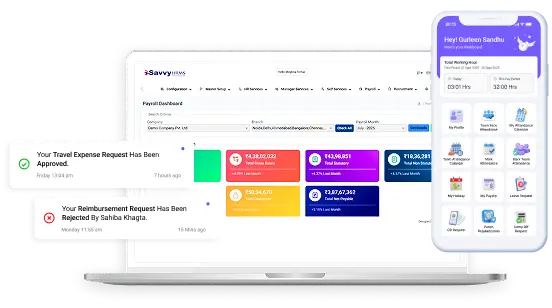
Managing compliance manually can be challenging, but the right technology makes it much simpler. Savvy HRMS helps businesses simplify payroll, statutory compliance, attendance, leave management, and employee records through a single platform, enabling HR teams to save time, reduce errors, and stay compliant with ease.










Ready to Simplify Labour Law Compliance?
Empower your HR team with Savvy HRMS and automate payroll, statutory compliance, attendance, and workforce management with confidence.
Frequently Asked Questions (FAQs)
1. What is the minimum wage in Andhra Pradesh in 2026?
The minimum wage in Andhra Pradesh for 2026 depends on the employee’s industry, skill category (unskilled, semi-skilled, skilled, or highly skilled), and the latest state government notification. Employers must pay wages at or above the notified minimum rates.
2. Which labour laws are most important for employers in Andhra Pradesh?
• Minimum Wages Act, 1948
• Andhra Pradesh Shops and Establishments Act, 1988
• EPF Act, 1952
• ESI Act, 1948
• Payment of Gratuity Act, 1972
• Payment of Bonus Act, 1965
3. Are businesses in Andhra Pradesh required to comply with the new Labour Codes?
The four Labour Codes have been enacted, but until they are fully implemented in Andhra Pradesh, employers must continue complying with the applicable Central Acts and state-specific labour laws currently in force.
4. What records should employers maintain for labour law compliance?
• Attendance register
• Wage register
• Leave register
• Overtime register
• Bonus register
• Employee service records
• Accident register (where applicable)
5. How can HR software help with labour law compliance in Andhra Pradesh?
Modern HR software automates payroll, statutory compliance, attendance, leave management, and employee records, helping businesses reduce manual errors, maintain accurate documentation, and stay compliant with Andhra Pradesh labour regulations.