


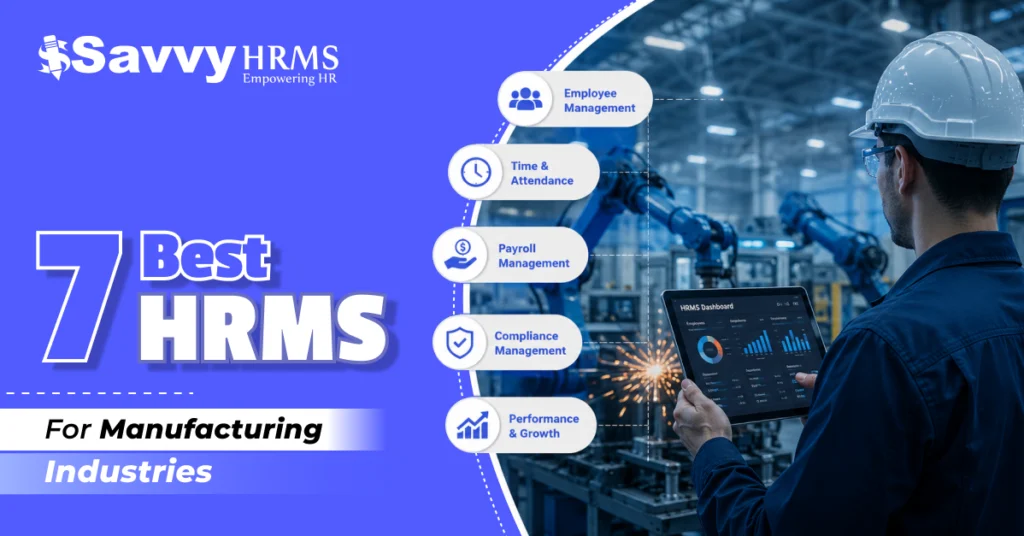

Have you ever wondered why some manufacturing companies manage thousands of employees, multiple shifts, and payroll effortlessly while others struggle with attendance errors, compliance issues, and workforce inefficiencies?
Managing a manufacturing workforce is far more complex than handling a regular office setup. Multiple shifts, contract workers, overtime calculations, statutory compliance, and real-time attendance require businesses to depend on technology that keeps every HR process connected and accurate.
This is where a modern HRMS for manufacturing becomes a business necessity rather than just another software investment. The right HR software for manufacturing simplifies HR operations, automates payroll, improves workforce visibility, ensures labour law compliance, and enables HR teams to focus on people instead of paperwork.
So, let’s explore what an HRMS for manufacturing is, the essential features to look for, and the top software solutions that can help simplify your workforce management in 2026.
What is an HRMS for Manufacturing?
An HRMS (Human Resource Management System) for manufacturing is a specialized software solution designed to manage the unique workforce requirements of manufacturing businesses. Unlike traditional HR software, it supports complex operations such as multi-location workforce management, shift scheduling, biometric attendance, overtime calculations, contract labour management, statutory compliance, payroll processing, and employee performance tracking.
Whether you operate a single manufacturing plant or multiple production units, a manufacturing HRMS centralizes employee information and automates repetitive HR tasks, reducing manual work while improving operational accuracy.
A strong HRMS for manufacturing industries generally helps organizations manage:
- Employee database
- Shift and roster management
- Biometric attendance integration
- Leave and holiday management
- Payroll automation
- Overtime calculations
- Factory workforce scheduling
- Contractor and temporary workforce management
- Statutory compliance
- Recruitment and onboarding
- Performance management
- Employee self-service portal
- HR analytics and reporting
As manufacturing companies continue embracing Industry 4.0 and digital transformation, investing in the right HR software for manufacturing has become important for improving productivity and workforce efficiency.
Our Approach to Evaluating HRMS for Manufacturing
Choosing the best HRMS for manufacturing isn’t just about comparing feature lists. Manufacturing businesses require software that can handle workforce complexities while remaining scalable, user-friendly, and compliant with developing labour regulations.
To identify the best HRMS platforms for manufacturing industries, we evaluated each solution using the following criteria:
- Manufacturing-specific HR capabilities
- Shift and roster management
- Payroll automation and overtime calculations
- Attendance and biometric integration
- Labour law and statutory compliance
- Employee self-service functionality
- Recruitment and onboarding tools
- Performance and appraisal management
- Reporting and workforce analytics
- Ease of implementation and scalability
- Customer support and overall user experience
Our recommendations focus on platforms that provide practical value for manufacturers while helping HR teams save time, reduce manual work, and improve workforce productivity.
Key Features to Look for in Manufacturing HRMS Software
Not every HRMS is built to handle the operational demands of manufacturing businesses. Before choosing a solution, ensure it offers features specifically designed for factory environments and large workforces.
1. Shift Management
Manufacturing companies often operate multiple shifts throughout the day. An ideal HRMS should simplify shift planning, rotation, scheduling, and employee allocation.
2. Biometric Attendance Integration
Automatic synchronization with biometric devices helps eliminate manual attendance tracking while improving payroll accuracy.
3. Payroll Automation
The software should automatically calculate salaries, overtime, deductions, bonuses, incentives, and statutory contributions with minimal manual intervention.
4. Leave Management
Employees should be able to apply for leave online while managers can approve requests quickly without paperwork.
5. Overtime Calculation
Manufacturing employees frequently work additional hours. The HRMS should calculate overtime accurately according to company policies and labour regulations.
6. Statutory Compliance
A reliable HR software for manufacturing should support compliance with regulations related to PF, ESI, Professional Tax, Labour Welfare Fund, TDS, and other statutory requirements.
7. Employee Self-Service Portal
Employees should have access to payslips, attendance records, leave balances, tax declarations, and personal information from a single portal.
8. Recruitment & Onboarding
Hiring factory workers, supervisors, and plant managers becomes easier with recruitment workflows, document collection, and digital onboarding.
9. Performance Management
Manufacturing organizations can monitor employee productivity, set KPIs, conduct appraisals, and encourage continuous improvement.
10. HR Analytics & Reports
Interactive dashboards and workforce reports help HR leaders make informed decisions regarding manpower planning, absenteeism, labour costs, and employee performance.
11. Multi-Location Workforce Management
For manufacturers operating across multiple plants, branches, or warehouses, centralized workforce management is important for maintaining consistency and visibility.
12. Mobile Accessibility
Modern HRMS platforms should provide mobile applications that allow employees and managers to perform HR tasks anytime and anywhere.
Quick Comparison of HRMS Platforms for Manufacturing
| HRMS Platform | Best For | Key Strength | Shift Management | Payroll | Compliance | Employee Self-Service |
| Savvy HRMS | Manufacturing businesses of all sizes | End-to-end HR & Payroll automation | ✔ | ✔ | ✔ | ✔ |
| Darwinbox | Large enterprises | AI-powered HR platform | ✔ | ✔ | ✔ | ✔ |
| ZingHR | Mid to large organizations | Workforce automation | ✔ | ✔ | ✔ | ✔ |
| Keka HR | SMEs & growing businesses | Payroll and employee experience | ✔ | ✔ | ✔ | ✔ |
| factoHR | Mobile-first organizations | Workforce mobility | ✔ | ✔ | ✔ | ✔ |
| greytHR | SMEs | Payroll and compliance | Limited | ✔ | ✔ | ✔ |
| HRMantra | Large enterprises | Enterprise HR automation | ✔ | ✔ | ✔ | ✔ |
1. Savvy HRMS
Overview
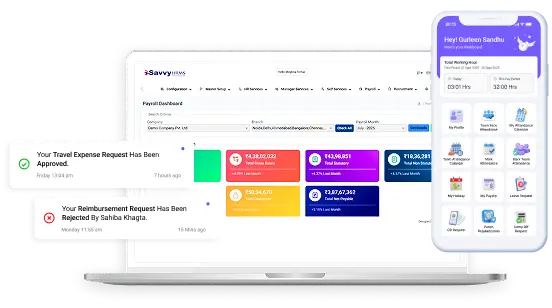
Savvy HRMS is a comprehensive HRMS for manufacturing that simplifies workforce management, payroll, compliance, attendance, and employee lifecycle processes from a single platform. Designed to meet the operational needs of manufacturing businesses, it helps HR teams automate routine tasks, improve workforce productivity, and maintain compliance while supporting organizations of all sizes.
Key Capabilities of Savvy HRMS include:
- End-to-end HR and payroll management
- Advanced shift and roster scheduling
- Biometric and GPS attendance integration
- Automated payroll with overtime calculations
- PF, ESI, PT, TDS, and statutory compliance
- Employee self-service (ESS) and manager self-service (MSS)
- Recruitment, onboarding, and document management
- Performance management with goal tracking
- Real-time HR analytics and customizable reports
Best For
Manufacturing companies of all sizes looking for a scalable, all-in-one HR software for manufacturing that combines workforce management, payroll, compliance, attendance, and employee engagement into a single, easy-to-use platform.
2. Darwinbox
Overview
Darwinbox is a cloud-based HR platform that helps enterprises digitize HR operations through automation, employee engagement, talent management, and workforce analytics. It is suitable for manufacturers managing large and distributed workforces.
Key Capabilities:
- Workforce and employee lifecycle management
- Attendance and shift scheduling
- Payroll integration
- Performance and talent management
- Employee engagement tools
- HR analytics and dashboards
Best For
Large manufacturing enterprises looking for an AI-enabled HR platform with advanced employee experience and workforce management capabilities.
3. ZingHR
Overview
ZingHR offers cloud-based HR software designed to automate HR processes, improve workforce productivity, and simplify compliance for businesses with distributed manufacturing operations.
Key Capabilities
- Shift and attendance management
- Payroll automation
- Recruitment and onboarding
- Employee self-service portal
- Compliance management
- HR reports and analytics
Best For
Mid-sized and large manufacturing organizations requiring workforce automation and centralized HR management.
4. Keka HR
Overview
Keka HR is an intuitive HR and payroll platform that focuses on simplifying people management through automated HR workflows, attendance tracking, payroll processing, and employee engagement.
Key Capabilities
- Payroll processing
- Attendance and leave management
- Shift scheduling
- Performance management
- Employee self-service
- HR analytics
Best For
Small and medium-sized manufacturing companies looking for user-friendly HR software with strong payroll capabilities.
5. factoHR
Overview
factoHR is a mobile-first HRMS that helps manufacturing organizations manage attendance, payroll, employee records, and workforce productivity across multiple locations.
Key Capabilities
- Mobile attendance management
- Shift and roster scheduling
- Payroll automation
- Compliance management
- Employee self-service
- Workforce analytics
Best For
Manufacturers with a distributed or field workforce that require mobile accessibility and workforce visibility.
6. greytHR
Overview
greytHR is a widely used HR and payroll software that automates payroll processing, attendance, leave management, and statutory compliance for growing businesses.
Key Capabilities
- Payroll automation
- Leave and attendance management
- Statutory compliance
- Employee self-service
- Document management
- HR reports
Best For
Small and growing manufacturing businesses looking for affordable payroll and compliance software.
7. HRMantra
Overview
HRMantra is an enterprise-grade HRMS that provides comprehensive workforce management, payroll automation, compliance, and employee lifecycle management for large organizations.
Key Capabilities
- End-to-end HR automation
- Shift and attendance management
- Payroll processing
- Compliance management
- Performance management
- HR analytics
Best For
Large manufacturing enterprises requiring a comprehensive HR platform with extensive automation and compliance features.
How to Choose the Right HRMS for Manufacturing Industries?
Selecting the right HRMS for manufacturing requires more than comparing pricing or feature lists. Your HR software should align with your workforce size, operational complexity, compliance requirements, and future business growth.
Here are the key factors to consider before making your decision:
1. Understand Your Workforce Requirements
Start by evaluating your workforce structure. If your organization operates multiple plants, rotating shifts, or employs contract workers, choose an HRMS that is specifically designed to handle manufacturing operations.
2. Prioritize Manufacturing-Specific Features
Look for features such as shift scheduling, biometric attendance integration, overtime calculation, contractor management, payroll automation, statutory compliance, and workforce analytics. These capabilities significantly reduce manual effort while improving operational efficiency.
3. Evaluate Scalability
Your HR software should be capable of growing with your business. Whether you expand to new manufacturing units or increase your workforce, the platform should support your long-term growth without requiring frequent system changes.
4. Check Compliance Capabilities
Manufacturing businesses must comply with multiple labour laws and statutory regulations. Choose software that automatically manages PF, ESI, Professional Tax, TDS, Labour Welfare Fund, and other compliance requirements to minimize legal risks.
5. Focus on User Experience
An intuitive interface encourages adoption across HR teams, managers, and employees. Mobile accessibility and employee self-service portals further improve efficiency by allowing employees to access HR services independently.
6. Review Customer Support
Reliable implementation assistance, product training, and responsive customer support are essential for ensuring a smooth transition and ongoing success with your HRMS.
7. Compare Overall Value
Instead of selecting software based only on price, assess the overall value it delivers. Consider automation capabilities, implementation support, reporting features, security, customization options, and long-term return on investment.
Among the platforms compared, Savvy HRMS stands out by combining comprehensive HR automation, manufacturing-focused workforce management, payroll, compliance, recruitment, performance management, and analytics into one unified solution. This makes it an excellent choice for manufacturers looking to simplify HR operations while improving workforce productivity.
Conclusion
As manufacturing businesses continue embracing digital transformation, investing in the right HRMS for manufacturing industries has become important for improving workforce efficiency, maintaining statutory compliance, and simplifying HR operations. From attendance and payroll to shift management, recruitment, and employee engagement, modern HR software for manufacturing helps organizations reduce administrative workload while enabling HR teams to focus on strategic growth.
While every platform discussed offers valuable capabilities, Savvy HRMS stands out with its comprehensive feature set, manufacturing-focused functionality, intuitive interface, and scalable architecture. Whether you’re managing a single factory or multiple production facilities, it provides everything needed to automate HR processes and build a more productive workforce.









Looking for an HRMS built specifically for manufacturing businesses?
Discover how Savvy HRMS can simplify workforce management, automate payroll, ensure statutory compliance, and help your organization operate more efficiently.