



Whether you’re starting a new job, preparing for a promotion, or planning your long-term career, having a clear roadmap for growth is essential. Without defined goals, it’s easy to lose direction and miss opportunities to improve your skills or advance professionally. That’s why many organizations encourage employees to create a Personal Development Plan (PDP) as part of their learning and performance strategy.
Understanding the PDP full form is more than just knowing what the abbreviation stands for. It helps employees take ownership of their professional growth while enabling organizations to build a skilled, motivated, and future-ready workforce. A well-structured PDP not only improves employee development but also supports performance management, goal setting, and career growth.
In this guide, we’ll explain the PDP full form, its importance, key components, benefits, and how businesses can use modern HRMS solutions to manage employee development more effectively. Now lets study what the PDP Full Form actually is:
What Is the Full Form of PDP?
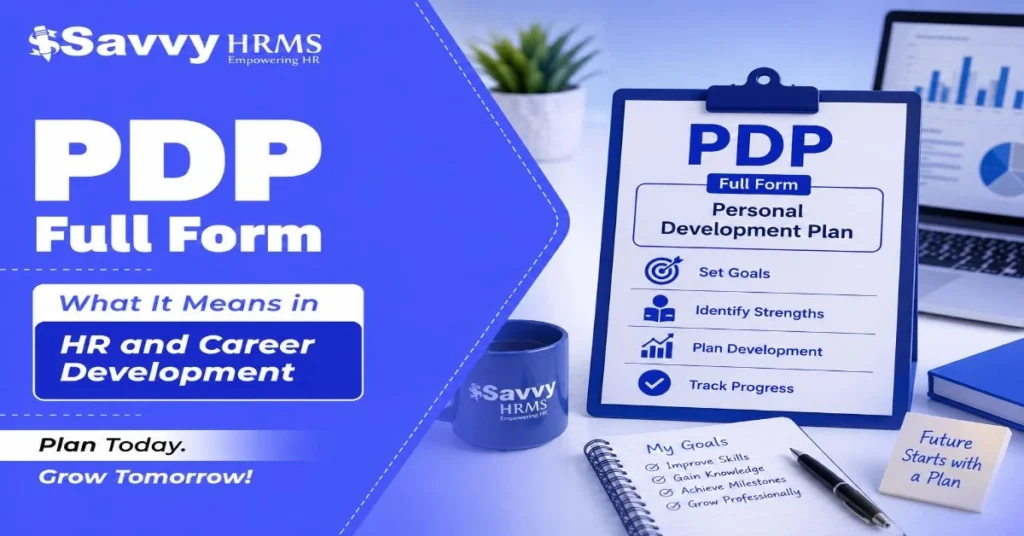
The PDP full form is Personal Development Plan.
A Personal Development Plan is a structured document that helps employees identify their career goals, assess their current skills, and create a step-by-step action plan to improve their knowledge and abilities over time.
Instead of leaving career growth to chance, a PDP provides a clear direction for professional development. It helps employees understand where they are today, where they want to be in the future, and what steps they need to take to get there.
Organizations also use PDPs to align individual goals with business objectives. When employees grow, businesses benefit from increased productivity, stronger engagement, and improved performance.
A typical Personal Development Plan includes:
- Career goals
- Current strengths
- Areas for improvement
- Skills to develop
- Learning activities
- Training programs
- Action plans
- Timelines
- Progress reviews
Whether you’re an employee looking to advance your career or an employer focused on workforce development, understanding the PDP full form is the first step toward continuous learning and improvement.
What Is a Personal Development Plan (PDP)?
A Personal Development Plan (PDP) is a personalized roadmap that helps individuals improve their professional knowledge, technical skills, soft skills, and overall job performance.
It acts as a guide for continuous learning by outlining specific goals and the actions required to achieve them.
Rather than focusing only on annual performance reviews, a PDP encourages employees to develop new skills throughout the year.
For example, a marketing executive may want to improve data analysis skills, while an HR professional may aim to strengthen leadership and employee engagement capabilities. A Personal Development Plan helps break these goals into achievable milestones.
A typical PDP follows a simple process:
- Assess your current skills.
- Identify career aspirations.
- Set realistic development goals.
- Choose learning opportunities.
- Create an action plan.
- Monitor progress.
- Review and update goals regularly.
Unlike one-time training sessions, a Personal Development Plan supports continuous learning and long-term career growth.
Why Is a Personal Development Plan Important?
Career growth doesn’t happen by chance. As industries evolve and job roles become more dynamic, employees need to continuously build new skills to stay competitive and achieve their professional goals.
A Personal Development Plan (PDP) provides employees with a clear path for professional growth while helping organizations build stronger, more capable teams.
Here are some of the key reasons why a PDP is important.
1. Encourages Continuous Learning
Employees who regularly develop new skills stay updated with industry trends and perform more effectively in their roles.
Continuous learning also increases confidence and prepares employees for future responsibilities.
2. Supports Career Growth
A Personal Development Plan helps employees identify the skills they need for promotions or career transitions.
Instead of waiting for opportunities, employees can actively prepare themselves for the next stage of their careers.
3. Improves Performance Management
Managers can use PDPs during performance reviews to set clear expectations and monitor employee progress throughout the year.
This creates more meaningful conversations around development rather than focusing only on past performance.
4. Helps Achieve Personal and Organizational Goals
An effective PDP aligns individual career goals with business objectives.
For example, if a company plans to adopt new technology, employees can include relevant training in their development plans, ensuring both personal and organizational growth.
5. Identifies Skill Gaps
One of the biggest advantages of a PDP is that it highlights areas where employees need improvement.
Once these gaps are identified, businesses can provide targeted learning programs, coaching, or mentoring to help employees develop the required skills.
6. Increases Employee Engagement
Employees are more engaged when they see opportunities to learn and grow within the organization.
Providing structured employee development plans shows that the company values its workforce and is invested in their future.
7. Builds Future Leaders
Organizations need strong leaders to support long-term success.
A Personal Development Plan helps identify high-potential employees and prepares them for leadership positions through continuous learning and skill enhancement.
8. Promotes Accountability
A PDP encourages employees to take responsibility for their own learning and career progression.
Instead of relying solely on managers, employees become active participants in achieving their professional goals.
By implementing Personal Development Plans, businesses create a culture of continuous improvement where learning becomes part of everyday work rather than an occasional activity.
Key Components of a Personal Development Plan
A successful Personal Development Plan (PDP) is more than just a list of goals. It provides a clear framework that helps employees identify where they are today, where they want to go, and how they can achieve their objectives. Including the right components makes a PDP practical, measurable, and easy to follow.
Here are the essential elements of an effective PDP.
1. Self-Assessment
The first step is understanding your current strengths, weaknesses, skills, and areas that need improvement. Honest self-assessment helps employees identify what they already do well and where they should focus their learning efforts.
Questions to ask yourself include:
- What are my strengths?
- Which skills do I need to improve?
- What feedback have I received from my manager?
- What challenges am I facing in my current role?
2. Career Goals
A PDP should include both short-term and long-term career goals. These goals give employees a clear direction and keep them motivated throughout their development journey.
For example:
- Become a team leader within two years.
- Improve communication and leadership skills.
- Learn advanced HR analytics.
- Earn a professional certification.
3. Skill Development Areas
After identifying career goals, employees should determine which skills they need to develop. These may include:
- Technical skills
- Leadership skills
- Communication skills
- Time management
- Problem-solving
- Project management
- Digital skills
Focusing on skill enhancement helps employees remain competitive in today’s changing workplace.
4. Action Plan
Goals become achievable only when supported by a clear action plan. Employees should list the activities required to achieve each objective.
Examples include:
- Attend online training courses.
- Participate in workshops.
- Complete certifications.
- Read industry-related books.
- Work on cross-functional projects.
- Learn from mentors or managers.
5. Timeline
Every goal should have a realistic deadline. Timelines help employees stay focused and allow managers to monitor progress effectively.
6. Progress Reviews
A Personal Development Plan should not remain static. Regular review meetings help evaluate progress, identify obstacles, and update goals whenever necessary.
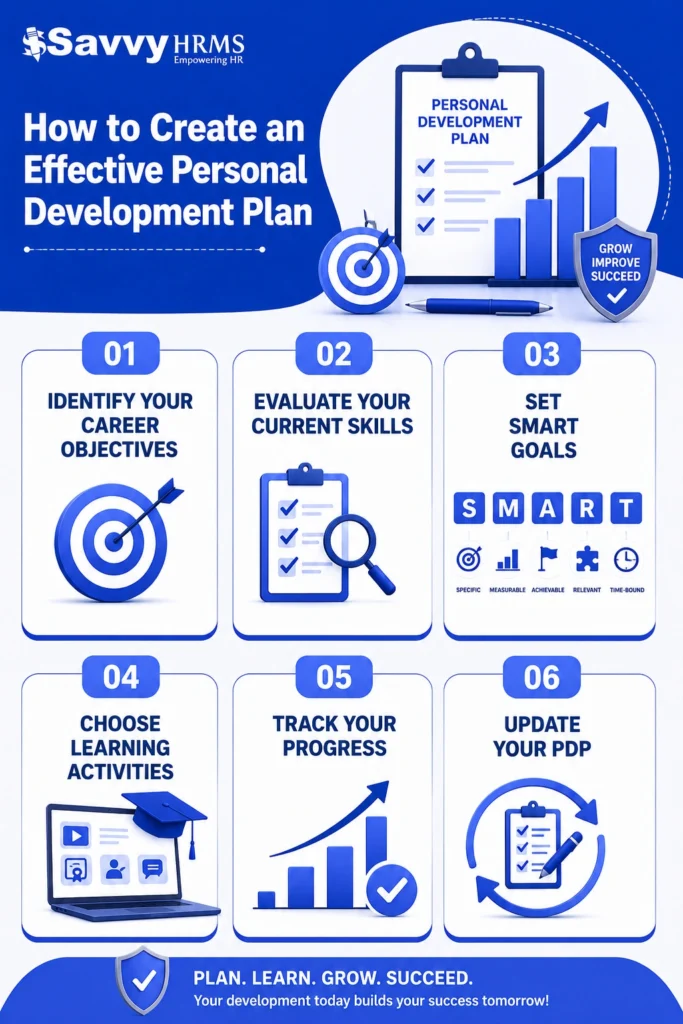
How to Create an Effective Personal Development Plan
Creating a PDP doesn’t have to be complicated. By following a structured approach, employees can create a plan that supports long-term career growth while helping organizations improve workforce performance.
Step 1: Identify Your Career Objectives
Think about where you want to be in the next one, three, or five years. Having a clear vision makes it easier to create meaningful development goals.
Step 2: Evaluate Your Current Skills
Assess your existing knowledge, strengths, and competencies. Compare them with the skills required for your future role.
Step 3: Set SMART Goals
Your goals should be:
- Specific
- Measurable
- Achievable
- Relevant
- Time-bound
Instead of saying, “I want to improve leadership,” write:
“Complete a leadership certification and lead one cross-functional project within six months.”
Step 4: Choose Learning Activities
Select learning methods that match your goals, such as:
- Online courses
- Professional certifications
- Webinars
- Coaching sessions
- Mentoring
- Workshops
- Job shadowing
Step 5: Track Your Progress
Review your progress regularly and celebrate small achievements. Tracking progress helps maintain motivation and identifies areas that need additional attention.
Step 6: Update Your PDP
Career goals often change over time. Reviewing your Personal Development Plan every few months ensures it continues to align with your personal aspirations and organizational objectives.
Benefits of a Personal Development Plan for Employees and Organizations
A well-designed Personal Development Plan benefits both employees and employers by creating a culture of continuous learning and improvement.
Benefits for Employees
1. Better Career Growth
Employees gain a clear roadmap for achieving promotions, new responsibilities, and long-term career success.
2. Improved Skills
Regular learning helps employees stay updated with industry trends and improve their overall performance.
3. Greater Confidence
Developing new competencies increases confidence when taking on challenging assignments or leadership roles.
4. Higher Job Satisfaction
Employees who feel supported in their professional growth are generally more engaged and motivated.
5. Better Performance
Continuous learning enables employees to perform their roles more effectively and contribute greater value to the organization.
Benefits for Organizations
1. Higher Employee Engagement
Employees are more likely to stay committed when organizations invest in their development.
2. Increased Productivity
Well-trained employees complete tasks more efficiently and make fewer mistakes.
3. Stronger Leadership Pipeline
Organizations can prepare future leaders by developing high-potential employees through structured development plans.
4. Reduced Employee Turnover
Providing learning and career development opportunities improves employee retention and reduces hiring costs.
5. Better Performance Management
PDPs support ongoing performance management by aligning employee development with business objectives.
Personal Development Plan vs Performance Development Plan
Many people confuse these two terms because they share the same abbreviation, PDP. However, they have different purposes.
| Personal Development Plan | Performance Development Plan |
| Focuses on individual career growth | Focuses on improving job performance |
| Created by employees with manager support | Usually initiated by managers |
| Long-term development | Short-term performance improvement |
| Includes learning, training, and career goals | Includes performance expectations and improvement actions |
| Supports continuous skill enhancement | Addresses specific performance gaps |
In simple terms:
- A Personal Development Plan helps employees grow professionally.
- A Performance Development Plan helps employees improve performance in their current role.
Many organizations use both plans together to support employee success.
Common Mistakes to Avoid When Creating a PDP
Even the best development plans can fail if they’re not created thoughtfully. Avoiding these common mistakes will make your PDP more effective.
1. Setting Vague Goals
Goals like “I want to improve” are difficult to measure.
Instead, define clear and measurable objectives.
2. Ignoring Skill Gaps
A PDP should focus on areas that genuinely need improvement rather than only reinforcing existing strengths.
3. Creating Unrealistic Timelines
Trying to learn too many skills in a short period often leads to frustration. Set practical deadlines that fit your workload.
4. Not Reviewing the Plan
A Personal Development Plan should evolve as your career progresses. Regular reviews ensure your goals remain relevant.
5. Depending Only on Formal Training
Learning doesn’t happen only through courses. Mentoring, coaching, projects, networking, and real-world experience also play crucial roles in employee development.
6. Failing to Seek Feedback
Constructive feedback from managers and colleagues helps identify blind spots and provides valuable guidance for continuous improvement.
Best Practices for Implementing a Personal Development Plan
Creating a Personal Development Plan (PDP) is only the first step. To achieve meaningful results, organizations should implement PDPs in a structured and consistent way. Following best practices helps employees stay motivated while ensuring development efforts align with business goals.
1. Align Individual Goals with Business Objectives
A successful PDP should benefit both the employee and the organization. When personal career goals support business priorities, employees feel more engaged while contributing to organizational success.
For example, if a company plans to adopt new technology, employees can include relevant certifications and technical training in their development plans.
2. Encourage Regular Feedback
A PDP should never be treated as a once-a-year document. Managers should schedule regular one-on-one meetings to discuss progress, provide constructive feedback, and update development goals when necessary.
Continuous feedback helps employees stay focused and overcome challenges more effectively.
3. Make Learning Continuous
Employee development should be an ongoing process rather than a one-time event. Encourage employees to participate in:
- Online learning programs
- Workshops and seminars
- Professional certifications
- Cross-functional projects
- Mentoring and coaching
- Industry conferences
Continuous learning keeps employees motivated while improving organizational capabilities.
4. Set Realistic and Measurable Goals
Goals should be practical and achievable. Breaking larger objectives into smaller milestones makes progress easier to measure and helps employees stay motivated.
5. Recognize Employee Achievements
Celebrating learning milestones encourages employees to continue developing their skills. Recognizing completed certifications, promotions, or successful projects creates a positive learning culture.
6. Review and Update PDPs Regularly
Career aspirations, business priorities, and industry trends change over time. Reviewing PDPs every quarter or every six months ensures employees remain focused on relevant development goals.
How HRMS Software Supports Personal Development Planning
Managing employee development manually becomes increasingly difficult as organizations grow. This is where modern HRMS software plays an important role.
A comprehensive HRMS simplifies employee development, tracks learning progress, and helps managers support career growth more effectively.
Here’s how HRMS software supports Personal Development Planning.
1. Centralized Employee Development Records
Instead of maintaining spreadsheets or paper documents, HRMS software stores every employee’s development plan, training history, certifications, and performance records in one secure location.
2. Goal Setting and Progress Tracking
Managers can assign development goals, monitor progress, and review achievements through a centralized dashboard. Employees can also track their own learning journey and stay accountable.
3. Learning and Development Integration
Many HRMS platforms include integrated Learning & Development modules where employees can:
- Access training programs
- Complete online courses
- Participate in assessments
- Earn certifications
- Monitor learning progress
This creates a seamless development experience.
4. Performance Management Integration
An HRMS connects Performance Management with employee development. During performance reviews, managers can identify strengths, discuss improvement areas, and create personalized development plans based on real performance data.
5. Skill Gap Analysis
Modern HRMS solutions help organizations identify skill gaps across teams and departments. HR leaders can then design targeted learning programs to improve workforce capabilities.
6. Analytics and Reporting
HRMS dashboards provide valuable insights into:
- Employee learning progress
- Training completion rates
- Skill development
- Performance improvement
- Career progression
These reports help organizations measure the effectiveness of their employee development initiatives.
By automating administrative tasks and providing actionable insights, HRMS software enables businesses to build a culture of continuous learning while reducing manual effort.
Conclusion
Understanding the PDP full form is the first step toward building a successful career and creating a workplace that values continuous learning. A well-structured Personal Development Plan helps employees identify their goals, strengthen their skills, and prepare for future opportunities. At the same time, organizations benefit from improved productivity, stronger employee engagement, and a workforce that’s ready to adapt to changing business needs.
Managing Personal Development Plans becomes even more effective when supported by the right technology. With an integrated HRMS, businesses can streamline employee development, simplify performance management, monitor learning progress, and align individual goals with organizational objectives.
If you’re looking for a smarter way to manage employee growth, Savvy HRMS offers a comprehensive solution with modules for performance management, Learning & Development, goal setting, training management, and employee performance tracking. It empowers HR teams to build a culture of continuous improvement while helping employees achieve their full potential.

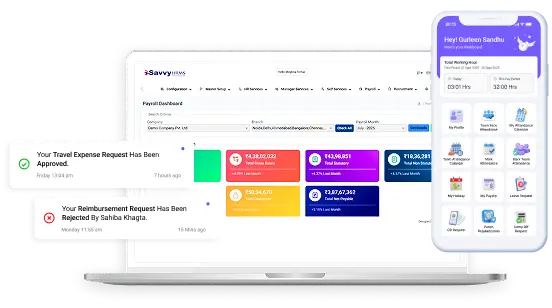









Ready to empower your workforce with structured employee development?
Book a free demo of Savvy HRMS today and discover how our all-in-one HRMS can simplify performance management, support continuous learning, and help your employees achieve long-term career growth.
FAQs
Q1. What is the PDP full form?
The PDP full form is Personal Development Plan. It is a structured plan that helps individuals set career goals, identify skill gaps, and create an action plan for continuous professional development.
Q2. Why is a Personal Development Plan important?
A Personal Development Plan provides clear career direction, supports continuous learning, improves performance, and helps employees develop the skills needed for future opportunities.
Q3. What is the difference between a Personal Development Plan and a Performance Development Plan?
A Personal Development Plan focuses on long-term learning, career growth, and skill enhancement, while a Performance Development Plan focuses on improving an employee’s current job performance and addressing performance-related challenges.
Q4. Who should create a Personal Development Plan?
Anyone interested in professional growth can create a PDP, including fresh graduates, employees, managers, and business leaders. Organizations also encourage PDPs as part of their employee development strategy.
Q5. How often should a PDP be reviewed?
A Personal Development Plan should ideally be reviewed every three to six months to ensure goals remain relevant and progress is being made.
Q6. Can HRMS software help manage Personal Development Plans?
Yes. Modern HRMS software helps organizations create development plans, assign learning programs, track employee progress, conduct performance reviews, and generate reports that support continuous employee development.