

What Is Succession Planning? A Complete Guide for HR Professionals


-
AuthorRuchika Rajput
-
 Last Updated
July 08, 2026
Last Updated
July 08, 2026
-
 Reading Time
8 Mins
Reading Time
8 Mins
Imagine this: your organization’s most experienced manager announces their retirement with just a month’s notice. Suddenly, everyone is scrambling to figure out who can step into the role. Projects slow down, teams become uncertain, and business operations start feeling the impact. Situations like these are more common than many organizations realize, and they highlight the importance of being prepared for leadership transitions.
This is where succession planning comes into the picture. Instead of reacting to unexpected vacancies, businesses can proactively identify and develop employees who are ready to take on important roles when the time comes. It ensures that valuable knowledge, leadership skills, and business continuity are never compromised.
Whether you’re an HR professional, business owner, or team leader, understanding succession planning in HRM is essential for building a future-ready workforce. In this blog, we’ll explore the succession planning meaning, why it matters, its benefits, and how to create an effective succession plan for your organization.
What Is Succession Planning?
At its core, succession planning is the process of identifying and developing employees who have the potential to fill critical positions within an organization when current leaders retire, resign, or move into new roles.
In simple words, succession planning meaning is preparing today’s employees for tomorrow’s leadership positions. Rather than waiting until an important role becomes vacant, organizations create a structured plan to ensure qualified talent is always ready to step in.
Succession planning in HRM is much more than replacing employees. It focuses on leadership development, employee growth, skill enhancement, and long-term workforce planning. The goal is to create a strong internal talent pipeline that supports business continuity and organizational success.
A successful succession plan generally includes:
- Identifying critical business roles
- Assessing employee skills and potential
- Developing future leaders through training and mentoring
- Continuously reviewing and updating talent pipelines
By investing in succession planning, organizations reduce hiring risks, retain institutional knowledge, and build a culture of continuous growth.
Why Is Succession Planning Important?
Every organization experiences change. Employees retire, managers get promoted, and key professionals may leave unexpectedly. Without a proper succession plan, these transitions can create operational disruptions and increase recruitment costs.
Here’s why succession planning is important:
1. Ensures Business Continuity
Essential activities are conducted without any barrier even after the departure of key employees because successors have been prepared in advance.
2. Reduces Leadership Gaps
Vacancies in leadership positions lead to delays in decision-making. Succession planning can help companies avoid such situations by ensuring that future leaders are ready long in advance.
3. Improves Employee Retention
Employees are likely to stay within companies that provide good career development opportunities.
4. Preserves Organizational Knowledge
Knowledge transfer to future leaders from experienced employees becomes possible with succession planning.
5. Supports Long-Term Growth
Companies with good pipelines for leadership ensure that changes in business requirements and conditions are handled efficiently.
What Are the Key Objectives of Succession Planning?
The primary purpose of succession planning goes beyond simply replacing employees. It is about creating a sustainable leadership strategy for the future.
Some key objectives include:
1. Identify Future Leaders
The process of succession planning enables the organizations to discover and evaluate their employees’ qualities and skills as leaders through performance reviews, evaluation of employee skills, and ambitions of the employees, thereby making sure that suitable people have what it takes to become future leaders.
2. Develop Employee Skills
A good succession planning scheme involves constant learning of the employees through various processes such as mentorship, coaching, training, job rotation, and leadership development programs.
3. Minimize Business Risk
Planning for successors helps in minimizing risks to the business resulting from sudden departures of key employees due to retirements, promotions, or resignations.
4. Strengthen Workforce Planning
The process of succession planning provides the Human Resource Department with a better way to plan the future needs of its workers and help in bridging any possible skills gaps.
5. Promote Internal Career Growth
Through succession planning, the organizations provide their employees with a path to develop their careers, which motivates and engages them.
6. Build Organizational Stability
Succession planning makes it easier for the organization to sustain its operations despite changes in its workforce.
What Are the Key Benefits of Succession Planning for Businesses?
An effective succession planning strategy delivers advantages for both employers and employees.
Benefits of Succession Planning for Employers
1. Ensures Business Continuity
Through succession planning, employees become ready to assume important tasks and ensure that business operations do not get hampered during leadership changes.
2. Reduces Recruitment Costs
By developing the capabilities of existing employees, there is no need to hire external individuals, which saves costs and time as well.
3. Builds a Strong Leadership Pipeline
The organization will always have the right candidates to assume leadership responsibilities in the future.
4. Preserves Organizational Knowledge
Knowledge and experience of employees could be transferred to other employees who may assume leadership positions in the future.
5. Improves Workforce Planning
The HR department will be able to develop a plan for future talent of the organization, and bridge skill gaps as well.
6. Increases Business Agility
Through a ready workforce, the organization will be able to deal effectively with leadership and other business challenges.
Benefits of Succession Planning for Employees
1. Provides Clear Career Growth Opportunities
Employees get a good idea about career advancement opportunities and the competencies required to move to more senior positions.
2. Encourages Continuous Learning
Succession planning involves continuous learning through training, mentoring, leadership development, and cross-functional learning opportunities.
3. Boosts Employee Engagement
Employees become more motivated and engaged at work knowing that there is a plan to help them advance in their careers.
4. Enhances Leadership Skills
Leaders of tomorrow get the practical experience, guidance, and development that will allow them to assume greater responsibilities with confidence.
5. Increases Job Satisfaction
Employees who get opportunities to develop their skills tend to be more satisfied and productive at work.
6. Improves Job Security
Being recognized as a high-potential employee and developing competencies increases an individual’s value to the company.
How Does Recruiting Support Succession Planning?
Many people think succession planning only focuses on existing employees. However, recruiting also plays an important role.
Hiring with succession planning in mind helps organizations build a stronger talent pipeline from the beginning.
Here’s how recruiting supports succession planning:
1. Hire for Long-Term Potential
Recruit candidates who possess leadership qualities, adaptability, and a willingness to grow.
2. Identify High-Potential Employees Early
Modern recruitment management includes behavioral assessments, competency evaluations, and leadership potential analysis.
3. Reduce Future Skill Gaps
Strategic recruitment helps organizations acquire skills that may become essential in the coming years.
4. Build Diverse Leadership Pipelines
Recruiting from diverse talent pools creates more inclusive future leadership teams.
5. Align Hiring with Business Goals
Recruitment strategies should support both current workforce needs and future leadership requirements.
When recruitment and succession planning work together, organizations develop stronger talent pipelines and reduce dependency on external hiring for leadership positions.
How to Build an Effective Succession Plan?
Creating a succession plan doesn’t have to be complicated. Following a structured approach makes the process more manageable and effective.
Step 1: Identify Important Roles
Determine which positions have the greatest impact on business operations. These often include leadership, technical, and specialized roles.
Step 2: Evaluate Current Talent
Assess employees based on performance, skills, leadership potential, and career aspirations.
Using performance reviews, competency assessments, and manager feedback can help identify future leaders.
Step 3: Identify High-Potential Employees
Select employees who demonstrate the ability to take on greater responsibilities in the future.
Potential indicators include:
- Strong performance
- Leadership qualities
- Problem-solving abilities
- Learning agility
- Positive attitude
Step 4: Create Individual Development Plans
Develop employees through:
- Leadership training
- Mentoring programs
- Job rotations
- Stretch assignments
- Coaching
- Skill development initiatives
These experiences prepare employees for future leadership responsibilities.
Step 5: Monitor and Update the Plan
Succession planning should never be a one-time activity.
Regularly review employee progress, update development plans, and adjust succession strategies based on business needs.
Organizations that continuously refine their succession plans remain more agile and better prepared for change.
Conclusion
Leadership transitions are unavoidable, but business disruptions don’t have to be. A well-designed succession planning strategy ensures your organization is always prepared for the future by developing capable leaders from within. From understanding the succession planning meaning to implementing a structured process, every step contributes to a stronger workforce planning, better employee engagement, and long-term business success.
For HR teams, succession planning in HRM is no longer just a leadership initiative; it’s a strategic business necessity. Organizations that proactively invest in employee development today are far more likely to navigate tomorrow’s challenges with confidence.
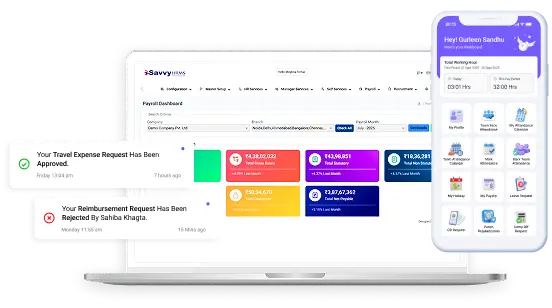
Managing succession planning manually can quickly become confusing, especially as your workforce grows. Savvy HRMS simplifies the entire process by helping HR teams identify high-potential employees, track performance, monitor competencies, create development plans, and maintain a future-ready talent pipeline, all from one centralized platform. With powerful analytics and integrated talent management tools, Savvy HRMS enables organizations to make smarter workforce decisions while ensuring business continuity.










Ready to build tomorrow's leaders today?
Discover how Savvy HRMS can simplify your succession planning process and help your organization develop a strong leadership pipeline for long-term success.