


Pro Rata Basis: A Complete Guide to Salary Calculations


-
AuthorRuchika Rajput
-
 Last Updated
July 04, 2026
Last Updated
July 04, 2026
-
 Reading Time
7 Mins
Reading Time
7 Mins
Ever joined a company mid-month and wondered, “Wait, am I getting paid for the full month or just the days I actually worked?” Or maybe you have hired a part-time employee and had no clue how to figure out their fair pay. If you have been there, you’re not alone, and the answer to both situations comes down to one simple concept: pro rata basis.
It sounds fancy, but once you get the hang of it, pro rata salary calculation is one of the most practical tools in HR. Whether you’re an HR professional, a business owner, or just someone trying to understand their payslip better, this guide is for you. Let’s break it all.
What Is a Pro Rata Basis?
The term “pro rata” comes from Latin, meaning “in proportion”. In everyday language, the pro rata basis meaning is simply this: you get paid (or charged) for exactly what you use or work, nothing more, nothing less.
Think of it like a mobile data plan. If you use only half the data in a billing cycle, you pay for half. The same logic applies to salaries, leaves, bonuses, and benefits. When something is calculated on a pro rata basis, it’s divided proportionally based on time, usage, or share.
In the world of HR and payroll, this concept is the foundation of fair and accurate compensation.
What Does Pro Rata Basis Mean in Salary?
When we talk about the pro rata basis meaning in salary, we’re referring to adjusting an employee’s pay based on the actual number of days or hours they worked, rather than paying a flat monthly or annual figure regardless of when they joined or left.
Let’s say an employee’s annual CTC (Cost to Company) is ₹6,00,000, which works out to ₹50,000 per month. But they joined on the 16th of the month. Should they get the full ₹50,000? Probably not, that wouldn’t be fair to either side.
Instead, their salary is calculated pro rata, proportionally for the days actually worked. That’s exactly what pro rata salary means: pay that reflects real working time.
This is especially relevant in situations like:
- A new hire joining mid-month
- An employee resigning before the month ends
- Part-time or reduced-hours arrangements
- Unpaid leave or loss of pay (LOP) deductions
When Is Pro Rata Salary Applied?
Pro rata salary doesn’t just apply to new joiners. Here are the most common situations when HR teams use it:
1. Mid-Month Joining
When an employee starts on any day other than the 1st, their first month’s salary is calculated pro rata for the days worked.
2. Mid-Month Resignation or Termination
Similarly, if someone leaves before the month ends, their final pay is calculated based on how many days they worked.
3. Part-Time Employment
A part-time employee working 20 hours a week in a full-time 40-hour role would receive 50% of the full-time salary, a classic pro rata calculation.
4. Unpaid Leave / Loss of Pay
When an employee takes leave beyond their approved quota, those extra days are deducted using a pro rata formula.
5. Salary Revisions Mid-Month
If a pay hike kicks in from the 10th of the month, the revised salary is applied pro rata from that date.
6. Contractual or Project-Based Roles
Employees hired for fixed-term contracts often receive salaries calculated on a pro rata basis aligned with their contract duration.
Where Is Pro Rata Commonly Used in HR?
Pro rata isn’t just a payroll thing; it shows up across several HR functions:
1. Leaves and Time Off
Annual leave entitlements are often pro-rated. If an employee joins in October and the leave year runs January – December, they don’t get 18 days; they get a pro rata share based on how many months remain in the year.
2. Bonuses and Incentives
A performance bonus for a quarter is sometimes calculated on a pro rata basis if the employee wasn’t present for the full quarter.
3. Gratuity and Statutory Benefits
Benefits like gratuity or provident fund contributions can also be calculated proportionally based on the actual period of employment.
4. Salary Advances and Deductions
Recovering salary advances or calculating LOP (Loss of Pay) deductions both depend on the same proportional logic.
How to Calculate Salary on a Pro Rata Basis?
Here’s where things get practical. The good news? The math isn’t complicated at all.
1. Basic Pro Rata Salary Formula:
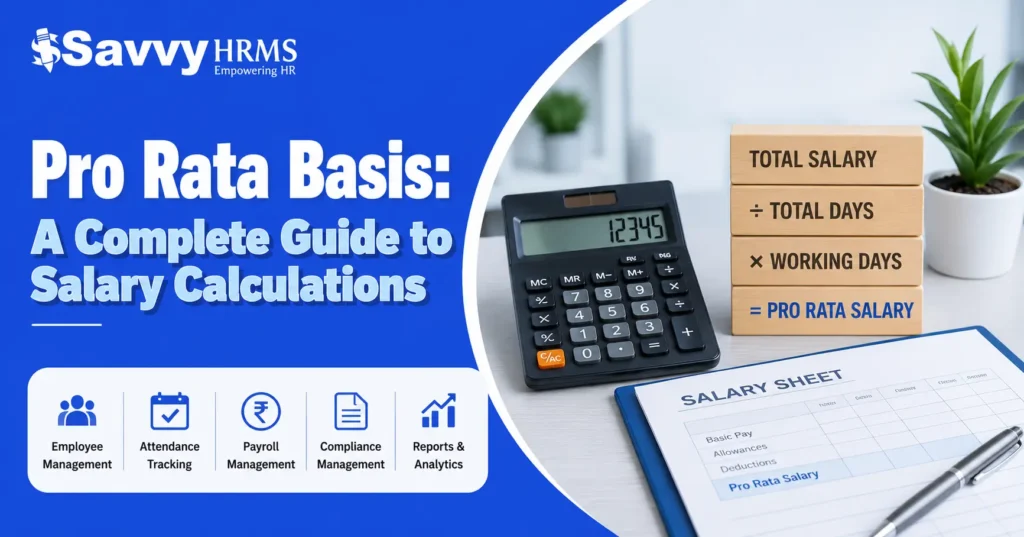
Pro Rata Salary = (Monthly Salary ÷ Total Working Days in Month) × Days Actually Worked
Example:
Suppose an employee’s monthly salary is ₹40,000. The month has 26 working days, but they joined on the 11th and worked only 16 days.
Pro Rata Salary = (₹40,000 ÷ 26) × 16 = ₹24,615
Some companies use calendar days (30 or 31) instead of working days. The method depends on your company’s HR policy, but the logic stays the same.
2. For Part-Time Employees:
Pro Rata Salary = (Full-Time Salary ÷ Full-Time Hours per Week) × Part-Time Hours per Week
Example:
Full-time salary is ₹50,000/month for 40 hours/week. A part-timer works 25 hours/week.
Pro Rata Salary = (₹50,000 ÷ 40) × 25 = ₹31,250
Simple, transparent, and fair, that’s the beauty of pro rata calculations.
Why Pro Rata Matters in HR?
You might be thinking, can’t we just round up or estimate? Technically, yes. But here’s why doing it right matters:
1. It builds trust with employees
Nothing damages employee confidence faster than a paycheck that doesn’t add up. Accurate pro rata calculations show employees that they’re being paid fairly and transparently.
2. It keeps you legally compliant
Labor laws in many countries require accurate wage calculations. Incorrect payroll, even unintentional, can lead to compliance issues, employee grievances, or legal disputes.
3. It simplifies payroll audits
When your calculations follow a consistent, documented pro rata method, audits become a breeze. Every figure has a clear rationale behind it.
4. It supports fair HR practices
Pro rata ensures that part-time workers, new joiners, and those on flexible arrangements all receive equitable treatment, which is a core principle of good HR management.
Common Mistakes to Avoid While Calculating Pro Rata Salary
Even experienced HR teams can slip up here. Watch out for these:
1. Using inconsistent denominators
Some months you use 30 days, other times 26 working days, without a clear policy. Pick one method and apply it consistently across all employees.
2. Forgetting to include allowances
Monthly salary isn’t just basic pay. HRA, transport allowance, and other components may also need to be prorated. Don’t miss them.
3. Not accounting for public holidays
If public holidays fall within the pro rata period, your treatment of them (including or excluding) must align with your policy.
4. Manual errors in spreadsheets
When you’re calculating pro rata for dozens of employees every month, manual calculations are a recipe for mistakes. A wrong formula in one cell can fall into multiple errors.
5. No documentation of the policy
If employees don’t know how their pro rata pay is calculated, expect queries, disputes, and confusion. Always document and communicate your method clearly.
Conclusion
Pro rata salary calculation isn’t just an accounting exercise; it’s a reflection of how fairly and professionally your organization treats its people. Whether it’s a new joiner’s first payslip or a part-timer’s monthly pay, getting the numbers right builds trust and shows that your HR function is operating with integrity.
But let’s be real, managing pro rata calculations manually, especially as your team grows, is time-consuming and error-prone. That’s where a smart HRMS comes in.
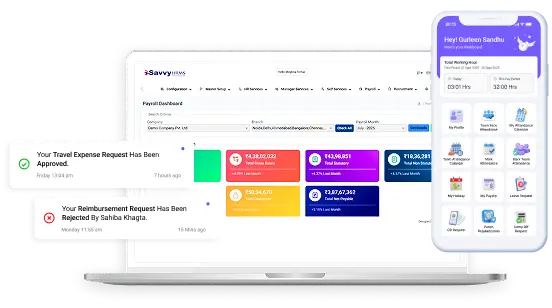
Savvy HRMS takes the guesswork out of pro rata salary calculations. With automated payroll management, real-time attendance integration, and built-in compliance checks, Savvy HRMS ensures every employee gets paid accurately, no manual formulas, no spreadsheet errors, no payroll headaches.
From mid-month joiners to part-time employees to LOP deductions, Savvy HRMS handles it all smoothly, so your HR team can focus on what actually matters: your people.










Ready to simplify your payroll and get pro rata calculations right every time?
Try Savvy HRMS today, because accurate payroll is just good HR.