


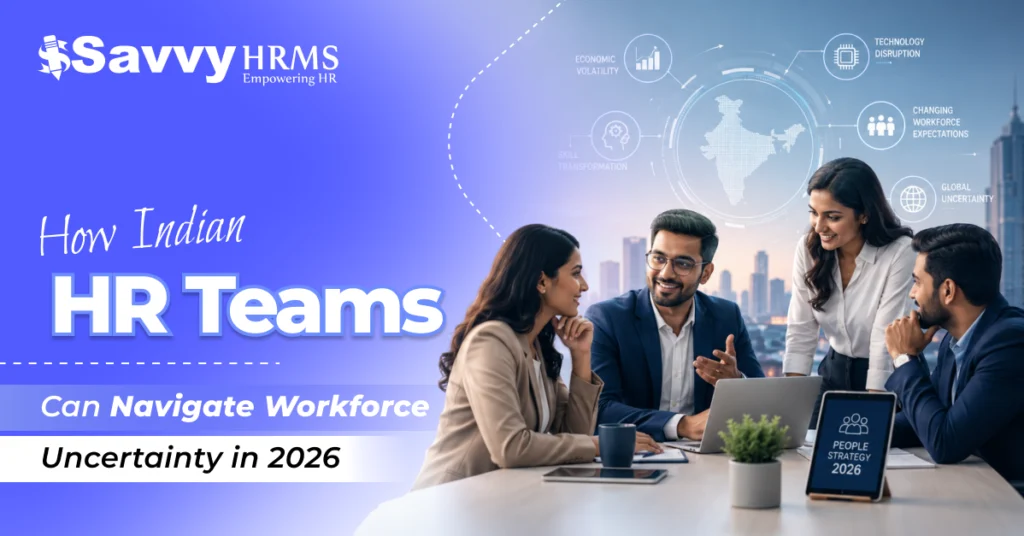

If you are an HR professional in India right now, you already know things feel different. Not just a little different, but fundamentally different.
The old playbook of annual appraisals, inflexible job roles, and hiring-when-needed just doesn’t cut it anymore. Between economic shifts, rapid automation, changing employee expectations, and the remaining aftereffects of a post-pandemic world, Indian HR teams are being asked to do something incredibly difficult: plan for a future that keeps changing its mind.
But here’s the thing: workforce uncertainty doesn’t have to mean workforce chaos. With the right strategies, tools, and mindset, HR Workforce Management across India can not only survive 2026 but actually come out stronger. Let’s break it all down, step by step, in a way that actually makes sense.
Why Is Workforce Uncertainty Becoming the New Normal in 2026?
Let’s be honest, “uncertainty” used to be something HR teams dealt with occasionally. A sudden resignation here, an unexpected hiring freeze there. But in 2026, workforce uncertainty has moved from occasional disruption to a permanent backdrop.
The pace of change in business is simply faster than it’s ever been. Industries are being reshaped by AI, gig economy models are challenging traditional employment, and employees are reassessing what work means to them. For Indian companies, which are simultaneously dealing with rapid growth opportunities and global economic headwinds, this creates a very specific kind of pressure on HR departments.
The result? HR isn’t just managing people anymore. HR is managing change itself. And that requires a completely different set of tools, strategies, and, honestly, a whole new way of thinking about workforce management.
What Factors Are Driving Workforce Changes in India?
To navigate this landscape, you first need to understand what’s actually causing all these issues. Here are the key drivers:
1. The AI and Automation Wave
India’s IT, manufacturing, and even BFSI sectors are being transformed by automation. Roles that existed three years ago are being redefined or eliminated, while entirely new skill sets are being demanded. HR teams are caught in the middle, managing existing talent while trying to attract people with skills that barely existed a decade ago.
2. The Rise of the Gig and Contract Workforce
India now has one of the largest gig economies in the world. More professionals are opting for project-based work, freelancing, or contract roles. For HR, this means managing a much more fluid, non-traditional workforce than ever before.
3. Shifting Employee Expectations
The Indian workforce, especially millennials and Gen Z, is prioritising flexibility, mental health, growth opportunities, and workplace culture alongside salary. Retaining good people now means delivering on all of these, not just a competitive pay cheque.
4. Economic Volatility and Global Pressures
Global slowdowns, client budget cuts in export-driven industries, and funding challenges in the startup ecosystem have made workforce planning more unpredictable. Hiring plans that looked solid in Q1 can look completely different by Q3.
5. Rapid Business Pivots
Companies are rotating their business models faster than ever. That means HR has to be ready to restructure, reskill, or redeploy teams on shorter timelines than traditional workforce planning allows.
Major Challenges Indian HR Teams Must Address
Given everything happening, let’s get specific about the real pain points HR leaders are dealing with every day in 2026:
1. Talent Shortage in Critical Areas
Despite a massive talent pool, India faces several shortages in areas like AI/ML, cybersecurity, data analytics, and advanced engineering. Finding, attracting, and retaining niche talent is a daily battle.
2. High Attrition Rates
India continues to see some of the highest attrition rates globally, particularly in IT and services. Replacing employees is expensive, time-consuming, and disruptive, and doing it repeatedly is simply not sustainable.
3. Compliance and Labour Law Complexities
India’s labour laws are developing, from the new Labour Codes to state-specific regulations, and staying compliant while managing a diverse, distributed workforce is increasingly complicated.
4. Data Gaps in Decision-Making
Many HR teams are still making critical workforce decisions based on gut feel or outdated spreadsheets rather than real-time data. In 2026, that’s simply not good enough.
5. Managing Hybrid and Remote Teams
The hybrid work model is here to stay, but many HR teams are still figuring out how to manage performance, culture, and collaboration across distributed setups effectively.
Strategies to Navigate Workforce Uncertainty in 2026
Alright, enough about the problems. Let’s talk solutions. Here’s what smart HR teams in India are actually doing:
1. Shift from Annual Planning to Rolling Workforce Plans
Instead of locking in a 12-month workforce plan and hoping for the best, leading HR teams are moving to quarterly or even monthly rolling plans. This allows them to respond quickly to business changes without scrambling.
2. Invest Heavily in Internal Mobility
Rather than always looking outside to fill skill gaps, more organisations are building internal talent marketplaces, identifying transferable skills within the existing workforce and redeploying people intelligently. It’s faster, cheaper, and boosts employee engagement.
3. Make Reskilling a Business Priority, Not an HR Initiative
Reskilling programmes need to be embedded into the business strategy, not treated as a nice-to-have HR programme. HR leaders should be working with business heads to identify future skill needs and build learning pathways now, before the gap becomes a crisis.
4. Build a Blended Workforce Model
The most resilient companies are those that have a thoughtful mix of full-time employees, contract workers, gig professionals, and even automation. HR needs to architect this blend intentionally rather than reactively.
5. Focus on Employee Experience as a Retention Strategy
Compensation matters, but it’s rarely enough on its own anymore. HR teams that are winning at retention are the ones investing in employee well-being, clear career progression frameworks, manager quality, and genuine recognition.
Why Does Workforce Agility Matter More Than Ever?
Here’s a simple way to think about it: in a stable world, you optimise for efficiency. In an uncertain world, you optimise for agility.
Workforce agility means your organisation can scale up or down, redeploy talent, acquire new skills, and adapt structures quickly, without everything falling apart. For Indian businesses navigating 2026, this isn’t a competitive advantage anymore; it’s a survival requirement.
HR teams that build agile workforce practices through flexible structures, cross-functional talent pools, and continuous skill development are the ones that give their organisations the ability to move fast without breaking things.
How Does HR Technology Support Better Workforce Management?
Here’s where things get really exciting, and this is where tools like Savvy HRMS become genuinely game-changing.
Manual HR processes simply can’t keep up with the pace of change. If your team is spending hours on payroll reconciliation, leave management, or chasing approvals through email chains, that’s time not being spent on the strategic workforce challenges that actually matter.
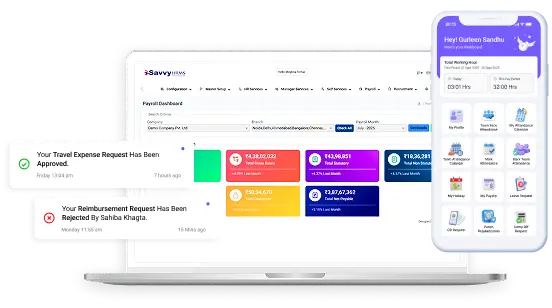
A modern HR management system like Savvy HRMS brings everything together- attendance, payroll, compliance, performance management, and employee self-service, into one intelligent platform. This does a few critical things for HR teams navigating uncertainty:
1. Real-time workforce visibility
You can see exactly what’s happening across your organisation, headcount, attendance trends, and performance patterns, without waiting for monthly reports.
2. Automated compliance management
With India’s evolving labour regulations, Savvy HRMS keeps your compliance in check automatically, reducing the risk of costly errors.
3. Data-driven decision-making
Instead of guessing, HR leaders can use actual analytics to spot attrition risks, identify high performers, and make smarter hiring and deployment decisions.
4. Seamless employee experience
When employees can manage their own leave requests, payslips, and HR queries through a clean, mobile-friendly interface, HR teams spend less time on admin and more time on impact.
The bottom line: in a world where workforce decisions need to happen faster and smarter, having the right HR technology isn’t optional; it’s essential.
Emerging HR Trends That Will Shape the Future of Work
Looking at what’s coming next, a few trends stand out as particularly important for Indian HR teams:
1. Skills-Based Hiring Over Degree-Based Hiring
More companies are moving away from traditional degree requirements and focusing on demonstrated skills and capabilities. This opens up a much larger talent pool and is already reshaping how leading Indian companies recruit.
2. AI-Assisted HR Processes
From screening resumes to predicting attrition to personalising learning recommendations, AI is becoming a core part of the HR toolkit. HR professionals who learn to work with AI will have a massive advantage.
3. Mental Health and Wellbeing as a Core Benefit
What was once considered a perk is now a baseline expectation, especially among younger employees. Companies that invest genuinely in employee mental health will see measurable returns in engagement and retention.
4. People Analytics Going Mainstream
The era of gut-feel HR is ending. Data literacy is becoming a core competency for HR professionals; the ability to read, interpret, and act on workforce data is now as important as traditional people skills.
5. Continuous Performance Management
Annual reviews are giving way to ongoing, real-time feedback models. This is a big cultural shift for many Indian organisations, but the companies that make this transition are seeing significantly better engagement and performance outcomes.
Building a Resilient and Future-Ready Workforce
So what does it actually look like to build a workforce that can handle whatever 2026 and beyond throw at it?
1. Leadership Alignment
It starts with leadership alignment. HR can’t build a resilient workforce alone. Business leaders need to understand that investing in people, their skills, their wellbeing, and their growth is directly tied to business performance.
2. Culture of Continuous Learning
It requires a culture of continuous learning. Organisations that normalise skill development, where learning is built into the workday, not squeezed in on weekends, are the ones that stay ahead.
3. Two-Way Communication
It demands honest, two-way communication. Employees who feel informed and heard during uncertain times are far more likely to stay engaged and loyal. HR plays an important role in creating the channels and culture for this kind of transparency.
4. Right Infrastructure
And it needs the right infrastructure, the processes, policies, and technology platforms that make it possible to manage a complex, evolving workforce without burning out your HR team.
Conclusion
The truth is, workforce uncertainty isn’t going away. If anything, 2026 is just the beginning of a longer era of rapid change for Indian businesses and their people.
But here’s what’s also true: the HR teams that invest in the right strategies, build genuine workforce agility, and leverage the right technology are not just coping with change; they’re leading their organisations through it.
Whether it’s building smarter hiring pipelines, creating meaningful reskilling programmes, or using platforms like Savvy HRMS to bring real-time intelligence to every HR decision, the opportunity to make a genuine impact has never been greater for Indian HR professionals.
The future of work is uncertain. Your response to it doesn’t have to be.









Ready to take control of your workforce strategy?
Explore how Savvy HRMS can help your HR team manage smarter, move faster, and build a workforce that's ready for anything.