


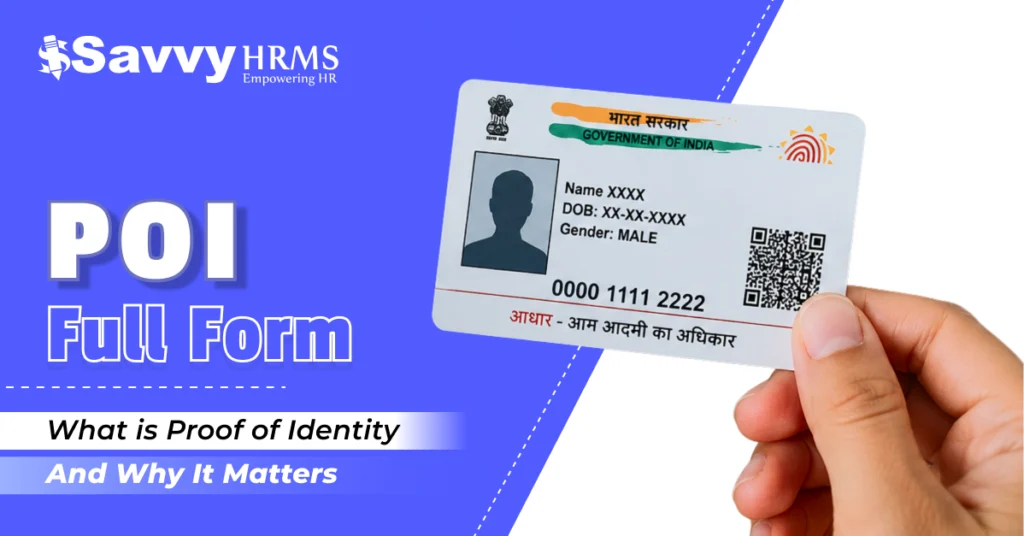

Hiring the right employees is not only about checking skills and experience. Organizations also need to verify the identity of every employee to ensure workplace security and compliance. That is why POI documents are an important part of the hiring process.
The POI full form refers to Proof of Identity, which includes official documents used to confirm a person’s identity. These documents help organizations maintain accurate employee records and reduce the risk of identity fraud.
In this blog, we will explore the POI’s meaning, its importance in HR and KYC processes, commonly accepted documents, and the best ways organizations can manage identity verification efficiently.
What is the POI Full Form and what does it mean?
The POI full form is Proof of Identity. It refers to official documents that verify the identity of a person. These documents contain important details such as the individual’s name, photograph, date of birth, signature, or unique identification number.
Proof of Identity documents are widely used in:
- Employee onboarding
- HR verification
- KYC compliance
- Payroll processing
- Banking services
- Government registrations
- Background verification
Organizations ask employees to submit POI documents to confirm their identity before granting access to company systems, salary accounts, or employee benefits.
For example, when a company hires a new employee, HR teams usually collect identity proof documents like Aadhaar Card, PAN Card, Passport, or Voter ID to maintain accurate records and comply with legal requirements.
Why is POI Important for HR Teams?
For HR departments, proper employee verification is not just a formality. It is an important step for maintaining compliance, security, and workforce transparency.
Here are some major reasons why POI is important for HR teams:
1. Ensures Authentic Employee Verification
The primary purpose of Proof of Identity documents is to verify that the employee is genuine. This helps organizations prevent fake identities and fraudulent hiring.
2. Supports Legal and Compliance Requirements
Many labor laws, payroll regulations, and KYC processes require organizations to maintain valid employee identity records. Proper POI collection helps companies stay compliant with these regulations.
3. Helps in Payroll and Salary Processing
Employee identity documents are often linked with salary accounts, tax records, and PF or ESIC registrations. Incorrect identity details can create payroll errors and compliance issues.
4. Improves Background Verification
HR teams use POI documents during employee background verification processes to match educational records, address details, and employment history.
5. Enhances Workplace Security
Identity verification also helps companies control unauthorized access to office premises, systems, and confidential data.
Common Types of POI Documents
Different organizations and government agencies may accept different types of identity proof documents. However, some documents are commonly accepted across India for HR and KYC purposes.
1. Aadhaar Card
The Aadhaar Card is one of the most widely accepted Proof of Identity documents in India. It contains biometric and demographic information linked to a unique identification number.
2. PAN Card
A PAN Card is mainly used for taxation and financial purposes. It is commonly required for salary processing and employee tax compliance.
3. Passport
A Passport acts as both identity proof and address proof. It is highly trusted for verification purposes.
4. Voter ID Card
Issued by the Election Commission of India, the Voter ID Card serves as an official identity proof document.
5. Driving License
A Driving License is another commonly accepted POI document that contains the individual’s photograph and personal details.
6. Employee ID Card
In some cases, organizations may also accept government-issued employee identification cards for internal verification.
What is the POI Submission Process in Organizations?
The process of collecting and verifying POI documents may differ from one organization to another, but the general workflow remains similar.
Step 1: Document Collection
During employee onboarding, HR teams collect POI documents like Aadhaar Card, PAN Card, or Passport through physical submission or secure digital upload systems.
Step 2: Verification of Details
HR professionals verify whether submitted identity documents are genuine and ensure all employee details correctly match official records and onboarding information provided.
Step 3: Record Storage
After successful verification, employee POI documents are securely stored in physical files or digital HRMS platforms for future reference and compliance purposes.
Step 4: Compliance and Audit Checks
Organizations regularly review employee identity records to maintain compliance with labor laws, internal company policies, and audit or verification requirements successfully.
Step 5: Document Updates
Employees must update their POI documents whenever personal information changes, including name updates, address modifications, or expired identity proof renewals.
Risks of Improper POI Management
Poor management of Proof of Identity records can create serious challenges for organizations.
1. Identity Fraud Risks
Improper POI verification may allow fake identities or illegal documents during hiring, increasing the chances of fraud and unauthorized workplace access.
2. Compliance and Legal Issues
Missing or inaccurate employee identity records can create compliance problems for organizations and may result in legal penalties during audits or inspections.
3. Payroll Processing Errors
Incorrect identity information can affect payroll management, salary transfers, tax deductions, and employee benefits, leading to operational and financial complications for businesses.
4. Data Security Threats
Poor management of POI documents increases the risk of employee data leaks, unauthorized access, and misuse of sensitive personal information within organizations.
5. Delays in Employee Onboarding
Manual verification and improper document handling can slow down onboarding processes, creating delays in employee joining, system access, and productivity management.
6. Poor Employee Record Management
Incomplete or outdated POI records make it difficult for HR teams to maintain accurate employee databases and manage workforce information efficiently over time.
How Technology Simplifies POI Management?
Modern HR technology has transformed the way organizations handle employee identity verification and document management.
1. Digital Document Uploads
Employees can upload POI documents through secure employee self-service portals, reducing paperwork, improving convenience, and simplifying document collection during onboarding processes.
2. Automated Verification
Modern HR software automatically verifies employee identity details, minimizes manual errors, improves accuracy, and speeds up document verification and compliance management processes efficiently.
3. Centralized Record Management
Organizations can securely store all employee identity records in one centralized HR platform for easier access, tracking, compliance monitoring, and document management activities.
4. Improved Data Security
Cloud-based HR systems protect sensitive employee information through encryption, restricted access controls, and secure storage practices, reducing the risk of data breaches.
5. Faster Employee Onboarding
Technology simplifies document collection and identity verification processes, helping organizations onboard employees faster while reducing administrative workload and improving overall HR efficiency.
Best Practices for Managing POI Documents in HR
Organizations should follow proper document management practices to ensure compliance and security.
1. Use Secure HR Software
HRMS software helps organizations securely store employee POI documents digitally, improving document management, reducing paperwork, and simplifying compliance tracking across HR operations efficiently.
2. Restrict Unauthorized Access
Organizations should allow access to sensitive employee identity records only to authorized HR personnel to prevent data misuse, security breaches, and confidentiality issues.
3. Conduct Regular Audits
Regular audits help HR teams identify outdated, missing, or incorrect employee POI documents and ensure compliance with organizational policies and legal requirements consistently.
4. Maintain Data Privacy
Companies must follow proper data privacy policies while handling employee information to protect sensitive records and maintain employee trust and organizational security standards.
5. Encourage Digital Documentation
Digital documentation simplifies employee record management, reduces dependency on physical paperwork, improves accessibility, and enhances overall operational efficiency for HR departments and businesses.
Role of POI in Employee Background Verification
Background verification has become an important part of hiring processes, especially for organizations dealing with sensitive data or customer information.
POI documents help background verification agencies confirm:
1. Employee Identity
POI documents help organizations verify an employee’s real identity, ensuring that the individual joining the company is genuine and officially recognized by authorities.
2. Educational Credentials
Background verification teams use employee documents to validate educational qualifications, certifications, and academic records submitted during recruitment and hiring processes accurately and efficiently.
3. Employment History
Organizations verify previous employment details to confirm an employee’s work experience, job roles, and tenure mentioned during the recruitment and onboarding process carefully.
4. Criminal Records
Identity verification helps organizations conduct criminal background checks to identify potential legal issues and maintain workplace safety, trust, and compliance with company policies.
5. Address Details
POI and supporting documents help verify an employee’s residential address, ensuring accurate communication, legal documentation, and smooth employee record management within the organization.
Accurate identity verification improves hiring quality and reduces organizational risk.
Industries Where POI Verification is Highly Important
Although POI verification is important across all industries, some sectors require stricter identity verification processes.
1. Banking and Financial Services
Banks and financial institutions use strict POI verification processes to comply with KYC regulations, prevent fraud, and maintain secure customer and employee records.
2. IT and Technology Companies
Technology companies verify employee identities to protect confidential business information, maintain cybersecurity, and prevent unauthorized access to sensitive systems and organizational data.
3. Healthcare Industry
Hospitals and healthcare industries require accurate employee identity verification to maintain compliance, ensure patient safety, and manage sensitive medical information responsibly and securely.
4. Government Organizations
Government departments depend on proper POI verification during recruitment processes to maintain transparency, prevent identity fraud, and ensure accurate public service administration effectively.
5. Manufacturing and Logistics
Manufacturing and logistics companies use employee identity verification to improve workplace security, manage workforce records, and control access to operational facilities and resources.
Conclusion
Understanding the POI full form and its importance is essential for modern businesses and HR teams. Proof of Identity documents help organizations verify employees, maintain compliance, improve security, and simplify onboarding processes.
As businesses continue to adopt digital HR practices, managing employee identity records manually can become time-consuming and risky. Modern HRMS platforms simplify the entire process by offering secure document storage, automated verification, and centralized employee management.
Solutions like Savvy HRMS help organizations manage employee onboarding, payroll, compliance, and document verification more efficiently while improving overall HR operations.
Looking for a smarter way to manage employee records and HR processes?
Explore Savvy HRMS and simplify your workforce management today
Book a Free Demo Today