

Glossary
HR Automation
Meaning & Definition
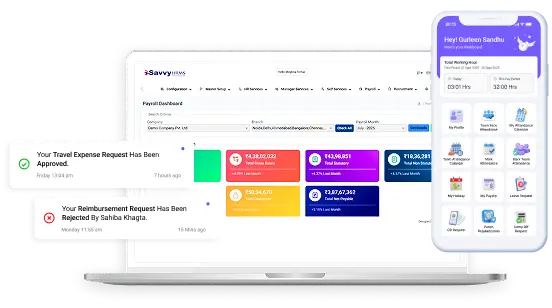
HR Automation can be defined as the process of automating HR tasks using technology. The most common automated tasks include payroll management, attendance recording, recruitment procedures, and managing employees’ information. Through automation, it becomes easier for companies to conduct HR activities since it saves time and makes the work accurate.
Important features of HR Automation
- Decreases manual labor and time consumption in everyday HR activities.
- Increases accuracy in payroll, attendance, and employee information.
- Improves employee satisfaction by providing speedy and transparent processes.
- Favors good decision-making through real-time HR data.
- Boosts efficiency and productivity in HR teams.
Compliance & Policy Considerations
HR Automation assists in complying with various legal aspects through the accuracy of records and timely processing. Some important legislations relevant here include:
- Employees’ Provident Fund (EPF) Act, 1952, ensures that PF contributions and other matters are handled correctly.
- Employees’ State Insurance (ESI) Act, 1948, facilitates the processing of ESI contributions efficiently.
- The Income Tax Act, 1961, helps in managing TDS calculations efficiently.
Automated HR systems help companies stay compliant and audit-ready with minimal manual disturbances.