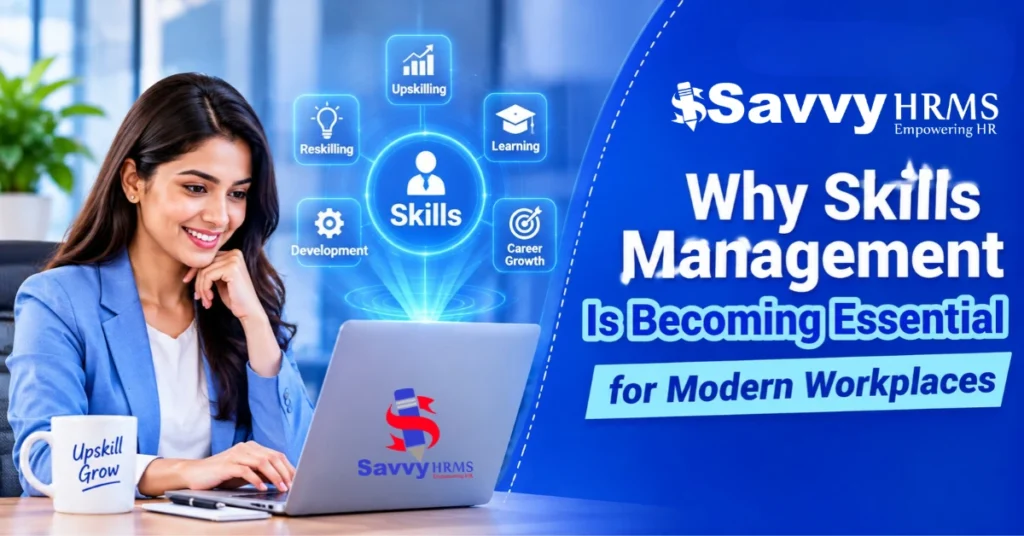
Why Skills Management Is Becoming Essential for Modern Workplaces


-
AuthorRuchika Rajput
-
 Last Updated
November 02, 2026
-
 Reading Time
16 Mins
TL;DR
Skills management helps organizations identify, assess and develop employee skills to meet changing business requirements. It provides better visibility into workforce capabilities, helps identify skill gaps and supports employee growth.
- Identify the skills employees already have and the ones they need to develop.
- Compare existing employee skills with the requirements of different roles to find skill gaps.
- Assign employees to suitable roles and projects based on their capabilities.
- Support employee growth through relevant training, upskilling and reskilling.
- Prepare employees to adapt to changing technologies and job responsibilities.
Having the right people in a team is important, but do they have the right skills to handle changing workplace requirements? As businesses adopt new technologies, automate tasks and introduce new ways of working, employees need to keep learning and developing their capabilities.
However, many organizations do not have a clear picture of the skills their employees already possess or the skills they need to develop. This makes it difficult for HR teams to identify skill gaps, plan relevant training and assign employees to suitable roles.
This is where Skills Management comes in which helps organizations understand employee capabilities, identify areas for improvement and develop the skills needed to meet business goals. In this blog, we’ll explore why skills management matters, its key benefits and how businesses can implement it effectively.
What Is Skills Management?
Skills management is the process of identifying, assessing, organizing, developing and monitoring the skills employees possess. It helps organizations understand their existing workforce capabilities and determine whether employees have the skills required to perform their current and future responsibilities.
For example, consider an organization planning to introduce new data analytics software. Before implementing it, HR managers need to understand whether employees have the technical knowledge required to use the software. If some employees lack the necessary skills, the organization can arrange relevant training to prepare them.
Businesses generally assess different categories of employee skills, including:
| Skill category | Meaning | Examples |
| Technical skills | Job-specific abilities required to perform particular tasks | Programming, accounting, data analysis |
| Soft skills | Personal and interpersonal abilities that support effective workplace interactions | Communication, teamwork, adaptability |
| Digital skills | Ability to use digital tools and technologies | Cloud computing, cybersecurity, AI tools |
| Leadership skills | Abilities required to guide teams and make decisions | Decision-making, delegation, conflict resolution |
By managing these skills systematically, organizations can make better decisions about employee development, workforce planning and internal talent allocation.
Why Is Skills Management Becoming Essential for Modern Workplaces?
Skills management is becoming important because organizations need employees who can adapt to changing technologies, business requirements and job responsibilities. It gives Core HR teams and managers better visibility into workforce capabilities and helps them prepare employees for current and future skill requirements.
This is also important because skill gaps can make it harder for businesses to adapt to change. According to the World Economic Forum’s Future of Jobs Report 2025, 63% of employers surveyed identified skill gaps as a major barrier to business transformation. This shows why organizations need to regularly assess employee skills and prepare their workforce for changing business needs.
Let’s understand why skills management is very important for businesses to focus on as explained below:
1. Changing Workplace Skill Requirements
The skills required to perform a task can change as businesses adopt new technologies and ways of working. Employees may need to learn new tools or develop additional skills to keep up with these changes.
For example, an accounting professional who once worked mainly with spreadsheets may now need to use automated accounting software and understand basic data analysis.
Skills management helps organizations identify these changing requirements and check whether employees have the skills needed to handle their work.
2. Growing Use of AI and Automation
AI and automation are changing how employees complete everyday tasks, as many activities that once required manual effort can now be handled with digital tools.
However, employees still need the right skills to use these tools effectively. They may need to improve their digital knowledge, understand data, solve problems and learn how to work with new technologies.
With employee skills management, HR teams can identify where employees need support and arrange relevant training to help them adapt.
3. Increasing Demand for Specialized Skills
Many businesses need employees with specific skills to manage technical tasks and day-to-day operations. Finding people with these skills can be difficult, especially when job requirements are changing.
For example, a manufacturing company introducing advanced production equipment may need employees who know how to operate the machines, carry out basic maintenance and maintain quality standards.
Skills management helps businesses understand whether these skills are already available within their workforce or whether they need to train existing employees or hire new people.
4. Need for Continuous Employee Learning
Employee learning should not end after onboarding or initial job training. As roles and business requirements change, employees need regular opportunities to update their knowledge and learn new skills.
Skills management helps HR teams understand what employees need to learn and plan training accordingly.
For example, instead of providing the same training to every employee, a company can arrange data analysis training for employees who need it and leadership training for those preparing to manage teams.
This makes employee training more relevant to individual roles and development needs.
5. Changing Employee Roles and Responsibilities
Employees may take on new responsibilities, move to different departments or apply for new positions as they gain experience. However, managers need to understand their skills before deciding whether they are suitable for these opportunities.
Skills management gives organizations a clearer picture of employee strengths, experience and areas for improvement. This makes it easier to identify employees who may be suitable for new projects, internal transfers or leadership roles.
It also helps employees understand which skills they need to develop to move forward in their careers.
What Are the Key Benefits of Skills Management?
Effective skills management helps organizations understand their workforce capabilities and make better decisions about employee development, talent allocation and future workforce requirements.
Let’s see some of the key benefits of skill management as explained below:
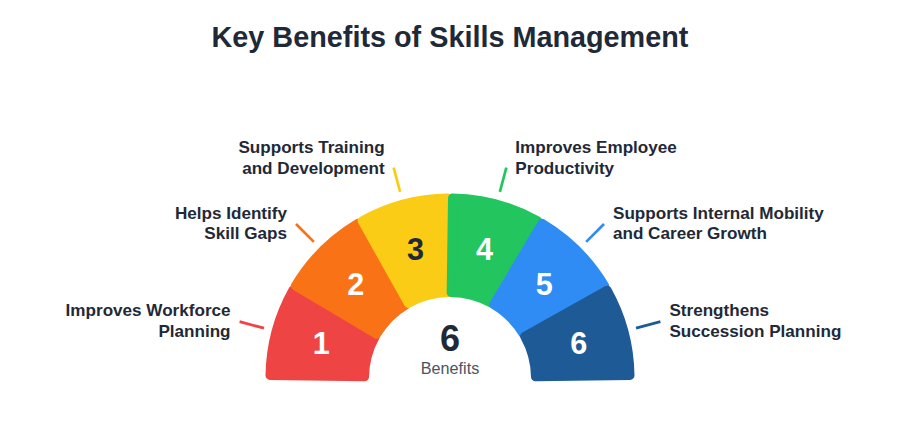
1. Improves Workforce Planning
Workforce planning involves understanding an organization’s current and future employee requirements. However, knowing how many employees are available is not enough. Businesses also need to understand the skills and capabilities those employees possess.
Skills management provides this visibility by helping managers identify employees with the right capabilities for specific roles, projects and responsibilities.
For example, if a company plans to expand its digital operations, HR teams can review existing employee skills to determine whether the organization has enough people with relevant technical knowledge. This makes workforce management more effective and helps organizations plan their talent requirements.
2. Helps Identify Employee Skill Gaps
A skill gap occurs when an employee does not have the skills or proficiency required to perform a particular job or responsibility effectively.
For example, a marketing team may need employees with advanced SEO, analytics and digital advertising skills. However, an assessment may show that some team members have limited experience in these areas.
Skills management helps organizations to compare existing employee capabilities with the skills required for different roles. Once these gaps are identified, HR teams can plan appropriate training, mentoring or recruitment activities to address them.
3. Supports Employee Training and Development
Not every employee has the same learning requirements. Some may need technical training, while others may benefit from communication, leadership or management development programmes.
Skills management helps organizations identify these individual requirements and create more relevant learning opportunities.
For example, an employee preparing for a managerial position may need additional training in team leadership, conflict resolution and decision-making. By aligning training programmes with identified skill gaps, organizations can make employee development more focused and relevant.
4. Improves Employee Productivity
Employees are more likely to perform effectively when their responsibilities match their knowledge, experience and capabilities.
Skills management helps managers understand employee strengths and assign tasks according to their abilities.
For instance, a project manager can identify employees with experience in data analysis, reporting or client communication and allocate responsibilities accordingly. This helps teams use available capabilities more effectively and reduces the likelihood of assigning employees tasks for which they are not adequately prepared.
5. Supports Internal Mobility and Career Growth
Employees often look for opportunities to learn new skills, take on additional responsibilities and progress within an organization.
However, businesses may overlook internal talent when they do not have sufficient information about employee capabilities.
Skills management helps HR teams identify employees who may be suitable for internal job opportunities, departmental transfers or promotions.
For example, an employee working in customer support may have strong communication, problem-solving and product knowledge skills that could support a transition into a customer success role. Recognizing these capabilities helps organizations create better career development opportunities while making effective use of existing talent.
6. Strengthens Succession Planning
Succession planning involves identifying and preparing employees who may take over important roles when existing employees move to other positions or leave the organization.
Skills management supports this process by helping organizations understand employee capabilities, experience and development requirements.
For example, if a department manager plans to retire, HR teams can identify employees who demonstrate leadership potential and assess whether they are ready to take on managerial responsibilities. Organizations can then provide relevant training and mentoring to prepare these employees for future roles.
How Does the Skills Management Process Work?
Skills management follows a structured process that helps organizations understand employee capabilities, identify development requirements and monitor progress.
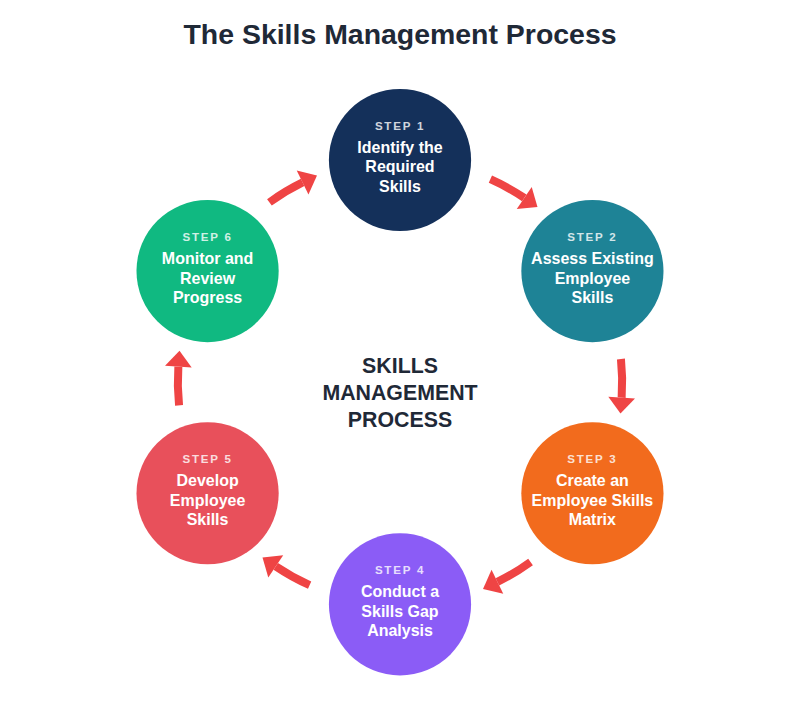
Here are six important steps involved in the process.
Step 1: Identify the Required Skills
The first step is to understand which skills employees need to perform their roles effectively. So, HR teams and department managers can review job descriptions, business objectives, project requirements and changing industry expectations to identify relevant skills.
For example, a software development company may require employees to have programming, database management, cybersecurity and problem-solving skills. As clearly defining these requirements provides a foundation for assessing employee capabilities.
Step 2: Assess Existing Employee Skills
Once the required skills are identified, organizations need to understand the capabilities employees currently possess.
HR teams can use different assessment methods, such as:
- Employee self-assessments.
- Manager evaluations.
- Practical tests and assignments.
- Performance reviews.
- Professional certifications and qualifications.
These methods help organizations understand employee strengths and determine their proficiency levels.
Step 3: Create an Employee Skills Matrix
A skills matrix is a tool used to organize employee skills and proficiency levels in a structured format which helps managers understand which capabilities are available within a team or department.
For example, the table below shows how three employees may have different levels of expertize in data analysis, communication and project management. This helps managers identify skill gaps and decide where additional training or support may be needed.
| Employee | Data Analysis | Communication | Project Management |
| Employee A | Advanced | Intermediate | Beginner |
| Employee B | Intermediate | Advanced | Intermediate |
| Employee C | Beginner | Intermediate | Advanced |
This information helps managers identify employees with specific capabilities and understand where additional training may be required.
The skills matrix should be reviewed periodically to reflect changes in employee responsibilities and proficiency levels.
Step 4: Conduct a Skills Gap Analysis
After assessing employee capabilities, organizations need to compare existing skills with the skills required for different roles and this process is known as skills gap analysis.
For example, if a company requires employees to have advanced data analysis skills but most team members have only basic knowledge, the difference represents a skill gap.
The analysis helps HR teams prioritize development requirements and decide whether they should address gaps through training, recruitment or internal talent allocation.
Step 5: Develop Employee Skills
Once skill gaps are identified, organizations can create development plans to improve employee capabilities.
Depending on the requirements, these plans may include:
- Technical and professional training.
- Online learning programmes.
- Mentoring and coaching.
- On-the-job training.
- Cross-functional assignments.
- Upskilling and reskilling programmes.
For example, an employee who needs to improve project management skills may receive training in project planning, resource allocation and team coordination.
Step 6: Monitor and Review Employee Progress
Skills management is an ongoing process. Employee capabilities and business requirements can change over time, so organizations need to review skills information regularly.
HR teams and managers can monitor employee progress through training assessments, performance reviews, feedback and updated skills records.
This helps organizations understand whether development activities are improving employee capabilities and whether additional learning is required.
What Are the Common Challenges in Employee Skills Management?
Although skills management offers several advantages, organizations may face challenges when implementing it across different teams and departments.
Understanding these challenges can help HR teams create a more effective approach.
| Common challenge | How organizations can address it |
| Incomplete employee skill records | Maintain centralized and regularly updated employee skill profiles. |
| Difficulty assessing employee proficiency | Use a combination of self-assessments, manager evaluations and practical tests. |
| Changing skill requirements | Review job roles and required capabilities periodically. |
| Limited employee participation | Explain the importance of skills assessments and encourage employee involvement. |
| Lack of relevant training | Develop learning plans based on identified skill gaps. |
| Difficulty tracking progress | Monitor training outcomes and update employee skills records regularly. |
Addressing these challenges requires coordination between HR teams, department managers and employees. A consistent process also helps organizations maintain more accurate information about workforce capabilities.
How Can Organizations Improve Workforce Skill Development?
Identifying employee skills is only one part of the process. However, organizations also need to create opportunities for employees to improve their capabilities and prepare for changing responsibilities.
Below are some practical ways to strengthen workforce skill development.
1. Conduct Regular Skills Assessments
Organizations should periodically evaluate employee skills to understand their strengths and identify areas that need improvement.
Assessments is the one way which can be conducted through performance reviews, manager feedback, practical assignments and employee self-evaluations because regular assessments help HR teams maintain an updated understanding of workforce capabilities.
2. Create Individual Development Plans
Every employee has different strengths, career goals and learning requirements.
HR teams can work with managers to create individual learning and development module plans based on employee skills and identified gaps. These plans should include clear learning objectives, suitable training activities and timelines for reviewing progress.
3. Encourage Continuous Learning
Employees should have opportunities to develop their skills throughout their careers and organizations should encourage continuous learning through online courses, workshops, mentoring, knowledge-sharing sessions and practical assignments.
Creating a learning-oriented workplace also encourages employees to take responsibility for their professional development.
4. Review Employee Development Progress
Organizations should regularly check whether employees are improving their skills after training.
To do this, managers can review employee performance, assessment results, feedback and progress towards learning goals. This helps them understand whether the training is effective and, if needed, identify areas where employees require additional support.
As a result, organizations can make better training decisions and support continuous employee development.
How Does Technology Support Skills Management in Modern Workplaces?
Managing employee skills manually can become challenging as a company grows. Employee information may be stored across different departments, making it harder for HR teams to get a clear picture of workforce capabilities.
Technology makes this process easier by helping organizations store employee information, track progress and manage HR activities in one place.
Here are some ways digital HR software can support employee management:
- Centralized Employee Information: Store employee details, qualifications, experience and other important records in one place.
- Performance Tracking: Keep track of employee performance and progress to understand where improvement may be needed.
- Training Records: Maintain details of employee training and development activities.
- Workforce Reporting: Use employee information to support workforce planning and management decisions.
- HR Process Management: Manage activities such as attendance, leave and payroll through digital systems.
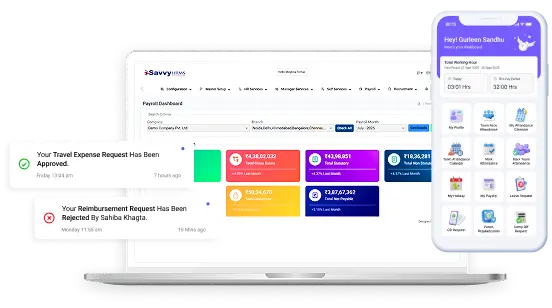
For example, HR management software helps organizations maintain employee records and manage different HR activities through a single platform which makes employee information easier to access and reduces manual work for HR teams.
Similarly, Payroll Software helps businesses manage salary calculations, deductions and payslips. Although payroll software and skills management serve different purposes, both help organizations manage their workforce more effectively.
Overall, the right digital tools can make HR processes easier to manage and help organizations keep employee information organized.
Frequently Asked Questions
1. What Is the Main Purpose of Skills Management?
The main purpose of skills management is to identify, assess, develop and utilize employee skills according to organizational requirements. It helps businesses understand workforce capabilities, identify skill gaps and prepare employees for current and future responsibilities.
2. Why Is Skills Management Important in the Workplace?
Skills management is important as it helps organizations understand employee capabilities and ensure they have the skills needed to meet business requirements. It also supports workforce planning, employee development, productivity and internal mobility.
3. What Are the Key Components of Skills Management?
The key components of skills management include:
• Identifying required skills.
• Assessing existing employee capabilities.
• Creating employee skills profiles.
• Conducting skills gap analysis.
• Developing employee skills.
• Monitoring and reviewing progress.
Together, these activities help organizations manage and improve workforce capabilities.
4. What Is the Difference Between Skills Management and Talent Management?
Skills management focuses on identifying, assessing, developing and utilizing employee skills. Talent management is broader and covers activities such as recruitment, onboarding, performance management, employee development, retention and succession planning.
Skills management is therefore an important part of an organization’s overall talent management approach.
5. How Does Skills Management Improve Workforce Productivity?
Skills management helps managers understand employee strengths and assign responsibilities according to their capabilities. It also identifies areas where employees need additional training, helping organizations improve job readiness and use workforce capabilities more effectively.
6. What Is an Employee Skills Matrix?
An employee skills matrix is a structured tool that maps employee skills against proficiency levels. It helps managers understand which skills are available within a team, identify skill gaps and plan employee development activities.
7. How Can HR Teams Identify Employee Skill Gaps?
HR teams can identify skill gaps by comparing the skills employees currently possess with the capabilities required for their roles. They can use employee assessments, manager feedback, practical tests, performance reviews and skills matrices to identify areas that need improvement.
8. What Is the Role of Technology in Employee Skills Management?
Technology helps organizations maintain employee information, organize skills-related records, support training activities and improve workforce visibility. Depending on the system’s capabilities, digital tools can also support skills assessments, development tracking and workforce planning.
Conclusion
As workplace requirements continue to change, organizations need a better understanding of the skills their employees possess and the capabilities they need to develop. Skills management provides a structured way to identify workforce strengths, address skill gaps and support employee growth.
By regularly assessing employee capabilities, creating development plans and encouraging continuous learning, businesses can prepare their workforce for changing responsibilities and future requirements.
For HR teams and managers, the focus should not only be on filling current positions but also on developing the skills employees need to contribute to the organization’s long-term growth.