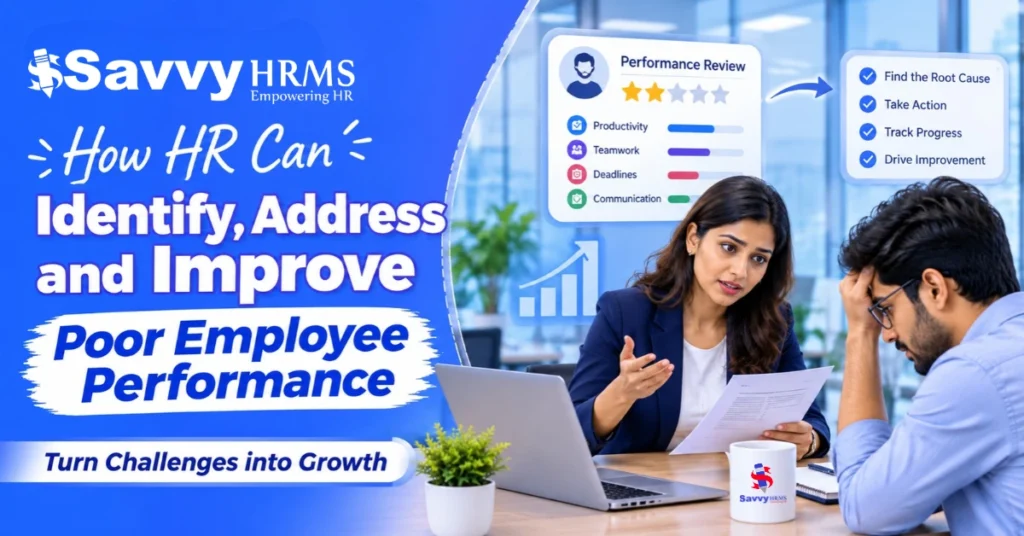
How HR Can Identify, Address and Improve Poor Employee Performance


-
AuthorRuchika Rajput
-
 Last Updated
October 31, 2026
-
 Reading Time
14 Mins
A Performance Improvement Plan (PIP) helps organizations address ongoing employee performance issues through clear goals, timelines and regular progress reviews. HR and managers can improve employee performance by:
- Identifying common signs of employee underperformance, such as missed deadlines, low productivity and declining work quality.
- Understanding the reasons behind performance issues, including skill gaps, unclear expectations and heavy workloads.
- Discussing concerns with employees and providing clear feedback, coaching and support.
- Setting measurable improvement goals and reviewing progress regularly.
- Using employee development plans to build skills and support career growth.
- Using HR management software to organize employee records, track goals and manage performance reviews.
When employees start missing deadlines, making frequent mistakes or struggling to meet their targets, it can affect the entire team’s work. However, poor performance does not always mean an employee lacks the skills or willingness to do their job. Sometimes, unclear instructions, heavy workloads, limited training or a lack of regular feedback may be the reason.
For HR teams and managers, the important thing is to understand what is affecting an employee’s performance and how they can help.
A Performance Improvement Plan (PIP) can make this process easier by setting clear goals, outlining the expected improvements and tracking progress. In this guide, we will look at how HR can identify employee underperformance, address performance issues and support employees in improving their performance.
What Is a Performance Improvement Plan (PIP)?
When employees regularly miss deadlines, make repeated mistakes or struggle to meet their targets, it can affect team productivity and business performance. However, poor performance does not always mean an employee lacks the skills or motivation to do their job. Sometimes unclear expectations, limited training, heavy workloads and a lack of regular feedback can also contribute to the problem.
For Core HR teams and managers, the first step is to identify performance gaps and understand what is causing them. They then need to discuss concerns with employees, set clear expectations and provide the right support to help them improve.
A Performance Improvement Plan (PIP) can make this process more structured by defining improvement goals, setting timelines and tracking progress. In this guide, we will explore how HR can identify employee underperformance, manage performance issues and use employee development plans to support continuous improvement.
Informal Performance Management vs. Performance Improvement Plan
Not every performance issue requires a formal PIP. Managers can often address initial concerns through regular feedback, coaching and guidance. However, when performance problems continue, a formal improvement plan may be appropriate.
| Comparison criteria | Informal performance management | Formal Performance Improvement Plan |
| Purpose | Address initial performance concerns | Address ongoing performance gaps |
| Approach | Feedback and coaching | Documented improvement process |
| Goals | General improvement expectations | Specific and measurable goals |
| Timeline | Flexible follow-ups | Defined review period |
| Documentation | Informal feedback records | Formal performance documentation |
| Monitoring | Regular manager discussions | Scheduled progress reviews |
Example: If an employee occasionally misses project deadlines, the manager may first discuss workload and task priorities. However, if missed deadlines continue despite feedback and support, HR may recommend a formal Performance Improvement Plan with clear deadlines, measurable targets and regular progress reviews.
What Are the Common Signs of Employee Underperformance?
Employee underperformance happens when an employee consistently fails to meet the expectations of their role. However, managers should look for repeated issues rather than judging employees based on a single mistake.
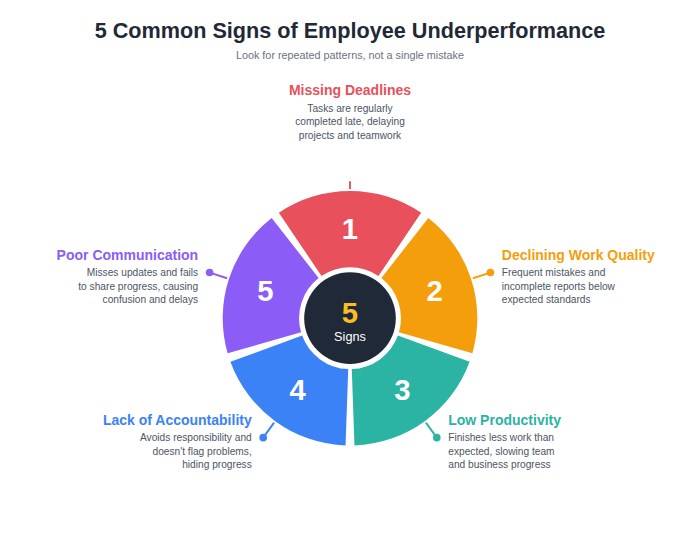
Let’s explore some of the common signs HR and managers should look as explained below:
1. Consistently Missing Deadlines
Employees regularly fail to complete assigned tasks on time which can delay projects, affect team coordination and make it difficult for other employees to complete their work.
2. Declining Work Quality
Employees may start making frequent mistakes, submitting incomplete reports or delivering work that does not meet expected standards, which can affect the quality of overall team output.
3. Low Productivity
Sometimes employees struggle to complete their daily tasks or consistently finish less work than expected. This can slow down team progress and affect overall business productivity.
4. Lack of Accountability
It has been observed that employees avoid taking responsibility for their work, fail to complete assigned tasks or do not communicate when they face problems, making it harder for managers to track progress.
5. Poor Communication
Employees may miss important updates, fail to share work progress or struggle to coordinate with team members, leading to confusion, delays and misunderstandings.
How Can Managers Identify These Performance Issues?
Identifying the signs of employee underperformance helps managers to spot problems early. However, they also need to understand how these issues affect daily work and what factors may be contributing to them.
The following table highlights common performance issues, workplace examples and what managers should examine.
| Performance issue | Workplace example | What managers should examine |
| Low productivity | Completing fewer tasks than expected | Workload, priorities and available resources |
| Missed deadlines | Repeatedly submitting reports late | Task planning and dependencies |
| Poor work quality | Frequent errors in deliverables | Skills, training and review processes |
| Communication gaps | Not sharing project updates | Role clarity and communication expectations |
| Missed targets | Consistently falling short of sales goals | Target feasibility, market conditions and available support |
Identifying these signs early helps managers address performance concerns before they affect larger business operations.
Why Do Employees Struggle to Meet Performance Expectations?
Before taking corrective action, HR and managers should understand why an employee is struggling. The same performance problem can have different causes, so the solution should depend on the situation. Let’s have a look at some common causes:
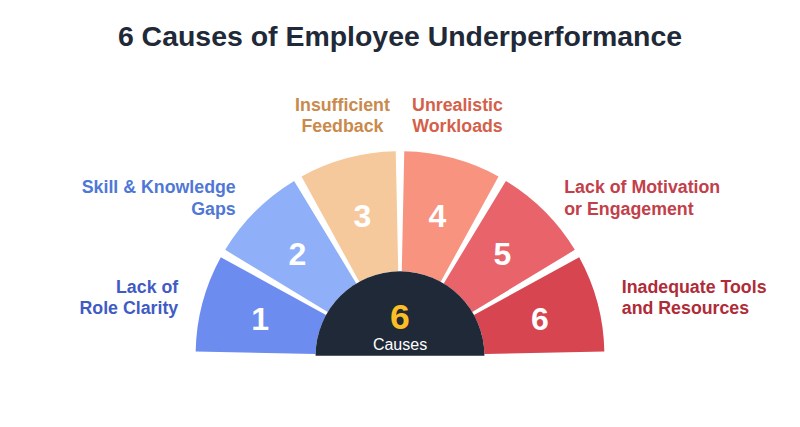
1. Lack of Role Clarity
Sometimes it happens, employees may not fully understand their role, responsibilities, priorities, or expected outcomes. When these expectations are unclear, they may struggle to complete tasks in the way managers expect.
What HR can do: Review job responsibilities, clarify expectations and make sure employees understand their key performance indicators (KPIs).
2. Skill and Knowledge Gaps
An employee may lack the technical knowledge or practical skills needed to execute certain tasks. This can also lead to repeated mistakes, delays and lower-quality work.
What HR can do: Identify the missing skills and arrange relevant training, mentoring or hands-on guidance.
3. Insufficient Feedback
It is possible that employees may continue making the same mistakes when managers do not provide timely feedback or explain how their work should improve.
What HR can do: Encourage regular one-on-one discussions and constructive feedback based on specific work examples.
4. Unrealistic Workloads
When employees handle too many responsibilities or competing deadlines at the same time, they may struggle to maintain productivity and work quality.
What HR can do: Review workload distribution, discuss priorities with managers and identify tasks that need to be reassigned or rescheduled.
5. Lack of Motivation or Engagement
Employees who feel disconnected from their work or do not receive recognition may show reduced interest in their responsibilities.
What HR can do: Understand employee concerns, recognize contributions and discuss opportunities for greater involvement and growth.
6. Inadequate Tools and Resources
Employees may not have access to the software, equipment, information or support required to complete their work efficiently.
What HR can do: Coordinate with relevant departments to provide the necessary tools, resources and workplace support.
| Important: A performance issue and its underlying cause are not always the same. For example, repeatedly missing deadlines is a performance issue, but the actual reason may be unclear priorities, insufficient training or an unrealistic workload so managers should understand the core cause before deciding on corrective action. |
How Can HR Manage Poor Employee Performance?
Once HR and managers have identified the signs of employee underperformance and understand why employees struggle, then they can address their concerns through clear communication, appropriate support and regular follow-ups.
Let’s understand how management can manage poor employee performance in a step-wise manner as defined below:
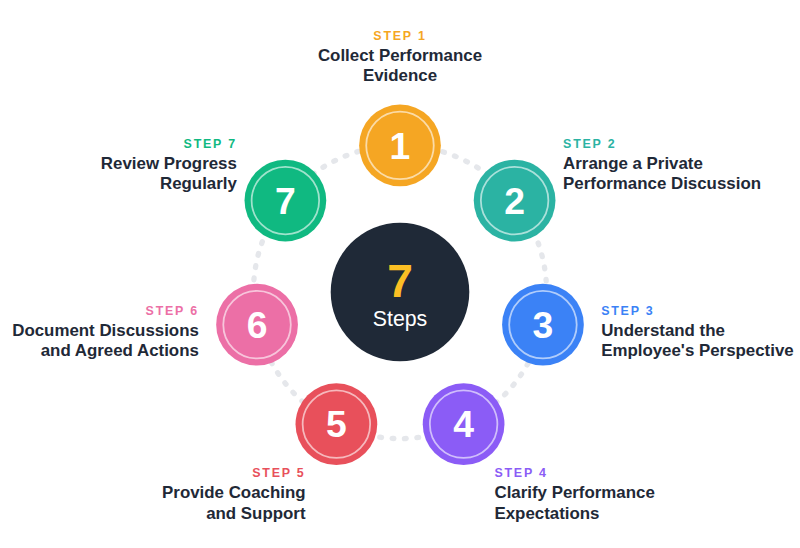
Step 1: Collect Performance Evidence
Start by reviewing the employee’s work and performance records. Check completed tasks, missed deadlines, work quality, previous feedback and performance targets.
Use clear examples to explain the concerns instead of making general statements such as “your performance is poor.”
Step 2: Arrange a Private Performance Discussion
Schedule a one-on-one meeting with the employee to discuss the performance concerns and explain where they are falling short, share specific examples and give them a chance to explain their side.
This keeps the conversation professional and focused on work-related issues rather than personal criticism.
Step 3: Understand the Employee’s Perspective
Ask the employee about what may be affecting their performance. This helps managers understand the challenges they are facing.
For example:
- Are your responsibilities and priorities clear?
- Do you need training for any tasks?
- Is your workload manageable?
- Do you have the tools and resources you need?
- What support would help you improve?
Their answers can help identify whether the issue is related to skills, workload, communication or other workplace factors.
Step 4: Clarify Performance Expectations
Explain what the employee needs to improve and what results are expected.
For example, instead of simply asking an employee to “improve reporting skills,” explain that reports must be submitted on time and meet the required accuracy standards.
Step 5: Provide Coaching and Support
Employees need the right guidance and resources to improve their performance and managers can support them through:
- Job-specific training.
- Mentoring from experienced employees.
- Regular guidance from reporting managers.
- Access to the required tools and resources.
- Help with setting priorities and managing tasks.
Step 6: Document Discussions and Agreed Actions
Keep a record of performance discussions, identified gaps, feedback, support provided and agreed next steps.
This helps HR and managers track progress and follow a consistent approach when addressing performance issues.
Step 7: Review Progress Regularly
However, schedule follow-up meetings to check whether the employee is improving and whether the support provided is helping.
If the employee shows improvement, continue providing guidance. If performance concerns continue, HR may consider a formal Performance Improvement Plan (PIP) in line with company policy.
How Do Employee Development Plans Help Improve Performance?
Not every performance issue needs a formal Performance Improvement Plan (PIP). In some cases, employees simply need more training, coaching or opportunities to build their skills. This is where employee development plans can help.
An employee development plan is a structured way to improve an employee’s knowledge, skills and abilities which helps employees perform their current duties better and prepare for future roles.
How Can HR Use Employee Development Plans?
HR managers can use employee development plans in the following ways:
- Identify skill gaps: Find out which technical, communication or job-related skills employees need to improve.
- Set learning goals: Decide which skills employees should develop and set a realistic timeline.
- Recommend relevant training: Provide access to courses, workshops and practical learning sessions.
- Offer mentoring and coaching: Connect employees with experienced colleagues who can guide and support them.
- Review development progress: Check whether the training and learning activities are helping employees improve.
Performance Improvement Plan vs. Employee Development Plan
While both plans help employees improve but they work in different ways. Let’s look at how a Performance Improvement Plan differs from an Employee Development Plan.
| Comparison | Performance Improvement Plan | Employee Development Plan |
| Main purpose | Address existing performance gaps | Build skills and support career growth |
| Focus | Improve specific performance issues | Develop current and future skills |
| Approach | A structured improvement process | Ongoing learning and development |
| Timeline | Usually has a defined review period | Can be ongoing |
| Example | Improving report accuracy | Developing leadership skills |
How Can HR Management Software Support Employee Performance Management?
Managing employee performance becomes more challenging as an organization grows. HR teams may need to maintain employee records, coordinate performance reviews, track goals and manage development activities across multiple departments.
HR management software can help centralize employee information and organize important HR processes, making it easier for HR teams and managers to access relevant records and coordinate performance management activities.
Here are some ways HR software can support the process.
1. Centralized Employee Information
HRMS software helps maintain employee details, job information and other relevant records in one place. This gives HR teams better access to employee information when reviewing performance-related matters.
2. Performance Tracking
Performance management features help managers set employee goals, record results and track progress over time. This makes it easier to see how employees are performing.
3. Organized Performance Reviews
HR software helps teams manage performance reviews, collect feedback and keep evaluation records, which makes the review process easier to organize and track.
4. Employee Goal Management
Managers can set clear goals and check how employees are progressing. This helps employees understand what they need to achieve and gives managers a clear way to discuss their performance.
5. Training and Development Records
HR teams can keep track of employee training, completed courses and development activities. These records help them understand what training employees have received and where further learning may be needed.
6. HR Reporting and Insights
HR reporting features help teams review employee and workforce information. These reports can highlight areas where employees may need additional guidance, training or support.
HR management software can help businesses organize employee records and manage routine HR activities. For example, attendance and payroll software helps HR teams maintain accurate attendance records and process payroll based on employee working hours, leave and attendance data.
What Are the Best Practices for HR Managers to Improve Employee Performance?
Managing poor employee performance requires regular communication, clear expectations and consistent support. HR managers can follow these practices to create a more effective performance management process.
- Address concerns early: Discuss performance problems before they affect the team or business outcomes.
- Set clear expectations: Ensure employees understand their responsibilities, targets and expected work standards.
- Use measurable performance indicators: Evaluate employees using relevant and role-specific performance criteria.
- Provide regular feedback: Give constructive feedback throughout the year rather than waiting for annual appraisals.
- Avoid unfair comparisons: Evaluate employees based on their roles, responsibilities and agreed expectations.
- Offer training opportunities: Help employees develop the skills and knowledge needed to perform their work.
- Recognize improvements: Acknowledge employees when they make progress or achieve their performance goals.
- Maintain proper documentation: Record performance discussions, agreed actions and progress reviews.
- Follow a consistent process: Apply performance management policies fairly across teams and departments.
These practices help managers address performance concerns constructively while giving employees a clear opportunity to improve.
Conclusion
Overall, improving poor employee performance requires more than identifying mistakes or setting new targets. HR and managers need to understand the reasons behind performance gaps, communicate expectations clearly and provide the right support to help employees improve.
A well-structured Performance Improvement Plan can make this process more organized by defining measurable goals, assigning responsibilities and establishing review timelines. At the same time, employee development plans, regular feedback and appropriate training can help employees strengthen their skills and perform their responsibilities more effectively.
With the right performance management approach and HR management software, organizations can maintain better employee records, organize performance reviews and support continuous employee development.



Looking for a better way to manage your HR processes?
Book a free demo today!
Frequently Asked Questions (FAQs)
1. What is a Performance Improvement Plan?
A Performance Improvement Plan (PIP) is a formal document that outlines an employee’s performance gaps, expected improvements, measurable goals and review timelines. It also defines the support an organization will provide to help the employee meet the required performance standards.
2. When should HR put an employee on a Performance Improvement Plan?
HR may consider a PIP when an employee consistently fails to meet established performance expectations despite receiving feedback, guidance or reasonable support. Managers should first understand the underlying causes and assess whether a formal improvement plan is appropriate.
3. What are the common signs of employee underperformance?
Common signs include repeatedly missing deadlines, declining work quality, low productivity, poor communication, lack of accountability and difficulty meeting agreed performance targets. Managers should evaluate repeated patterns and relevant evidence rather than relying on isolated incidents.
4. How long should a Performance Improvement Plan last?
The duration depends on the employee’s role, the nature of the performance gap and the improvement required. Organizations should establish a reasonable review period with clear milestones and regular check-ins rather than applying the same timeline to every employee.
5. What should be included in a Performance Improvement Plan?
A PIP should include employee details, identified performance gaps, measurable improvement goals, action steps, support from HR and managers, review timelines and expected outcomes. It should clearly explain how performance will be evaluated.
6. Can an employee development plan replace a Performance Improvement Plan?
Not always. An employee development plan focuses on building skills and supporting career growth, while a PIP addresses specific performance gaps. The appropriate approach depends on whether the employee needs further development or a formal process to address ongoing performance concerns.
7. What happens if an employee does not meet PIP goals?
If an employee does not meet the agreed goals, HR and the manager should review the documented progress, feedback and support provided. Depending on company policy and applicable employment requirements, the organization may consider additional support, an extended review or further employment action.
8. How can managers measure employee performance improvement?
Managers can measure improvement using role-specific KPIs, work quality, task completion rates, deadline adherence, customer feedback and progress against agreed goals. Regular review meetings help identify whether the employee is meeting expectations and where further support may be needed.