


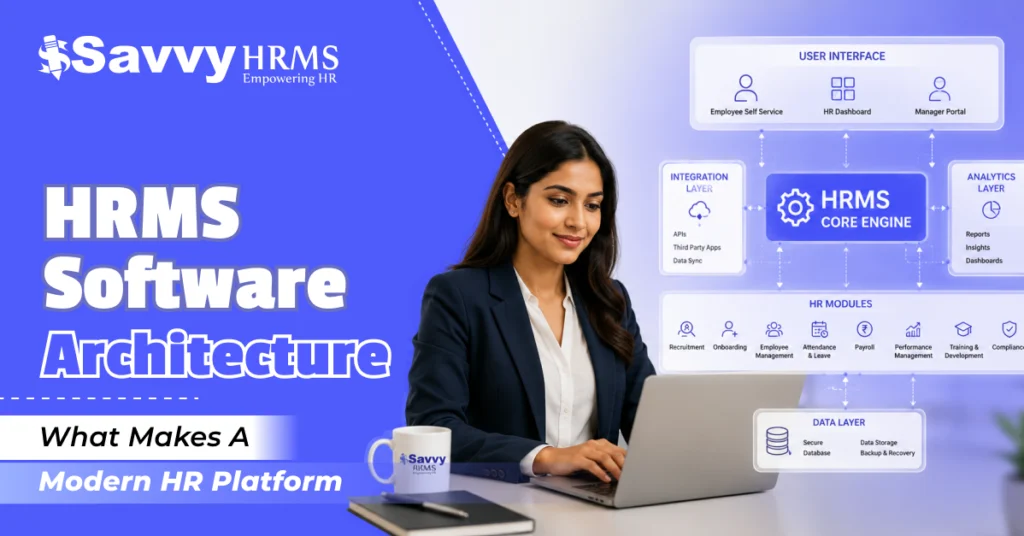

Behind every efficient HR platform is a powerful software architecture that keeps people, processes, and data connected. Whether it’s automating payroll, managing employee records, tracking attendance, or generating workforce insights, the right architecture ensures every HR function works smoothly together.
HRMS software architecture is the framework that enables this integration. It helps organizations build scalable, secure, and efficient HR systems that can adapt to changing business needs and workforce expectations.
In this blog, we’ll explore what HRMS software architecture is, why it’s more important than ever in 2026, its core components, how it works, and the different architecture models businesses can consider.
What Is HRMS Software Architecture?
HRMS software architecture refers to the structure and design of an HR Management System. It defines how different modules, databases, applications, and technologies work together to manage the complete employee lifecycle.
Think of it as the blueprint of an HR platform. Just as a building needs a strong foundation, an HRMS needs a strong architecture to support payroll, attendance, recruitment, leave management, performance reviews, compliance, and employee records without interruptions.
A modern HRMS architecture generally includes:
- A centralized employee database
- Business logic to automate HR workflows
- User-friendly web and mobile interfaces
- Secure cloud infrastructure
- Third-party integrations
- Reporting & Analytics Tool
Instead of depending on multiple spreadsheets or disconnected applications, a modern HRMS keeps all HR information in one place, ensuring better collaboration, accuracy, and efficiency.
Why Does HRMS Software Architecture Matter in 2026?
As businesses become more digital, HR teams require systems that are flexible, scalable, and secure. The architecture behind an HRMS directly impacts how efficiently HR operations are managed.
1. Supports Business Growth
As organizations expand, they hire more employees, introduce new HR policies, and open multiple locations. A scalable HRMS architecture grows with the business without requiring major system changes.
2. Improves Employee Experience
Employees expect quick access to payslips, attendance, leave balances, tax documents, and company updates. Modern HR platforms offer self-service portals and mobile apps that simplify these everyday tasks.
3. Enables Better Decision-Making
Integrated HR systems collect data from multiple modules and convert it into meaningful dashboards and reports. HR leaders can easily monitor hiring trends, attendance, payroll costs, employee performance, and workforce productivity.
4. Enhances Data Security
Employee information is highly sensitive. Modern HRMS architecture protects data through:
- Role-based access
- Data encryption
- Multi-factor authentication
- Audit trails
- Regular backups
These security measures reduce the risk of unauthorized access and data loss.
5. Simplifies Compliance
Labour laws, payroll regulations, and tax requirements change regularly. A well-designed HRMS automates compliance-related processes, reducing manual effort and minimizing the risk of penalties.
What Are the Core Components of Modern HRMS Architecture?
Every HRMS consists of multiple interconnected components that work together to automate HR operations.
1. Centralized Employee Database
The employee database serves as the single source of truth for all workforce information, including:
- Personal details
- Employment history
- Salary records
- Attendance
- Leave balances
- Performance data
- Employee documents
Having one centralized database eliminates duplicate records and ensures consistent information across the organization.
2. User Interface (UI)
The user interface is where employees, managers, and HR teams interact with the system.
A modern HRMS should provide:
- Simple navigation
- Responsive web portal
- Mobile accessibility
- Employee self-service
- Manager dashboards
A clean and intuitive interface encourages higher adoption across the organization.
3. Business Logic Layer
This layer handles the organization’s HR rules and automates daily processes such as:
- Leave approvals
- Attendance calculations
- Payroll processing
- Shift scheduling
- Expense approvals
- Performance cycles
Automation reduces manual work while ensuring consistent policy implementation.
4. Workflow Automation Engine
Workflow automation keeps HR processes moving without constant manual intervention.
For example, when an employee applies for leave:
- The manager receives an approval request.
- HR gets notified after approval.
- Leave balance updates automatically.
- Payroll reflects the approved leave.
This improves efficiency while reducing delays.
5. Payroll Processing Module
Payroll is one of the most critical HRMS modules.
A modern payroll engine can automatically:
- Calculate salaries
- Process overtime
- Manage bonuses
- Apply deductions
- Generate payslips
- Calculate taxes
- Ensure statutory compliance
Since payroll integrates with attendance and leave modules, salary calculations become faster and more accurate.
6. Integration Layer
Organizations use multiple software solutions such as ERP systems, accounting software, biometric devices, and recruitment platforms.
The integration layer allows smooth communication between these systems through APIs, eliminating duplicate data entry and improving operational efficiency.
7. Reporting and Analytics
Modern HR relies heavily on data.
Reporting tools help organizations monitor:
- Employee turnover
- Hiring performance
- Attendance trends
- Payroll expenses
- Leave utilization
- Performance ratings
- Workforce productivity
Real-time dashboards help HR leaders make informed business decisions.
8. Security Framework
Protecting employee data is a business priority.
A secure HRMS architecture includes:
- Role-based permissions
- Multi-factor authentication
- Data encryption
- Audit logs
- Regular backups
- Disaster recovery plans
These features safeguard sensitive employee information while supporting compliance requirements.
How Does HRMS Software Architecture Work?
A modern HRMS connects every HR function into one integrated platform, allowing information to flow automatically across modules.
Step 1: Data Collection
Employee information is collected from different sources, including:
- Employee profiles
- Attendance
- Leave requests
- Shift schedules
- Recruitment
- Payroll
- Performance reviews
All data is stored securely in a centralized database.
Step 2: Workflow Automation
The system automatically triggers predefined workflows.
For example, a leave request moves from employee to manager approval, updates leave balances, and shares the information with payroll without manual intervention.
Step 3: Data Processing
The business logic layer processes information according to company policies.
It automatically handles:
- Working hour calculations
- Overtime
- Leave deductions
- Payroll
- Attendance updates
- Employee record changes
Step 4: Reporting
Processed data is transformed into dashboards and reports that help managers track workforce performance, payroll, attendance, recruitment, and employee productivity.
What Are the Different Types of HRMS Architecture?
Different businesses have different HR requirements, so multiple HRMS architecture models are available.
1. Monolithic Architecture
In a monolithic architecture, all HR functions operate as one integrated application.
Best for:
- Startups
- Small businesses
Advantages
- Easy deployment
- Lower implementation cost
- Simple maintenance
Limitations
- Difficult to scale
- Less flexibility
- Updates affect the entire system
2. Three-Tier Architecture
This is one of the most widely used models for medium and large organizations.
It separates the HRMS into three layers:
- Presentation Layer (User Interface)
- Application Layer (Business Logic)
- Database Layer (Data Storage)
This structure improves performance, simplifies maintenance, and makes future upgrades much easier.
3. Cloud-Based Architecture
Cloud-based HRMS has become the preferred choice for modern organizations.
Instead of installing software on local servers, the platform is hosted securely in the cloud, allowing employees to access HR services anytime using desktops, laptops, tablets, or smartphones.
Benefits include:
- Lower infrastructure costs
- Automatic updates
- Easy scalability
- Remote accessibility
- High system availability
4. Microservices Architecture
Large enterprises often choose microservices architecture, where each HR module operates independently.
For example:
- Payroll
- Recruitment
- Attendance
- Performance Management
- Employee Self-Service
Each module can be updated without affecting the rest of the platform, providing greater flexibility and scalability.
5. Hybrid Architecture
Hybrid architecture combines on-premise infrastructure with cloud technology.
Organizations can keep sensitive data on local servers while using cloud-based HR services for other functions. This approach offers greater control while still benefiting from cloud flexibility.
What Are the Essential Features of a Modern HRMS?
1. Centralized Employee Database
A modern HRMS stores all employee information in one secure platform, making it easy to manage records, update details, and access accurate data whenever needed.
2. Payroll and Compliance Automation
The system automates salary calculations, tax deductions, statutory compliance, and payslip generation, reducing manual errors while ensuring timely and accurate payroll processing.
3. Employee Self-Service (ESS)
An employee self-service portal enables staff to apply for leave, download payslips, update personal details, and access HR information without depending on HR teams.
4. Attendance and Leave Management
Integrated attendance and leave management helps track working hours, shifts, overtime, and leave requests accurately while simplifying approvals and improving workforce planning.
5. Reporting and Analytics
Built-in dashboards and analytics provide real-time insights into workforce trends, payroll costs, employee performance, attendance, and other HR metrics for better decision-making.
What Challenges Can a Well-Designed HRMS Architecture Solve?
| HR Challenge | How HRMS Architecture Solves It |
| Manual Processes | Automates payroll, attendance, leave, and other routine HR tasks to save time and reduce errors. |
| Scattered Data | Centralizes employee records, ensuring accurate and consistent information across all HR functions. |
| Compliance Issues | Automates statutory calculations and reporting to simplify compliance and reduce legal risks. |
| Data Security Risks | Protects employee data with encryption, role-based access, and secure backups. |
| Business Growth | Scales easily to support larger workforces, multiple locations, and evolving HR needs. |
How to Choose the Right HRMS Platform for Your Business?
Choosing the right HRMS requires evaluating both your current HR needs and future business goals.
1. Scalability
Select software that can grow with your organization and support an increasing workforce without affecting performance.
2. Ease of Use
An intuitive interface improves user adoption and reduces training requirements for employees, managers, and HR teams.
3. Customization
Look for an HRMS that allows you to customize leave policies, attendance rules, payroll settings, approval workflows, reports, and user permissions to match your business processes.
4. Integration Capabilities
Your HRMS should integrate smoothly with payroll systems, ERP software, accounting applications, biometric devices, recruitment platforms, and communication tools to improve operational efficiency.
5. Security
Choose a platform that offers strong security features, including encryption, role-based access, audit logs, and regular backups to protect sensitive employee information.
6. Customer Support
Reliable implementation assistance, product updates, user training, and responsive technical support ensure a smooth experience throughout the software lifecycle.
Why Is Cloud-Based HRMS the Preferred Choice for Modern Businesses?
Cloud technology has transformed HR management by making HR systems more flexible, accessible, and cost-effective.
Since cloud-based HRMS platforms are hosted online, employees and HR teams can securely access the system anytime using a desktop, laptop, tablet, or smartphone. This flexibility is particularly valuable for organizations with hybrid or remote workforces.
Cloud solutions also provide automatic software updates, enhanced security, and lower infrastructure costs. As businesses expand, cloud HRMS platforms can easily accommodate additional employees, locations, and HR functions without requiring major investments in IT infrastructure.
For organizations looking to build a future-ready workplace, cloud-based HRMS offers the scalability and reliability needed for long-term growth.
Conclusion
A well-designed HRMS software architecture is the foundation of an efficient and future-ready HR platform. By integrating core HR functions into a single system, it helps organizations automate routine tasks, improve data accuracy, strengthen security, and simplify compliance.
As businesses continue to embrace digital transformation in 2026, investing in a scalable, cloud-based HRMS architecture is no longer optional, it’s a strategic decision that supports long-term growth and operational efficiency.
Whether you’re managing a growing workforce or looking to modernize your HR processes, choosing the right HRMS architecture will help your organization deliver a better experience for both HR teams and employees.

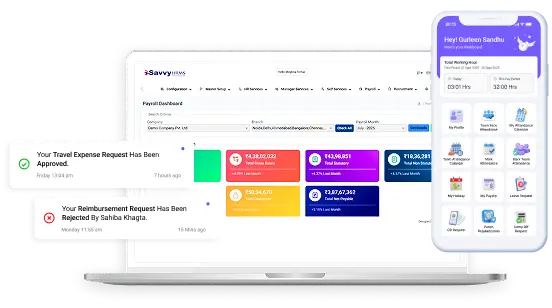









Transform the way you manage your workforce with Savvy HRMS.
Automate HR processes, improve compliance, and empower your employees with an all-in-one HR solution.