

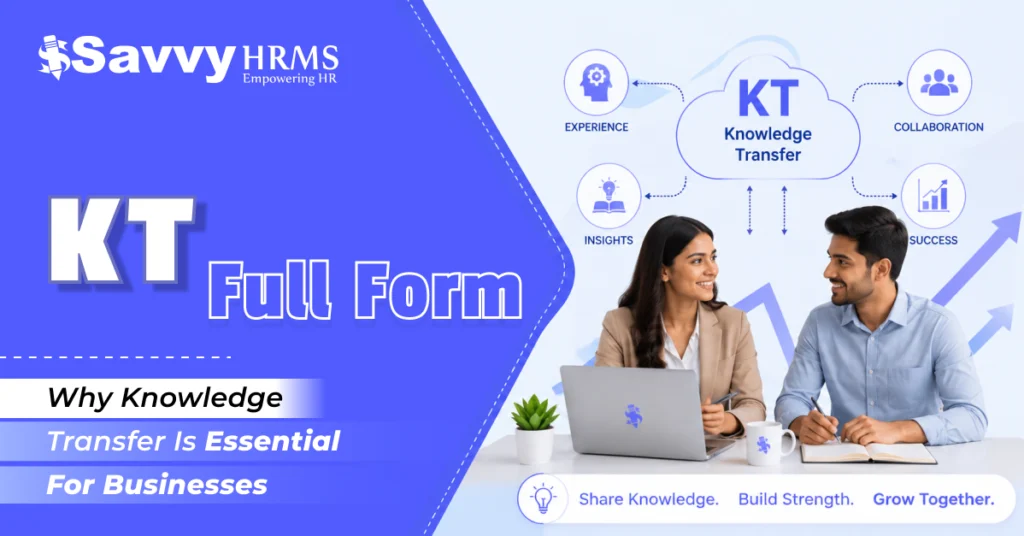
KT Full Form: Why Knowledge Transfer Is Essential for Businesses


-
AuthorRuchika Rajput
-
 Last Updated
July 06, 2026
Last Updated
July 06, 2026
-
 Reading Time
8 Mins
Reading Time
8 Mins
Every organization depends on knowledge to operate efficiently. Whether it’s onboarding a new employee, handing over projects, or ensuring business continuity, sharing information effectively is important. This is where KT comes into the picture.
If you’ve ever worked in an IT company, corporate office, or HR department, you’ve probably heard someone say, “Let’s schedule a KT session before the employee leaves.” But what exactly does KT mean, and why is it so important?
In this blog, we will explore the KT full form, its significance across different industries, the various types and methods of knowledge transfer, common challenges, and how modern HRMS software like Savvy HRMS makes the entire process more organized and efficient.
Let’s get started.
What Is the KT Full Form?
The KT full form is Knowledge Transfer.
Knowledge Transfer is the process of sharing information, skills, expertise, experience, and best practices from one individual or team to another. Its primary objective is to ensure that valuable organizational knowledge doesn’t disappear when employees change roles, resign, retire, or move to different projects.
A successful knowledge transfer process helps organizations maintain productivity, reduce operational risks, and ensure smooth transitions without disrupting business operations.
For example, before a software developer leaves a company, they generally conduct KT sessions to explain application architecture, ongoing tasks, project documentation, and troubleshooting methods to the replacement employee.
Simply put, Knowledge Transfer ensures that important business knowledge remains within the organization instead of leaving with employees.
KT Full Form in Different Industries
Although Knowledge Transfer is the most commonly used meaning in professional environments, the abbreviation “KT” can have different meanings depending on the industry.
| Industry | KT Full Form | Meaning |
| IT & Software | Knowledge Transfer | Sharing technical and project knowledge |
| Human Resources | Knowledge Transfer | Employee handover and process documentation |
| Business Management | Knowledge Transfer | Passing operational knowledge between teams |
| Education | Knowledge Transfer | Sharing research and academic knowledge |
| Manufacturing | Knowledge Transfer | Training employees on production processes |
| Healthcare | Knowledge Transfer | Sharing clinical knowledge and treatment procedures |
Among all these, Knowledge Transfer is the most widely recognized meaning in corporate workplaces.
Why Is Knowledge Transfer Important for Organizations?
Organizations that invest in knowledge transfer are better prepared for change and future growth. Here are some key reasons why it matters.
1. Prevents Knowledge Loss
When experienced employees leave without proper handovers, organizations lose years of valuable knowledge. A structured KT process preserves this expertise.
2. Improves Employee Onboarding
New employees become productive faster when they receive well-organized training, documentation, and guidance from experienced team members.
3. Ensures Business Continuity
Unexpected employee exits or internal transfers shouldn’t disrupt daily operations. Knowledge transfer helps teams continue working without delays.
4. Boosts Collaboration
When employees openly share their expertise, departments collaborate more effectively and solve problems faster.
5. Reduces Training Costs
Well-documented processes reduce repetitive training efforts and help employees learn independently.
6. Increases Productivity
Employees spend less time searching for information and more time focusing on meaningful work.
7. Supports Better Decision-Making
Easy access to historical data, previous experiences, and documented processes helps teams make informed business decisions.
What Are the Different Types of Knowledge Transfer?
Knowledge transfer can be categorised into several types depending on how information is shared.
1. Explicit Knowledge Transfer
This includes documented information that is easy to record and distribute.
Examples include:
- User manuals
- Company policies
- SOPs
- Training documents
- Process guides
2. Tacit Knowledge Transfer
Silent knowledge comes from personal experience and practical expertise.
Examples include:
- Problem-solving techniques
- Leadership skills
- Negotiation methods
- Decision-making approaches
This type of knowledge is often shared through mentoring, shadowing, coaching, and discussions.
3. Implicit Knowledge Transfer
Implicit knowledge refers to practical know-how that isn’t formally documented but can be explained and demonstrated through experience.
4. Internal Knowledge Transfer
This occurs within the organization.
Examples include:
- Team handovers
- Department training
- Employee onboarding
- Cross-functional collaboration
5. External Knowledge Transfer
Organizations may also share knowledge with customers, vendors, consultants, or business partners through documentation, training, or workshops.
What Are the Different Methods of Knowledge Transfer?
There isn’t a single way to transfer knowledge. Organizations often combine multiple methods for better results.
1. Documentation
Creating process documents, user guides, and SOPs helps employees access accurate information quickly, ensuring consistency, reducing errors, and improving operational efficiency across teams.
2. KT Sessions
Interactive KT sessions allow employees to share knowledge, clarify doubts, demonstrate workflows, and ensure the receiving team understands tasks and responsibilities effectively.
3. Job Shadowing
Job shadowing enables employees to observe experienced colleagues in real situations, helping them learn practical skills, workflows, decision-making, and workplace best practices.
4. Mentoring
Mentoring connects junior employees with experienced professionals who provide guidance, share expertise, answer questions, and support continuous learning and career development.
5. Cross-Training
Cross-training helps employees learn multiple roles, increasing workforce flexibility, reducing dependency on individuals, and ensuring smooth operations during absences or transitions.
6. Video Tutorials
Video tutorials provide recorded demonstrations that employees can watch anytime, making learning more convenient, consistent, and accessible for remote or distributed teams.
7. Knowledge Bases
Knowledge bases store documents, FAQs, templates, and learning resources in one place, helping employees find information quickly and collaborate more efficiently.
8. Workshops
Hands-on workshops encourage collaboration, discussion, and practical learning, allowing employees to apply knowledge, solve problems, and strengthen skills through interactive activities.
What Is a Knowledge Transfer Document?
A Knowledge Transfer Document (KT Document) is a structured document that contains all the essential information needed for another employee to continue a role or project successfully.
Generally, a KT document includes:
- Project overview
- Roles and responsibilities
- Process documentation
- Daily activities
- Client details
- System access information
- Software tools used
- Dependencies
- Escalation contacts
- Pending tasks
- Common issues and solutions
- Frequently asked questions
A well-prepared KT document minimises confusion and helps new employees become productive much faster.
Best Practices for Successful Knowledge Transfer
A successful KT process requires planning, collaboration, and proper documentation.
Here are some best practices organizations should follow.
1. Start Early
Begin the knowledge transfer process as soon as an employee submits their notice. Starting early provides enough time for documentation, training, discussions, and successful task handovers.
2. Document Everything
Record critical processes, workflows, responsibilities, and project details in clear documents. Proper documentation minimizes knowledge gaps and ensures employees can access reliable information whenever needed.
3. Encourage Two-Way Communication
Make knowledge transfer interactive by encouraging employees to ask questions, clarify doubts, and discuss real scenarios. Open communication improves understanding and reduces misunderstandings during transitions.
4. Record KT Sessions
Record important KT sessions so employees can revisit explanations whenever required. These recordings become valuable learning resources for future hires and ongoing employee training.
5. Standardize Templates
Use consistent KT templates to capture important information across every project or role. Standardized formats improve clarity, maintain consistency, and prevent important details from being overlooked.
6. Update Documentation Regularly
Review and update knowledge transfer documents whenever processes, systems, or responsibilities change. Keeping documentation current ensures employees always have access to accurate information.
7. Measure Effectiveness
Assess whether the receiving employee can confidently perform assigned responsibilities after the KT process. Regular evaluations help identify gaps and improve future knowledge transfer initiatives.
Common Challenges During KT
Even well-planned knowledge transfer initiatives can face obstacles.
1. Lack of Documentation
When important processes are not documented, organizations depend on employee memory. This increases the risk of losing valuable knowledge when experienced employees leave.
2. Limited Time
Employees serving notice periods often have tight schedules, leaving limited time for detailed KT sessions and proper documentation before transitioning to new opportunities.
3. Poor Communication
Unclear instructions or incomplete explanations can lead to misunderstandings, confusion, and knowledge gaps, making it difficult for employees to perform their responsibilities effectively.
4. Resistance to Sharing Knowledge
Some employees hesitate to share expertise due to workload, job security concerns, or lack of motivation, creating unnecessary dependency on specific individuals within teams.
5. Information Overload
Providing excessive information within a short timeframe can confuse employees, making it difficult to absorb, retain, and apply important knowledge effectively during transitions.
6. Outdated Documents
Old or inaccurate documents can mislead employees and cause errors. Regular updates ensure knowledge remains relevant, reliable, and aligned with current business processes.
How HRMS Helps Manage Knowledge Transfer?
Managing knowledge transfer manually through emails, spreadsheets, and scattered documents can quickly become confusing, especially for growing organizations.
A modern HRMS like Savvy HRMS simplifies the entire process by centralizing employee information, documentation, and workflows.
Here’s how Savvy HRMS supports efficient Knowledge Transfer:
1. Centralized Document Management
Store SOPs, policies, training manuals, and KT documents securely in one place for easy access.
2. Smooth Employee Onboarding
Provide new hires with role-specific documents, training resources, and learning materials from day one.
3. Digital Employee Records
Maintain updated employee profiles, responsibilities, reporting structures, and historical records.
4. Workflow Automation
Automate exit processes, approvals, and document collection to ensure no critical information is missed during employee transitions.
5. Learning and Development Support
Deliver structured learning programs and training materials that help employees continuously build their skills.
6. Better Collaboration
Teams can easily access shared documents and standardized processes, reducing dependency on individual employees.
7. Improved Compliance
Maintain complete documentation trails that support audits and regulatory compliance.
With Savvy HRMS, organizations can transform knowledge transfer into a simplified, well-documented, and repeatable process that supports business continuity and long-term growth.
Conclusion
Understanding the KT full form is more than just knowing that it stands for Knowledge Transfer. It represents a strategic process that helps organizations preserve expertise, reduce operational risks, improve employee productivity, and ensure smooth transitions during role changes.
Whether you’re onboarding new employees, managing project handovers, or preparing for employee exits, a structured knowledge transfer process keeps valuable organizational knowledge within the business. By combining effective documentation, collaborative learning, and the right technology, companies can build a stronger and more resilient workforce.
If your organization wants to simplify employee handovers, centralize documentation, and automate HR processes, adopting the right HRMS can make all the difference.

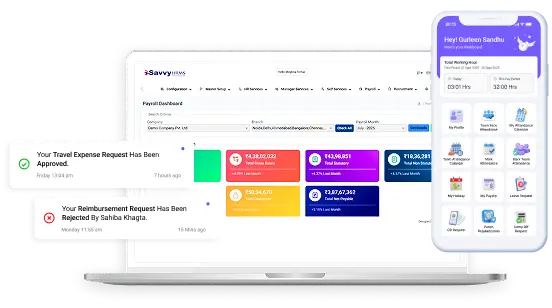









Simplify Knowledge Transfer with Savvy HRMS
Discover how Savvy HRMS can help your business retain knowledge, improve collaboration, and build a future-ready workplace.