

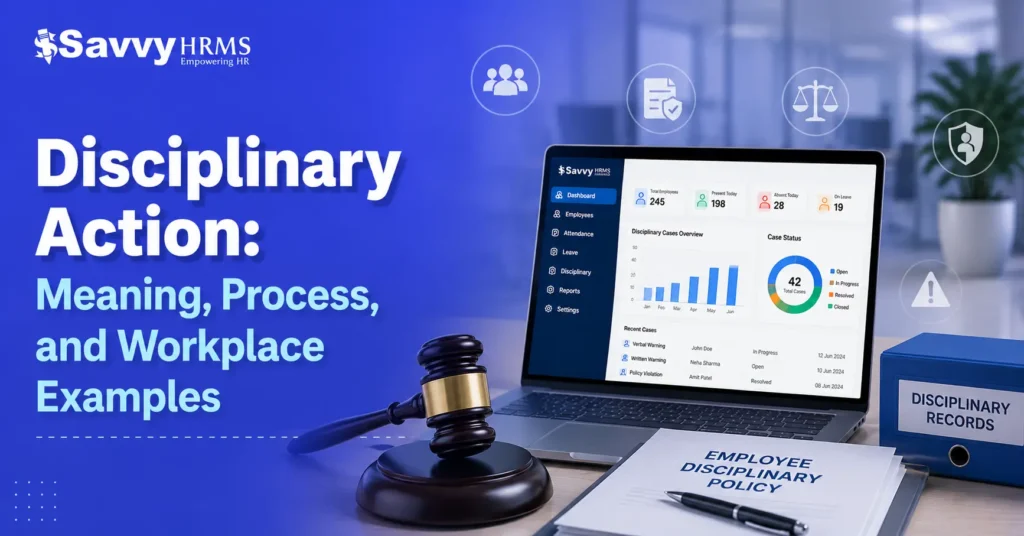
Disciplinary Action: Meaning, Process, and Workplace Examples


-
AuthorRuchika Rajput
-
 Last Updated
June 29, 2026
Last Updated
June 29, 2026
-
 Reading Time
7 Mins
Reading Time
7 Mins
Every workplace needs certain rules and expectations to keep things running smoothly. But when employees repeatedly break policies, show misconduct, or fail to meet company standards, organizations may need to take disciplinary action to address the issue and maintain a professional work environment.
A proper disciplinary action process helps companies handle workplace issues in a fair and organized way. Whether it’s a verbal warning, written warning, or suspension, disciplinary actions help employees understand expectations clearly while promoting accountability, transparency, and better workplace discipline.
In this blog, we will explore the disciplinary action meaning, its different types, common workplace examples, and best practices organizations should follow to manage employee discipline effectively.
What is Disciplinary Action?
Disciplinary action implies the measures taken against the employee by the employer if they fail to adhere to the organizational policies and procedures, do not meet the required performance levels, and engage in misconduct at work. In disciplinary actions, the goal is not to punish the employee but to make sure their actions improve.
The term disciplinary action in HR is not about punishments and warnings but entails a systematic approach where the employer is able to deal with various organizational issues through disciplining employees in order to improve their behavior.
Disciplinary action can vary depending on the type of issue. Minor problems may result in verbal warnings, while serious misconduct could lead to suspension or termination.
What are the Most Common Types of Disciplinary Actions?
Organizations use different disciplinary actions depending on the nature of the violation and company policies. Some of the most common types include:
1. Verbal Warning
Verbal warnings are often the first stage in any process of disciplinary action. Managers usually communicate with the employee regarding the matter and outline the needed changes.
2. Written Warning
If an individual fails to comply with the requirements and the situation remains the same or even gets worse, managers use the written warning. As its name suggests, it is used when problems persist or the violation is relatively significant.
3. Performance Improvement Plan (PIP)
When employees continue to underperform in their duties, Performance Improvement Plans are used. They define improvement criteria and timeframes as well as performance standards.
4. Suspension
Suspension refers to the process during which employees are temporarily relieved of all of their duties at work for a certain period of time. Suspension can be applied in cases of major infractions or pending investigations.
5. Demotion
Demotion includes reducing responsibilities, status, and designation of an individual due to their improper behavior or poor performance management.
6. Termination
Termination is the final stage of disciplinary action and occurs when employee behavior seriously violates company policies or repeated issues remain unresolved.
Common Reasons Employees Receive Written Warnings at Work
Written warnings are among the most common disciplinary actions in organizations. They provide documented evidence of employee misconduct or performance concerns.
Some common reasons employees receive written warnings include:
1. Poor Attendance
Repeated absences, delays, or early departures without permission may have an adverse impact on efficiency and teamwork.
2. Violation of Company Policies
Failure to adhere to workplace policies relating to dress code, data confidentiality, etc., could invite formal written warnings.
3. Poor Performance
Missing deadlines, inefficiency, or neglecting one’s assignments could invite disciplinary measures.
4. Workplace Misconduct
Disrespectful behavior, sexual or other harassment, and abuse or inappropriate communication in the workplace are typical grounds for disciplinary measures.
5. Misuse of Company Resources
Misusing work-related resources or breaking IT policies may lead to disciplinary action against an employee.
6. Insubordination
Insisting on not following the directions of one’s superiors or behaving disrespectfully towards them may invite disciplinary measures.
What is the Need for Disciplinary Policies in Organizations?
A disciplinary policy is important for maintaining fairness, consistency, and transparency in the workplace. Without clear policies, organizations may struggle to handle employee issues properly.
1. Ensures Fair Treatment
The proper disciplinary actions policy ensures that all cases are handled the same way within an organization to ensure that each worker receives equal treatment free from favoritism, discrimination, or bias.
2. Maintains Workplace Discipline
The creation of a disciplinary policy will help workers know the policies of the organization and how to act professionally and effectively to create a better workplace.
3. Reduces Legal Risks
The implementation of effective disciplinary procedures and the proper documentation of the whole process will allow an organization to avoid any disputes and legal issues.
4. Improves Employee Accountability
As a result of understanding the consequences of their behavior or violation of the policies, employees start taking responsibility for their actions and strive for better performance.
5. Supports Organizational Culture
By implementing disciplinary actions, companies can maintain their organizational culture and values.
When Should Employers Take Disciplinary Action?
Employers should take disciplinary action when employee behavior negatively impacts workplace productivity, safety, compliance, or team morale. However, disciplinary actions should always be fair, reasonable, and properly documented.
Some situations where employers may need to initiate disciplinary action include:
- Repeated absenteeism or delays
- Workplace harassment or misconduct
- Poor job performance despite feedback
- Violation of safety policies
- Breach of confidentiality
- Inappropriate workplace behavior
- Misuse of company property
- Failure to follow management instructions
Before taking disciplinary action, employers should investigate the situation carefully, collect relevant evidence, and provide employees with an opportunity to explain their side.
In many cases, corrective conversations and coaching can resolve minor issues before formal disciplinary actions become necessary.
Best Practices for Fair Disciplinary Action
A fair disciplinary action process helps organizations maintain trust, consistency, and employee morale. HR teams and managers should follow best practices to ensure workplace discipline is handled professionally.
1. Clearly Communicate Company Policies
Employees should have easy access to workplace policies, employee handbooks, and disciplinary procedures. Clear communication reduces misunderstandings and confusion.
2. Be Consistent
Organizations must apply disciplinary actions consistently across all employees to avoid favoritism or discrimination claims.
3. Maintain Proper Documentation
Every disciplinary action should be documented properly, including warnings, meetings, investigations, and employee responses.
4. Conduct Fair Investigations
Before issuing disciplinary action, employers should collect facts, review evidence, and speak with all parties involved.
5. Focus on Corrective Action
The goal of disciplinary action should be employee improvement rather than punishment. Constructive feedback and support can help employees improve performance.
6. Respect Employee Rights
Employees should have an opportunity to explain their side of the issue before disciplinary decisions are finalized.
7. Train Managers and HR Teams
Managers should receive proper training on handling disciplinary procedures professionally and legally.
How Does HRMS Software Help Manage Disciplinary Action?
Managing employee disciplinary actions manually can become difficult, especially in growing organizations. This is where modern HRMS software plays an important role.
An advanced HRMS solution helps HR teams simplify disciplinary procedures, maintain records, and improve workplace compliance efficiently.
1. Centralized Employee Records
HRMS software stores all employee disciplinary records, warnings, and performance data in one centralized system for easy access.
2. Automated Documentation
Manual paperwork can lead to errors and missing records. HRMS platforms automate documentation and maintain accurate disciplinary histories.
3. Improved Policy Management
Organizations can digitally manage disciplinary policies, employee handbooks, and compliance documents within the HRMS system.
4. Better Transparency
HRMS software ensures all disciplinary actions are documented properly, creating transparency between employees, managers, and HR teams.
5. Workflow Automation
Automated approval workflows simplify warning issuance, escalation processes, and disciplinary tracking.
6. Performance Monitoring
Integrated performance management tools help HR teams identify recurring performance issues before they become major problems.
7. Compliance Support
HRMS software helps organizations maintain labor law compliance by ensuring proper documentation and standardized disciplinary procedures.
Conclusion
Disciplinary action is an important part of effective workforce management. A structured disciplinary action process helps organizations address employee misconduct fairly, improve accountability, and maintain workplace professionalism.
When handled correctly, disciplinary actions create a balanced work environment where employees clearly understand expectations and organizational standards. Clear disciplinary policies, fair procedures, and proper documentation are essential for building trust and reducing workplace conflicts.
With the support of modern HRMS solutions like Savvy HRMS, organizations can simplify disciplinary action management, improve compliance, and create a more efficient HR process.

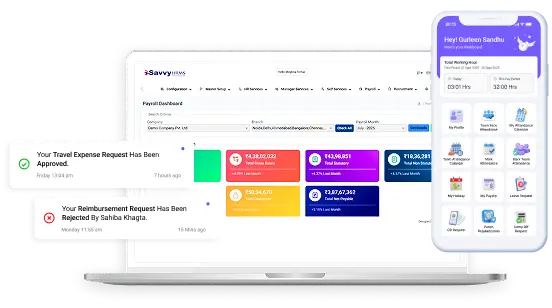









Looking to simplify employee management and workplace discipline?
Explore how Savvy HRMS can help your organization simplify HR operations with smarter automation and efficient workforce management solutions