

Perks: Meaning, Types, Benefits, Examples, and Best Practices in the Workplace


-
AuthorRaghvendra Bhardwaj
-
 Last Updated
June 17, 2026
Last Updated
June 17, 2026
-
 Reading Time
7 Mins
Reading Time
7 Mins
The expectations of employees have undergone changes over time. Even though salary continues to be an essential part of employment, the modern-day worker desires certain extra perks that enhance their job satisfaction level. The concept of perk comes into play here. From flexible work schedules to health programs, there are plenty of employee perks that can contribute to increasing job satisfaction levels among employees.
Those companies that use perks wisely stand a good chance of attracting better talent, retaining employees, and being productive as well. A brief insight into the perks definition and differences between perks and employee benefits should give employers some ideas about motivating their staff.
In this blog, we will explore the perks’ meaning, the different types of employee perks, their benefits, real-world examples, best practices for designing a successful perks program, and how Savvy HRMS can help organizations manage workplace perks more effectively.
What Are Perks?
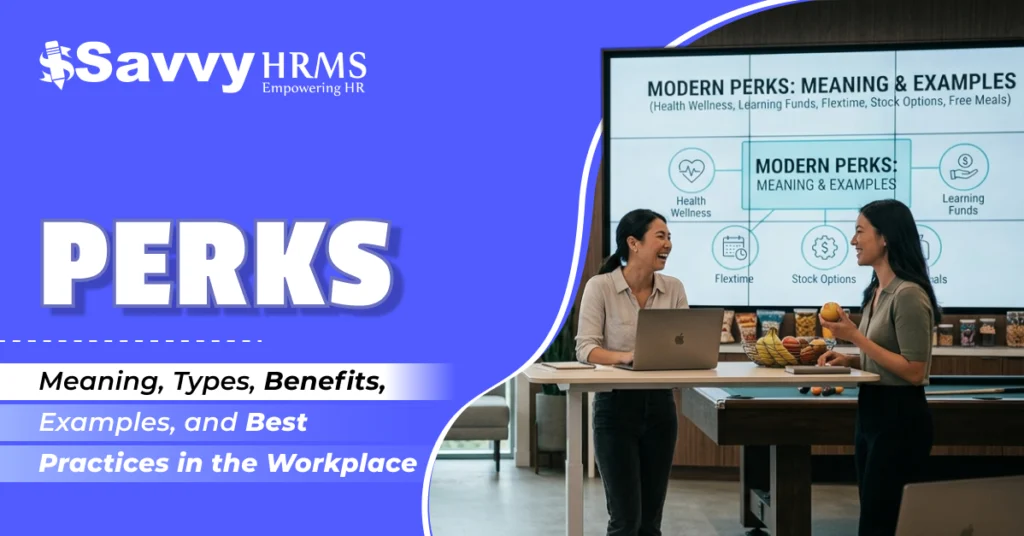
Perks are extra benefits, incentives, or privileges granted to employees apart from their salary and mandated benefits. They include bonuses for employees that aim at making them feel comfortable at work.
Perks are an abbreviation of perquisites, referring to a benefit acquired in addition to remuneration. Examples of perks in today’s work environments include free food and flexi-time, among others.
As opposed to mandated benefits, such as provident fund, gratuity, or medical insurance, perks are not required by law. They are usually optional, and employers choose whether to grant them or not.
Some Examples of Workplace Perks
- Flexible work hours
- Work-from-home options
- Gym memberships
- Learning and development programs
- Employee recognition awards
- Team outings and retreats
- Wellness initiatives
- Additional paid leave
- Meal allowances
- Transportation assistance
Why Are Perks Important for Employees?
Employee perks are more than just nice-to-have benefits. They can have a significant impact on employee morale, productivity, and loyalty.
1. Improve Employee Satisfaction
Employees who feel appreciated by their employer will be happy at work and dedicated to the company. These perks indicate that the organization cares about the well-being of its employees.
2. Enhance Work-Life Balance
Such perks as telecommuting, flexible hours, and wellness programs enable employees to better balance their life and work responsibilities.
3. Boost Employee Engagement
Employee engagement can lead to increased productivity and motivation. Providing workplace perks ensures a good experience for employees.
4. Support Employee Well-Being
Providing health and wellness perks enables employees to remain physically fit and mentally relaxed, leading to higher productivity.
5. Increase Retention
Employees will tend to stay within the organization due to good perks and a work-friendly environment.
Perks vs Employee Benefits: What’s the Difference?
Although the terms are often used interchangeably, perks and employee benefits are not exactly the same.
| Aspect | Perks | Employee Benefits |
| Purpose | Enhance employee experience | Provide financial and social security |
| Requirement | Usually optional | Often legally required or contractually provided |
| Flexibility | Highly customizable | Generally standardized |
| Examples | Flexible work, wellness programs, free meals | Health insurance, provident fund, gratuity |
| Impact | Improves satisfaction and engagement | Supports employee welfare and compliance |
In simple terms, employee benefits provide essential protection and support, while perks are additional advantages that improve the overall workplace experience.
What Are the Different Types of Employee Perks?
Organizations can offer various types of employee perks depending on workforce needs and company goals.
1. Financial Perks
Financial perks provide additional monetary value to employees.
Examples include:
- Performance bonuses
- Internet reimbursement
- Travel allowances
- Education assistance
- Employee discounts
Some organizations also integrate certain perks with their compensation structure and perk payroll management to ensure proper tracking and reporting.
2. Health and Wellness Perks
These perks focus on employee well-being.
Examples include:
- Gym memberships
- Health checkups
- Mental wellness programs
- Yoga and fitness sessions
- Wellness allowances
3. Flexible Work Perks
Flexibility has become one of the most valued workplace perks.
Examples include:
- Remote work opportunities
- Hybrid work models
- Flexible work schedules
- Compressed workweeks
4. Learning and Development Perks
Employees appreciate opportunities to grow professionally.
Examples include:
- Online courses
- Certification programs
- Skill development workshops
- Leadership training
5. Recognition and Reward Perks
Recognizing employee contributions strengthens workplace morale.
Examples include:
- Employee of the Month awards
- Gift cards
- Spot bonuses
- Achievement recognition programs
6. Lifestyle Perks
These perks improve the overall employee experience.
Examples include:
- Free snacks and meals
- Company-sponsored events
- Team outings
- Childcare assistance
- Recreational facilities
Best Practices for Designing an Employee Perks Program
A successful employee perks program should align with both employee expectations and organizational objectives.
1. Understand Employee Preferences
Conduct surveys and collect employee feedback to understand what perks employees value most.
2. Align Perks with Business Goals
Choose perks that support company culture and workforce priorities.
For example:
- Wellness programs support employee health.
- Learning opportunities improve workforce capabilities.
- Flexible work options enhance productivity.
3. Offer Flexibility
Different employees have different needs. Providing a range of perk options allows employees to choose what benefits them most.
4. Ensure Fairness
Perks should be accessible and transparent across employee groups to avoid perceptions of favoritism.
5. Communicate Clearly
Employees should fully understand available perks and how they can access them.
6. Review Programs Regularly
Employee expectations change over time. Regular reviews help ensure perks remain relevant and valuable.
7. Measure Effectiveness
Track metrics such as:
- Employee satisfaction
- Retention rates
- Engagement scores
- Utilization rates
These insights help optimize your perks strategy.
Common Challenges in Managing Employee Perks
While employee perks offer many advantages, organizations may face several challenges when managing them.
| Challenge | Impact |
| Budget Constraints | Limits the range and quality of perks offered. |
| Diverse Employee Needs | Not all perks appeal to every employee. |
| Administrative Complexity | Increases HR workload and manual effort. |
| Lack of Awareness | Employees may not fully utilize available perks. |
| Tracking and Measurement | Difficult to assess perk effectiveness and ROI. |
| Payroll Integration | Can create errors in perk payroll calculations. |
| Compliance Issues | May lead to tax and regulatory challenges. |
| Fairness and Consistency | Unequal access can affect employee satisfaction. |
| Remote Workforce Management | Traditional perks may not suit remote employees. |
| Keeping Perks Relevant | Outdated perks may reduce employee engagement. |
How Can Savvy HRMS Help Manage Employee Perks?
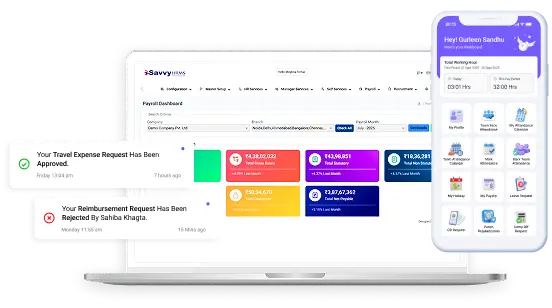
Managing employee perks manually can become time-consuming and complex as organizations grow. Savvy HRMS simplifies the process by providing a centralized platform for managing employee information, payroll, attendance management, performance, and workplace benefits.
1. Centralized Employee Records
Maintain all employee-related information in one secure platform, making it easier to manage perk eligibility and allocations.
2. Automated Payroll Processing
Savvy HRMS helps simplify payroll management while supporting the accurate handling of perk payroll components and employee compensation.
3. Customizable Benefit Tracking
Track and manage different employee perks efficiently, reducing administrative workload and improving transparency.
4. Employee Self-Service Portal
Employees can access relevant information, view benefits, and stay informed about available workplace perks.
5. Improved Reporting and Analytics
Generate reports that help HR teams understand perk utilization, employee engagement trends, and overall program effectiveness.
6. Enhanced Employee Experience
By automating routine HR processes, organizations can focus more on creating meaningful employee experiences through well-designed perks programs.
Conclusion
Perks have become an important part of the modern employee experience. While competitive salaries remain important, employees increasingly value workplace perks that support their well-being, professional growth, and work-life balance.
Understanding the perks’ meaning, offering relevant workplace perks, and implementing best practices can help organizations attract top talent, improve retention, and build a positive workplace culture. However, managing employee perks effectively requires the right systems and processes, especially when dealing with tracking, administration, and perk payroll requirements.
With Savvy HRMS, organizations can simplify employee perk management, automate HR operations, and create a workplace where employees feel valued and supported.
Ready to Simplify Employee Perk Management?
Simplify employee perks and HR operations with Savvy HRMS.
Book a Demo Today