


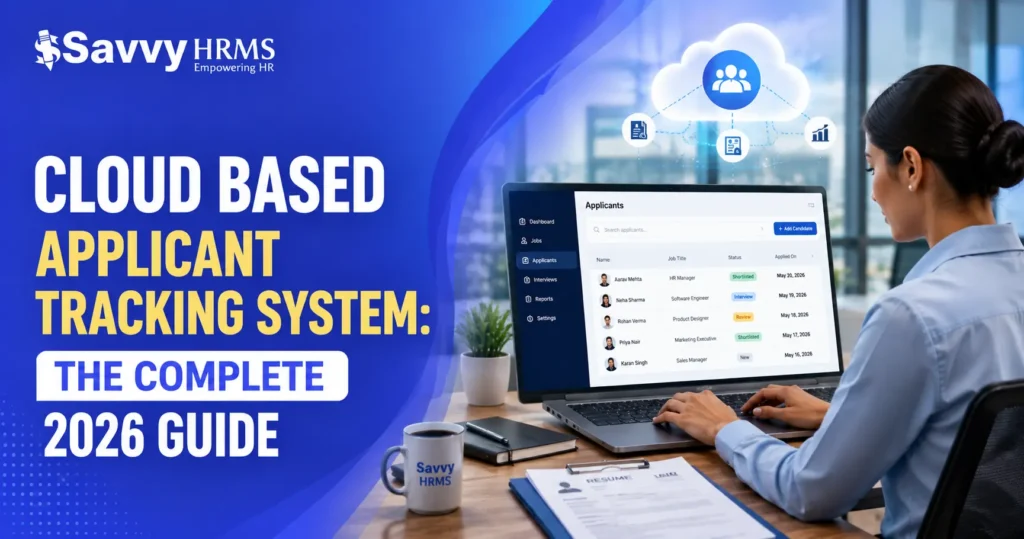

Hiring hasn’t fundamentally changed in decades-until now. Recruiters still spend hours screening resumes manually, candidates still wait days or weeks for feedback, and hiring managers still lose context between interview rounds. The costs add up: a single bad hire can cost 50% of an employee’s annual salary in turnover and lost productivity. A cloud based applicant tracking system reverses this dynamic.
The shift from on-premise or spreadsheet-based hiring to cloud-based candidate tracking software reflects a larger truth: recruitment is now a data problem. Organizations that can rapidly identify top talent, reduce time-to-hire, and improve candidate experience outcompete those still using manual processes. Modern applicant tracking system ats software handles this at scale.
According to the Society for Human Resource Management (SHRM), organizations using dedicated ats software reduce time-to-hire by 23% on average and improve quality-of-hire metrics significantly. The cloud delivery model-no IT overhead, automatic updates, accessibility from anywhere-makes adoption faster and adoption costs lower.
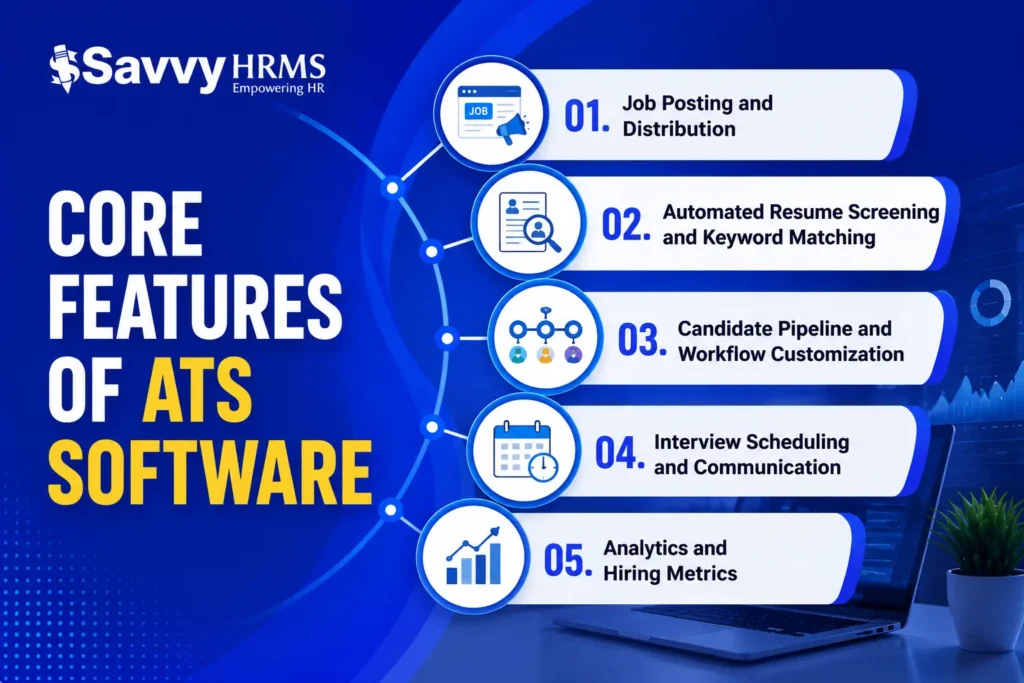
Core Features of ATS Software
Job Posting and Distribution
A cloud based applicant tracking system doesn’t just collect applications, it broadcasts your openings to the right audiences. Modern ats tracking platforms integrate with job boards, social media, and career pages, allowing you to publish once and reach candidates across multiple channels. Your applicant tracking system software automatically deduplicates applications, so you don’t review the same candidate twice.
Automated Resume Screening and Keyword Matching
Candidate tracking software uses intelligent parsing to extract key information from resumes: skills, experience level, education, and career history. You define criteria for your role (years of Python experience, project management certification, specific industry background), and the ats software automatically flags candidates who match, saving your team hours of initial screening.
Candidate Pipeline and Workflow Customization
Every organization hires differently. A cloud based applicant tracking system lets you design custom hiring workflows-from “Posted → Applied → Screened → Phone Screen → Interview → Offer → Hired” to more complex, multi-stage processes. Candidates move through the pipeline, and hiring managers see real-time progress on every open role. You can set automatic actions: send rejection emails, trigger interview invitations, or notify the hiring team when a candidate reaches a stage.
Interview Scheduling and Communication
Coordinating interview times across time zones and stakeholders is painful. Modern applicant tracking system software includes built-in calendar integration, so candidates can book available slots, and interview invitations automatically sync to hiring managers’ calendars. Candidates receive timely updates about where they stand, reducing ghosting and improving experience.
Analytics and Hiring Metrics
A cloud based applicant tracking system captures data on every hiring metric that matters: source of hire (which job board, referral channel, or organic discovery brought in your best people), time-to-hire, cost-per-hire, hiring funnel conversion rates, and diversity metrics. These insights reveal which sourcing strategies work, where your bottlenecks are, and where bias might be creeping into your process.
How a Cloud Based Applicant Tracking System Improves Hiring
Speed and Efficiency Gains
Time-to-hire is one of the most competitive hiring metrics today. When recruiting for specialized roles, the fastest team often wins. A cloud based applicant tracking system removes delays. Instead of waiting for emailed resumes, you have applications flowing into a central hub. Instead of emails bouncing between hiring managers, everyone sees candidate status in real time. Organizations using ats software report closing positions 10-15 days faster on average.
Better Candidate Experience
Candidate experience directly impacts your employer brand. When job seekers go silent after applying, they assume you’re unorganized. When they hear timely updates, even if it’s a rejection, they remember your company positively. A cloud based applicant tracking system enables consistent, automated communication: application confirmations, rejection notices, interview invitations, and offer letters all go out on schedule. Candidates know where they stand, and your team maintains a professional reputation even with candidates who don’t get hired.
Reduced Hiring Bias
Manual resume screening is prone to unconscious bias-recruiters may favor candidates with certain names, schools, or backgrounds. Modern applicant tracking system software includes structured evaluation: standard questions, blind screening options (reviewing candidates without names or photos), and audit trails showing exactly who reviewed whom and when. By standardizing the screening process, you improve both fairness and defensibility.
Data-Driven Recruitment Decisions
A cloud based applicant tracking system transforms hiring from intuition to insight. Which sourcing channels deliver the strongest candidates? Where do candidates drop out of your funnel? Do certain interview question patterns correlate with high performers? Ats tracking analytics answer these questions, helping you refine your recruitment strategy continuously. Over time, your hiring quality improves and your cost-per-hire drops.
Scalability Without Added Overhead
As your organization grows, manual hiring processes break down. If you hired 50 people last year and need to hire 150 this year, spreadsheets and email won’t scale. A cloud based applicant tracking system grows with you. Add more job openings, more hiring managers, more sourcers-the system handles the volume without slowing down. You don’t need to hire more recruiters just to manage the administrative burden.
Choosing the Right Applicant Tracking System Software
Not all ats software is created equal. Your choice should align with your organization’s size, hiring volume, industry, and technical capability.
Evaluate Your Hiring Complexity
Small teams with one or two concurrent openings and straightforward hiring workflows might thrive with a lightweight, affordable ats software. Enterprise organizations managing dozens of concurrent roles, complex approval workflows, and integration with multiple HR systems need a more robust applicant tracking system platform. Be honest about your current needs-and your needs 12 months from now.
Consider Integration Capabilities
Your applicant tracking system software doesn’t exist in isolation. It needs to integrate with your HRIS (Human Resource Information System), payroll system, background check providers, and potentially your communication or project management tools. When evaluating cloud based applicant tracking system platforms, ask about API availability, pre-built integrations, and integration support. Poor integrations create manual workarounds that defeat the purpose of automation.
Assess User Experience and Training
The best ats software sits unused if recruiters and hiring managers find it frustrating. Request a demo with your actual team. Can they navigate job posting without a manual? Can hiring managers schedule interviews intuitively? Is the interface clean on mobile, or does it require a desktop? Ease of adoption directly impacts ROI-systems that get used quickly generate value faster.
Review Reporting and Analytics Depth
All cloud based applicant tracking system platforms report on basic metrics, but depths vary widely. If you need detailed diversity reporting, source-of-hire attribution, or predictive analytics on candidate quality, verify the platform supports these. Some ats software charges extra for advanced analytics-factor that into your cost comparison.
Common Questions About ATS Tracking
How Long Does It Take to Implement a Cloud Based Applicant Tracking System?
Most modern ats software goes live in 2 – 4 weeks. Your cloud based applicant tracking system provider handles data migration, customization of hiring workflows, and staff training. The timeline depends on your organization’s complexity-a 50-person startup might launch in two weeks, while a 5,000-person enterprise with 20 concurrent job categories might take six weeks. The cloud delivery model eliminates months of IT infrastructure setup, which is a major advantage over on-premise systems.
What Happens to Data If My Cloud Based Applicant Tracking System Provider Has Downtime?
Reputable applicant tracking system software providers maintain 99.9% uptime SLAs (Service Level Agreements) and store data across geographically distributed servers. Your data is backed up continuously. In practice, modern cloud services are far more reliable than on-premise systems-a single server failure or IT oversight can’t bring down your hiring. Before signing a contract, review the provider’s uptime track record and disaster recovery plan.
Can I Export My Data If I Switch ATS Platforms?
Yes, and you should verify this contractually before choosing. Your applicant tracking system software should allow you to export candidate records, hiring history, and job posting data in standard formats (CSV, API access, or database exports). Data portability protects you-you can switch platforms if your needs change without losing critical hiring history. Reputable ats software providers make this easy; platforms that make data hostage to lock you in.
How Much Does a Cloud Based Applicant Tracking System Cost?
Pricing varies widely based on your applicant tracking system features, number of users, and job posting volume. Entry-level ats software ranges from “approx” ₹3,000 – ₹ 8,000/month for small teams; mid-market platforms run “approx” ₹15,000 – ₹50,000/month; enterprise solutions often use custom pricing. When evaluating cost, compare total cost of ownership: implementation, training, integrations, and support. A cheaper ats software that requires expensive integrations might cost more overall.
Getting Started with Your Cloud Based Applicant Tracking System
The right applicant tracking system software doesn’t just automate hiring tasks, it transforms your team’s capacity to attract, evaluate, and hire top talent. Whether you’re a startup scaling your first 50 hires or an established organization optimizing a large recruitment operation, a cloud based applicant tracking system pays for itself through faster time-to-hire, better hiring quality, and reduced administrative overhead.
The investment in modern ats tracking technology signals to your team and candidates that you take hiring seriously. When candidates experience smooth, professional, communicative recruiting, they’re more likely to accept your offers-and more likely to recommend your company to peers. That reputation compounds.
Ready to modernize your hiring workflow?
Explore how Savvy HRMS can streamline your applicant tracking system workflow with automated candidate tracking, intelligent screening, and integrated hiring analytics. Schedule a free demo to see how our cloud based applicant tracking system works for teams like yours.
Book a Demo Today