

How to Improve Employee Engagement for Better Performance in 2026



-
AuthorRuchika Rajput
-
 Last Updated
March 25, 2026
Last Updated
March 25, 2026
-
 Reading Time
8 Mins
Reading Time
8 Mins
Employee engagement is not a “nice-to-have” anymore; it is a necessity for organizations in 2026. In this blog, you will learn how to enhance employee engagement strategies to overcome common challenges faced by organizations.
Low motivation levels, high employee turnover rates, burnout, and poor communication are common challenges faced by different companies. Engaged employees are those who are more productive and help organizations grow.
Improving employee engagement is a way to overcome all these challenges faced by organizations. You will learn how various technologies, such as attendance management tools, leave management tools, and payroll management tools, can help organizations improve their employee engagement plan.
What Is Employee Engagement?
Employee engagement is the emotional commitment and level of involvement employees have towards the organization and its goals. Employees who are engaged are not only motivated and excited but are also ready to contribute beyond their job requirements towards the growth of the organization.
Unlike job satisfaction, which is an emotional state, employee engagement is an emotional commitment towards the organization. It is not just about the job one is doing but about the values, vision, and culture of the organization. It is one of the important areas for HR professionals in 2026.
Why Employee Engagement Matters in 2026?
In 2026, employee engagement is an important aspect that drives productivity and retention within an organization.
1. Drives Higher Productivity
When employees are engaged within an organization, this means that they are more focused and committed to their daily tasks and responsibilities. As a result, this improves productivity since employees are more answerable and responsible for the quality of work being delivered to the company.
2. Reduces Employee Turnover
High employee engagement within an organization improves emotional commitment, which reduces the chances of employees resigning from the organization. As a result, this helps the organization save on costs associated with recruiting new employees while maintaining continuity among the employees.
3. Minimizes Absenteeism
When employees are engaged within an organization, this helps reduce cases of absenteeism. As a result, this improves attendance management systems within an organization.
4. Enhances Workplace Culture
Employee engagement within an organization helps improve the workplace culture significantly. This boosts trust and collaboration within the organization while creating an environment where employees are comfortable working together.
5. Improves Customer Experience
Engaged employees are more likely to provide a positive customer experience, show passion, and be responsive to customer requirements, thus creating a positive impact on the customer relationship in terms of loyalty and reputation.
6. Strengthens Employer Branding
Companies with high employee engagement are more likely to attract the best talent in the industry, as a positive employee experience improves employer branding.
7. Supports Sustainable Business Growth
Employee engagement helps to align personal and business objectives, thus creating a positive impact on business performance, innovation, and sustainability in a highly competitive and technology-driven business environment.
What are the Key Drivers of Employee Engagement?
1. Strong Leadership and Transparent Communication
Leadership style plays an important role in employee engagement. Leaders who exhibit transparent communication styles, identify with employees, and provide feedback can boost employee engagement.
Employees look for leaders who can listen. This can be achieved through regular town hall sessions, feedback surveys, and check-in sessions.
2. Recognition and Rewards
Recognition has been identified as one of the strongest engagement drivers. When employees feel that their efforts are recognised, it can enhance their productivity.
In 2026, data-driven recognition systems that integrate with payroll softwarecan be implemented.
3. Career Development and Growth Opportunities
Professional development plays an important role in employee engagement. When employees are aware that there are growth opportunities, it can improve employee engagement.
Training sessions, mentorship programs, and skill development platforms can be implemented for the development of employees.
4. Work-Life Balance and Flexibility
Work flexibility is essential in the modern workplace environment. It is important for maintaining a work-life balance. A good attendance management or leave management system is necessary for maintaining transparency as well as flexibility.
Employees are able to manage their time effectively if a proper attendance management or leave management system is implemented, which reduces stress levels.
5. Technology-Driven HR Processes
Employees are frustrated if outdated processes are implemented by the HR department.
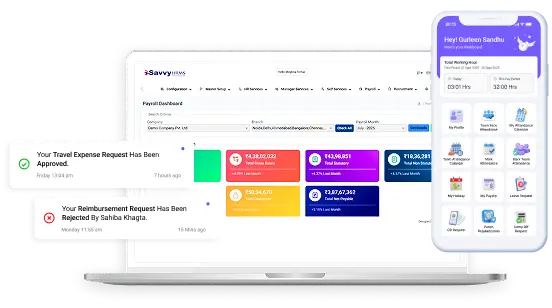
HRMS systems are essential for maintaining correct attendance records and leave records, as well as integrating payroll software.
A good attendance management or leave management system increases the level of satisfaction among employees, which directly impacts employee engagement.
What Are the Practical Strategies to Improve Employee Engagement in 2026?
1. Conduct Regular Engagement Surveys
Data-driven decisions start with knowing the current employee view. Anonymous surveys help to understand the concerns, expectations, and areas of improvement.
It is important to act on the feedback received from employees. If not, employees tend to disengage from work.
2. Improve Onboarding Experience
The engagement of employees starts from day one. A well-structured and planned onboarding process helps employees understand the company culture, expectations, and growth opportunities.
It helps to ease the anxiety of new employees and instill confidence within them. HR software helps to create a better onboarding experience by automating the process.
3. Set Clear Goals and KPIs
Clarity is key to performance. Employees need to understand the purpose of their work and how it helps achieve company goals and objectives.
A goal-setting framework helps to set goals, and performance management software helps to set KPIs.
4. Foster a Culture of Feedback
The traditional performance review is now missing somewhere. Continuous feedback helps employees improve.
HR software helps to track performance and document employee performance for better performance reviews.
5. Promote Team Collaboration
Team collaboration is an effective way to increase employee engagement. This can be achieved by undertaking cross-functional projects, brainstorming, and team-building activities.
Digital communication platforms and HR technology platforms promote transparency across various departments and promote team collaboration and efficiency.
6. Ensure Fair Compensation and Timely Payroll
Transparency in employee compensation is one of the most important aspects of employee engagement. Delaying salaries and inaccuracies in payroll software can negatively impact employee trust.
Using payroll software can promote timely salaries, tax compliance, and accuracy, thus improving employee trust and satisfaction.
7. Support Employee Well-being
Promoting employee well-being is an effective way to increase employee engagement. This can be achieved by undertaking mental health initiatives, flexible leave management, and wellness programs.
When an employee feels supported, it can increase employee engagement to a great extent.
What is The Role of HR Technology in Driving Engagement?
1. Simplifies Attendance Management
Modern attendance management systems have simplified attendance tracking, eliminating room for error and improving transparency. Employees can be more aware of work timings, thereby enhancing trust and employee engagement.
2. Simplifies Leave Management
Digital leave management platforms have simplified employee leave requests and tracking. This has helped eliminate confusion and promoted employee engagement.
3. Ensures Accurate Payroll Processing
Integrated payroll management software ensures the timely and correct payment of salaries. This has helped build financial security, thereby improving trust and employee engagement.
4. Enables Real-Time Performance Tracking
Modern HR technology offers platforms to track employee performance, including goal tracking, feedback, and appraisal. This has helped promote employee growth and employee engagement.
5. Empowers Employee Self-Service
Employee Self-service platforms have empowered employees to view pay slips, attendance records, and personal details. This has helped promote employee engagement.
6. Provides Data-Driven Insights
HR technology offers data analytics, which have helped identify employee engagement trends, absenteeism, and productivity. This has helped leaders implement strategies to continuously improve employee engagement.
What are the Common Mistakes to Avoid?
However, even good-intentioned companies face issues while attempting to improve employee engagement. Identifying these issues early helps leaders create better and more sustainable employee engagement strategies.
1. Not taking employees’ feedback seriously
Conducting surveys to collect employees’ feedback and not taking any action based on the results undermines trust within the organization. Employees feel that their opinions don’t matter, leading to low employee engagement.
2. Dependency on financial incentives
While financial incentives play an important role in increasing employee engagement, there are other equally important factors that contribute to better and more sustainable employee engagement.
3. Not investing in middle management
Managers play an essential role in influencing employees’ daily experiences. Middle managers directly influence employees’ experiences and can significantly affect overall employee engagement within an organization.
4. Not investing in attendance and payroll software
Not investing in attendance and payroll software results in errors in salary calculation and attendance records, which negatively impact overall employee engagement within an organization.
5. Not making employee engagement a continuous process
Employee engagement is not just a one-time activity within an organization. It needs to be a continuous process.
6. Neglect of work-life balance policies
Inflexible work schedules and unclear leave policies are a cause of burnout. Flexible work-life balance policies make the workforce feel valued.
7. Unclear career growth opportunities
A lack of understanding of growth opportunities makes the workforce lose interest. Career growth opportunities strengthen workforce commitment.
8. Poor communication during organizational changes
Uncertainty during organizational changes, such as restructuring, digitalization, or changes in policies, creates anxiety among the employees.
Conclusion
To improve employee engagement within an organization in 2026, strategic leadership, open communication, fair remuneration, and HR technology are key aspects to focus on. Improving the effectiveness of attendance management systems, leave management systems, and payroll software will not only improve trust within an organization but will also improve productivity and contribute to employee loyalty.
Employee engagement is a continuous process and not just a one-time activity. Organizations that implement data-driven strategies and utilize HR technology solutions like Savvy HRMS will be able to develop a high-performing workforce.