


Central government employees and pensioners have a fresh reason to watch the 8th Pay Commission closely. With data collection now complete and the Commission actively meeting employee unions in Delhi, the process is entering a more decisive phase.
8th Pay Commission Latest Update
The 8th Central Pay Commission has issued a fresh notice inviting Associations, Federations, and Unions of Central Government and Union Territory employees for direct interaction. According to the official notice dated 23rd July 2026, the Commission will meet with stakeholders registered in Delhi on 7th August (Friday) and 10th August (Monday), 2026.
The notice also clarifies that organisations which have already submitted their memorandum but haven’t yet had a chance to meet the Commission, in Delhi or in any State/UT, can still request an appointment. This had to be done online through the Commission’s official form portal, using their unique Memo ID, by 31st July 2026. Venue and timing details for the August meetings are expected to be shared separately. Importantly, the notice signals that more such meetings will follow in Delhi and across other States and UTs in the coming months, with updates to be posted on the Commission’s official website.
This comes right after another key milestone: the deadline for ministries, government departments, and Union Territories to submit employee-related data has officially ended, giving the Commission the inputs it needs to begin detailed evaluation.
| Payroll teams tracking Pay Commission updates manually risk missing critical compliance windows; Savvy HRMS’s payroll software flags regulatory changes automatically, so nothing slips through. |
Why Was the Data Collection Process So Important?
The data collection phase wasn’t just a formality; it forms the backbone of the entire pay revision exercise. The 8th Pay Commission had extended the deadline for submission of workforce data through its online Data Collection Portal to 31 July 2026, giving Ministries, Departments, and UTs extra time to submit accurate numbers. This data includes details of contractual and outsourced manpower, and is meant to support the Commission’s ongoing salary revision exercise.
Without accurate workforce data, the Commission cannot realistically model fitment factors, pay matrix slabs, or the fiscal impact of a revision. Essentially, this phase decides how well the Commission understands who it’s revising pay for, from permanent staff to outsourced workers, before any numbers can be finalised.
What Happens Next in the 8th Pay Commission Process?
With data collection wrapped up, attention now shifts to consultations. The Commission is continuing consultations with employee unions, pensioner associations, and government departments, and while employee organisations have proposed a higher fitment factor and various pension reforms, the Commission has not yet finalised the fitment factor, revised pay matrix, allowances, or pension revision formula.
The Delhi meetings scheduled for 7th and 10th August fall right within this consultation window, meaning union feedback gathered in these sessions could directly influence the Commission’s eventual recommendations. Following this, the Commission is expected to move deeper into number-crunching, analysing submitted data, weighing union demands, and drafting its report.
| Clean, accurate employee data is the backbone of error-free payroll, just as it is for the Pay Commission’s evaluation. Savvy HRMS payroll software keeps your salary, PF, and gratuity data audit-ready at all times. |
Could Government Employees See a Major Salary Revision Soon?
Millions are hopeful, but the process still has ground to cover. Even with the data collection phase complete, millions of central government employees and pensioners waiting for announcements on revised salaries and pensions may need to wait longer before anything concrete is announced.
That said, the scale of the expected revision is significant. The Commission’s recommendations will benefit around 50 lakh central government employees and 69 lakh pensioners, and will also have ripple effects on state government pay structures. Some estimates suggest a proposed fitment factor and resulting minimum wage increase in the range of 30-35%, though these figures remain unofficial until the Commission formally submits its recommendations.
How Could the 8th Pay Commission Impact Salaries and Pensions?
A revised pay structure would primarily affect two things: basic pay and pension calculations. Historically, pay commissions have used a “fitment factor”, a multiplier applied to existing basic pay, to arrive at revised salaries. Employee unions have already pushed for a higher fitment factor than what was used in the 7th Pay Commission, hoping for a bigger jump in take-home pay.
Separately, and outside the Commission’s own timeline, the Union Cabinet has already approved a 2% increase in Dearness Allowance and Dearness Relief effective from 1 January 2026, taking the DA/DR rate from 58% to 60% of Basic Pay/Pension. This DA hike is a routine, twice-yearly adjustment and is separate from whatever the 8th Pay Commission eventually recommends, but it does offer some interim relief while the bigger revision is worked out.
| Every time pay structures shift, whether due to a Pay Commission revision or your own appraisal cycle, recalculating basic pay, PF, and gratuity by hand invites errors. Savvy HRMS payroll software automates these recalculations instantly, keeping your payroll compliant and accurate. |
When Can the Final Report Be Expected?
The Commission was given 18 months to submit its report, with interim reports to be released as and when they are finalised, and its recommendations were originally expected to take effect from 1st January 2026. However, with data collection only just concluding in mid-2026 and consultations still ongoing through August, that original effective date looks increasingly unlikely to hold without a retrospective arrears payout.
Some financial research reports have flagged possible delays, suggesting the actual rollout could slip further. Until the Commission completes its consultations, finalises the fitment factor, and submits its report, employees and pensioners will need to track official updates rather than depend on speculative timelines, and with more union meetings lined up for August and beyond, the coming months should bring more clarity.

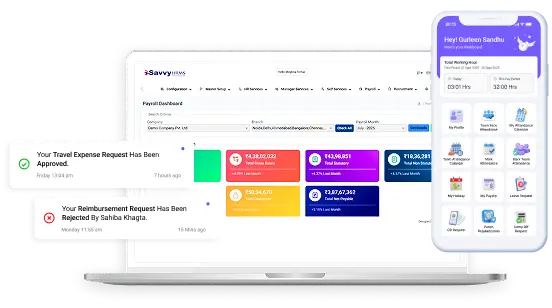









Don't let payroll compliance become a scramble. Run accurate, audit-ready payroll every cycle with Savvy HRMS.