


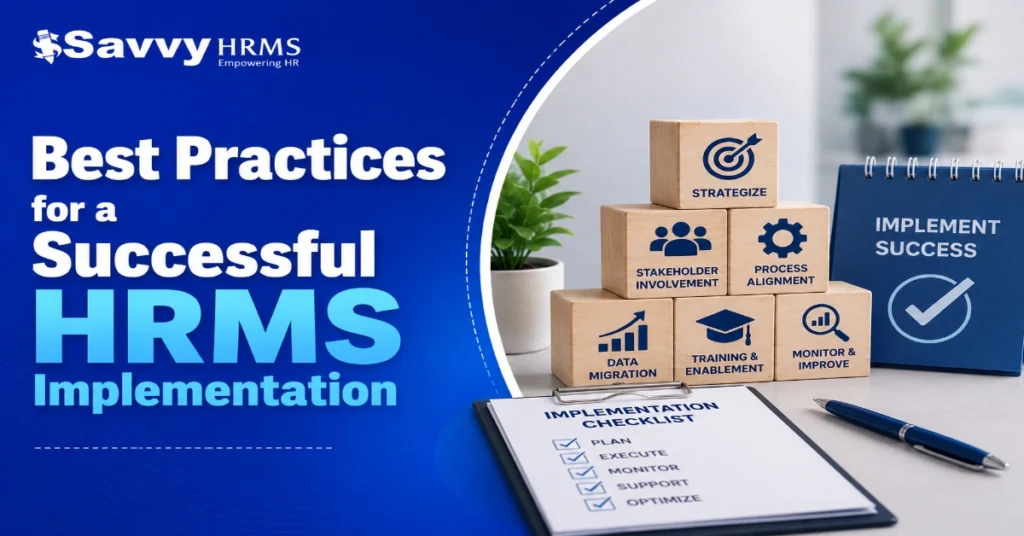

The process of HRMS Implementation in any company is considered one of the biggest and most important steps that should be taken to ensure the efficiency of the company’s HR and payroll management. But just purchasing proper software doesn’t mean much. It is much more important to implement HRMS correctly. Correct implementation will help businesses to improve the processes, increase accuracy, improve the employees’ experience, and save lots of time.
There are various examples when companies started implementing digital HR solutions but faced various problems such as ineffective planning, the lack of employee support, problems with migrating data, or insufficient training. Fortunately, there are ways to avoid all those difficulties with correct planning and implementation. Proper application of HRMS implementation best practices will guarantee a smooth process and quick ROI.
Both for new implementation and replacement of HRMS, a correct plan plays a great role in the process. This blog provides information that can be helpful to any business implementing HRMS.
What Is HRMS Implementation?
HRMS Implementation refers to the entire procedure of planning, customizing, deploying, and integrating a Human Resource Management System within an organization’s HR operations. The procedures include installation of the software, transferring of employees’ data, configuration of the workflow, integration with the payroll and attendance systems, testing of the software, training of the users, and finally deployment of the system.
The aim of HRMS implementation is not only to implement the software but to change HR operations from a traditional manual process to a modernized automated process that is driven by data.
The implementation process usually includes:
- Understanding business requirements
- Choosing the right HRMS solution
- Data preparation and migration
- System configuration
- Integration with existing applications
- User training
- Testing and validation
- Go-live and post-implementation support
When each of these stages is carefully planned, businesses can minimize disruptions and maximize the benefits of their HR technology investment.
What Are the Key Best Practices for Implementing HR Technology Successfully?
Implementing HR technology requires careful planning and collaboration across departments. Here are the best practices that contribute to a successful HRMS implementation.
1. Define Clear Business Goals
Identify what you need to accomplish using the HRMS. Some of your objectives may involve automating payroll, attendance, improving employee self-service functions or meeting the regulatory compliance requirements.
Setting clear objectives enables you to identify the right features and prioritize the activities involved in implementing your HRMS project.
2. Involve Key Stakeholders Early
The HRMS affects several departments in the organization such as HR, Payroll, Finance, Information Technology, and Management among others. Involving them in your project from the early stages will ensure that all their requirements are met.
It will also reduce the resistance in implementing the system due to early buy-in of the users.
3. Choose the Right HRMS
There is no single software which meets every business requirement. Identify a right HRMS which is required for your needs and is compatible with your size and the kind of business you run and plan to grow.
Such HRMS should have the following features;
- Payroll Management
- Attendance and Leave Management
- Recruitment
- Performance Management
- Employee Self Service
- Mobile Access
- Compliance Management
- Reporting & Analytics
4. Review Existing HR Processes
Before you introduce any new technology, you should assess your existing HR processes first.
Some of the questions to ask are:
- What tasks take up too much of your time?
- What tasks lead to mistakes?
- Where could automation increase efficiency?
Process optimization will ensure that you do not bring any inefficiency into the system.
5. Prepare Accurate Employee Data
The migration of data is one of the most important steps during the HRMS implementation process.
Make sure that all duplicate, inaccurate, or outdated data is cleaned up before migrating it into the new HR system.
6. Develop a Detailed Implementation Plan
A well-planned implementation strategy will keep everybody on track.
It should consist of the following elements:
- Timeline
- Responsibilities
- Milestones
- Risk management
- Testing schedule
- Go live date
- Support plan
7. Limit Unnecessary Customization
The modern HRMS systems come with the best practices in the industry.
It is advisable not to make too much customization that might not be necessary for your business. Too many customizations may make the system expensive, time-consuming, and even hard to upgrade.
8. Train Employees Thoroughly
The best HRMS system will not work without the proper knowledge of how to use it.
Make sure employees are trained on how to use the software depending on their roles.
These roles include:
- HR personnel
- Managers
- General employees
- Payroll staff
9. Communicate Throughout the Project
The employees need to be informed of the reasons for adopting the new HRMS and the benefits of using it.
Communication during the entire process makes employees accept the new system.
10. Test Before Going Live
Test extensively before going live with the system.
This should involve:
- Payroll calculations
- Leave balances
- Attendance
- Employees’ processes
- Approvals
- Reporting
- Integration
Testing will reveal any problems that can be fixed prior to employees going live on the system.
11. Monitor Performance After Go-Live
Implementation is not over when the system goes live.
Monitoring system performance and addressing any feedback from employees is crucial for continued success.
Why Is HRMS Implementation Important for Businesses?
An effective HRMS implementation creates value across the entire organization.
1. Improves Operational Efficiency
Eliminating the need to perform repetitive administrative processes enables HR personnel to devote more time to strategic activities.
2. Reduces Human Errors
Calculating payroll manually and maintaining records via spreadsheets frequently leads to errors that may cost a business money. The HRMS software helps to decrease error rates in data processing.
3. Enhances Employee Experience
Employees have access to self-service portals enabling them to request leave, receive payslips, update personal information and check their attendance at any time.
4. Strengthens Compliance
Properly set up HRMS ensures that the business complies with labor laws and statutes without compromising on its compliance.
5. Supports Better Decision-Making
The real-time analytics help HR managers to make better decisions regarding the workforce based on reliable data.
6. Scales with Business Growth
HRMS software scales up together with the business adding more employees and HR functions with no hassle.
How to Measure the Success of HRMS Implementation?
A successful implementation should deliver measurable business outcomes. Organizations should evaluate performance using key metrics such as:
1. User Adoption Rate
A high level of engagement of employees within the system shows successful implementation and adequate training.
2. Time Saved on HR Processes
Assess how much time is spent on payroll activities, attendance tracking, leave management, and onboarding before and after the implementation.
3. Payroll Accuracy
Determine the reduction in errors in the payroll process, salary disputes, and processing time.
4. Employee Satisfaction
Collect opinions of employees about the HRMS regarding usability and accessibility.
5. Compliance Performance
Determine improvement in statutory filing, audit management, and compliance management.
6. Return on Investment (ROI)
Determine savings made by automating processes and increasing productivity and minimizing paperwork and errors.
When these indicators improve, one can conclude that the implementation of the HRMS has been successful.
Why Choose Savvy HRMS for HRMS Implementation?
Choosing the right implementation partner is just as important as selecting the right software. Savvy HRMS simplifies the entire HRMS implementation journey by combining advanced technology with expert guidance and ongoing support.
Here’s why businesses trust Savvy HRMS:
1. End-to-End Implementation Support
From requirement analysis and system configuration to data migration, user training, and post-launch assistance, Savvy HRMS supports every stage of implementation.
2. Easy-to-Use Interface
The platform is designed with user experience in mind, making it simple for HR teams, managers, and employees to adopt quickly.
3. Comprehensive HR & Payroll Features
Savvy HRMS offers an all-in-one solution covering:
- Payroll Management
- Attendance Management
- Leave Management
- Recruitment Management
- Employee Self-Service
- Performance Management
- Expense Management
- Compliance Management
- HR Analytics and Reports
4. Highly Scalable
Whether you’re a growing startup, an SME, or a large enterprise, Savvy HRMS adapts to your evolving workforce and business requirements.
5. Secure and Reliable
With strong security measures, regular updates, and cloud-based accessibility, organizations can confidently manage sensitive employee information.
6. Dedicated Customer Support
The implementation team works closely with clients to ensure a smooth transition, resolve issues quickly, and help organizations maximize the value of their HRMS investment.
By choosing Savvy HRMS, businesses can confidently modernize their HR operations while reducing implementation risks and accelerating digital transformation.
Conclusion
An effective HRMS implementation entails much more than the installation of any software. Careful planning, business goals, cooperation of stakeholders, good data, training of employees, and continuous improvement form the key components of such projects. Companies that adhere to all these principles have a chance of becoming more productive and compliant, engaged, and successful.
Are you searching for an effective HRMS solution which ensures smooth implementation along with advanced HR and payroll features? Look no further because Savvy HRMS is the perfect choice for your company!

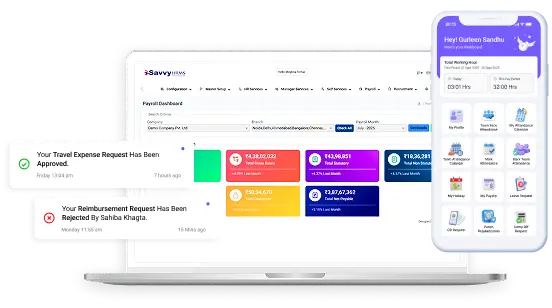









Ready to transform your HR operations?
Contact Savvy HRMS today and discover how our comprehensive HRMS solution can simplify implementation, streamline your HR processes, and support your business growth.