

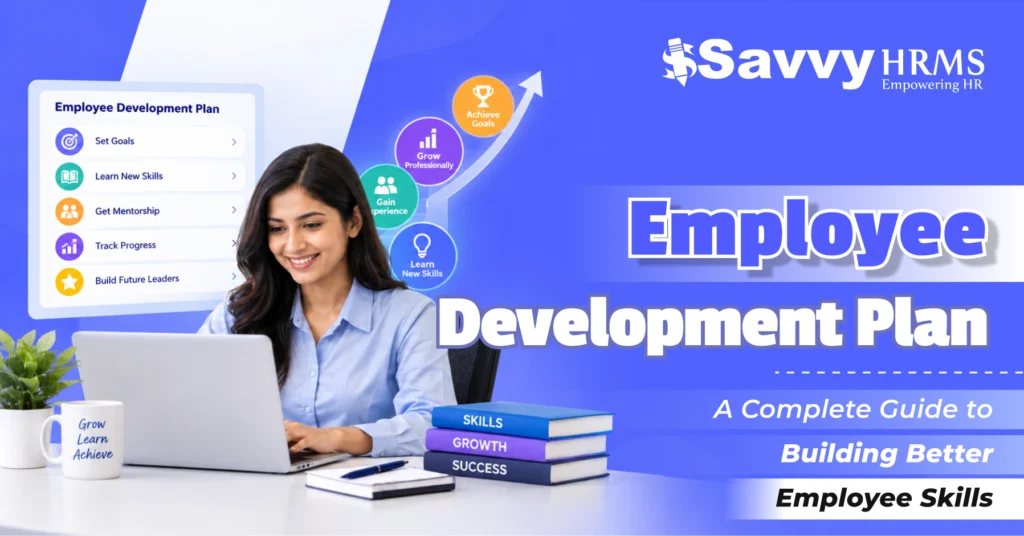
Employee Development Plan: A Complete Guide to Building Better Employee Skills


-
AuthorC.S. Verma
-
 Last Updated
September 22, 2026
Last Updated
September 22, 2026
-
 Reading Time
18 Mins
Reading Time
18 Mins
How can organizations help employees build the right skills while improving their performance and preparing them for future roles? A successful employee development plan provides a structured way to identify skill gaps, set development goals, provide learning opportunities, and support continuous career growth.
Employees today want more than a job; they want opportunities to learn, grow, and progress. At the same time, businesses need skilled employees who can adapt to changing technologies, customer expectations, and business requirements. Employee development plans help connect individual career aspirations with organizational goals.
A well-designed employee development plan can improve employee skills, performance, engagement, productivity, and retention. By combining training, mentoring, coaching, practical experience, and measurable goals, HR teams and managers can create a culture of continuous learning and build a stronger, future-ready workforce.
So, let’s explore how employee development plans work, why they matter, and how organizations can use them to build stronger skills and better performance.
TL;DR
- Employee Development Plan (EDP) provides a structured roadmap for employee growth and career development.
- Identifies skill gaps, strengths, and development needs.
- Sets SMART goals with clear timelines and success measures.
- Supports learning through training, mentoring, coaching, job rotation, and practical projects.
- Improves employee skills, performance, engagement, and retention.
- Helps organizations prepare employees for future roles and leadership positions.
- Regular reviews and feedback keep development plans relevant and measurable.
- HRMS software simplifies tracking of skills, goals, training, performance, and career growth.
What Is an Employee Development Plan?
An employee development plan (EDP) is a structured plan that highlights how an employee can improve their skills, knowledge, competencies, and performance to achieve current and future career goals. It identifies development needs, establishes measurable objectives, and defines specific learning activities and timelines.
An employee development plan is usually created collaboratively by the employee, manager, and HR team. Rather than focusing only on weaknesses, it can also identify existing strengths and opportunities for employees to use those strengths in broader responsibilities.
For example, an employee who wants to move into a managerial position may need to develop leadership, communication, representation, decision-making, and conflict-resolution skills. Their employee development plan could include leadership training, mentoring, project ownership, and regular feedback from their manager.
A general employee development plan answers five important questions:
- Where is the employee currently?
- What skills does the employee need to develop?
- Where does the employee want to go professionally?
- What development activities will help them get there?
- How will progress and success be measured?
Employee development plans can be used for new employees, existing team members, high-potential employees, future managers, and employees preparing for internal career opportunities.
Why Is an Employee Development Plan Important?
Employee development plans are important because they give employees a clear roadmap for improving their skills and progressing in their careers. They also help organizations build the capabilities required to achieve long-term business objectives.
Here are some of the key benefits of employee development plans:
1. Improves Employee Skills
A development plan helps employees focus on specific technical and soft skills they need to strengthen. Instead of depending on general training, organizations can provide learning opportunities based on individual requirements.
2. Improves Employee Performance
When employees understand which capabilities they need to improve and receive appropriate support, they can perform their responsibilities more effectively. Development goals can also be linked to performance objectives.
3. Supports Career Growth
Employees are more likely to see a future within an organization when they understand how they can develop their careers. Employee development plans can create pathways toward promotions, expanded responsibilities, or new roles.
4. Increases Employee Engagement
Employees often feel more valued when organizations actively invest in their professional development. Learning opportunities, career discussions, coaching, and recognition can contribute to stronger employee engagement.
5. Helps Retain Talent
Employees who have opportunities to learn and advance may be less likely to look for growth opportunities elsewhere. A strong employee development strategy can therefore support employee retention.
6. Builds a Future-Ready Workforce
Business requirements constantly change. Organizations need employees who can learn new technologies, processes, and ways of working. Employee development plans help companies proactively build these capabilities.
7. Supports Succession Planning
Development plans can prepare employees for future positions, including leadership and critical roles. This helps organizations create a stronger internal talent pipeline.
What Are the Key Components of an Employee Development Plan?
An effective employee development plan should contain clear information about the employee’s current capabilities, development needs, goals, activities, timelines, and progress measures.
The key components include:
1. Current Skills and Competencies
Start by identifying the employee’s existing skills, knowledge, qualifications, and competencies. This establishes a baseline for development.
2. Development Needs or Skill Gaps
Identify the difference between the employee’s current capabilities and the skills required for their current or future role. Skill gap analysis can help make this process more objective.
3. Career Goals
The plan should reflect what the employee wants to achieve professionally. Goals could include becoming a team leader, developing a specialized skill, taking on a new responsibility, or preparing for a promotion.
4. Development Goals
Development goals should clearly explain what the employee needs to achieve. These goals should ideally be specific, measurable, achievable, relevant, and time-bound.
5. Learning and Development Activities
The plan should identify how the employee will develop the required skills. Activities may include courses, workshops, mentoring, coaching, job rotation, shadowing, projects, or self-directed learning.
6. Timeline
Each development goal should have a realistic target date or review period. A timeline creates accountability and makes progress easier to track.
7. Required Resources
Identify the resources needed to achieve the goal, such as training budgets, learning and development platforms, mentors, managers, certifications, or project opportunities.
8. Progress Measurement
Define how success will be evaluated. Depending on the goal, this could include assessment scores, project results, productivity improvements, performance ratings, completed certifications, or manager feedback.
9. Review and Follow-Up
Employee development should be continuous. Regular check-ins allow managers and employees to review progress, address challenges, and adjust goals when business or career priorities change.
How to Create an Effective Employee Development Plan
Creating an employee development plan does not have to be complicated. A structured approach can help HR teams and managers create plans that are practical, measurable, and aligned with business requirements.
Step 1: Assess the Employee’s Current Performance
Begin with the employee’s current performance, responsibilities, strengths, and areas for improvement. Use performance reviews, manager feedback, self-assessments, project outcomes, and competency assessments where appropriate.
Step 2: Identify Skill Gaps
Compare the employee’s current skills with the capabilities required for their current or desired future role. This helps identify specific areas that require development.
Step 3: Discuss Career Aspirations
Have an open conversation with the employee about their career interests. Understanding their goals makes it easier to create a development plan that is meaningful and motivating.
Step 4: Set Development Goals
Create specific goals based on the identified skill gaps and career objectives. Avoid indefinite goals such as “improve communication.” Instead, define what improvement should look like and how it will be measured.
Step 5: Select Appropriate Development Activities
Choose activities that match the skill being developed. Technical skills may require courses or certifications, while leadership skills may benefit more from mentoring, coaching, or real-world project experience.
Step 6: Set Timelines
Assign realistic deadlines or milestones for each goal. Smaller milestones can make longer development objectives easier to manage.
Step 7: Define Success Metrics
Decide how progress will be measured. Metrics should be connected to the specific development objective rather than depending only on completion of training.
Step 8: Review Progress Regularly
Managers should schedule regular development conversations rather than discussing the plan only during annual performance reviews. Frequent check-ins help employees stay on track.
Step 9: Update the Plan
Employee development plans should be updated. New business requirements, role changes, completed training, or changing career interests may require the plan to be updated.
How to Identify Employee Skills and Development Needs?
Identifying employee skills and development needs is one of the most important steps in creating an effective employee development plan. Organizations should look at both current performance and future role requirements.
Here are several ways to identify development needs:
1. Performance Reviews
Performance reviews can reveal areas where an employee is performing well and areas that require improvement. However, development discussions should go beyond performance ratings and focus on specific competencies.
2. Self-Assessments
Employees can evaluate their own skills, interests, strengths, and development needs. Self-assessments can provide valuable insights that managers may not always observe.
3. Manager Feedback
Managers can identify skill gaps based on daily work, project performance, collaboration, communication, and problem-solving.
4. 360-Degree Feedback
Feedback from managers, peers, direct reports, and other stakeholders can provide a broader perspective on an employee’s capabilities.
5. Competency Frameworks
Organizations can use competency frameworks to define the skills and behaviors required for different roles and compare them against employee capabilities.
6. Skill Gap Analysis
A skill gap analysis compares current employee capabilities with the skills required to achieve specific business or role objectives. It can be particularly useful for workforce planning and future skill development.
7. Employee Career Discussions
Regular one-on-one career conversations can help HR and managers understand employees’ aspirations and identify development opportunities aligned with those goals.
How to Set SMART Goals for Employee Development?
SMART goals make employee development goals more specific and measurable. SMART stands for Specific, Measurable, Achievable, Relevant, and Time-bound.
For example, instead of setting the goal:
“Improve presentation skills.”
A SMART employee development goal could be:
“Complete a presentation skills course and deliver three client presentations within the next six months, with an average manager feedback score of at least 4 out of 5.”
The goal is:
- Specific: Focuses on presentation skills.
- Measurable: Includes three presentations and a feedback score.
- Achievable: Provides a realistic development target.
- Relevant: Supports professional responsibilities.
- Time-bound: Has a six-month deadline.
Examples of SMART employee development goals include:
- Complete an advanced Excel certification within four months.
- Improve customer communication by completing a communication workshop and achieving a defined customer satisfaction target within six months.
- Develop leadership skills by leading at least two cross-functional projects within the next year.
- Learn a new HR technology platform and independently complete defined workflows within three months.
- Improve public speaking by delivering one internal presentation every month for six months.
SMART goals make employee development plans easier to track and evaluate because both employees and managers have a clear understanding of what success means.
What Are the Different Types of Employee Development Activities?
Employee development activities should be selected according to the employee’s role, skill gaps, career goals, and preferred learning methods. A combination of formal and practical learning can often produce better results.
1. Training Programs
Formal training programs can help employees develop technical, functional, compliance, communication, leadership, or industry-specific skills.
2. Online Courses
Online learning gives employees flexibility to develop skills at their own pace. It can be useful for technology, business, management, language, and professional skills.
3. Mentoring
Mentoring connects employees with experienced professionals who can provide guidance, career advice, and practical knowledge.
4. Coaching
Coaching focuses on improving specific behaviors, skills, or performance areas through regular guidance and feedback.
5. Job Shadowing
Employees can learn by observing experienced colleagues perform specific responsibilities. This is particularly useful when employees are preparing for new roles.
6. Job Rotation
Job rotation allows employees to work in different functions or responsibilities, helping them develop broader organizational knowledge and transferable skills.
7. Stretch Assignments
A stretch assignment gives an employee responsibility beyond their usual role while still providing appropriate support. It can help build problem-solving, leadership, and decision-making abilities.
8. Cross-Functional Projects
Working with other teams exposes employees to different processes, perspectives, and business functions.
9. Conferences and Workshops
Industry events and workshops can help employees learn about new trends, technologies, practices, and professional approaches.
10. Certifications
Professional certifications can help employees develop specialized knowledge and demonstrate competency in a particular field.
11. Peer Learning
Employees can learn from one another through knowledge-sharing sessions, communities of practice, workshops, and collaborative projects.
12. Leadership Development Programs
High-potential employees and future managers can participate in leadership programs covering delegation, communication, decision-making, conflict management, and strategic thinking.
How Managers and HR Can Support Employee Development?
Employee development is most effective when employees, managers, and HR work together. HR can provide the framework and resources, while managers provide day-to-day guidance and employees take ownership of their development.
1. Role of HR
HR teams can:
- Create employee development frameworks and policies.
- Establish competency models.
- Provide learning and development resources.
- Coordinate training and certification programs.
- Track development progress.
- Support succession planning.
- Analyze workforce skill gaps.
- Connect development programs with performance management.
- Use HR technology to centralize development information.
2. Role of Managers
Managers can:
- Conduct regular development conversations.
- Provide constructive feedback.
- Recommend relevant learning opportunities.
- Assign meaningful projects.
- Offer coaching and mentoring.
- Recognize employee progress.
- Provide opportunities to apply newly developed skills.
- Help employees connect their goals with team and business objectives.
3. Role of Employees
Employees should actively participate by:
- Taking ownership of their development goals.
- Completing agreed learning activities.
- Asking for feedback.
- Applying new skills at work.
- Tracking their progress.
- Communicating challenges with managers.
- Identifying new areas for growth.
This shared responsibility creates a stronger employee development culture.
How to Measure the Success of an Employee Development Plan?
Employee development should be measured using outcomes rather than simply counting completed training programs.
Organizations can use several metrics to evaluate employee development plans:
1. Skill Improvement
Assess whether employees have developed the specific skills identified in their employee development plans. This can be measured through:
- Skill assessments
- Practical assignments
- Manager observations
- Before-and-after assessments
- Demonstration of new skills at work
2. Performance Improvement
Compare the employee’s performance before and after completing development activities. Look for measurable improvements such as:
- Higher productivity
- Better work quality
- Fewer errors
- Faster project completion
- Improved customer satisfaction
3. Goal Completion
Track whether employees are achieving the development goals defined in their employee development plans. Regularly review completed, ongoing, and delayed goals to understand overall development progress.
4. Training Effectiveness
Training completion alone does not indicate successful development. Organizations should evaluate whether employees are actually applying what they learned in their day-to-day work and demonstrating improved capabilities.
5. Internal Mobility
Monitor how employee development contributes to career progression. Useful indicators include:
- Promotions
- Internal transfers
- Expanded responsibilities
- New role assignments
- Movement into leadership positions
6. Employee Engagement
Employee feedback can help organizations understand whether development opportunities are improving engagement. Surveys can measure whether employees feel supported, valued, and confident about their career growth.
7. Retention
Effective development opportunities can contribute to employee retention by giving employees clearer career paths and growth opportunities. Organizations can compare retention trends among employees participating in development programs.
8. Manager Feedback
Managers play an important role in evaluating whether employees are applying newly developed skills. Regular feedback can highlight improvements, remaining gaps, and areas that may require additional coaching or training.
A balanced approach combining learning, behavior, performance, and business outcomes provides a more accurate picture of development success.
Common Challenges in Employee Development and How to Overcome Them
Although employee development plans can provide significant benefits, organizations may face challenges when implementing them.
1. Unclear Development Goals
Challenge: Employees may have broad goals without clear outcomes.
Solution: Use SMART goals with defined metrics and deadlines.
2. Limited Time for Learning
Challenge: Employees may struggle to balance development activities with daily responsibilities.
Solution: Integrate learning into regular work through mentoring, job rotation, project assignments, and short learning sessions.
3. Lack of Manager Support
Challenge: Development plans may lose momentum when managers do not provide regular guidance.
Solution: Make development conversations part of regular manager-employee check-ins.
4. One-Size-Fits-All Training
Challenge: Providing the same training to every employee may not address individual skill gaps.
Solution: Use role-based and employee-specific development plans.
5. Difficulty Measuring Results
Challenge: Organizations may track training completion without measuring actual skill improvement.
Solution: Define success metrics before starting the development activity.
6. Employee Resistance
Challenge: Employees may not immediately see the value of development programs.
Solution: Connect development activities to personal career goals, practical responsibilities, and future opportunities.
7. Development Plans Become Outdated
Challenge: Business requirements and employee career goals can change.
Solution: Review and update employee development plans regularly.
How Does HRMS Software Support Employee Development?
Managing employee development manually can become difficult as the workforce grows. HRMS software simplifies the process by bringing employee skills, performance, goals, training, feedback, and career development into one centralized platform.
With an HRMS, organizations can:
- Track employee skills and identify skill gaps
- Set and monitor employee development goals
- Manage training and learning activities
- Connect performance reviews with development plans
- Collect and track employee feedback
- Monitor career growth and internal mobility
- Generate reports on development progress
For example, if an employee needs stronger leadership skills, managers can assign relevant training, set development goals, provide feedback, and monitor progress through the HRMS.
This makes employee development more organized, measurable, and continuous, while helping HR teams and managers support employees more effectively.
Best Practices for Building an Effective Employee Development Plan
To make employee development plans more effective, organizations should follow a few practical best practices.
1. Align Employee Development With Business Goals
Development should benefit both the employee and the organization. Connect individual skill development with current responsibilities and future business requirements.
2. Make Plans Employee-Specific
Employees have different skills, career interests, learning preferences, and development needs. Avoid creating identical development plans for everyone.
3. Focus on Practical Learning
Training is valuable, but employees also need opportunities to apply what they learn. Projects, stretch assignments, job rotations, and real-world responsibilities can reinforce new skills.
4. Encourage Continuous Feedback
Do not wait for an annual performance review to discuss development. Regular feedback allows employees to make improvements sooner.
5. Give Employees Ownership
Employees should participate in setting their own development goals. Greater ownership can make development plans more meaningful and actionable.
6. Track Progress With Measurable Metrics
Every major development goal should have a clear way to determine whether progress has been made.
7. Combine Different Learning Methods
Use a mix of formal training, mentoring, coaching, practical assignments, peer learning, and self-directed learning.
8. Review Plans Regularly
Employee development is an ongoing process. Review plans quarterly, biannually, or according to the organization’s performance cycle.
9. Recognize Development Progress
Recognition can reinforce positive behaviors and promote employees to continue developing their capabilities.
10. Use HR Technology
HRMS software can centralize employee development information, automate workflows, track goals, and provide useful workforce insights.
What Should an Employee Development Plan Template Include?
An employee development plan template should provide a simple structure for recording an employee’s current skills, development needs, career goals, learning activities, timelines, and progress.
A basic employee development plan template can include the following fields:
| Employee Development Area | What to Include |
| Employee Name | Name of the employee |
| Current Role | Employee’s current position |
| Career Goal | Desired future role or career objective |
| Current Skills | Existing skills and competencies |
| Skill Gap | Skills that need improvement |
| Development Goal | Specific development objective |
| Development Activity | Training, mentoring, coaching, project, certification, etc. |
| Resources Required | Courses, mentor, tools, budget, or other resources |
| Target Date | Expected completion date |
| Success Measure | Metric used to evaluate progress |
| Manager Support | Guidance or resources provided by the manager |
| Progress Status | Not started, in progress, completed, or needs review |
| Review Date | Date for progress discussion |
| Employee Comments | Employee’s feedback or observations |
| Manager Comments | Manager’s feedback and recommendations |
Simple Employee Development Plan Example
Employee: Marketing Executive
Career Goal: Become a Marketing Manager
Development Need: Leadership, data analysis, and strategic planning
Development Goals:
- Complete a marketing analytics course within four months.
- Lead two cross-functional campaigns within six months.
- Attend a leadership development program within the next nine months.
- Conduct monthly campaign performance reviews with the manager.
Success Measures: Improved analytics capability, successful project delivery, manager feedback, and demonstrated ability to coordinate cross-functional work.
This type of employee development plan provides employees with a clear roadmap while giving managers measurable points for reviewing progress.
Conclusion
Employee development plans provide employees with a clear path to strengthen skills, achieve career goals, and improve workplace performance. They also help organizations build capable, engaged, and future-ready teams.
When supported by managers, HR teams, continuous feedback, measurable goals, and HRMS technology, employee development becomes an ongoing process that benefits both people and business growth.









Ready to Build a Stronger, More Skilled Workforce?
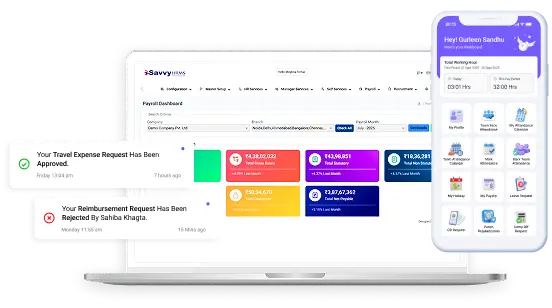
Explore Savvy HRMS to simplify employee development, performance management, learning, and career growth, all in one platform.
Frequently Asked Questions (FAQs)
1. What is an employee development plan?
An employee development plan is a structured roadmap that outlines an employee’s skills, career goals, development needs, learning activities, and measurable objectives to support professional growth and better performance.
2. Why are employee development plans important?
Employee development plans help identify skill gaps, improve employee performance, support career growth, increase engagement, strengthen retention, and prepare employees for future responsibilities and leadership roles.
3. What should an employee development plan include?
An effective employee development plan should include current skills, skill gaps, career goals, development objectives, learning activities, required resources, timelines, success metrics, and regular progress reviews.
4. How can HR measure employee development?
HR can measure employee development through skill improvement, goal completion, performance changes, training effectiveness, employee feedback, internal promotions, career progression, and the practical application of newly developed skills.
5. How does HRMS software help with employee development?
HRMS software helps organizations manage employee development by centralizing skills, goals, training, performance reviews, feedback, and career information, making development more organized, measurable, and easier to track.