

Authorization Letter: 7 Ready-to-Use Formats, Examples & Writing Guide


-
AuthorRuchika Rajput
-
 Last Updated
October 16, 2026
Last Updated
October 16, 2026
-
 Reading Time
23 Mins
Reading Time
23 Mins
An authorization letter is a formal document that gives a person or organization permission to perform a specific task on someone else’s behalf. In HR and employee management, an authorization letter may be used for employment verification, employee document collection, payroll-related activities, employee benefits administration, reference checks, employee transfers, and background verification.
This guide explains what an authorization letter is, how to write one, and which details to include. It also provides seven ready-to-use authorization letter samples for HR teams, along with practical guidance on employee consent, signatures, company letterhead, and legal considerations in India.
So, let’s explore the different authorization letter formats, understand how to write one correctly, and review practical examples for common HR and employee management tasks.
TL;DR
- An authorization letter allows someone to act on your behalf for a specific purpose.
- Include sender and recipient details, purpose, authorized person’s information, validity period, and signature.
- Use authorization letters for HR tasks such as document collection, employment verification, payroll, and background checks.
- Keep the authorization specific, clear, and limited to the required task.
- Follow applicable laws, company policies, and consent requirements when handling employee information.
What Is an Authorization Letter?
An authorization letter is a written document that grants a person permission to perform a specific action on behalf of another person or organization. It identifies the person granting permission, the authorized individual or organization, the purpose of the authorization, and any relevant conditions or limitations.
For example, an employee may authorize a representative to collect an experience certificate, or a candidate may authorize a prospective employer to verify specified employment details. Similarly, an authorized company representative may permit an HR team member to process an approved employee transfer.
An authorization letter provides a written record of the permission granted and helps the recipient understand the scope of the authorized activity. However, it does not automatically replace other requirements, such as internal approvals, prescribed forms, employee consent, identity verification, or legal documentation.
Why Is an Authorization Letter Important in HR?
Authorization letters help HR departments document permission and responsibility for specific administrative activities. They can make processes more consistent and reduce confusion about who may perform a task.
Common uses include:
- Employment verification: Documenting permission for a prospective employer or verification agency to check specified employment details.
- Employee document collection: Allowing a designated representative to collect documents when the employee cannot attend personally.
- Payroll administration: Defining responsibility for a limited payroll software-related administrative task.
- Employee benefits: Supporting a specified benefits-related request where authorization is required.
- Reference checks: Recording permission to contact professional references for recruitment purposes.
- Employee transfers: Documenting authority to process an already approved employee transfer.
- Background verification: Recording authorization for specified recruitment or employment-related checks where required.
A well-prepared authorization letter should always define what is permitted instead of granting unnecessarily broad access or authority.
How to Write an Authorization Letter? Step-by-Step Guide
To write an effective authorization letter, clearly identify the parties, explain the purpose, specify the permitted action, and include any necessary dates, conditions, and signatures. The language should be formal, direct, and easy for the recipient to understand.
Follow these steps to prepare an authorization letter for HR or business purposes.
Step 1: Add the Date and Recipient Details
Start with the date of issuance. Add the recipient’s name, designation, department, organization, and address where required.
For example, an authorization letter for employment verification may be addressed to the HR manager or designated verification team.
Step 2: Write a Clear Subject Line
Use a short subject line that communicates the purpose of the letter.
Examples include:
- Authorization for Employment Verification
- Authorization for Employee Document Collection
- Authorization for Payroll-Related Administrative Activities
- Authorization for Employee Background Verification
A descriptive subject line helps the recipient identify the request quickly.
Step 3: Identify the Authorizing Person
Mention the full name and designation of the person granting permission. For company-issued authorization letters, confirm that the signatory has the authority to approve the activity.
If the letter concerns an employee, include an employee ID only when it is necessary for identification.
Step 4: Identify the Authorized Person
Clearly state the full name of the person or organization receiving permission. Include additional identification details only if the recipient requires them.
Avoid using vague descriptions such as “my representative” without identifying the individual when a specific name is required.
Step 5: Explain the Purpose and Scope
Describe exactly what the authorized person may do.
For example, instead of writing “I authorize this person to handle my HR work,” specify that the person is authorized to collect a named employment certificate on a particular date.
Clearly defined permissions reduce the risk of misunderstandings or unauthorized actions.
Step 6: Mention the Validity Period
Where applicable, specify the start date, end date, or single-use nature of the authorization.
For example, a letter may permit a representative to collect a document on one specified date. A broader or ongoing authorization should be subject to appropriate limits and review.
Step 7: Include the Required Signature
Add the authorizing person’s name, designation, signature, and contact information. For a company-issued letter, follow the organization’s approval and signing procedures.
Depending on the recipient, a physical signature, digital signature, signed scan, or prescribed online form may be required.
Step 8: Review the Letter Before Sending
Check the names, dates, purpose, scope of permission, and supporting documents. Confirm that the letter does not disclose unnecessary personal or confidential information.
For sensitive HR activities, ensure that applicable consent, privacy, and internal approval requirements have been addressed.
What Is the Official Authorization Letter Format?
An official authorization letter is a formal document that allows a designated person to act on behalf of an individual or organization for a specific purpose. It generally includes the sender’s details, recipient’s details, subject line, authorized person’s information, scope of authorization, validity period, and signature.
Official Authorization Letter Template
[Your Name]
[Your Position]
[Your Company Name]
[Company Address]
[City, State, PIN Code]
Email: [Your Email Address]
Phone: [Your Phone Number]
Date: [DD/MM/YYYY]
To,
[Recipient’s Name]
[Recipient’s Position]
[Recipient’s Company Name]
[Company Address]
[City, State, PIN Code]
Subject: Authorization Letter
Dear [Recipient’s Name],
I, [Your Name], holding the position of [Your Position] at [Your Company Name], hereby authorize [Authorized Person’s Name], [Authorized Person’s Position] at [Authorized Person’s Company Name, if applicable], to act on my behalf regarding [specify the task or purpose, such as collecting documents, submitting paperwork, attending a meeting, or signing approved documents].
Details of the Authorized Person:
- Name: [Authorized Person’s Name]
- Position: [Authorized Person’s Position]
- Company Name: [Authorized Person’s Company Name, if applicable]
- Contact Number: [Authorized Person’s Phone Number]
This authorization will remain valid from [Start Date] to [End Date] and is limited to the purpose stated above. The authorized person may be required to provide identification or supporting documents as per your organization’s procedures.
I kindly request you to extend the necessary support to [Authorized Person’s Name] in carrying out the authorized task. If you require any clarification, please contact me using the details provided above.
Thank you for your cooperation.
Sincerely,
[Your Signature, if sending a hard copy]
[Your Name]
[Your Position]
[Your Company Name]
What Are the 7 Authorization Letter Samples for HR and Employee Management?
Below are seven ready-to-use authorization letter samples for HR and employee management, following the same formal structure as the official authorization letter format. Each template can be customized according to the task, the authorized person’s role, and the company’s requirements.
1. Authorization Letter Format for Employment Verification
This letter allows an employee to authorize their present or former employer to share specified employment details with a prospective employer, financial institution, or other requesting organization.
[Employee’s Full Name]
[Residential Address]
[City, State, PIN Code]
Phone: [Contact Number]
Email: [Email Address]
Date: [DD/MM/YYYY]
To,
The HR Manager
[Current or Previous Employer’s Name]
[Company Address]
[City, State, PIN Code]
Subject: Authorization for Employment Verification
Dear Sir/Madam,
I, [Employee’s Full Name], formerly employed/currently employed as [Designation] at [Company Name], hereby authorize the release of the employment information specified in this letter to [Requesting Company or Representative’s Name] for the purpose of employment verification.
Employee Details:
- Employee Name: [Full Name]
- Employee ID: [Employee ID, if applicable]
- Department: [Department Name]
- Employment Period: [Start Date] to [End Date/Present]
- Designation: [Job Title]
Information Authorized for Verification:
- Employment dates and job titles
- Employment status
- Job responsibilities, where appropriate
- Salary details, if specifically required and permitted
- Reason for separation, where applicable and permitted
Requesting Party Details:
- Contact Person: [Name]
- Organization: [Company Name]
- Phone: [Contact Number]
- Email: [Email Address]
This authorization will remain valid for [Number of Days] from the date of this letter and is limited to the verification purpose stated above. Please share only the information covered by this authorization and permitted under applicable policies and laws.
If further clarification is required, I can be contacted using the details provided above.
Thank you for your cooperation.
Sincerely,
[Signature]
[Employee’s Full Name]
2. Authorization Letter Example for Employee Document Collection
This sample is suitable when an employee cannot personally collect important employment documents and wishes to authorize a trusted representative to collect them from the HR department.
[Employee’s Full Name]
[Employee’s Address]
[City, State, PIN Code]
Phone: [Contact Number]
Email: [Email Address]
Date: [DD/MM/YYYY]
To,
The HR Manager
[Company Name]
[Company Address]
[City, State, PIN Code]
Subject: Authorization for Collection of Employee Documents
Dear Sir/Madam,
I, [Employee’s Full Name], working as [Designation] in the [Department Name] department, hereby authorize [Representative’s Full Name], [Employee ID or Identification Details], to collect the following documents from the HR Department on my behalf.
Employee Details:
- Employee Name: [Full Name]
- Employee ID: [Employee ID]
- Designation: [Job Title]
- Department: [Department Name]
Documents to Be Collected:
- [Document Name, e.g., Experience Certificate]
- [Document Name, e.g., Salary Revision Letter]
- [Document Name, e.g., Form 16]
- [Other Approved Document]
Authorized Representative Details:
- Name: [Representative’s Full Name]
- Employee ID: [If applicable]
- Department: [Department Name]
- Contact Number: [Phone Number]
- Identification Document: [Type of ID]
As I am unable to collect these documents personally due to [Brief Reason], this authorization will be valid until [Expiry Date] and will apply only to the documents listed above.
I request you to verify the representative’s identity and release the documents in accordance with the company’s procedures. I can be contacted for any additional confirmation.
Thank you for your assistance.
Sincerely,
[Employee’s Signature]
[Employee’s Full Name]
[Designation]
[Employee ID]
3. Authorization Letter Sample for Payroll Processing
Use this format when an employee requests authorized payroll updates or when a company designates a representative to coordinate specific payroll-related activities. Sensitive bank and tax information should be submitted through approved secure channels.
[Authorized Signatory’s Full Name]
[Designation]
[Company Name]
[Office Address]
Phone: [Contact Number]
Email: [Official Email Address]
Date: [DD/MM/YYYY]
To,
The Finance Manager / Payroll Administrator
[Company Name or Payroll Service Provider]
[Office Address]
[City, State, PIN Code]
Subject: Authorization for Payroll Processing and Updates
Dear Sir/Madam,
I, [Authorized Signatory’s Name], holding the position of [Designation] at [Company Name], hereby authorize [Authorized Representative’s Name], [Representative’s Designation], to coordinate the approved payroll activities specified below for [Employee Name or Relevant Employee Group].
Employee or Payroll Details:
- Employee Name: [Full Name, if applicable]
- Employee ID: [Employee ID, if applicable]
- Department: [Department Name]
- Payroll Period: [Month and Year]
Authorized Payroll Activities:
- Submission and verification of approved payroll inputs
- Coordination of authorized salary or bank-detail updates
- Processing of approved salary components and deductions
- Submission of applicable tax declarations and supporting documents
- Collection of payroll reports for review
Authorized Representative Details:
- Name: [Representative’s Full Name]
- Designation: [Job Title]
- Department: [Department Name]
- Contact Number: [Phone Number]
- Email: [Official Email Address]
This authorization will be effective from [Start Date] to [End Date] and is limited to the activities listed above. Any changes to employee bank details, salary structures, tax declarations, or payment instructions must undergo the required verification and approval process.
Please provide the necessary assistance to the authorized representative while maintaining the confidentiality of payroll records.
Thank you for your cooperation.
Sincerely,
[Signature of Authorized Signatory]
[Full Name]
[Designation]
[Company Name]
4. Authorization Letter Format for Employee Benefits Administration
This letter can be used by an employee to request changes to eligible benefits or authorize an HR representative to coordinate benefits administration with an insurer or benefits provider.
[Employee’s Full Name]
[Designation]
[Employee ID]
[Department Name]
[Company Name]
[Office Address]
Email: [Official Email Address]
Phone: [Contact Number]
Date: [DD/MM/YYYY]
To,
The Benefits Administrator
HR Department
[Company Name]
[Company Address]
[City, State, PIN Code]
Subject: Authorization for Employee Benefits Administration
Dear Sir/Madam,
I, [Employee’s Full Name], employed as [Designation] under Employee ID [Employee ID], hereby authorize the HR Benefits Team or its designated administrator to process the benefits-related requests specified in this letter, subject to eligibility criteria and company policy.
Employee Details:
- Employee Name: [Full Name]
- Employee ID: [Employee ID]
- Department: [Department Name]
- Designation: [Job Title]
Benefits-Related Requests:
- Health insurance enrollment or eligible dependent updates
- Insurance nomination updates, subject to the prescribed process
- Selection of eligible flexible benefits
- Changes to permitted allowances or reimbursements
- Enrollment in or withdrawal from optional benefit plans, where allowed
Authorized Representative Details, if Applicable:
- Name: [Representative’s Name]
- Designation: [Position]
- Department or Organization: [Department or Company]
- Contact Number: [Phone Number]
This authorization will be effective from [Start Date] and will remain valid until [End Date or Applicable Enrollment Deadline]. All requested changes are subject to eligibility requirements, supporting documentation, approval procedures, and applicable policy terms.
I confirm that the information and declarations submitted with this request are accurate to the best of my knowledge. I understand that certain changes may only be permitted during designated enrollment periods.
Supporting Documents:
- [Document Name]
- [Document Name]
- [Additional Document, if Required]
Please process the eligible requests and contact me if further information is required.
Thank you for your assistance.
Sincerely,
[Employee’s Signature]
[Employee’s Full Name]
[Designation]
[Employee ID]
For HR Use Only
Received Date: [DD/MM/YYYY]
Processed By: [Name]
Effective Date: [DD/MM/YYYY]
Remarks: [If Applicable]
5. Authorization Letter Example for Reference Check
This format is appropriate when a job applicant authorizes a prospective employer or recruitment team to contact a former employer for a professional reference check.
[Applicant’s Full Name]
[Current Address]
[City, State, PIN Code]
Phone: [Contact Number]
Email: [Email Address]
Date: [DD/MM/YYYY]
To,
The HR Manager
[Previous Employer’s Name]
[Company Address]
[City, State, PIN Code]
Subject: Authorization for Employment Reference Check
Dear Sir/Madam,
I, [Applicant’s Full Name], hereby authorize [Prospective Employer’s Name] to contact [Previous Employer’s Name] for the purpose of verifying my previous employment and obtaining relevant professional reference information as part of the recruitment process for the position of [Job Title].
Applicant’s Employment Details:
- Name: [Applicant’s Full Name]
- Previous Designation: [Job Title]
- Employee ID: [Employee ID, if applicable]
- Department: [Department Name]
- Employment Period: [Start Date] to [End Date]
- Reporting Manager: [Name, if applicable]
Scope of Authorization:
- Confirmation of employment dates and designation
- Verification of relevant roles and responsibilities
- Professional reference relating to job performance, where appropriate
- Confirmation of rehire eligibility, where the previous employer permits disclosure
- Other job-related details specifically agreed upon and permitted
Requesting Organization Details:
- Company Name: [Prospective Employer’s Name]
- Contact Person: [Recruiter’s Name]
- Designation: [Recruiter’s Job Title]
- Email: [Official Email Address]
- Phone: [Contact Number]
This authorization will remain valid for [Number of Days] from the date of signing and is limited to the stated recruitment purpose. I understand that the information provided will be handled according to applicable privacy requirements and the organization’s policies.
I request your cooperation in completing this reference check. Please contact me if additional confirmation is needed.
Thank you for your time and assistance.
Sincerely,
[Applicant’s Signature]
[Applicant’s Full Name]
Enclosure: [Consent Form, if Required]
6. Authorization Letter Sample for Employee Transfers
This sample is intended for organizations that need to formally communicate an approved employee transfer between branches, offices, departments, or project teams.
[Company Name]
[Registered or Office Address]
[City, State, PIN Code]
Email: [Official Email Address]
Phone: [Office Contact Number]
Reference No.: [Transfer Reference Number]
Date: [DD/MM/YYYY]
To,
The Branch Head / Department Manager
[Receiving Branch or Department]
[Office Address]
[City, State, PIN Code]
Subject: Authorization for Employee Transfer
Dear Sir/Madam,
This letter formally authorizes the transfer of the employee identified below in accordance with the organization’s internal approval process and applicable employment terms.
Employee Details:
- Name: [Employee’s Full Name]
- Employee ID: [Employee ID]
- Designation: [Current Designation]
- Department: [Current Department]
- Reporting Manager: [Current Manager’s Name]
Transfer Details:
- Current Location: [Current Office or Branch]
- New Location: [Receiving Office or Branch]
- New Department or Project: [Details]
- New Reporting Manager: [Name]
- Effective Date: [DD/MM/YYYY]
- Expected Joining Date: [DD/MM/YYYY]
Relocation and Administrative Arrangements, if Applicable:
- Relocation Allowance: [Amount or As per Policy]
- Temporary Accommodation: [Details or As per Policy]
- Travel and Moving Expenses: [Details or As per Policy]
- IT, Facilities, and Access Updates: [Required Arrangements]
The HR, Finance, IT, Facilities, and concerned business teams are requested to coordinate the necessary documentation and handover activities to ensure a smooth transition.
This authorization is limited to the transfer approved by the designated authority. Any changes to compensation, benefits, reporting arrangements, or other employment terms must follow the applicable approval process.
Please ensure that the employee receives the relevant transfer communication and that all required formalities are completed before the effective date.
Thank you for your cooperation.
Sincerely,
[Signature of Authorized Approver]
[Approver’s Full Name]
[Designation]
[Company Name]
Employee Acknowledgment
I acknowledge receipt of this transfer communication and understand that any applicable terms are subject to the official transfer letter and company policies.
Employee Signature: __________________
Date: __________________
CC: HR Operations, Current Manager, Receiving Manager, Finance Department
7. Authorization Letter for Employee Background Checks
Use this template when an employer authorizes a background verification agency to conduct specified checks on a candidate or employee. Obtain the candidate’s informed consent where required and limit the checks to a legitimate, disclosed purpose.
[Company Name]
[Company Address]
[City, State, PIN Code]
Email: [Official Email Address]
Phone: [Office Contact Number]
Date: [DD/MM/YYYY]
To,
The Background Verification Manager
[Verification Agency Name]
[Agency Address]
[City, State, PIN Code]
Subject: Authorization for Employee Background Verification
Dear Sir/Madam,
I, [Authorized Signatory’s Full Name], holding the position of [Designation] at [Company Name], hereby authorize [Background Verification Agency Name] to conduct the background checks specified below for [Candidate’s or Employee’s Full Name], in connection with [Recruitment or Employment Purpose].
Candidate or Employee Details:
- Full Name: [Candidate’s or Employee’s Name]
- Position: [Job Title]
- Candidate or Employee ID: [Reference Number, if Applicable]
- Department: [Department Name, if Applicable]
- Contact Details: [As Appropriate]
Authorized Verification Scope:
- Employment history verification
- Educational qualification verification
- Address verification, where lawful and necessary
- Identity verification using permitted methods
- Professional reference checks
- Other specifically disclosed and approved checks: [Details]
Agency Details:
- Agency Name: [Verification Agency Name]
- Authorized Contact: [Contact Person’s Name]
- Designation: [Job Title]
- Email: [Official Email Address]
- Phone: [Contact Number]
The verification is authorized from [Start Date] to [End Date], subject to the required consent, applicable law, and the agreed scope of work. The agency must handle personal information securely, use it only for the stated purpose, and report findings through the agreed confidential channel.
Please complete the authorized checks within [Number of Working Days], where practicable, and notify us if additional documentation or clarification is required.
Thank you for your cooperation.
Sincerely,
[Signature of Authorized Signatory]
[Full Name]
[Designation]
[Company Name]
Candidate Consent
I, [Candidate’s or Employee’s Full Name], acknowledge the disclosed verification scope and provide my consent to the checks described above, subject to applicable law and the relevant consent documentation.
Signature: __________________
Date: __________________
Enclosures, if Applicable:
- Candidate Consent Form
- Verification Request Form
- Supporting Documents
Note: These templates are general examples and should be adapted to the specific purpose. An authorization letter does not automatically permit access to confidential information or replace mandatory consent, company approvals, prescribed forms, or legal requirements. Avoid including full bank account numbers, identity numbers, or other sensitive personal details in letters unless necessary and transmitted through a secure, approved process.
What Details Should an Authorization Letter Include?
An effective authorization letter should identify the authorizing person, the recipient, the purpose of the authorization, the permitted actions, and any applicable validity period. The additional information required depends on the activity and the recipient’s procedures.
Include the following details where relevant:
- Date: The date on which the authorization letter is issued.
- Recipient details: The name, designation, department, or organization receiving the letter.
- Subject line: A concise description of the authorization’s purpose.
- Authorizing person’s details: Full name, designation, and contact information.
- Authorized person’s details: The name of the individual or organization receiving permission.
- Purpose and scope: A precise description of the permitted action.
- Employee reference details: An employee ID or department, only when needed.
- Validity period: Start and end dates or a single-use limitation, where appropriate.
- Supporting documents: Any identification or documentation required by the recipient.
- Signature and approval: The signature of the appropriate person and any required company approval.
- Conditions or restrictions: Limits on access, disclosure, further delegation, or use of information.
For HR authorization letters, include enough information to establish the permission without disclosing unnecessary personal, financial, or confidential employee data.
What Are the Common Mistakes to Avoid When Writing an Authorization Letter?
The most common authorization letter mistakes include unclear permissions, missing details, incorrect dates, inadequate approval, and unnecessary disclosure of confidential information. These issues can delay processing and create uncertainty about the actions permitted.
Avoid these mistakes when preparing an authorization letter:
- Using unclear language: Replace broad phrases such as “handle all HR matters” with a clearly defined task.
- Leaving out the authorized person’s identity: Include the correct name and any reference details required for verification.
- Ignoring the validity period: Specify when the authorization applies if it is time-sensitive or limited to one transaction.
- Using an unauthorized signatory: Confirm that the person issuing a company authorization letter has the necessary authority.
- Assuming a signature is always enough: Some organizations require prescribed forms, identity checks, digital approvals, or additional documents.
- Sharing unnecessary personal information: Avoid attaching salary details, bank information, identity documents, or other sensitive records unless necessary and appropriately protected.
- Using a general letter for sensitive activities: Payroll access, benefits changes, and background screening may require separate approvals or consent procedures.
- Failing to maintain records: HR teams should retain authorization records in accordance with their document retention and access-control policies.
Reviewing these details before issuing an authorization letter helps make the process clearer, more consistent, and easier to verify.
Is an Authorization Letter Legally Valid in India?
An authorization letter can serve as written evidence that permission has been granted for a defined task in India. However, its legal effect depends on the purpose, the authority of the person issuing it, applicable law, and the requirements of the organization receiving it.
A general authorization letter does not automatically replace a prescribed form, formal power of attorney, statutory procedure, or other legally required document.
For example, an organization may accept a signed authorization letter for routine document collection but require a separate procedure for financial transactions, benefits changes, or access to confidential records. Some transactions may require additional identity verification, prescribed documentation, witnessing, stamping, or registration, depending on the applicable rules.
For HR and employment-related activities, organizations should also consider relevant employment requirements, contractual obligations, confidentiality, and applicable data protection rules. Permission to perform a task should not be treated as unlimited permission to collect, disclose, or use employee information.
Before depending on an authorization letter for a legally significant transaction, check the recipient’s official instructions and look for legal advice where necessary. There is no single authorization letter format that is suitable for every situation in India.
What Is the Difference Between an Authorization Letter and an Authority Letter?
An authorization letter generally grants a person permission to perform a specific task on behalf of another person or organization. An authority letter may be used to confirm or delegate authority for a particular responsibility, but its meaning can vary by organization and context.
| Basis | Authorization Letter | Authority Letter |
| Main purpose | Grants permission for a defined action | May confirm or delegate authority for a task or role |
| Typical use | Document collection, verification, or a specific administrative activity | Company representation, delegated responsibilities, or institution-specific processes |
| Scope | Usually states the permitted action and any limits | Depends on the authority being conferred and the wording used |
| Format | Often follows a standard letter structure | May use a prescribed organizational format |
| Legal effect | Depends on the transaction and applicable requirements | Also depends on the wording, authority, and applicable requirements |
The terms can overlap, and the document’s title alone does not determine its legal effect. The most important factors are who issues the letter, what it authorizes, and whether it meets the recipient’s requirements.
Conclusion
An authorization letter helps individuals and HR teams document permission for specific tasks, including employment verification, employee document collection, payroll administration, benefits processing, reference checks, employee transfers, and background screening. A well-written letter identifies the parties, defines the scope of permission, states any applicable validity period, and includes the required approval or signature. Using a suitable authorization letter sample can simplify the process, but the final document should always match the actual task and the recipient’s requirements.
For HR teams in India, authorization letters should be managed alongside appropriate approval workflows, privacy safeguards, access controls, and recordkeeping practices. Before issuing or accepting a letter, confirm that the person granting permission has the necessary authority and that any additional consent, forms, or legal requirements have been addressed.

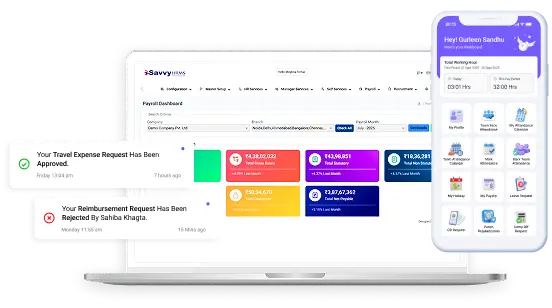









Want easier HR management?
See what Savvy HRMS can do for your team.
Frequently Asked Questions (FAQs)
1. What is an authorization letter used for?
An authorization letter allows an individual or organization to permit another person to perform a specific task on their behalf, such as collecting documents, verifying employment details, or handling approved HR activities.
2. How do you write an authorization letter?
Include the sender’s and recipient’s details, date, subject, purpose of authorization, authorized person’s details, scope of permission, validity period, and signature. Keep the language clear and specify exactly what the person is allowed to do.
3. Is an authorization letter legally valid in India?
An authorization letter may be accepted as evidence of permission in India, depending on its purpose and applicable law. Certain transactions may require additional documents, prescribed forms, notarization, or a power of attorney.
4. Does an authorization letter need to be signed?
A signature is generally recommended to establish that the authorization was issued by the relevant person. Depending on the recipient’s requirements, a digital signature, email confirmation, or additional identity verification may also be accepted.
5. Can an authorization letter be used for HR and employee management?
Yes. Authorization letters can be used for employment verification, employee document collection, payroll coordination, benefits administration, reference checks, employee transfers, and background verification. Sensitive employee information should only be shared with appropriate permission and in accordance with applicable policies and laws.