


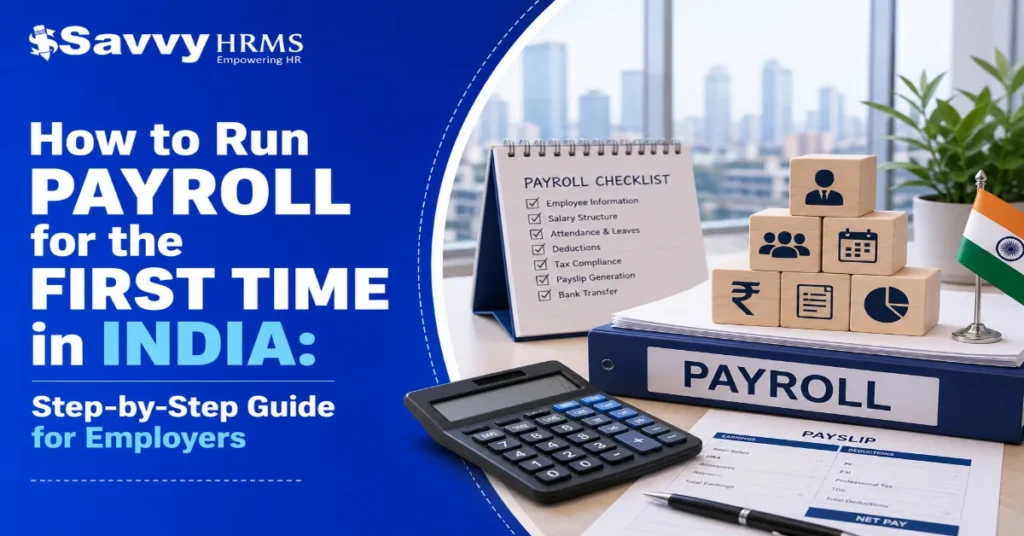

Running payroll for the first time can feel confusing, especially if you are a new business owner or HR professional. From calculating salaries and deducting taxes to ensuring compliance with Indian labour laws, there are several moving parts that need your attention. Even a small mistake can result in payroll errors, employee dissatisfaction, or legal penalties.
The good news is that payroll processing doesn’t have to be complicated. With the right preparation, a clear understanding of the payroll process, and the right payroll software, you can pay your employees accurately and on time while staying compliant with statutory regulations.
In this blog, we’ll walk you through everything you need to know about how to run payroll for the first time in India. Whether you’re a startup, SME, or growing enterprise, this step-by-step guide will help you build a smooth and compliant payroll process from day one.
Why Is Payroll Processing Important in India?
Payroll is much more than simply paying employees every month. It is one of the most important business functions because it directly impacts employee satisfaction, financial management, and legal compliance.
Here are some reasons why payroll processing is important:
1. Ensures Employees Are Paid Accurately
Employees have the expectation of getting paid regularly and accurately for their hard work. Proper payroll management will help you calculate salaries accurately without any mistakes.
2. Helps Maintain Legal Compliance
There are various payroll-related labour laws which Indian employers have to align with. These include Provident Fund, Employee State Insurance, Professional Tax, Tax Deducted at Source, Labour Welfare Fund, etc.
3. Reduces Payroll Errors
Sometimes, manual calculations can result in mistakes during salary calculations, tax deductions, and even attendance management.
4. Improves Employee Experience
Regular payments of salaries and professional pay slips make sure that there is a positive experience of employees working for the company.
5. Supports Better Financial Planning
Payroll is one of the largest expenses that a business has to deal with. Proper payroll management is necessary for the same.
What Do You Need Before Running Payroll in India for the First Time?
Before processing payroll, it’s important to collect all the required information and complete the necessary registrations. Preparing these details in advance will help avoid delays and compliance issues.
1. Employee Information
Collect complete employee records, including:
- Full name
- PAN
- Aadhaar
- UAN (if applicable)
- Bank account details
- Date of joining
- Employment type
- Contact information
2. Salary Structure
Prepare a clear salary structure for each employee that includes:
- Basic salary
- House Rent Allowance (HRA)
- Special allowance
- Conveyance allowance
- Bonus
- Incentives
- Employer contributions
3. Attendance and Leave Data
Payroll calculations depend heavily on attendance records. Ensure you have accurate information on:
- Working days
- Paid leave
- Loss of pay (LOP)
- Overtime
- Holidays
4. Statutory Registrations
Depending on your organization’s applicability, ensure registrations are completed for:
- PAN
- TAN
- EPF
- ESI
- Professional Tax
- Labour Welfare Fund
5. Payroll Calendar
Create a monthly payroll schedule that clearly defines:
- Attendance cut-off date
- Payroll processing date
- Salary payment date
- Payslip generation
- Statutory filing deadlines
Having these basics ready makes payroll processing much smoother.
Step-by-Step Process to Run Payroll for the First Time in India
Running payroll becomes much easier when you follow a structured process.
Step 1: Collect Employee Information
Start by collecting all employee details, including identification documents, salary agreements, tax declarations, bank account information, and statutory registration details.
Accurate employee records form the foundation of payroll processing.
Step 2: Create Salary Structures
Define each employee’s Cost to Company (CTC) and break it into salary components such as:
- Basic Pay
- HRA
- Special Allowance
- Medical Allowance (if applicable)
- Bonus
- Employer PF Contribution
A well-designed salary structure helps optimise taxation while ensuring compliance.
Step 3: Track Attendance and Leave
Calculate payable days based on:
- Attendance
- Approved leave
- Loss of pay
- Overtime
- Shift allowances
Accurate attendance directly impacts salary calculations.
Step 4: Calculate Gross Salary
Gross salary includes all earnings before deductions.
These may include:
- Basic salary
- HRA
- Allowances
- Bonus
- Incentives
- Overtime payments
Step 5: Calculate Statutory Deductions
Deduct applicable statutory contributions such as:
1. Provident Fund (PF)
Applicable under EPF regulations for eligible employees.
2. Employee State Insurance (ESI)
Applicable to employees earning within the prescribed wage limit.
3. Professional Tax (PT)
Applicable in states where Professional Tax is collected.
4. Tax Deducted at Source (TDS)
Income tax is deducted based on employee income and declarations.
5. Labour Welfare Fund (LWF)
Applicable in certain states.
These deductions ensure statutory compliance and avoid penalties.
Step 6: Calculate Net Salary
Net salary is calculated using the following formula:
Net Salary = Gross Salary – Total Deductions
This is the amount credited to employees’ bank accounts.
Step 7: Verify Payroll
Before releasing salaries, review payroll carefully.
Check for:
- Incorrect attendance
- Duplicate entries
- Wrong deductions
- Salary revisions
- Missing reimbursements
A final review helps eliminate costly payroll mistakes.
Step 8: Process Salary Payments
Transfer salaries through bank transfer or integrated payroll banking systems.
Ensure salaries are credited on the committed payday.
Step 9: Generate Payslips
Provide employees with detailed digital payslips showing:
- Salary breakup
- Earnings
- Deductions
- Net salary
- Tax information
Payslips improve transparency and employee trust.
Step 10: Complete Statutory Filings
After payroll is processed, complete all mandatory statutory filings within the prescribed timelines.
Maintain payroll records securely for audits and future reference.
Payroll Compliance Every Employer Should Know
Payroll compliance is one of the most important responsibilities of every employer in India. Missing deadlines or incorrect deductions can result in penalties and legal complications.
Some key payroll compliances include:
1. Provident Fund (EPF)
Eligible employers must deduct and deposit employee and employer PF contributions within the prescribed timelines.
2. Employee State Insurance (ESI)
Businesses covered under the ESI Act must deduct employee contributions and deposit both employer and employee shares.
3. Professional Tax
Professional Tax rules differ across states. Employers must deduct and deposit PT wherever applicable.
4. Tax Deducted at Source (TDS)
Employers are responsible for deducting income tax from employee salaries and filing TDS returns.
5. Labour Welfare Fund
Some states require periodic contributions towards the Labour Welfare Fund.
6. Minimum Wage Compliance
Ensure salaries comply with the applicable minimum wage notifications issued by state governments.
7. Bonus and Gratuity
Eligible employees must receive statutory bonus and gratuity benefits according to applicable laws.
Regular compliance protects businesses from legal issues while building employee confidence.
Manual Payroll vs Payroll Software: Which Is Better?
Many small businesses begin with spreadsheets, but manual payroll quickly becomes difficult as the workforce grows.
| Manual Payroll | Payroll Software |
| Time-consuming | Fully automated |
| Higher risk of errors | Accurate calculations |
| Difficult compliance tracking | Automatic compliance updates |
| Manual payslips | Instant payslip generation |
| Limited reporting | Real-time payroll reports |
| Difficult to scale | Easily scalable |
| More paperwork | Cloud-based records |
| Higher administrative effort | Saves HR time |
For businesses planning long-term growth, payroll software offers greater efficiency, accuracy, and compliance.
Benefits of Using Payroll Software for First-Time Payroll
Using payroll software simplifies payroll management and reduces the burden on HR teams.
1. Saves Time
Automation significantly reduces the time spent on salary calculations and payroll processing.
2. Improves Accuracy
Payroll software automatically calculates salaries, taxes, deductions, bonuses, and reimbursement management, reducing human error.
3. Ensures Statutory Compliance
Modern payroll software stays updated with the latest statutory rules, helping businesses comply with PF, ESI, PT, TDS, and other regulations.
4. Automates Payslip Generation
Employees receive digital payslips instantly without manual effort.
5. Better Record Management
Payroll software securely stores salary records, tax details, attendance, and payroll history in one centralized location.
6. Easy Payroll Reports
Generate payroll summaries, salary registers, tax reports, and compliance reports with just a few clicks.
7. Scales with Business Growth
Whether you have 10 employees or 1,000, payroll software grows with your organization without increasing administrative complexity.
8. Improves Employee Experience
Employees can access payslips, salary history, tax information, and reimbursement details through self-service portals, reducing HR queries.
Conclusion
Running payroll for the first time in India may seem challenging, but following a structured payroll process makes it much easier. From collecting employee information and creating salary structures to calculating deductions and ensuring statutory compliance, every step plays an important role in accurate and timely salary processing.
While manual payroll may work for very small teams, it becomes increasingly difficult as your workforce grows. Investing in reliable payroll software helps automate calculations, reduce errors, stay compliant with Indian payroll laws, and save valuable time for your HR team.
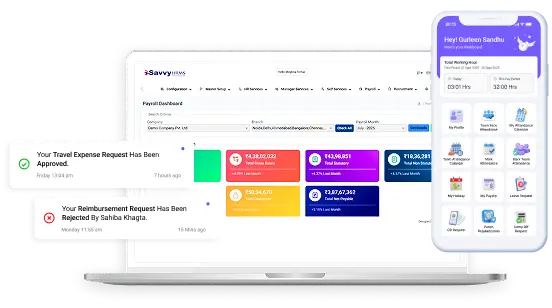
If you’re looking for an easy, accurate, and compliant way to manage payroll, Savvy HRMS Payroll Software can simplify the entire process. From automated salary calculations and statutory compliance to digital payslips, attendance integration, and tax management, Savvy HRMS helps businesses process payroll confidently and efficiently, all from a single platform.










Ready to simplify your first payroll?
Discover how our intelligent payroll software can help you process salaries faster, stay compliant, and deliver a smooth payroll experience for your employees.