

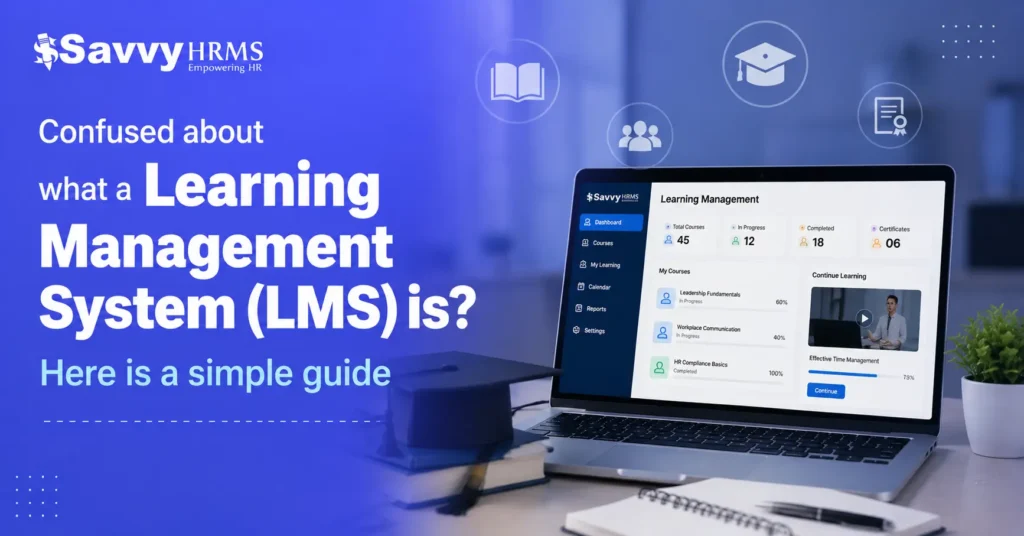
Confused about what a Learning Management System (LMS) is? Here is a simple guide


-
AuthorDurgesh Sharma
-
 Last Updated
June 19, 2026
Last Updated
June 19, 2026
-
 Reading Time
8 Mins
Reading Time
8 Mins
What if a simple software tool could help your employees learn faster, reduce costly mistakes, and boost productivity across your entire organization?
That’s exactly why businesses of all sizes are investing in Learning Management Systems (LMS).
Instead of managing training through scattered emails, documents, spreadsheets, and messaging apps, companies are creating structured learning experiences that are easier to deliver, track, and improve.
But an LMS does much more than store training materials. It can transform how employees learn, perform, and grow within your organization.
In this guide, we’ll explore what an LMS is, why businesses need one, the key features to look for when choosing an LMS, and why Savvy HRMS stands out as the ideal solution for modern workforce training and development.
What Is a Learning Management System (LMS)?
A Learning Management System (LMS) is a software platform that helps businesses manage employee training in one place.
Think of it as an online training center. Instead of sending training documents through emails, sharing videos in WhatsApp groups, or storing files in different folders, companies can use an LMS to organize everything in a single system.
With an LMS, businesses can:
- Share training materials with employees
- Assign courses to individuals or teams
- Track training progress and completion rates
- Conduct quizzes and assessments
- Measure employee learning and performance
- Issue certificates after course completion
For example, when a new employee joins your company, you can assign onboarding courses through the LMS and track their progress without any manual follow-up.
In simple terms, a Learning Management System makes employee training easier to manage, easier to track, and more effective for both employees and employers.
Why Do Businesses Need an LMS?
Training employees is important, but managing it manually can be difficult. As your team grows, it becomes harder to keep training organized, track progress, and ensure everyone learns what they need to know.
This is where a Learning Management System (LMS) can help.
Here are some common training challenges that an LMS solves:
1. Training Is Not Consistent
When different managers or trainers conduct training, employees may receive different information. Some may learn everything they need, while others may miss important details.
An LMS solves this problem by providing the same training content to everyone, ensuring a consistent learning experience across the organization.
2. Important Onboarding Steps Get Missed
New employees need proper training to understand their roles, company policies, and work processes. However, when onboarding is managed manually, important tasks or training materials can easily be forgotten.
With an LMS, businesses can create a structured onboarding program that guides every new hire through the same learning journey.
3. It Is Difficult to Track Employee Progress
Without a centralized system, HR teams often struggle to know who has completed training and who still needs it.
An LMS automatically tracks employee progress, course completion, and assessment results, making it easy to monitor learning across the company.
4. Too Much Time Is Spent Repeating Training
HR teams and managers often have to deliver the same training session multiple times for different employees.
An LMS allows employees to access training materials whenever they need them, reducing repetitive work and saving valuable time for trainers and managers.
5. Compliance Training Becomes Hard to Manage
Many businesses must provide mandatory training related to safety, workplace policies, or industry regulations.
An LMS helps organizations assign required training, track completion, and maintain records, making compliance management much easier.
As businesses grow, these challenges become more common. A Learning Management System helps simplify training, save time, improve employee learning, and ensure that everyone stays on the same page.
That’s why more companies are investing in LMS software to build a skilled, productive, and future-ready workforce.
Features to Look for in LMS Software
Choosing the right LMS is important because not all learning management systems offer the same experience. Some are packed with features but are difficult to use, while others make employee training simple and effective.
When evaluating LMS software, look for these key features:
1. Easy Course Creation
Creating training programs shouldn’t require technical expertise. A good LMS should allow HR teams and managers to quickly upload documents, videos, presentations, and other learning materials without any hassle.
2. Employee Progress Tracking
One of the biggest benefits of an LMS is the ability to track learning progress. You should be able to see who has started a course, who has completed it, and who may need additional support.
3. Quizzes and Assessments
Training is most effective when you can measure learning outcomes. Built-in quizzes and assessments help businesses evaluate employee understanding and identify knowledge gaps.
4. Certificates
Certificates provide proof that employees have successfully completed a course or training program. This is especially useful for onboarding, skill development, and compliance training.
5. Automated Training Reminders
Employees can sometimes forget about pending courses or deadlines. An LMS with automated reminders helps keep training on track without requiring constant follow-ups from HR teams.
6. Reports and Analytics
A good LMS should provide detailed reports on training completion, employee performance, and overall learning progress. These insights help businesses improve their training programs and make better decisions.
7. Mobile Access
Today’s workforce is not always tied to a desk. Employees should be able to access training anytime and anywhere using their smartphones, tablets, or laptops.
8. Integration with HR Software
An LMS works best when it connects with your existing HR system. Integration helps reduce manual work, keeps employee data updated, and creates a smoother experience for both HR teams and employees.
Choose Simplicity Over Complexity
When selecting learning management software, don’t focus only on the number of features. The best LMS is one that employees can use easily and consistently.
After all, even the most advanced training platform won’t deliver results if employees find it difficult to use.
Benefits of an LMS for Companies
Investing in a Learning Management System is not just about moving training online. It is about making employee learning more effective, easier to manage, and more beneficial for the business.
Here are some of the biggest benefits an LMS offers:
1. Better Employee Training
Employees learn best when training is organized and easy to access. An LMS provides a structured learning experience, helping employees understand concepts more clearly and apply them effectively in their daily work.
2. Saves Time for HR and Managers
Conducting the same training sessions repeatedly can take up a lot of time. With an LMS, training materials are available anytime, allowing employees to learn at their own pace while HR teams focus on more important tasks.
3. Easy Tracking and Monitoring
One of the biggest challenges in employee training is knowing who has completed it. An LMS automatically tracks course progress, completion rates, assessment scores, and certifications, giving managers complete visibility into employee learning.
4. Simplifies Compliance Training
Many organizations are required to provide training on workplace policies, safety procedures, data security, and industry regulations. An LMS helps ensure that employees complete mandatory training on time while maintaining records for audits and compliance requirements.
5. Reduces Training Costs
Traditional training often involves expenses such as travel, printed materials, venue arrangements, and trainer fees. An LMS reduces these costs by delivering training digitally, making it a more cost-effective solution for businesses of all sizes.
6. Supports Employee and Business Growth
Employees who continue learning are more confident, productive, and prepared for new responsibilities. As employee skills improve, businesses benefit from better performance, higher efficiency, and stronger long-term growth.
A Win-Win for Businesses and Employees
A Learning Management System helps employees develop new skills while making training easier to manage for HR teams and business leaders. The result is a more knowledgeable workforce, better productivity, and a stronger foundation for business success.
Why Savvy HRMS Stands Out as the Best Learning Management Software Provider in India
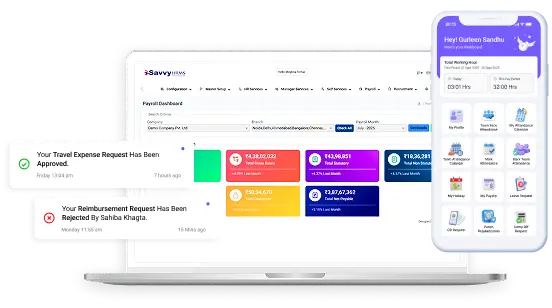
Savvy HRMS brings HR management and employee training together in one simple platform. Instead of using separate tools for HR tasks and learning management, businesses can handle everything in one place.
This makes a big difference in day-to-day work. HR teams don’t need to switch between multiple systems, managers can easily track employee growth, and employees get a smoother learning experience without confusion or extra steps.
With Savvy HRMS, companies can:
- Manage employee training and HR operations in one system
- Track learning progress alongside employee performance
- Simplify communication between HR teams, managers, and employees
- Reduce the need for multiple software tools and manual coordination
If you’re looking for a learning management system that fits modern business needs, Savvy HRMS is one and only choice. It connects training directly with your HR workflow, making employee development more organized, efficient, and easy to manage.
Conclusion
A Learning Management System is no longer just a “nice-to-have” tool. It has become a must-have for businesses that want to train employees in a structured, fast, and effective way.
From solving common training problems like inconsistency and poor tracking, to improving compliance and saving time, an LMS makes employee learning much easier to manage. It also helps businesses build a more skilled and productive workforce over time.
The key is choosing the right LMS one that is simple, easy to use, and actually adopted by employees.
That’s where Savvy HRMS makes a difference. By combining HR management and learning in one platform, it removes complexity and helps businesses manage everything in one place.
If you want to improve employee training and make your HR processes more efficient, now is the right time to adopt a smarter learning system.