

BGV Full Form in Company: Everything Employees Should Know


-
AuthorRandhir Kumar Jha
-
 Last Updated
June 17, 2026
Last Updated
June 17, 2026
-
 Reading Time
7 Mins
Reading Time
7 Mins
Have you ever received a job offer and then been asked to submit documents for a background check before joining? Many employees, especially freshers, often wonder why companies verify their educational qualifications, previous employment records, and identity details before onboarding them.
This process is known as Background Verification (BGV), an essential step in modern recruitment. Whether you are a job seeker preparing for a new role or an HR professional responsible for hiring, understanding the BGV full form, its process, and its importance can help you navigate recruitment more effectively.
In this blog, we will explain everything employees should know about background verification, including its purpose, process, benefits, and the risks of skipping it.
What is the BGV Full Form?
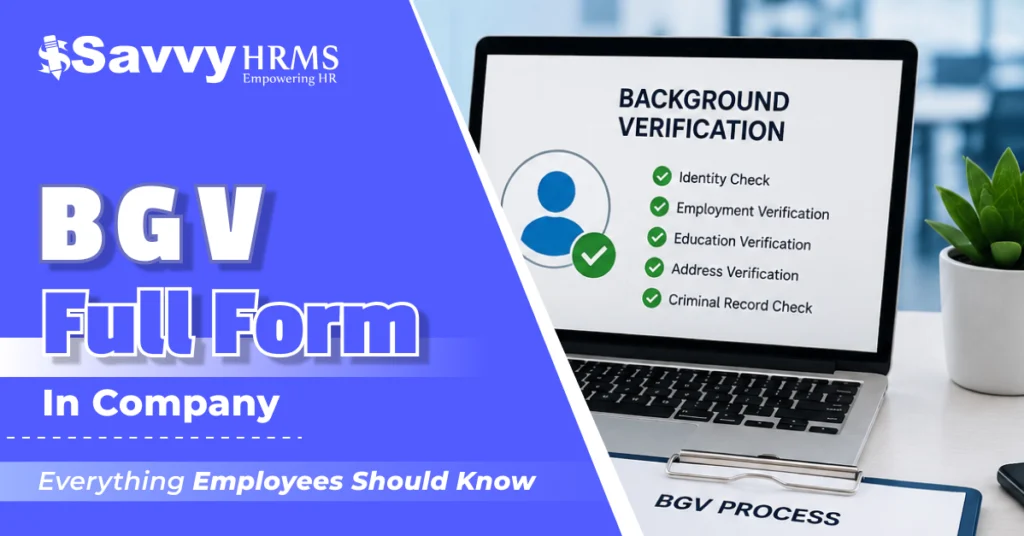
The BGV full form is Background Verification.
Background Verification is a process through which employers verify the information provided by candidates during recruitment. The objective is to ensure that applicants have accurately represented their qualifications, employment history, identity, and other important details.
A general BGV check may include:
- Identity verification
- Address verification
- Educational qualification verification
- Employment history verification
- Criminal record checks
- Reference checks
Today, background verification has become a standard hiring practice across industries, helping organizations make informed hiring decisions and reduce recruitment risks.
What is the Process of Background Verification?
While the exact process may vary between organizations, most companies follow a structured background verification process.
1. Candidate Consent
Before initiating verification, employers obtain written consent from the candidate. This ensures compliance with privacy and data protection requirements.
2. Collection of Documents
Candidates are asked to provide supporting documents such as:
- Government-issued identity proof
- Address proof
- Educational certificates
- Experience letters
- Salary slips
- PAN card or tax-related documents
3. Information Verification
The employer or third-party verification agency validates the submitted information against official records.
4. Employment Verification
The verification team contacts previous employers to confirm:
- Job title
- Employment duration
- Reporting structure
- Reason for leaving
5. Educational Verification
Educational institutions may be contacted to verify:
- Degrees earned
- Course completion
- Graduation dates
6. Criminal Background Check
Where legally permitted, companies may conduct criminal record checks to identify any serious legal concerns.
7. Report Generation
After completing all checks, a detailed verification report is generated and shared with the hiring organization.
8. Hiring Decision
Based on the verification findings, the company proceeds with onboarding or looks for clarification from the candidate if discrepancies are identified.
Why Should We Conduct Employee Background Verification?
Employee background verification plays an important role in building a reliable and trustworthy workforce.
Here are some major reasons organizations conduct BGV checks:
1. Ensures Accurate Information
Candidates sometimes unintentionally provide incorrect information, while others may intentionally verify qualifications or experience. Verification helps identify inaccuracies before hiring.
2. Reduces Hiring Risks
Recruiting the wrong employee can result in productivity loss, workplace issues, and additional recruitment costs.
3. Protects Company Reputation
Employees represent the organization. Conducting proper background checks helps prevent reputational damage caused by misconduct or fraudulent activities.
4. Creates a Safer Workplace
Verifying employee credentials contributes to a secure and trustworthy work environment.
5. Supports Better Hiring Decisions
Accurate information allows HR teams to make informed hiring choices based on verified data rather than assumptions.
What Are the Different Modes of Conducting Background Verification?
Organizations use various methods to perform background verification depending on the position, industry, and level of risk involved.
1. Manual Verification
In this traditional method, HR teams manually contact educational institutions, previous employers, and references.
Advantages:
- Personalized verification
- Suitable for small-scale hiring
Challenges:
- Time-consuming
- Higher administrative workload
2. Third-Party Verification Agencies
Many companies outsource background checks to specialized verification service providers.
Advantages:
- Faster processing
- Professional expertise
- Better compliance management
Challenges:
- Additional costs
3. Digital Verification Platforms
Modern organizations increasingly depend on technology-driven verification solutions.
These platforms automate verification by connecting with digital databases and government records.
Advantages:
- Faster turnaround times
- Improved accuracy
- Reduced paperwork
4. Hybrid Verification Model
Many organizations combine manual and digital verification methods to balance efficiency and thoroughness.
Risks of Not Doing Background Verification
Skipping background verification can expose organizations to significant operational and financial risks.
1. Hiring Unqualified Candidates
Without proper verification, companies may unknowingly hire individuals who lack the required qualifications or experience.
2. Increased Employee Fraud
False claims regarding education, employment history, or certifications can go unnoticed.
3. Financial Losses
Poor hiring decisions often result in:
- Reduced productivity
- Higher turnover
- Additional recruitment costs
- Training expenses
4. Workplace Safety Concerns
Failure to conduct criminal background checks where appropriate may create safety risks within the workplace.
5. Legal and Compliance Issues
In regulated industries, inadequate verification practices may lead to compliance violations and penalties.
6. Damage to Brand Reputation
Employee misconduct can negatively impact customer trust, business relationships, and overall company reputation.
Why is Background Verification Important for Employers?
Background verification is no longer just a formality. It has become a strategic hiring practice that supports organizational growth and risk management.
1. Improves Workforce Quality
Verified employees are more likely to possess the skills, qualifications, and experience required for their roles.
2. Enhances Organizational Trust
A workforce built on verified information creates greater confidence among managers, employees, clients, and stakeholders.
3. Reduces Employee Turnover
Accurate hiring decisions contribute to better job fit and long-term employee retention.
4. Strengthens Compliance
Many industries have strict compliance requirements regarding employee screening and verification.
5. Protects Sensitive Information
Organizations handling confidential customer or financial data need assurance that employees meet required standards of integrity and professionalism.
6. Supports Long-Term Business Growth
A reliable workforce helps organizations maintain operational stability and achieve business objectives more effectively.
When is BGV Conducted During Recruitment?
One of the most common questions among job seekers is when background verification actually takes place.
The answer depends on the organization’s hiring process.
1. Before Issuing the Offer Letter
Some companies complete background verification before extending an employment offer.
This approach helps minimize hiring risks early in the recruitment cycle.
2. After the Offer Letter
Many organizations issue a conditional offer letter and begin verification afterward.
The final employment offer remains subject to successful completion of BGV.
3. During Onboarding
Certain companies initiate verification after the candidate joins the organization.
In such cases, employment may remain provisional until verification is completed.
4. During Internal Promotions
Background verification may also be conducted when employees are promoted to sensitive positions involving financial responsibilities, leadership roles, or access to confidential information.
Tips for Employees to Successfully Clear BGV
Candidates can significantly improve their chances of a smooth verification process by following a few best practices.
1. Provide Accurate Information
Ensure all details shared in resumes, application forms, and supporting documents are accurate, consistent, and up to date. Even minor discrepancies can create delays during verification.
2. Avoid Exaggerating Experience
Present your professional experience honestly without overstating job titles, responsibilities, achievements, or employment periods. Background verification can identify inaccuracies that may affect credibility.
3. Keep Documents Ready
Maintain organized and updated copies of educational certificates, experience letters, identity proofs, and address documents. Quick access to these records helps simplify verification processes.
4. Explain Employment Gaps Honestly
Be transparent about career breaks, sabbatical leave, or employment gaps. Providing genuine reasons and supporting information helps employers understand your professional journey confidently.
5. Inform References in Advance
Notify your professional references before the verification process begins. This ensures they are prepared to respond promptly and provide accurate information about your work.
6. Verify Your Resume Before Submission
Review your resume carefully to confirm employment dates, qualifications, certifications, and job details are correct. Accurate information reduces the chances of verification discrepancies.
7. Maintain Professional Records
Retain employment-related documents, including offer letters, salary records, and relieving letters, even after changing jobs. These records are often required during future verifications.
Conclusion
Understanding the BGV full form and the overall background verification process is essential for both employees and employers. Background verification helps organizations hire trustworthy talent, reduce recruitment risks, maintain compliance, and build a secure workplace. For candidates, providing accurate information and maintaining proper documentation can ensure a smooth and successful verification experience.
Organizations looking to simplify hiring and employee management can benefit from an integrated HR solution like Savvy HRMS, which simplifies workforce processes, improves HR efficiency, and supports smarter talent management from recruitment to retirement.
Ready to simplify your HR operations?
Explore Savvy HRMS today and discover how technology can help you build a stronger, more reliable workforce.
Book a Demo Today