

Best Contract Labour Management Software in India: Features, Benefits and Selection Criteria



-
AuthorRuchika Rajput
-
 Last Updated
October 16, 2026
Last Updated
October 16, 2026
-
 Reading Time
20 Mins
Reading Time
20 Mins
TL;DR
The best Contract Labour Management Software in India depends on your workforce size, number of contractors, attendance requirements, payroll processes, compliance needs, and budget. Popular options are
- Savvy HRMS combines contract labour management with contractor registration, work orders, attendance, payroll, compliance records, and contractor billing.
- Agnihr focuses on contract labour attendance, wage calculations, statutory forms, and compliance workflows.
- StaffingGo supports enterprises managing labour vendors and contract workers across multiple sites.
- BeeForce by BlueTree offers contract workforce management, compliance tracking, attendance, and contractor billing.
- BiOKnox CLMS focuses on contractor records, biometric attendance, worker management, and workforce reporting.
When comparing software, prioritize digital onboarding, attendance and shift management, payroll processing, statutory documentation, invoice verification, and multi-site reporting. These features can help reduce manual administration, improve workforce visibility, and maintain organized records.
Contract Labour Management Software (CLMS) helps businesses manage contractor registration, worker onboarding, attendance, payroll-related processes, statutory records, and contractor billing through a central system. It can improve workforce visibility and help HR, finance, and compliance teams work with more consistent records.
The need for organized contract workforce management is relevant across India’s manufacturing sector. According to the Labour Bureau’s Annual Survey of Industries 2022–23, the surveyed factory sector recorded 915,963 contract workers in Maharashtra, 558,685 in Tamil Nadu, 453,268 in Haryana, and 452,256 in Uttar Pradesh. These figures cover the factories included in the survey, not every contract worker in these states.
For businesses comparing contract labour management software in India, the right choice depends on workforce size, contractor networks, attendance methods, payroll requirements, compliance workflows, and budget.
This guide compares the best software options based on their features, intended use cases, and pricing information where available. It also explains the benefits of CLMS, essential features to consider, and how to select a solution for your business.
What Is Contract Labour Management Software?
Contract labour management software helps businesses manage contractors, vendor details, agreements, work orders, documents, and contractor-related approvals through a central platform. It gives HR, finance, and operations teams a more organized way to coordinate external workforce arrangements.
Depending on the software, businesses may use it to:
- Manage contractor records: Store vendor details, agreements, licenses, and contract validity dates.
- Track worker onboarding: Collect worker information and required documents before deployment.
- Monitor attendance: Record worker attendance, shifts, absences, and overtime.
- Manage payroll-related processes: Calculate wages using approved attendance and agreed wage rates.
- Organize compliance records: Maintain statutory documents, wage records, and contribution-related information.
- Review contractor invoices: Compare bills with approved attendance, work orders, and contract terms.
Sometimes contractor management software and Contract Labour Management Software (CLMS) overlap, but they may serve different purposes. Contractor management software often focuses on vendors, contracts, and work orders while CLMS places greater emphasis on the workers supplied by contractors, including onboarding, attendance, wage processing, and labour compliance records.
Some platforms combine both functions as businesses should check whether a product supports their complete workflow or only specific contractor management tasks.
Why Do Modern Enterprises Need Contract Labour Management Software?
Small to large enterprises need Contract Labour Management Software to manage contract workers, coordinate contractors, track attendance, process wages, and maintain compliance records. As businesses expand across factories and locations, manual spreadsheets can make workforce management more difficult.
Manual Contract Workforce Management Becomes Difficult at Scale
In FY23, the ASI recorded about 5.95 million contract workers among 14.61 million factory workers. With roughly two in five workers hired through contractors, separate spreadsheets across shifts, wage structures, and contractors become much harder to reconcile.
A Growing Contractor Network Increases Complexity
The share of contract workers rose from 38.4% in FY20 to 40.7% in FY23 in ASI data. As this share grows, contractor documents, license dates, worker lists, and billing records need one central place to stay manageable.
Multi-Site Visibility Helps Manage Workforce Differences
Contract worker share varies widely by state: in FY23, Bihar recorded 68.6% and Telangana 64.5%, while Kerala recorded 23.8% and Tamil Nadu 24.5%. Multi-state operations therefore need site-wise dashboards to track manpower and contractor activity
What Is the Best Contract Labour Management Software in India?
The best contract labour management software depends on the processes a business needs to control. Some platforms focus on contractor compliance and statutory records, while others combine contract workforce management with attendance, payroll, billing, and broader HRMS functions.
The following comparison provides an initial shortlist for businesses evaluating contract labour management software features, integrations, and pricing.
Quick Overview of Contract Labour Management Software
| Software | Best suited for | Key capabilities |
| Savvy HRMS | Businesses seeking integrated HRMS and contract labour management | Contractor registration, work orders, worker onboarding, attendance, payroll, compliance, contractor billing, and reporting |
| agnihr | Contractors and principal employers prioritizing compliance workflows | GPS-based attendance, wage calculations, PF/ESI processes, statutory forms, document tracking, and approval workflows |
| StaffingGo | Enterprises managing third-party workers across multiple sites | Vendor onboarding, site-wise budget control, attendance integration, compliance tracking, invoice approval, and audit workflows |
| BeeForce by BlueTree | Businesses managing contract and frontline workforces | Worker lifecycle management, attendance, compliance tracking, payouts, contractor billing, and workforce reporting |
| BiOKnox CLMS | Industrial organizations evaluating integrated HRMS and contract labour management | Contractor and worker records, attendance, compliance workflows, workforce dashboards, and HRMS integration |
Note: This overview is based on information available on the vendors’ official websites. It is not an independent product test or certification. Feature availability, integrations, implementation requirements, and pricing may vary by plan and configuration. So, always confirm these details directly with each provider before making a purchase decision.
What Are the Benefits of Contract Labour Management Software
Contract Labour Management Software helps businesses reduce manual administration, organize worker records, and improve visibility into contract workforce operations. By connecting attendance, payroll workflows, contractor documents, and billing records, it can help HR, finance, and site teams manage daily tasks more efficiently. Let’s explore contract labour management software benefits as shown below:
- How Does CLMS Reduce Manual HR Work?
A centralized system helps teams manage contractor details, worker documents, attendance records, and approvals in one place which reduces the need to maintain separate spreadsheets and repeatedly enter the same information across departments.
- How Can It Improve Attendance and Wage Accuracy?
Contract labour software can connect approved attendance, shift schedules, overtime, and wage rates to payroll calculations which helps teams identify missing attendance records and review wage calculations before processing payments.
- How Does It Support Labour Compliance?
Contract labour compliance software can organize contractor licenses, worker documents, statutory records, and contribution details. Expiry alerts and accessible records help teams identify pending actions and prepare documentation for internal reviews or inspections. Employers must still verify applicable legal requirements and complete required filings.
- How Can It Improve Contractor Cost Control?
Businesses can compare contractor invoices against approved attendance, work orders, agreed rates, and supporting documents. This makes discrepancies easier to identify before payment approval and helps finance teams review labour costs.
- How Does It Help Manage Workers Across Multiple Sites?
Centralized dashboards can give managers a view of worker attendance, contractor details, and manpower across factories, warehouses, and other locations. Site-wise reports help teams identify staffing gaps and coordinate workforce requirements.
Top 5 Contract Labour Management Software in India
The right contract labour management software depends on workforce size, site locations, contractor processes, payroll requirements, and compliance needs. Let’s explore some of the best contract management software available in India as shown below:
Savvy HRMS offers a Contract Labour Management System (CLMS) designed to manage contractor registration, work orders, manpower planning, worker onboarding, attendance, payroll, statutory records, contractor billing, and reporting.
Human capital management
Our feature set also includes biometric integration, mobile face recognition, and a contractor self-service portal which makes Savvy HRMS worth evaluating for manufacturers, factories, and businesses that manage contract workers across departments or sites.
Core Features of Savvy HRMS Contract Labour Management System
- Contractor Registration: Contractor registration stores contractor details, documents, and contract validity dates in one place.
- Work Order Management: Handles work orders, permits, approvals, gate passes, extensions, safety checks, equipment inspections and completion records.
- Manpower Planning: Helps businesses request workers and approve staffing needs.
- Training and Document Management: Maintains worker identity documents, medical records, safety training details, and worker blacklisting.
- Digital Onboarding and Employee Database: Stores worker details, documents, contracts, face records, supports duplicate checks, audit trails, and Aadhaar verification.
- Contractor Self-Service Portal: Supports bulk worker uploads, manpower planning, employee record management and access to salary slips, salary registers, PF-related files, and alerts.
- Attendance and Rostering: Helps in managing shifts, pay cycles, worker schedules, gate passes, biometric attendance, and attendance approvals.
- Mobile Face Recognition Attendance: Records attendance through selfies, face registration, location tracking, geo-tagging, and geo-fencing.
- Payroll and Overtime: Calculates wages using attendance, skill categories, locations, and overtime rules, with payslips and bonus records.
- Statutory Compliance Management: Manages PF, ESI, PT, and LWF records, gratuity eligibility, audit records, and PF/ESI reconciliation.
- Biometric Integration: Connects supported biometric devices, face-recognition systems, SAP, Oracle, ERP platforms, and canteen devices.
- Contractor Billing: Supports paperless billing, charge calculations, payment records, and comparisons between PF challan receipts and wage payments.
- Reports and Analytics: Provides attendance dashboards, plant-wise and department-wise workforce reports, and exports in Excel and PDF formats.
What Challenges Are Solved by Savvy HRMS?
Managing contract workers often involves scattered records, manual checks, and delays between site teams, HR, and finance. That’s where Savvy HRMS brings these tasks into one system, so teams can find and resolve common contract workforce challenges earlier.
| Challenge | How Savvy HRMS Helps |
| Attendance Errors | Biometric and face attendance reduce wrong punches and shift errors. |
| Document Gaps | Contractor records, worker IDs, and validity dates stay in one place. |
| Payroll Mismatch | Wages follow approved attendance and overtime rules, reducing manual corrections. |
| Approval Delays | Digital onboarding and online approvals help requests move without paperwork delays. |
| Compliance Risk | PF, ESI, PT, and LWF records stay organized for audits. |
| Visibility Issues | Dashboards show manpower and attendance across plants and contractors together. |
| Weak Reporting | Plant-wise and department-wise reports export to Excel and PDF for reviews. |
| Vendor Disputes | Contractor bills are checked against approved attendance and wage payment records. |
How Does Savvy HRMS CLMS Differ from Generic Workforce Tools?
Generic workforce tools handle basic tracking, but contract labour operations also need contractor records, work orders, statutory records, and billing checks. Explore below how Savvy HRMS is different and the preferred choice for contract labour management software, as shown below:
| Capability | Savvy HRMS CLMS | Generic Workforce Software |
| HRMS and CLMS in one platform | Integrated HRMS and CLMS | Often separate systems |
| Biometric device integration | Supported biometric and face devices | May need extra tools |
| Mobile face attendance | Selfie, geo-tagging, geo-fencing | Varies by vendor |
| ERP integration | SAP, Oracle, other ERPs | May need custom work |
| Contractor self-service portal | Bulk uploads, salary slips, PF files | Limited or absent |
| Work order management | Orders, permits, gate passes | Often not included |
| Worker onboarding | Digital, with Aadhaar verification | Often manual |
| Statutory compliance | PF, ESI, PT, LWF records | May cover payroll only |
| Contractor billing | Paperless, checked against PF challans | Usually handled separately |
| Training and document records | Safety training, medical records | Varies by vendor |
| Canteen device integration | Supported canteen devices | Varies by vendor |
| Reports and exports | Excel and PDF, plant-wise | Often basic |
What Does Savvy HRMS CLMS Offer at a Glance?
Find a quick view of the contract workforce scale, platform coverage, and compliance records that Savvy HRMS CLMS supports, based on our published case studies and feature set.
| Metric | Number | Details |
| Contract Workers Managed | 10,000+ | Across multiple sites and contractors |
| Locations Supported | 15+ | Across multiple locations |
| HR Modules | 20+ | In one integrated HRMS platform |
| CLMS Capabilities | 13 | From contractor registration to billing and reporting |
| Challenges Addressed | 8 | From attendance errors to vendor disputes |
| Statutory Records | 4 | PF, ESI, PT, and LWF |
How Manufacturers Use Savvy HRMS to Manage Contract Workers
At Savvy HRMS, we help businesses simplify workforce management by connecting attendance, shift scheduling, overtime, and payroll processes. Our customer case studies highlight how we support large organizations in managing complex workforce operations, improving visibility, and reducing manual work across multiple locations.
- Nilkamal Limited: Managing 10,000+ Contract Workers Across PAN India
Nilkamal Limited needed a better way to manage their 10,000 contract workers across multiple sites and contractors. So, we helped to centralize attendance, leave, and payroll processes while supporting automated attendance capture, overtime calculations, rotating rosters, and compensatory time off. Our published case study reports reduced manual work and improved control over HR operations.
- Richa Global: Managing 30,000+ Workforce Across 15+ Locations
Richa Global Exports needed better shift scheduling, overtime tracking, and HR coordination across multiple factories. We supported its workforce management with configurable shifts, overtime reports, centralized employee information, and automated attendance calculations. Our published case study highlights better workforce visibility, streamlined HR processes, and timely salary processing for its large workforce.
Best For: Manufacturing, textiles, retail, logistics, construction, and industrial businesses.
2. agnihr
agnihr helps businesses manage contract labour attendance, wage calculations, payroll approvals, and statutory records. It offers features for tracking worker attendance, calculating wages, managing contractor documents, and preparing compliance-related reports.
Where it stands out:
- Photo- and GPS-based attendance
- Overtime and attendance approvals
- State-wise and category-based wage calculations
- PF, ESI, PT, LWF, bonus, and overtime calculations
- Statutory forms and registers
- Subcontractor recovery records
Best for: Contractors and principal employers managing attendance, wages, and compliance documentation.
3. StaffingGo
StaffingGo offers CLMS and VMS capabilities for businesses managing multiple labour vendors and work sites. Its platform focuses on vendor onboarding, workforce visibility, attendance integration, compliance tracking, and contractor invoice approvals.
Where it stands out:
- Vendor onboarding and KYC
- Site-wise workforce visibility
- Purchase-order and budget controls
- Biometric attendance integration
- Compliance-document tracking
- Vendor payroll verification
Best for: Businesses coordinating contractors, workforce deployment, and invoices across multiple sites.
4. BeeForce by BlueTree
BeeForce by BlueTree helps businesses manage contract worker records, monitor compliance, connect attendance with wage calculations, and handle contractor payments.
Where it stands out:
- Contractor and worker lifecycle management
- Site-wise and vendor-wise compliance dashboards
- License-expiry and missed-return alerts
- Inspection-ready document records
- Contractor invoice generation and approvals
- PF, PT, and TDS-related workflows
Best for: Principal employers managing contractor compliance, workforce records, and payment workflows.
5. BiOKnox CLMS
BiOKnox CLMS focuses on contractor management, worker onboarding, biometric attendance, and workforce reporting. Its capabilities support industrial businesses that need to monitor contract workers, manage site access, and maintain contractor-related records.
Where it stands out:
- Vendor registration and KYC
- License validation and work-order management
- Gate-pass management
- Biometric, facial recognition, and RFID attendance
- Geo-fenced mobile check-ins
- Wage calculations and contractor billing
Best for: Industrial businesses prioritizing biometric attendance, site-level visibility, and contractor controls.
Key Features to Look for in Contract Labour Management Software
Contract Labour Management Software helps businesses manage contractors, worker records, attendance, payroll, and compliance documents in one system. These features can reduce manual work and give HR, finance, and site teams better control over contract workforce operations. Let’s explore more about the contract labour management software features that are worth considering, as defined below:
1. Contractor Registration and Document Tracking
This feature helps to store contractor details, licenses, agreements, and work orders in one place. As expiry reminders help HR teams follow up on missing or outdated documents before assigning work, supporting better contractor management and record-keeping.
2. Digital Worker Onboarding
Digital onboarding helps businesses collect worker details, identity documents, and other required information before joining. Features such as bulk uploads, digital forms, worker ID generation, and duplicate-record checks can simplify registration and reduce repeated data entry.
3. Attendance and Shift Management
Attendance management records worker check-ins, check-outs, shifts, overtime, and absences. So, depending on the setup, businesses can use biometric devices, face recognition, or mobile attendance to track contract workers across factories, offices, warehouses, and project sites.
4. Contract Labour Payroll Software
Contract labour payroll software calculates wages using approved attendance, wage rates, overtime, and applicable deductions. Features such as payslip generation, wage registers, advances, and payroll reports help teams process payments and review salary calculations before approval.
5. Contract Labour Compliance Software
Contract labour compliance software helps maintain statutory records, contractor documents, wage registers, and contribution details. Depending on its capabilities, it may support PF, ESI, Professional Tax, and Labour Welfare Fund records, helping teams prepare for reviews and inspections.
6. Contractor Billing and Invoice Verification
Contractor billing features help businesses compare submitted invoices with approved attendance, contract terms, overtime, and agreed charges. Finance teams can review supporting documents and identify differences before payment approval, improving visibility into contractor costs and billing records.
7. Multi-Site Workforce Management
Multi-site workforce management gives businesses a combined view of contract workers across factories, warehouses, and offices. Site-wise dashboards, contractor reports, shift coverage, and role-based access help managers monitor workforce activity while keeping location-specific records organized.
8. Reports, Alerts, and Integrations
Reports and alerts help teams monitor attendance, manpower, pending approvals, and document expiry dates. Integration with HRMS, ERP, payroll, or biometric systems can reduce duplicate data entry, provided the required connections are supported and configured correctly.
How Do You Choose the Right Contract Labour Management Software in India?
Choosing the right Contract Labour Management Software depends on your workforce size, contractor network, payroll process, compliance needs, and number of work sites. Consider these factors before making a decision as defined below:
1. Identify Your Workforce Management Needs
List the processes you want to manage, such as contractor registration, onboarding, attendance, payroll, and invoice approvals. So, choose software that addresses your current challenges and supports future growth.
2. Check State-Wise Compliance Requirements
Check whether the software supports applicable wage rules, statutory records, and reporting requirements in states where your business operates, such as Maharashtra, Tamil Nadu, Haryana, Gujarat, and Uttar Pradesh.
3. Review Attendance and Payroll Integration
Confirm compatibility with existing biometric devices, shift schedules, overtime policies, and payroll systems to reduce duplicate data entry and attendance errors.
4. Evaluate Contractor Self-Service
Check whether contractors can upload documents and submit worker details while HR retains control over approvals and access permissions.
5. Check Reports and Audit Records
Review sample attendance reports, wage registers, contractor bills, and approval histories to ensure records are easy to retrieve.
6. Compare Usability and Support
Evaluate ease of use, training, mobile access, implementation support, and issue resolution.
7. Understand Scalability
Confirm that the software can accommodate additional workers, contractors, sites, and integrations as your business expands.
How Much Does Contract Labour Management Software Cost in India?
Contract labour management software pricing varies by vendor, workforce size, modules, integrations, and implementation requirements. Some providers publish plan prices, while others prepare customized quotations based on the company’s operations.
Before comparing quotations, check what the price includes. Ask vendors about:
| Software | Published pricing information | Important pricing detail |
| Savvy HRMS | Custom pricing based on clients’ requirements | Please request a free demo to explore the complete CLMS feature set and receive a personalized quote. |
| agnihr | ₹7,999 per month, or ₹79,990 billed annually (an effective ₹6,666 per month) for its displayed CLMS Professional plan | The listed plan includes mobile attendance, payroll, statutory forms, principal-employer documents, approvals, and analytics. The page states there is no setup fee and offers a 14-day free trial. |
| StaffingGo | Custom pricing for its CLMS/VMS plans | Its Standard plan covers up to five vendor sites, while its Multi-site Enterprise plan targets larger operations. The separately listed ₹60 and ₹75 per consultant per month prices apply to Staffing ERP plans, not the CLMS/VMS plans. |
| BiOKnox | The general HRMS page lists monthly plans starting at ₹1,000 for up to 50 employees, with higher listed tiers at ₹1,250, ₹1,500, and ₹2,000; an Enterprise plan is custom-priced | These are general HRMS plan prices, not confirmed standalone CLMS prices. BiOKnox says CLMS features are available in higher plans or through dedicated CLMS pricing. Its page also states that GST is extra. |
| BeeForce by BlueTree | Custom pricing; no public CLMS price verified | Contact BlueTree for a quote based on workforce size, number of sites, contractor volume, compliance requirements, and integrations. Confirm implementation fees and recurring charges. |
Note: For a fair comparison, request a quotation based on the same workforce size, number of sites, required modules, and integrations. A low subscription price may not represent the lowest total cost if implementation or add-on charges are significant.
Where Do Businesses Need Contract Labour Management Software Across India?
Businesses should assess Contract Labour Management Software according to where their workers are deployed and which state-specific requirements apply. Industrial areas with multiple factories, warehouses, contractors, and shifts may benefit from centralized workforce and attendance records.
Examples of industrial locations include:
| State | Key Industrial Cities | Contract Labour Management Needs |
| Haryana | Gurugram, Manesar | Contractor coordination, manufacturing workforce tracking, and shift management |
| Uttar Pradesh | Noida, Greater Noida | Worker records, attendance tracking, and logistics workforce management |
| Maharashtra | Mumbai, Pune, Chakan | Multi-site attendance, contractor documentation, and payroll coordination |
| Tamil Nadu | Chennai, Sriperumbudur | Shift scheduling, contractor records, and wage processing |
| Gujarat | Ahmedabad, Sanand | Site-wise workforce reporting, contractor billing, and compliance records |
| Telangana | Hyderabad | Contract worker coordination across industrial, infrastructure, and service operations |
| Madhya Pradesh | Indore, Bhopal, Pithampur | Factory workforce tracking, attendance management, and contractor documentation |
| Karnataka | Bengaluru | Contractor coordination, workforce reporting, and attendance across business sites |
| Rajasthan | Jaipur, Bhiwadi, Neemrana | Industrial workforce tracking, shift scheduling, and compliance records |
These are examples of relevant industrial locations, not rankings by contract-worker population. So, before selecting software, always confirm that it supports the locations, wage categories, statutory requirements, and reporting workflows relevant to your own workforce.
Conclusion:
Overall, the best Contract Labour Management Software should help your business manage contractors, worker records, attendance, payroll, compliance documents, and billing in one organized system. Before choosing a platform, compare its features, integrations, reporting options, support, and total cost.
For businesses operating factories, warehouses, or multiple sites, the right solution can reduce manual administration and improve visibility into contract workforce activities. However, confirm that the software supports your applicable state requirements and existing systems before making a final decision.

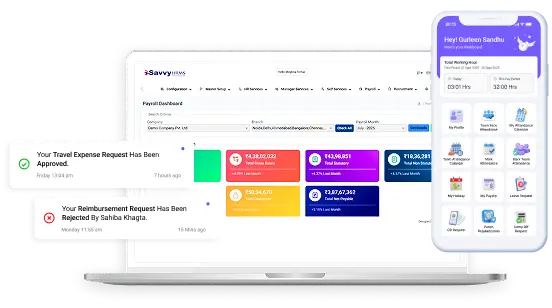









Are you looking for a more organized way to manage contract labour?
Explore Savvy HRMS Contract Labour Management Software and request a demo to see whether its features match your workforce and compliance requirements.
Frequently Asked Questions (FAQ’s):
1. What is the best contract management software in India?
The best Contract Labour Management Software depends on your workforce size, compliance requirements, attendance processes, and payroll needs. Compare solutions such as Savvy HRMS, agnihr, StaffingGo, BeeForce, and BiOKnox based on their features, integrations, support, and pricing.
2. How to manage contract labour?
Manage contract labour by maintaining contractor records, verifying worker documents, tracking attendance, calculating wages, monitoring statutory requirements, and reviewing contractor invoices. Using a centralized system can help HR, finance, and site teams coordinate these activities and maintain accurate records.
3. Why Do Enterprises in India Need Contract Employee Management Software in 2026?
Enterprises need Contract Employee Management Software to manage large contract workforces, multiple contractors, attendance, payroll, and compliance records. In 2026, centralized workforce data and automated workflows can help businesses reduce manual administration and improve visibility across locations.
4. Can Contract Employee Management Software Handle PF, ESI, and TDS Compliance?
Some systems support PF and ESI calculations, statutory records, and TDS-related payroll workflows. However, capabilities vary by vendor and configuration. Businesses should confirm applicable rules, reporting formats, and filing support with the provider and their compliance advisor.
5. Can Contract Employee Management Software Track Attendance and Overtime?
Yes. Many systems record worker attendance, shifts, absences, and overtime through biometric devices, mobile applications, or supervisor entries. Approved attendance data can then support wage calculations and payroll processing, depending on the software’s available features.
6. What Features Should Contract Labour Management Software Include?
Important features include contractor registration, digital worker onboarding, document tracking, attendance management, payroll processing, statutory records, contractor billing, and workforce reports. Businesses operating multiple sites may also need biometric integration, approval workflows, and role-based access.
7. How Much Does Contract Labour Management Software Cost in India?
Pricing varies according to workforce size, modules, number of sites, integrations, and implementation requirements. Some vendors offer published subscription plans, while others provide customized quotations. Request a detailed quote that includes setup, training, support, and additional charges.
8. What Is the Difference Between Contractor Management Software and Contract Labour Management Software?
Contractor management software generally focuses on vendor records, agreements, work orders, and contractor performance. Contract Labour Management Software adds workforce-specific functions such as worker onboarding, attendance, wage processing, and labour compliance records. Some platforms combine both capabilities.